跳至产品信息
1 / 1
My Good Green CA flag

Official Reseller

Provision Gardens is an official reseller of this brand.

Our inventory is sourced directly from the manufacturer and/or authorized distribution partners. We do not sell used items or unverified/old stock. This helps ensure product authenticity, freshness, and the high standard you expect.

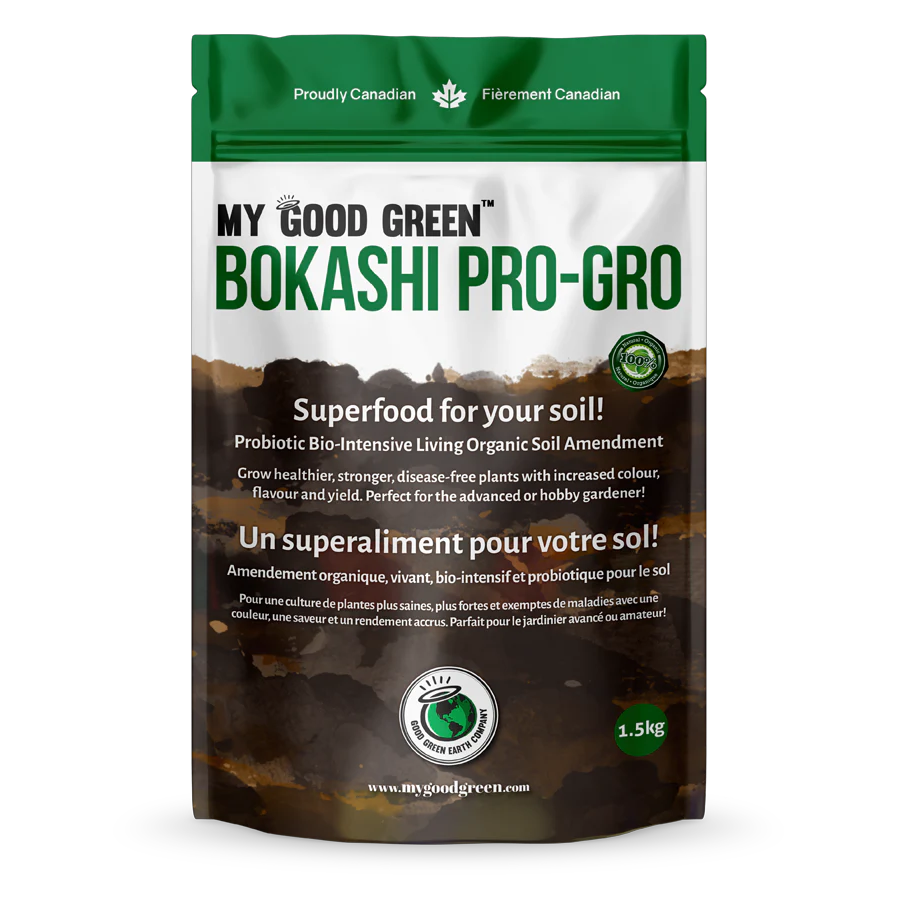
My Good Green Bokashi Pro-Gro - 1.5 公斤

常规价格 $40.99
常规价格 促销价 $40.99
结账时计算的运费

OTHER AVAILABLE SIZES / MODELS:

Store Availability
Estimated Delivery Date
Order Within
Province
Est. Delivery
$0.00
Ontario
$125.00
Canada
$149.99
Choose your province
数量
Qualifies for Free Shipping Promotion

Description

Description
My Good Green Bokashi Pro-Gro 是一种 My Good Green 发酵肥料,用于改善土壤健康,它是一种用于草坪和花园的活体有机肥料和土壤改良剂。它专为希望使用微生物优先的有机肥料来支持更强壮的植物性能和更好的土壤功能,同时又不想让园艺变得复杂种植者而设计。

Bokashi Pro-Gro 由麦麸、多种维生素、矿物质和超级食品复合物以及益生菌群组成。该配方通过独特的酸性厌氧发酵过程生产,其中包含有益细菌、酵母和其他微生物。这种发酵有机土壤方法是其与众不同之处:它旨在帮助恢复日常种植从土壤中带走的东西,支持可持续的微生态系统,使其随着时间的推移持续发挥作用。

在花园中,Bokashi Pro-Gro 旨在帮助植物繁茂生长,并在短短几周内支持更健康的植物。My Good Green 还强调了营养密度的增加,并将这一益处与水果和蔬菜以及风味、颜色和产量的改善联系起来。如果您的首要任务是获得外观更好、食用质量更高的收成,那么这种发酵肥料正是为支持这些以植物为中心的结果而设计的。

Bokashi Pro-Gro 还被描述为有助于增加有机物的吸收,这对于旨在使土壤在整个季节都感觉更有活力和反应灵敏的种植者来说非常重要。该品牌还指出,浇水需求减少和营养成本降低是与产品支持土壤性能相关的实际优势。最后还包括了一个环境说明:径流被描述为对环境有益,这使得它非常适合关注投入对下游影响的种植者。

该产品适用于多种常见的园艺例程,而不局限于单一风格。它被描述为适用于草坪和花园,也适用于容器表面施肥。Bokashi Pro-Gro 还被认为适用于堆肥茶和叶面喷施,为喜欢在土壤表面之外进行微生物支持的种植者提供了灵活性。

My Good Green Bokashi Pro-Gro 非常适合那些想要以麦麸为基础,含有有益微生物、维生素、矿物质和超级食品复合物的发酵肥料的园丁,尤其是那些专注于更健康的植物、改善水果和蔬菜的风味和颜色以及更强大、更具弹性的土壤生态系统的人。

产品优势:营养生长期;室内;室外;椰糠安全;土壤;无土;有机;土壤生物支持;有机质;植物健康;更好的营养吸收;更好的风味;植物活力;优质产量支持;多介质适用。

保证分析:总氮 (N):2.57%;水溶性氮 (N):1.21%;水不溶性氮 (N):1.36%;有效磷酸 (P2O5):2.5%;可溶性钾 (K2O):1.7%;钙 (Ca):1.7%;泡叶藻:0.00025%;总镁 (Mg):0.6%;钠 (Na):0.15%;有机质:86.6%;维生素 B1:0.00005%;维生素 B2:0.00005%;维生素 B3:0.00005%;维生素 B5:0.00005%。

源自:麦麸;碳酸盐岩;火麻籽蛋白粉;黑糖蜜;海带粉;海盐;腌制盐。

Warnings & Safety

Important – Safety Information

This product may cause mild skin irritation and eye irritation. Avoid unnecessary contact with skin, eyes, and clothing. Use only as directed.

General Safety Precautions

Read and follow all instructions on the product label and any accompanying documentation before use. Keep out of reach of children and pets. Do not ingest. Avoid breathing vapours, mist, or dust that may be generated during handling or use.

Wear appropriate personal protective equipment (PPE), such as protective gloves, long sleeves, long pants and closed-toe footwear. When there is a risk of splashing or airborne particles, use safety glasses or other suitable eye and face protection.

First Aid – Skin Contact

IF ON SKIN OR HAIR: Remove contaminated clothing immediately. Rinse skin with clean water for several minutes, then wash with mild soap and water. If irritation or redness develops and persists, seek medical attention. Wash contaminated clothing before reuse.

First Aid – Eye Contact

IF IN EYES: Rinse cautiously with clean water for several minutes, keeping eyelids open. Remove contact lenses if present and easy to do. Continue rinsing. If irritation persists, obtain medical advice.

First Aid – Ingestion

IF SWALLOWED: Rinse mouth thoroughly with water. Do not induce vomiting unless instructed by a medical professional. Seek medical attention if you feel unwell.

First aid – Inhalation

IF INHALED: Move the person to fresh air and keep them comfortable for breathing. If coughing, breathing difficulty, dizziness or other symptoms occur, seek medical assistance.

Storage And Handling

Store this product in its original closed container, in a cool, dry and well-ventilated area. Protect from extreme temperatures and direct sunlight. Keep container tightly sealed when not in use.

Avoid release to drains, natural waterways or outdoor soil. Dispose of unused product and empty containers in accordance with local regulations and the directions on the label.

Important – Medical

If medical advice is needed, keep the product label or container available. Always follow the specific instructions and safety recommendations provided by the manufacturer. This safety notice is intended as general guidance and does not replace official label directions or documentation.

Frequently Asked Questions

Why is total nitrogen (N) important for plant growth, and what makes it different from other nutrients?

Total Nitrogen is important because it directly drives leafy growth, chlorophyll production, and overall growth speed, which sets the pace for the entire plant. It’s unique because the “total” number can include different nitrogen forms that behave differently in the root zone, meaning the same total amount can produce very different results depending on the nitrogen type and plant stage.

Why is water-soluble nitrogen important for plant growth, and what makes it unique compared to other nitrogen sources?

Water-soluble nitrogen is important because it dissolves in water and becomes available to plants quickly, helping drive fast green growth, strong photosynthesis, and rapid recovery from nitrogen deficiency. It’s unique because it works immediately rather than relying on slow breakdown or conversion, so it delivers faster results—but also requires more careful control to avoid overfeeding, soft growth, or nutrient imbalance.

Why is water insoluble nitrogen important for plant growth?

Water Insoluble Nitrogen is important because it acts like a slow-release nitrogen reserve that feeds plants steadily over time, which helps maintain consistent green growth and reduces sudden nutrient swings; it’s unique from faster nitrogen forms because it must be broken down in the root zone before plants can use it, so timing and soil conditions matter as much as the total nitrogen amount.

What does available phosphoric acid (P₂O₅) do for plants, and how is it different from available phosphate?

Available phosphoric acid provides a fast-absorbing form of phosphorus that fuels root growth, energy transfer, and strong flowering. It becomes part of the plant’s total available phosphate supply, but the two terms are not the same—available phosphoric acid is one source of phosphorus, while available phosphate refers to the entire pool of plant-available phosphorus overall.

Why is soluble potash (K2O) important for plants?

Soluble potash (K2O) is important because it helps plants control water use, move sugars to new growth and fruit, and build stronger, higher-quality structure under stress. It’s unique from many other nutrients because it acts more like a regulator and transport helper than a direct “building material,” so the biggest benefits show up as steadier growth, stronger stems, and better finishing instead of just bigger leaves.

Why is calcium important for plant growth?

Calcium is important because it builds and stabilizes plant cells as they form, acting as the structural support that keeps new growth strong and functional. Unlike other nutrients that drive color or speed of growth, calcium’s role is unique because it controls cell wall strength and membrane stability, making it essential for healthy roots, shoots, and long-term plant resilience rather than quick visual results.

What does ascophyllum nodosum do for plants?

Ascophyllum nodosum supports stronger root growth, improves stress resistance, enhances nutrient uptake, and helps plants maintain balanced, steady development throughout their entire growth cycle.

Why is total magnesium (Mg) important for plant growth?

Total magnesium is important because magnesium powers chlorophyll and energy use, helping plants stay green, turn light into growth, and use other nutrients efficiently—and it’s unique because its problems often come from nutrient balance and uptake competition, not just a simple shortage.

Why is sodium (Na) important to manage in plant growing?

Sodium is important to manage because it can quietly build up in the root zone, making it harder for plants to absorb water and essential nutrients like potassium, which leads to slow growth and leaf burn. It’s unique from most nutrients because the problem is usually excess and imbalance—not a shortage—so fixing it often means preventing buildup and restoring root-zone balance rather than adding more feed.

Why is organic matter important for plant growth?

Organic matter is important because it stabilizes the root zone by holding water, storing nutrients, and improving airflow, which helps plants absorb what they need more consistently; it’s unique because it supports the whole growing environment instead of acting like a single nutrient with one job.

Why is vitamin B1 important for plants after stress or transplanting?

Vitamin B1 is important because it supports plant energy metabolism during recovery, helping plants rebuild roots and resume growth more smoothly after stress. It’s unique from most other plant inputs because it doesn’t feed the plant like a fertilizer or force growth like a hormone—it mainly supports the plant’s internal energy-use systems while you correct the real stress cause.

Why is vitamin B2 important for plants?

Vitamin B2 (riboflavin) supports plant energy processes and stress response, helping plants stay steady during recovery and challenging conditions, which is unique because it works as a metabolic helper instead of acting like a direct growth-building nutrient.

Why is vitamin B3 important for plants?

Vitamin B3 is important because it supports the energy-related chemistry plants rely on to grow steadily and recover from stress, helping them use nutrients and light more efficiently. It’s unique from most other inputs because it doesn’t act as a “building nutrient” like nitrogen or calcium—its value is in supporting internal metabolism and smoother recovery rather than directly adding structure.

Why is vitamin B5 important for plants?

Vitamin B5 helps support key energy and repair processes inside plants, which can improve recovery after stress events like transplanting, heat, or heavy pruning, keeping growth steadier. It’s unique from many other plant inputs because it acts mainly as a metabolic support tool rather than a primary building-block nutrient that directly “feeds” growth.

What makes carbonatite unique for plant growing compared to more common mineral amendments?

Carbonatite is unique because it acts mainly as a slow, long-term mineral and buffering support rather than a quick nutrient hit, helping the root zone stay steadier over time while gently contributing carbonate minerals and often calcium. That stability matters because many nutrient problems in containers and mixes come from pH drift and imbalances, not from simply “not feeding enough.”

Does blackstrap molasses actually feed plants or just soil microbes?

Blackstrap molasses mainly feeds beneficial microbes in the root zone, and those microbes help cycle nutrients, break down organic matter, and support healthier root conditions so plants can access nutrition more steadily. What makes it unique is that it’s a fast, concentrated carbon source that can quickly boost biological activity, which can be helpful in a well-aerated living medium but harmful if the root zone is already too wet or low in oxygen.

Is wheat bran good for plant soil?

Yes, wheat bran can be good for plant soil because it quickly feeds beneficial microbes that improve nutrient cycling and root-zone structure, but it’s unique because it works through biology rather than acting like a direct nutrient dose, so using too much or keeping soil too wet can cause temporary nitrogen tie-up or low-oxygen stress.

Can hemp seed protein powder replace regular nitrogen fertilizer for plants?

It can support nitrogen needs in a living root zone because microbes break its proteins into plant-available forms over time, but it’s unique because it isn’t an instant feed like most nitrogen fertilizers. That slow, biology-driven release is important because it can create steadier growth with fewer harsh swings, yet it also means problems show up as delayed hunger in weak soil biology or delayed excess if you over-apply.

What does kelp meal do for plants?

Kelp meal supports balanced growth and stronger roots by gently enhancing root-zone biology and helping plants handle stress more smoothly than fast-acting inputs, making it unique as a steady “support” amendment rather than a quick nutrient fix.

Is sea salt good for plants?

Sea salt can sometimes help in tiny amounts because it contains chloride and trace minerals, but its main effect is adding sodium and raising salinity in the root zone, which can block water and nutrient uptake. That makes it unique from most plant inputs: instead of reliably feeding growth, it primarily changes the plant’s stress level, so careful restraint matters more than dosage excitement.

Is pickling salt safe to use around plants?

Pickling salt is mostly pure sodium chloride, so even though it’s “cleaner” than many other salts, it can still raise root-zone salinity quickly and block normal water uptake. Its uniqueness is that it doesn’t nourish plants like nutrient salts do; it mainly changes osmosis and ion balance, so small exposures can cause tip burn, wilting in wet soil, and long-term sodium-related soil problems.

查看完整详细信息

Product Comparison