Frequently purchased together
-
My Good Green 博卡西发酵菌堆肥促进剂 - 1 公斤
常规价格 $16.78常规价格 -
My Good Green Bokashi Pro-Bloom 顶部肥料和堆肥茶 - 1 公斤
常规价格 $27.99常规价格 -
我的好绿肥植物清洗剂 - 1升
常规价格 $66.88常规价格 -
My Good Green Ferminator 植物清洗剂 - 500 毫升
常规价格 $41.88常规价格


Reviews are submitted by verified customers after purchase. This section shows a summary of product feedback rather than the full individual review list.

My Good Green Bokashi Pro-Gro - 20 公斤
Store Availability
Newmarket, Ontario (Head Office)
1175 Stellar Drive, Unit #5
Newmarket, ON L3Y 7B8
- Mon10:00am–6:00pm
- Tue10:00am–6:00pm
- Wed10:00am–6:00pm
- Thu10:00am–6:00pm
- Fri10:00am–6:00pm
- Sat10:00am–4:00pm
- SunClosed


Barrie, Ontario
106 Saunders Road, Unit #2A
Barrie, ON L4N 9A8
- Mon10:00am–5:00pm
- Tue10:00am–5:00pm
- Wed10:00am–5:00pm
- Thu10:00am–5:00pm
- Fri10:00am–5:00pm
- Sat10:00am–3:00pm
- SunClosed
Winnipeg, Manitoba
915 McLeod Avenue, Unit #4
Winnipeg, MB R2G 0Y4
- Mon10:00am–6:00pm
- Tue10:00am–6:00pm
- Wed10:00am–6:00pm
- Thu10:00am–6:00pm
- Fri10:00am–6:00pm
- Sat11:00am–3:00pm
- SunClosed
数量
In-Store Pickup Only
Sign in required
Back-in-stock notification
Select the store locations where you’d like to pick up this item, or choose Shipping to have it delivered.
Email notifications are turned off
Turn on email marketing to receive back-in-stock notifications.
Open account profile
Special order request
Select the store where you’d prefer to pick up your special order. To choose a different store, unselect your current choice first.
Description
Description
Description
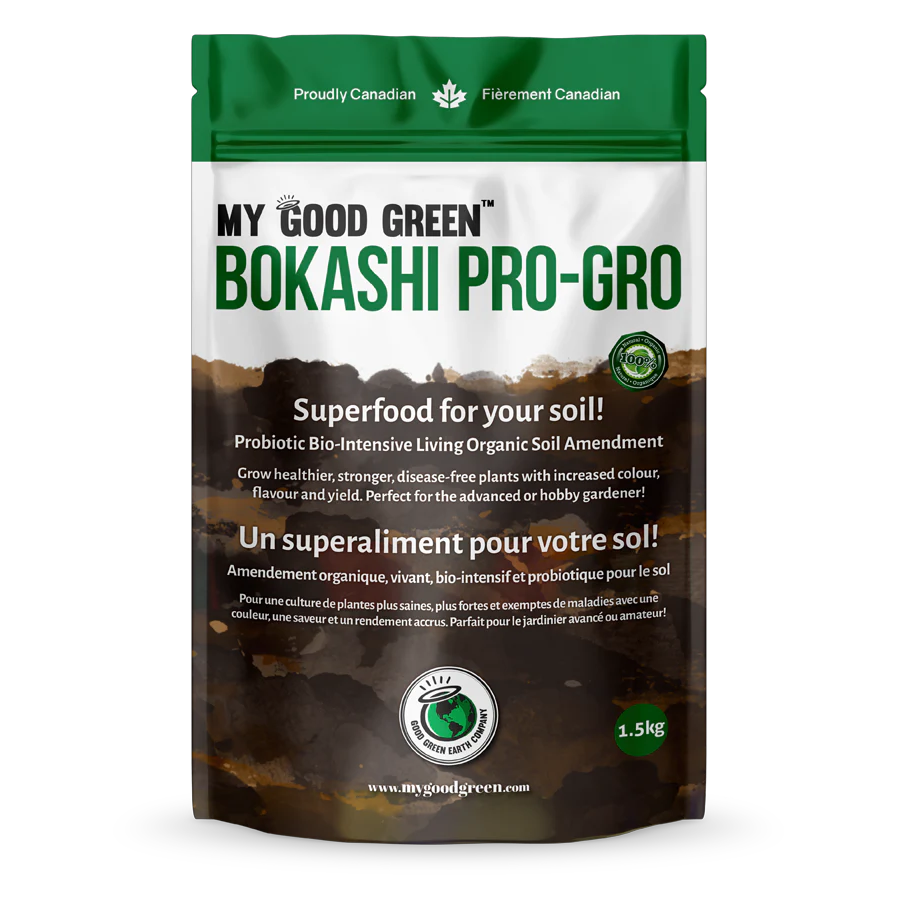
My Good Green Bokashi Pro-Gro 是一种 My Good Green 发酵肥料,用于改善土壤健康,它是一种活的有机肥料和土壤改良剂,适用于草坪和花园。它专为希望使用以微生物为主的有机肥料的种植者而设计,这种肥料能够促进植物更强壮的生长和更好的土壤功能,同时不会使园艺变得复杂。
Bokashi Pro-Gro 由麦麸、多种维生素、矿物质和超级食品复合物以及益生菌群制成。该配方通过独特的酸性厌氧发酵过程生产,其中含有有益细菌、酵母和其他微生物。这种发酵有机土壤方法是其与众不同之处:它旨在帮助恢复日常种植可能从土壤中带走的东西,支持可持续的微生态系统,使其持续发挥作用。
在花园中,Bokashi Pro-Gro 旨在帮助植物繁茂生长,并在短短几周内支持更健康的植物。My Good Green 还强调了营养密度的增加,并将这一益处与水果和蔬菜以及风味、颜色和产量的改善联系起来。如果您的首要任务是获得外观更好、食用质量更高的作物,那么这种发酵肥料正是为支持这些以植物为中心的结果而设计的。
Bokashi Pro-Gro 还被描述为有助于增加有机物的吸收,这对于旨在使土壤在整个季节中感觉更有活力和反应灵敏的种植者来说非常重要。该品牌还指出,浇水需求减少和营养成本降低是与产品支持土壤性能相关的实际优势。此外,还提到了一个环境方面的说明:径流被描述为对环境有益,这使得它非常适合关心其投入对下游影响的种植者。
该产品适用于多种常见的园艺例程,不受单一风格的限制。它适用于草坪和花园,也适用于容器表面施肥。Bokashi Pro-Gro 还适用于制作堆肥茶和叶面喷施,为那些喜欢在土壤表面之外获得微生物支持的种植者提供了灵活性。
My Good Green Bokashi Pro-Gro 非常适合希望使用富含有益微生物、维生素、矿物质和超级食品复合物的麦麸基发酵肥料的园丁——特别是那些专注于更健康的植物、改善水果和蔬菜的风味和颜色以及更强大、更有弹性的土壤生态系统的人。
产品优点:营养生长阶段;室内;室外;对椰糠安全;土壤;无土;有机;支持土壤生物学;有机质;植物健康;更好的养分吸收;更好的风味;植物活力;支持优质产量;多介质适用。
保证分析:总氮 (N): 2.57%;水溶性氮 (N): 1.21%;水不溶性氮 (N): 1.36%;有效磷酸 (P2O5): 2.5%;可溶性钾 (K2O): 1.7%;钙 (Ca): 1.7%;海带 (Ascophyllum Nodosum): 0.00025%;总镁 (Mg): 0.6%;钠 (Na): 0.15%;有机质: 86.6%;维生素 B1: 0.00005%;维生素 B2: 0.00005%;维生素 B3: 0.00005%;维生素 B5: 0.00005%。
来源:麦麸;碳酸盐;大麻籽蛋白粉;糖蜜;海带粉;海盐;腌制盐。
Bokashi Pro-Gro 由麦麸、多种维生素、矿物质和超级食品复合物以及益生菌群制成。该配方通过独特的酸性厌氧发酵过程生产,其中含有有益细菌、酵母和其他微生物。这种发酵有机土壤方法是其与众不同之处:它旨在帮助恢复日常种植可能从土壤中带走的东西,支持可持续的微生态系统,使其持续发挥作用。
在花园中,Bokashi Pro-Gro 旨在帮助植物繁茂生长,并在短短几周内支持更健康的植物。My Good Green 还强调了营养密度的增加,并将这一益处与水果和蔬菜以及风味、颜色和产量的改善联系起来。如果您的首要任务是获得外观更好、食用质量更高的作物,那么这种发酵肥料正是为支持这些以植物为中心的结果而设计的。
Bokashi Pro-Gro 还被描述为有助于增加有机物的吸收,这对于旨在使土壤在整个季节中感觉更有活力和反应灵敏的种植者来说非常重要。该品牌还指出,浇水需求减少和营养成本降低是与产品支持土壤性能相关的实际优势。此外,还提到了一个环境方面的说明:径流被描述为对环境有益,这使得它非常适合关心其投入对下游影响的种植者。
该产品适用于多种常见的园艺例程,不受单一风格的限制。它适用于草坪和花园,也适用于容器表面施肥。Bokashi Pro-Gro 还适用于制作堆肥茶和叶面喷施,为那些喜欢在土壤表面之外获得微生物支持的种植者提供了灵活性。
My Good Green Bokashi Pro-Gro 非常适合希望使用富含有益微生物、维生素、矿物质和超级食品复合物的麦麸基发酵肥料的园丁——特别是那些专注于更健康的植物、改善水果和蔬菜的风味和颜色以及更强大、更有弹性的土壤生态系统的人。
产品优点:营养生长阶段;室内;室外;对椰糠安全;土壤;无土;有机;支持土壤生物学;有机质;植物健康;更好的养分吸收;更好的风味;植物活力;支持优质产量;多介质适用。
保证分析:总氮 (N): 2.57%;水溶性氮 (N): 1.21%;水不溶性氮 (N): 1.36%;有效磷酸 (P2O5): 2.5%;可溶性钾 (K2O): 1.7%;钙 (Ca): 1.7%;海带 (Ascophyllum Nodosum): 0.00025%;总镁 (Mg): 0.6%;钠 (Na): 0.15%;有机质: 86.6%;维生素 B1: 0.00005%;维生素 B2: 0.00005%;维生素 B3: 0.00005%;维生素 B5: 0.00005%。
来源:麦麸;碳酸盐;大麻籽蛋白粉;糖蜜;海带粉;海盐;腌制盐。
Warnings & Safety
Warnings & Safety
Important – Safety Information
General Safety Precautions
First Aid – Skin Contact
First Aid – Eye Contact
First Aid – Ingestion
First aid – Inhalation
Storage And Handling
Important – Medical
Guaranteed Minimum Analysis
Guaranteed Minimum Analysis
| Total Nitrogen (N) | 2.57% |
|---|---|
| Water Soluble Nitrogen (N) | 1.21% |
| Water Insoluble Nitrogen (N) | 1.36% |
| Available Phosphoric Acid (P2O5) | 2.5% |
| Soluble Potash (K2O) | 1.7% |
| Calcium (Ca) | 1.7% |
| Ascophyllum Nodosum | 0.00025% |
| Total Magnesium (Mg) | 0.6% |
| Sodium (Na) | 0.15% |
| Organic Matter | 86.6% |
| Vitamin B1 | 0.00005% |
| Vitamin B2 | 0.00005% |
| Vitamin B3 | 0.00005% |
| Vitamin B5 | 0.00005% |
Frequently Asked Questions
Frequently Asked Questions
Why is total nitrogen (N) important for plant growth, and what makes it different from other nutrients?
Why is water-soluble nitrogen important for plant growth, and what makes it unique compared to other nitrogen sources?
Why is water insoluble nitrogen important for plant growth?
What does available phosphoric acid (P₂O₅) do for plants, and how is it different from available phosphate?
Why is soluble potash (K2O) important for plants?
Why is calcium important for plant growth?
What does ascophyllum nodosum do for plants?
Why is total magnesium (Mg) important for plant growth?
Why is sodium (Na) important to manage in plant growing?
Why is organic matter important for plant growth?
Why is vitamin B1 important for plants after stress or transplanting?
Why is vitamin B2 important for plants?
Why is vitamin B3 important for plants?
Why is vitamin B5 important for plants?
What makes carbonatite unique for plant growing compared to more common mineral amendments?
Does blackstrap molasses actually feed plants or just soil microbes?
Is wheat bran good for plant soil?
Can hemp seed protein powder replace regular nitrogen fertilizer for plants?
What does kelp meal do for plants?
Is sea salt good for plants?
Is pickling salt safe to use around plants?
Frequently purchased together
-
My Good Green 博卡西发酵菌堆肥促进剂 - 1 公斤
常规价格 $16.78常规价格 -
My Good Green Bokashi Pro-Bloom 顶部肥料和堆肥茶 - 1 公斤
常规价格 $27.99常规价格 -
我的好绿肥植物清洗剂 - 1升
常规价格 $66.88常规价格 -
My Good Green Ferminator 植物清洗剂 - 500 毫升
常规价格 $41.88常规价格
Reviews are submitted by verified customers after purchase. This section shows a summary of product feedback rather than the full individual review list.