Frequently purchased together
-
My Good Green 博卡西发酵菌堆肥促进剂 - 1 公斤
常规价格 $16.78常规价格 -
My Good Green Bokashi Pro-Gro - 1.5 公斤
常规价格 $44.99常规价格 -
My Good Green Ferminator 植物清洗剂 - 500 毫升
常规价格 $41.88常规价格 -
我的好绿肥植物清洗剂 - 1升
常规价格 $66.88常规价格


Reviews are submitted by verified customers after purchase. This section shows a summary of product feedback rather than the full individual review list.

Store Availability
Newmarket, Ontario (Head Office)
1175 Stellar Drive, Unit #5
Newmarket, ON L3Y 7B8
- Mon10:00am–6:00pm
- Tue10:00am–6:00pm
- Wed10:00am–6:00pm
- Thu10:00am–6:00pm
- Fri10:00am–6:00pm
- Sat10:00am–4:00pm
- SunClosed


Barrie, Ontario
106 Saunders Road, Unit #2A
Barrie, ON L4N 9A8
- Mon10:00am–5:00pm
- Tue10:00am–5:00pm
- Wed10:00am–5:00pm
- Thu10:00am–5:00pm
- Fri10:00am–5:00pm
- Sat10:00am–3:00pm
- SunClosed
Winnipeg, Manitoba
915 McLeod Avenue, Unit #4
Winnipeg, MB R2G 0Y4
- Mon10:00am–6:00pm
- Tue10:00am–6:00pm
- Wed10:00am–6:00pm
- Thu10:00am–6:00pm
- Fri10:00am–6:00pm
- Sat11:00am–3:00pm
- SunClosed
Estimated Delivery Date
Order Within
—
Province
Est. Delivery
—
数量
Qualifies for Free Shipping Promotion
Sign in required
Back-in-stock notification
Select the store locations where you’d like to pick up this item, or choose Shipping to have it delivered.
Email notifications are turned off
Turn on email marketing to receive back-in-stock notifications.
Open account profile
Special order request
Select the store where you’d prefer to pick up your special order. To choose a different store, unselect your current choice first.
Description
Description
Description
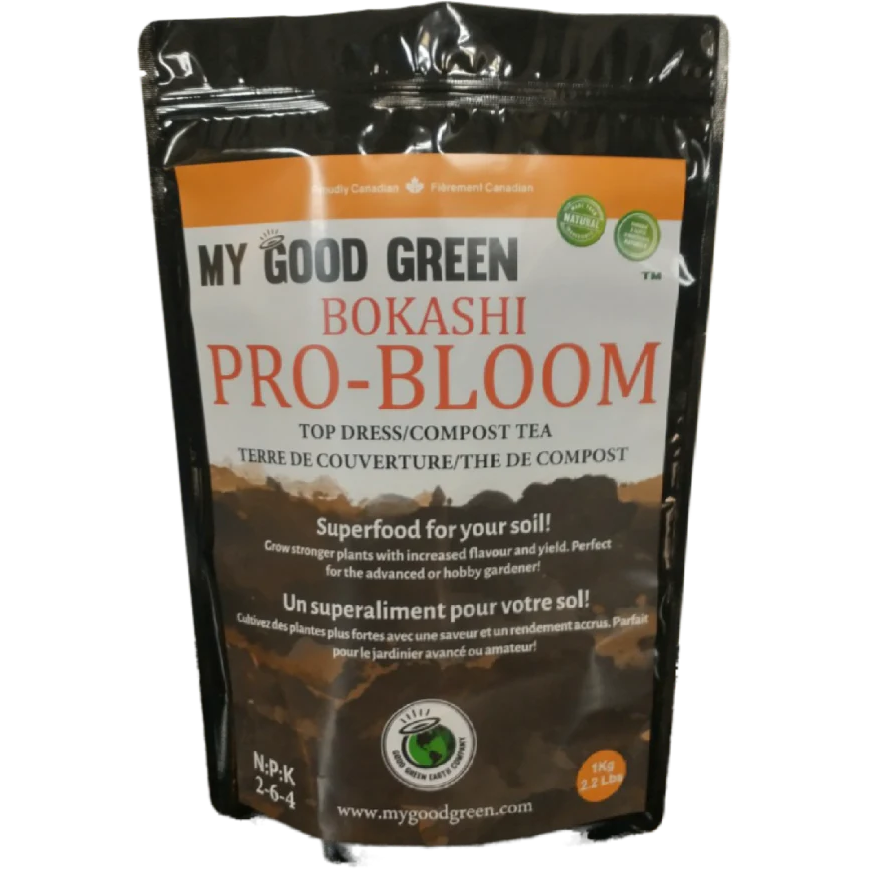
My Good Green Bokashi Pro-Bloom 面施肥和堆肥茶是一种发酵面施肥和堆肥茶,旨在通过有益微生物和矿物质支持植物生长和收获表现。这种有机肥料专为希望获得富含微生物的活性改良剂的园丁设计,该改良剂有助于在植物冲刺强劲收尾时保持营养可用性。
其核心特点是发酵。Bokashi Pro-Bloom 被定位为一种发酵面施肥,这意味着它围绕生物活性输入而不是简单的矿物盐方法构建。这种发酵重点与品牌声称的“富含有益微生物”相结合,使其非常适合关注土壤生命作为生长过程一部分的种植者。它也被描述为一种独立的有机肥料,在偏好单一产品的花园和容器中具有广泛的用途。
在一个简洁、对买家友好的事实层中,Bokashi Pro-Bloom 的 NPK 值为 2-6-4。其成分以矿物质混合物为中心,包括火山磷岩粉、软磷酸盐和钾肥,并辅以镁和碳酸钙。配方还包括有机输入,如海带和甜菜根糖蜜,将植物和矿物成分混合到一种发酵改良剂中。
它对植物的作用在于保持稳定生长并减少挫折。My Good Green 明确将其描述为纠正缺陷和优化植物生长,这说明了该产品在植物需要营养以保持正常轨道时作为支持性面施肥的作用。该品牌还将其定位为“您的植物收获所需的一切”,因此它旨在支持收获前的冲刺,而不是作为一种单一用途的利基投入。其结果是一款旨在实现更强整体性能的产品,采用平衡方法,支持植物需求和土壤环境。
Bokashi Pro-Bloom 适用于面施肥和堆肥茶,也可用于叶面喷施。这种多功能性对于希望一种发酵改良剂能够适应不同园艺管理风格,而无需堆满各种单一产品架子的买家来说至关重要。
My Good Green Bokashi Pro-Bloom 面施肥和堆肥茶非常适合寻求含有有益微生物、矿物质丰富成分和 2-6-4 NPK 的发酵有机肥料的园丁——特别是对于任何想要采用“土壤优先”方法来支持持续生长和自信收尾的人。
产品优势:开花期;室内;室外;椰糠安全;土壤;无土;有机;微生物支持;平衡磷钾配方;微量矿物质支持;可叶面喷施;多介质适用;植物可用营养;有机质;开花支持。
保证分析:总氮 (N):2.0%;水溶性氮 (N):1.0%;水不溶性氮 (N):1.0%;有效磷酸 (P2O5):6.0%;可溶性钾 (K2O):4.0%;钙 (Ca):1.7%;总镁 (Mg):0.6%;钠 (Na):0.15%;有机质:86.6%。
来源于:麦麸;碳酸盐岩;火山磷岩粉;硫酸钾;大麻籽蛋白粉;糖蜜;海带粉;海盐;腌制盐。
其核心特点是发酵。Bokashi Pro-Bloom 被定位为一种发酵面施肥,这意味着它围绕生物活性输入而不是简单的矿物盐方法构建。这种发酵重点与品牌声称的“富含有益微生物”相结合,使其非常适合关注土壤生命作为生长过程一部分的种植者。它也被描述为一种独立的有机肥料,在偏好单一产品的花园和容器中具有广泛的用途。
在一个简洁、对买家友好的事实层中,Bokashi Pro-Bloom 的 NPK 值为 2-6-4。其成分以矿物质混合物为中心,包括火山磷岩粉、软磷酸盐和钾肥,并辅以镁和碳酸钙。配方还包括有机输入,如海带和甜菜根糖蜜,将植物和矿物成分混合到一种发酵改良剂中。
它对植物的作用在于保持稳定生长并减少挫折。My Good Green 明确将其描述为纠正缺陷和优化植物生长,这说明了该产品在植物需要营养以保持正常轨道时作为支持性面施肥的作用。该品牌还将其定位为“您的植物收获所需的一切”,因此它旨在支持收获前的冲刺,而不是作为一种单一用途的利基投入。其结果是一款旨在实现更强整体性能的产品,采用平衡方法,支持植物需求和土壤环境。
Bokashi Pro-Bloom 适用于面施肥和堆肥茶,也可用于叶面喷施。这种多功能性对于希望一种发酵改良剂能够适应不同园艺管理风格,而无需堆满各种单一产品架子的买家来说至关重要。
My Good Green Bokashi Pro-Bloom 面施肥和堆肥茶非常适合寻求含有有益微生物、矿物质丰富成分和 2-6-4 NPK 的发酵有机肥料的园丁——特别是对于任何想要采用“土壤优先”方法来支持持续生长和自信收尾的人。
产品优势:开花期;室内;室外;椰糠安全;土壤;无土;有机;微生物支持;平衡磷钾配方;微量矿物质支持;可叶面喷施;多介质适用;植物可用营养;有机质;开花支持。
保证分析:总氮 (N):2.0%;水溶性氮 (N):1.0%;水不溶性氮 (N):1.0%;有效磷酸 (P2O5):6.0%;可溶性钾 (K2O):4.0%;钙 (Ca):1.7%;总镁 (Mg):0.6%;钠 (Na):0.15%;有机质:86.6%。
来源于:麦麸;碳酸盐岩;火山磷岩粉;硫酸钾;大麻籽蛋白粉;糖蜜;海带粉;海盐;腌制盐。
Warnings & Safety
Warnings & Safety
Important – Safety Information
General Safety Precautions
First Aid – Skin Contact
First Aid – Eye Contact
First Aid – Ingestion
First aid – Inhalation
Storage And Handling
Important – Medical
Guaranteed Minimum Analysis
Guaranteed Minimum Analysis
| Total Nitrogen (N) | 2.0% |
|---|---|
| Water Soluble Nitrogen (N) | 1.0% |
| Water Insoluble Nitrogen (N) | 1.0% |
| Available Phosphoric Acid (P2O5) | 6.0% |
| Soluble Potash (K2O) | 4.0% |
| Calcium (Ca) | 1.7% |
| Total Magnesium (Mg) | 0.6% |
| Sodium (Na) | 0.15% |
| Organic Matter | 86.6% |
Frequently Asked Questions
Frequently Asked Questions
Why is total nitrogen (N) important for plant growth, and what makes it different from other nutrients?
Why is water-soluble nitrogen important for plant growth, and what makes it unique compared to other nitrogen sources?
Why is water insoluble nitrogen important for plant growth?
What does available phosphoric acid (P₂O₅) do for plants, and how is it different from available phosphate?
Why is soluble potash (K2O) important for plants?
Why is calcium important for plant growth?
Why is total magnesium (Mg) important for plant growth?
Why is sodium (Na) important to manage in plant growing?
Why is organic matter important for plant growth?
What makes carbonatite unique for plant growing compared to more common mineral amendments?
Does blackstrap molasses actually feed plants or just soil microbes?
Is wheat bran good for plant soil?
What makes volcanophos rock dust different from fast phosphorus fertilizers?
What does sulfate of potash do for plants?
Can hemp seed protein powder replace regular nitrogen fertilizer for plants?
What does kelp meal do for plants?
Is sea salt good for plants?
Is pickling salt safe to use around plants?
Frequently purchased together
-
My Good Green 博卡西发酵菌堆肥促进剂 - 1 公斤
常规价格 $16.78常规价格 -
My Good Green Bokashi Pro-Gro - 1.5 公斤
常规价格 $44.99常规价格 -
My Good Green Ferminator 植物清洗剂 - 500 毫升
常规价格 $41.88常规价格 -
我的好绿肥植物清洗剂 - 1升
常规价格 $66.88常规价格
Reviews are submitted by verified customers after purchase. This section shows a summary of product feedback rather than the full individual review list.