Frequently purchased together
-
Pots de pépinière carrés de 7 cm (2,75 po) - Blanc
Prix habituel $0.55Prix habituel -
Pots de pépinière carrés 2,75 pouces - Rose
Prix habituel $0.55Prix habituel -
Terreau Fafard pour cactus et plantes grasses - 8,8 litres
Prix habituel $14.77Prix habituel -
Biochar de charbon de bois horticole Hydra Garden (2-20MM) - 1 KG
Prix habituel $12.99Prix habituel


Reviews are submitted by verified customers after purchase. This section shows a summary of product feedback rather than the full individual review list.

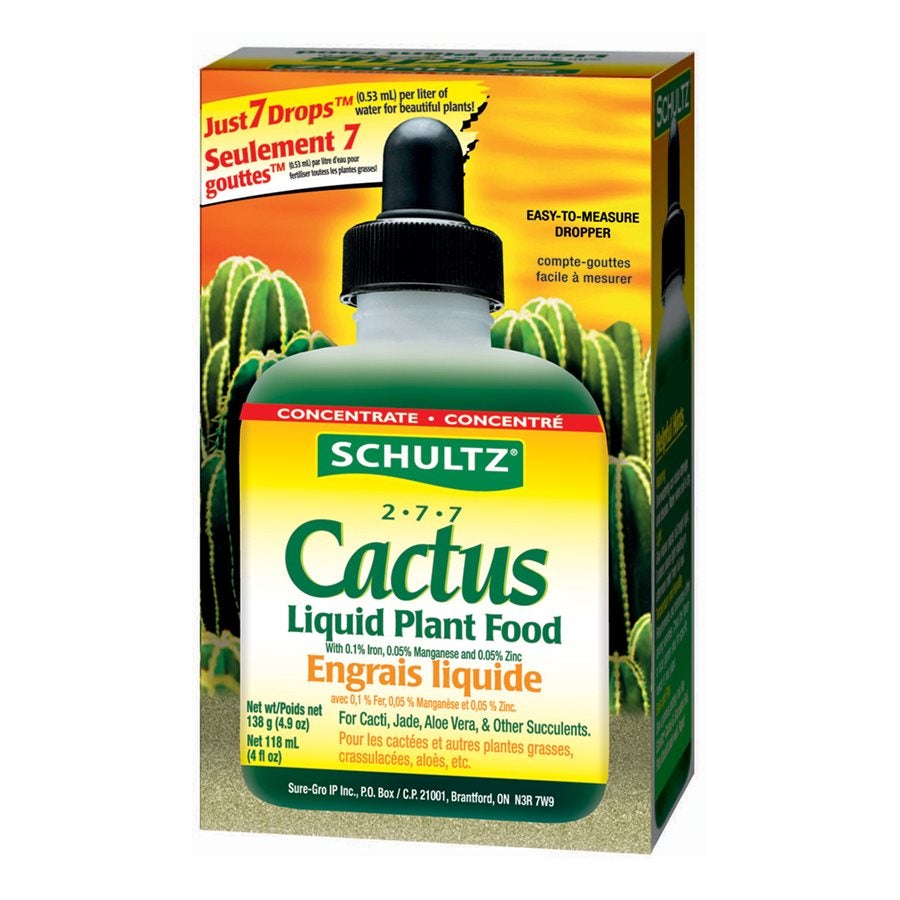
Nourriture liquide pour cactus Schultz - 138 grammes
Prix habituel
$7.99
Prix habituel
Prix promotionnel
$7.99
Frais d'expédition calculés à l'étape de paiement.
Store Availability
Newmarket, Ontario (Head Office)
1175 Stellar Drive, Unit #5
Newmarket, ON L3Y 7B8
- Mon10:00am–6:00pm
- Tue10:00am–6:00pm
- Wed10:00am–6:00pm
- Thu10:00am–6:00pm
- Fri10:00am–6:00pm
- Sat10:00am–4:00pm
- SunClosed


Barrie, Ontario
106 Saunders Road, Unit #2A
Barrie, ON L4N 9A8
- Mon10:00am–5:00pm
- Tue10:00am–5:00pm
- Wed10:00am–5:00pm
- Thu10:00am–5:00pm
- Fri10:00am–5:00pm
- Sat10:00am–3:00pm
- SunClosed
Winnipeg, Manitoba
915 McLeod Avenue, Unit #4
Winnipeg, MB R2G 0Y4
- Mon10:00am–6:00pm
- Tue10:00am–6:00pm
- Wed10:00am–6:00pm
- Thu10:00am–6:00pm
- Fri10:00am–6:00pm
- Sat11:00am–3:00pm
- SunClosed
Estimated Delivery Date
Order Within
—
Province
Est. Delivery
—
Quantité
Qualifies for Free Shipping Promotion
Sign in required
Back-in-stock notification
Select the store locations where you’d like to pick up this item, or choose Shipping to have it delivered.
Email notifications are turned off
Turn on email marketing to receive back-in-stock notifications.
Open account profile
Special order request
Select the store where you’d prefer to pick up your special order. To choose a different store, unselect your current choice first.
Description
Description
Description
L'engrais liquide pour cactus Schultz (Schultz™ Cactus Plus™ Liquid Plant Food) est un engrais liquide concentré pour plantes et cactus, conçu pour répondre aux besoins uniques des cactus et autres plantes grasses.
Cette formule pour plantes grasses est spécialement conçue pour tous les cactus et autres plantes grasses populaires, y compris le jade et l'aloe vera. Il est adapté aux plantes grasses d'intérieur et d'extérieur, ce qui en fait un choix pratique si vous avez une collection variée répartie sur les rebords de fenêtres, les vérandas, les patios ou les jardins. Si vous avez remarqué que les mélanges de terreau pour cactus et plantes grasses sèchent rapidement et se drainent vite, ce produit est destiné à ces terreaux poreux où les nutriments peuvent s'éloigner de la zone racinaire.
L'engrais liquide pour cactus Schultz est décrit comme excellent pour le repiquage, le rempotage et l'enracinement, ce qui le rend particulièrement utile pendant les périodes où les plantes s'installent ou rétablissent leur système racinaire. L'objectif est une nutrition stable et équilibrée qui favorise des habitudes de croissance constantes, typiques des plantes grasses, sans provoquer une croissance molle et étirée. Il contient également des micronutriments, favorisant la performance globale des plantes au-delà de la nutrition primaire lorsque vos plantes sont en cycles de croissance active.
Le profil nutritif est de 2-7-7 NPK, avec une faible teneur en azote adaptée aux besoins des cactus et des plantes grasses. Les principaux intrants sont dérivés des phosphates d'ammonium et de potassium, du nitrate de potassium et de l'urée. Les micronutriments sont inclus sous forme d'EDTA, avec du fer, du manganèse et du zinc présents pour soutenir une nutrition complète dans un engrais liquide compact et concentré.
Si vous souhaitez un engrais pour cactus conçu spécifiquement pour les plantes grasses, cet engrais concentré est un excellent choix pour les cultivateurs qui apprécient une nutrition simple et constante pour les cactus, le jade, l'aloe vera et d'autres plantes grasses — en particulier dans les mélanges à drainage rapide où les racines bénéficient d'un accès fiable aux nutriments.
Avantages du produit : Stade végétatif ; Intérieur ; Arrosage régulier ; Sans danger pour la fibre de coco ; Terre ; Sans terre ; Large utilisation des plantes ; Utilisation intérieure ; Utilisation extérieure ; Soutien à la transplantation ; Soutien à la propagation ; Nutrition équilibrée ; Soutien en micronutriments ; Arrosage des racines.
Analyse garantie : Azote total (N) : 2,0 % ; Acide phosphorique disponible (P2O5) : 7,0 % ; Potasse soluble (K2O) : 7,0 % ; Fer chélaté (Fe) : 0,1 % ; Manganèse chélaté (Mn) : 0,05 % ; Zinc chélaté (Zn) : 0,05 % ; EDTA (Agent chélatant) : 1,0 %.
Cette formule pour plantes grasses est spécialement conçue pour tous les cactus et autres plantes grasses populaires, y compris le jade et l'aloe vera. Il est adapté aux plantes grasses d'intérieur et d'extérieur, ce qui en fait un choix pratique si vous avez une collection variée répartie sur les rebords de fenêtres, les vérandas, les patios ou les jardins. Si vous avez remarqué que les mélanges de terreau pour cactus et plantes grasses sèchent rapidement et se drainent vite, ce produit est destiné à ces terreaux poreux où les nutriments peuvent s'éloigner de la zone racinaire.
L'engrais liquide pour cactus Schultz est décrit comme excellent pour le repiquage, le rempotage et l'enracinement, ce qui le rend particulièrement utile pendant les périodes où les plantes s'installent ou rétablissent leur système racinaire. L'objectif est une nutrition stable et équilibrée qui favorise des habitudes de croissance constantes, typiques des plantes grasses, sans provoquer une croissance molle et étirée. Il contient également des micronutriments, favorisant la performance globale des plantes au-delà de la nutrition primaire lorsque vos plantes sont en cycles de croissance active.
Le profil nutritif est de 2-7-7 NPK, avec une faible teneur en azote adaptée aux besoins des cactus et des plantes grasses. Les principaux intrants sont dérivés des phosphates d'ammonium et de potassium, du nitrate de potassium et de l'urée. Les micronutriments sont inclus sous forme d'EDTA, avec du fer, du manganèse et du zinc présents pour soutenir une nutrition complète dans un engrais liquide compact et concentré.
Si vous souhaitez un engrais pour cactus conçu spécifiquement pour les plantes grasses, cet engrais concentré est un excellent choix pour les cultivateurs qui apprécient une nutrition simple et constante pour les cactus, le jade, l'aloe vera et d'autres plantes grasses — en particulier dans les mélanges à drainage rapide où les racines bénéficient d'un accès fiable aux nutriments.
Avantages du produit : Stade végétatif ; Intérieur ; Arrosage régulier ; Sans danger pour la fibre de coco ; Terre ; Sans terre ; Large utilisation des plantes ; Utilisation intérieure ; Utilisation extérieure ; Soutien à la transplantation ; Soutien à la propagation ; Nutrition équilibrée ; Soutien en micronutriments ; Arrosage des racines.
Analyse garantie : Azote total (N) : 2,0 % ; Acide phosphorique disponible (P2O5) : 7,0 % ; Potasse soluble (K2O) : 7,0 % ; Fer chélaté (Fe) : 0,1 % ; Manganèse chélaté (Mn) : 0,05 % ; Zinc chélaté (Zn) : 0,05 % ; EDTA (Agent chélatant) : 1,0 %.
Warnings & Safety
Warnings & Safety
Important – Safety Information
General Safety Precautions
First Aid – Skin Contact
First Aid – Eye Contact
First Aid – Ingestion
First aid – Inhalation
Storage And Handling
Important – Medical
Guaranteed Minimum Analysis
Guaranteed Minimum Analysis
| Total Nitrogen (N) | 2.0% |
|---|---|
| Available Phosphoric Acid (P2O5) | 7.0% |
| Soluble Potash (K2O) | 7.0% |
| Chelated Iron (Fe) | 0.1% |
| Chelated Manganese (Mn) | 0.05% |
| Chelated Zinc (Zn) | 0.05% |
| EDTA (Chelating Agent) | 1.0% |
Frequently Asked Questions
Frequently Asked Questions
Why is total nitrogen (N) important for plant growth, and what makes it different from other nutrients?
What does available phosphoric acid (P₂O₅) do for plants, and how is it different from available phosphate?
Why is soluble potash (K2O) important for plants?
Why is chelated iron important for plants, and what makes it different from other iron sources?
Why is chelated manganese (Mn) important for plant growth?
Why is chelated zinc (Zn) important for plants?
Why is EDTA chelation important for plant nutrition, and what makes it unique?
Safety & Technical Documents
Safety & Technical Documents
Frequently purchased together
-
Pots de pépinière carrés de 7 cm (2,75 po) - Blanc
Prix habituel $0.55Prix habituel -
Pots de pépinière carrés 2,75 pouces - Rose
Prix habituel $0.55Prix habituel -
Terreau Fafard pour cactus et plantes grasses - 8,8 litres
Prix habituel $14.77Prix habituel -
Biochar de charbon de bois horticole Hydra Garden (2-20MM) - 1 KG
Prix habituel $12.99Prix habituel
Reviews are submitted by verified customers after purchase. This section shows a summary of product feedback rather than the full individual review list.