Frequently purchased together
-
Pots de pépinière carrés 2,75 pouces - Transparents
Prix habituel $0.55Prix habituel -
Pots de pépinière carrés 2,75 pouces - Rose
Prix habituel $0.55Prix habituel -
Pot de pépinière transparent - 3 pouces
Prix habituel $0.89Prix habituel -
Technologie de croissance Succulent Focus - 250 ml
Prix habituel $18.50Prix habituel


Reviews are submitted by verified customers after purchase. This section shows a summary of product feedback rather than the full individual review list.

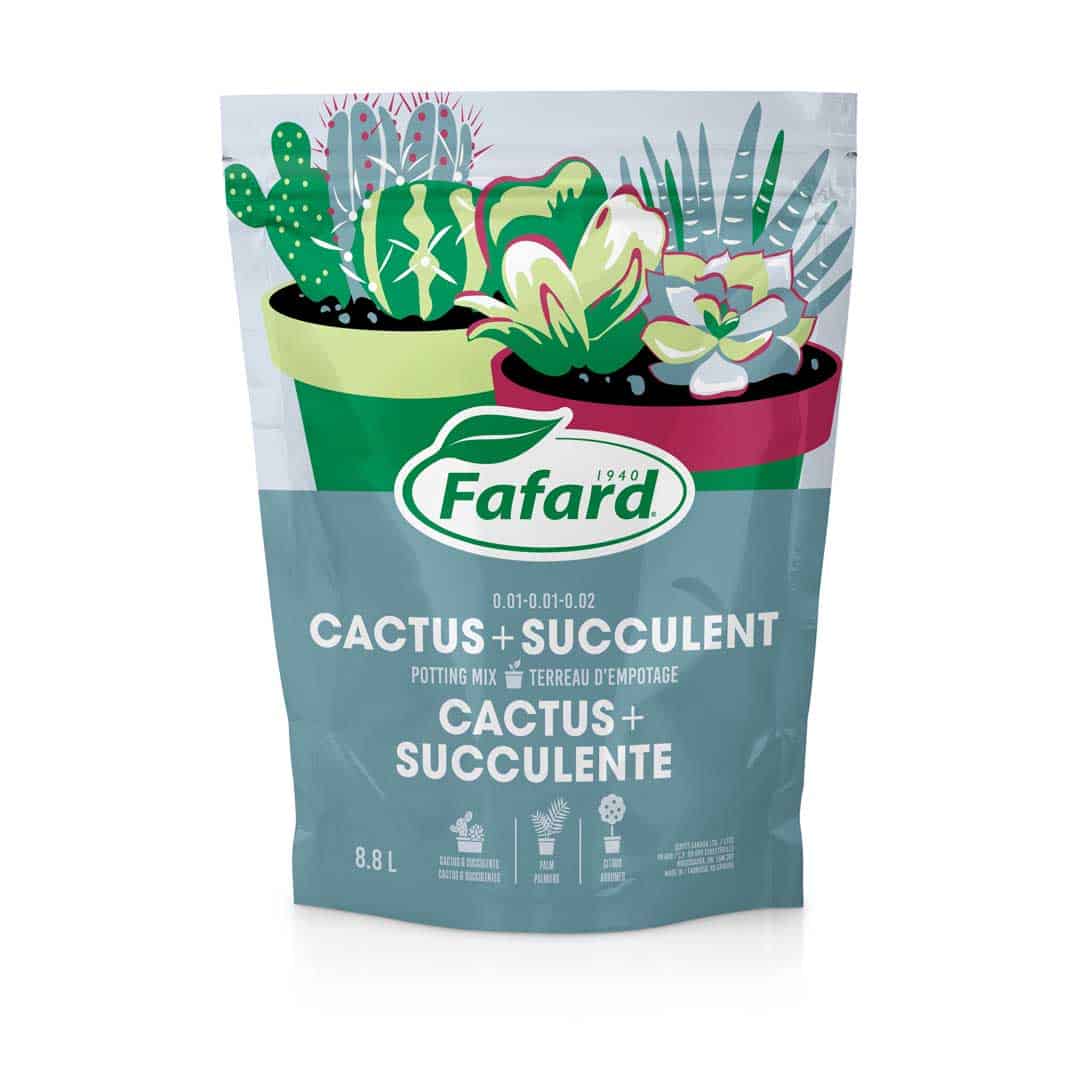
Terreau Fafard pour cactus et plantes grasses - 8,8 litres
Prix habituel
$14.77
Prix habituel
Prix promotionnel
$14.77
Frais d'expédition calculés à l'étape de paiement.
Store Availability
Newmarket, Ontario (Head Office)
1175 Stellar Drive, Unit #5
Newmarket, ON L3Y 7B8
- Mon10:00am–6:00pm
- Tue10:00am–6:00pm
- Wed10:00am–6:00pm
- Thu10:00am–6:00pm
- Fri10:00am–6:00pm
- Sat10:00am–4:00pm
- SunClosed


Barrie, Ontario
106 Saunders Road, Unit #2A
Barrie, ON L4N 9A8
- Mon10:00am–5:00pm
- Tue10:00am–5:00pm
- Wed10:00am–5:00pm
- Thu10:00am–5:00pm
- Fri10:00am–5:00pm
- Sat10:00am–3:00pm
- SunClosed
Winnipeg, Manitoba
915 McLeod Avenue, Unit #4
Winnipeg, MB R2G 0Y4
- Mon10:00am–6:00pm
- Tue10:00am–6:00pm
- Wed10:00am–6:00pm
- Thu10:00am–6:00pm
- Fri10:00am–6:00pm
- Sat11:00am–3:00pm
- SunClosed
Estimated Delivery Date
Order Within
—
Province
Est. Delivery
—
Quantité
Qualifies for Free Shipping Promotion
Sign in required
Back-in-stock notification
Select the store locations where you’d like to pick up this item, or choose Shipping to have it delivered.
Email notifications are turned off
Turn on email marketing to receive back-in-stock notifications.
Open account profile
Special order request
Select the store where you’d prefer to pick up your special order. To choose a different store, unselect your current choice first.
Description
Description
Description
Le terreau Fafard Cactus + Succulentes est un mélange spécialement conçu pour les cactus et les plantes grasses, favorisant un drainage rapide et une humidité constante dans les contenants. Ce terreau est un mélange de plantation en pot pour les plantes adaptées à la sécheresse qui nécessitent une circulation rapide de l'eau dans la zone racinaire.
Conçu pour un drainage rapide de l'eau, ce mélange aide à prévenir les conditions détrempées tout en maintenant un niveau d'humidité idéal pour les plantes qui préfèrent un rythme plus sec. La tourbe de sphaigne aide à retenir et à libérer l'eau au besoin, de sorte que les racines ne restent pas complètement sèches entre les arrosages. La perlite et le sable améliorent le drainage et l'aération, créant une structure plus légère et plus ouverte qui favorise une croissance racinaire vigoureuse et un développement racinaire plus sain au fil du temps.
Ce mélange est spécialement formulé pour les plantes du désert comme les cactus et les plantes grasses, et convient également à une gamme de types de plantes d'intérieur populaires de la même manière. C'est une option pratique pour les collections qui comprennent la plante serpent, le dracaena, la plante ZZ et le hoya, ainsi que les palmiers et les agrumes cultivés en pot. La texture est conçue pour soutenir les plantes qui n'aiment pas l'humidité persistante, ce qui facilite le maintien de conditions constantes dans les jardinières mixtes et les contenants à spécimen unique.
Pour une couche d'informations compacte, le terreau Fafard Cactus + Succulentes affiche un NPK de 0,01-0,01-0,01 et comprend une légère charge d'engrais de démarrage dérivée de nitrate d'ammonium, de sulfate de potassium et de sources de phosphate. Il convient aux installations de contenants intérieurs et au démarrage des semis où un terreau à drainage rapide est la priorité. C'est un bon choix pour les cultivateurs qui veulent un terreau simple pour cactus et plantes grasses qui favorise le drainage, l'humidité équilibrée et un enracinement solide sans compliquer la configuration.
Avantages du produit : Soutien au drainage ; Moins de risque de sur-arrosage ; Équilibre d'arrosage ; Rétention d'humidité ; Meilleure aération ; Développement racinaire ; Large utilisation des plantes ; Nutrition de démarrage ; Intérieur ; Extérieur ; Stade de floraison ; Stade végétatif ; Sans terre.
Analyse garantie : Azote total (N) : 0,01 % ; Acide phosphorique disponible (P2O5) : 0,01 % ; Potasse soluble (K2O) : 0,01 % ; Calcium (Ca) : 0,001 % ; Soufre (S) : 0,005 % ; Huile de lin : 0,003 % ; Polyol : 0,002 % ; Diphénylméthanediisocyanate : 0,003 %.
Dérivé de : Tourbe de sphaigne canadienne ; Perlite ; Sable.
Conçu pour un drainage rapide de l'eau, ce mélange aide à prévenir les conditions détrempées tout en maintenant un niveau d'humidité idéal pour les plantes qui préfèrent un rythme plus sec. La tourbe de sphaigne aide à retenir et à libérer l'eau au besoin, de sorte que les racines ne restent pas complètement sèches entre les arrosages. La perlite et le sable améliorent le drainage et l'aération, créant une structure plus légère et plus ouverte qui favorise une croissance racinaire vigoureuse et un développement racinaire plus sain au fil du temps.
Ce mélange est spécialement formulé pour les plantes du désert comme les cactus et les plantes grasses, et convient également à une gamme de types de plantes d'intérieur populaires de la même manière. C'est une option pratique pour les collections qui comprennent la plante serpent, le dracaena, la plante ZZ et le hoya, ainsi que les palmiers et les agrumes cultivés en pot. La texture est conçue pour soutenir les plantes qui n'aiment pas l'humidité persistante, ce qui facilite le maintien de conditions constantes dans les jardinières mixtes et les contenants à spécimen unique.
Pour une couche d'informations compacte, le terreau Fafard Cactus + Succulentes affiche un NPK de 0,01-0,01-0,01 et comprend une légère charge d'engrais de démarrage dérivée de nitrate d'ammonium, de sulfate de potassium et de sources de phosphate. Il convient aux installations de contenants intérieurs et au démarrage des semis où un terreau à drainage rapide est la priorité. C'est un bon choix pour les cultivateurs qui veulent un terreau simple pour cactus et plantes grasses qui favorise le drainage, l'humidité équilibrée et un enracinement solide sans compliquer la configuration.
Avantages du produit : Soutien au drainage ; Moins de risque de sur-arrosage ; Équilibre d'arrosage ; Rétention d'humidité ; Meilleure aération ; Développement racinaire ; Large utilisation des plantes ; Nutrition de démarrage ; Intérieur ; Extérieur ; Stade de floraison ; Stade végétatif ; Sans terre.
Analyse garantie : Azote total (N) : 0,01 % ; Acide phosphorique disponible (P2O5) : 0,01 % ; Potasse soluble (K2O) : 0,01 % ; Calcium (Ca) : 0,001 % ; Soufre (S) : 0,005 % ; Huile de lin : 0,003 % ; Polyol : 0,002 % ; Diphénylméthanediisocyanate : 0,003 %.
Dérivé de : Tourbe de sphaigne canadienne ; Perlite ; Sable.
Guaranteed Minimum Analysis
Guaranteed Minimum Analysis
| Total Nitrogen (N) | 0.01% |
|---|---|
| Available Phosphoric Acid (P2O5) | 0.01% |
| Soluble Potash (K2O) | 0.01% |
| Calcium (Ca) | 0.001% |
| Sulfur (S) | 0.005% |
| Linseed Oil | 0.003% |
| Polyol | 0.002% |
| Diphenylmethanediisocyanate | 0.003% |
Derived From
Derived From
Frequently Asked Questions
Frequently Asked Questions
Why is total nitrogen (N) important for plant growth, and what makes it different from other nutrients?
What does available phosphoric acid (P₂O₅) do for plants, and how is it different from available phosphate?
Why is soluble potash (K2O) important for plants?
Why is calcium important for plant growth?
Why is sulfur (S) important for plant growth?
Why is linseed oil important in cactus and succulent potting mix?
Why are polyols important in succulent and cactus potting mixes?
Why is diphenylmethanediisocyanate important in cactus and succulent soil mixes?
Why do growers use Canadian sphagnum peat moss in potting mixes?
Why is perlite important for plant growth, and what makes it different from other mix ingredients?
Does sand always improve drainage for plants?
Frequently purchased together
-
Pots de pépinière carrés 2,75 pouces - Transparents
Prix habituel $0.55Prix habituel -
Pots de pépinière carrés 2,75 pouces - Rose
Prix habituel $0.55Prix habituel -
Pot de pépinière transparent - 3 pouces
Prix habituel $0.89Prix habituel -
Technologie de croissance Succulent Focus - 250 ml
Prix habituel $18.50Prix habituel
Reviews are submitted by verified customers after purchase. This section shows a summary of product feedback rather than the full individual review list.