

Frequently purchased together
-
Pulvérisateur à réservoir de luxe Mondi Mist N' Spray - 1,2 litre
Prix habituel $23.63Prix habituel -
Pulvérisateur à réservoir de luxe Mondi Mist N' Spray - 2 litres
Prix habituel $24.88Prix habituel -
-
Flacon pulvérisateur à brume fine en PEHD blanc - 120 ml
Prix habituel $0.80Prix habituel


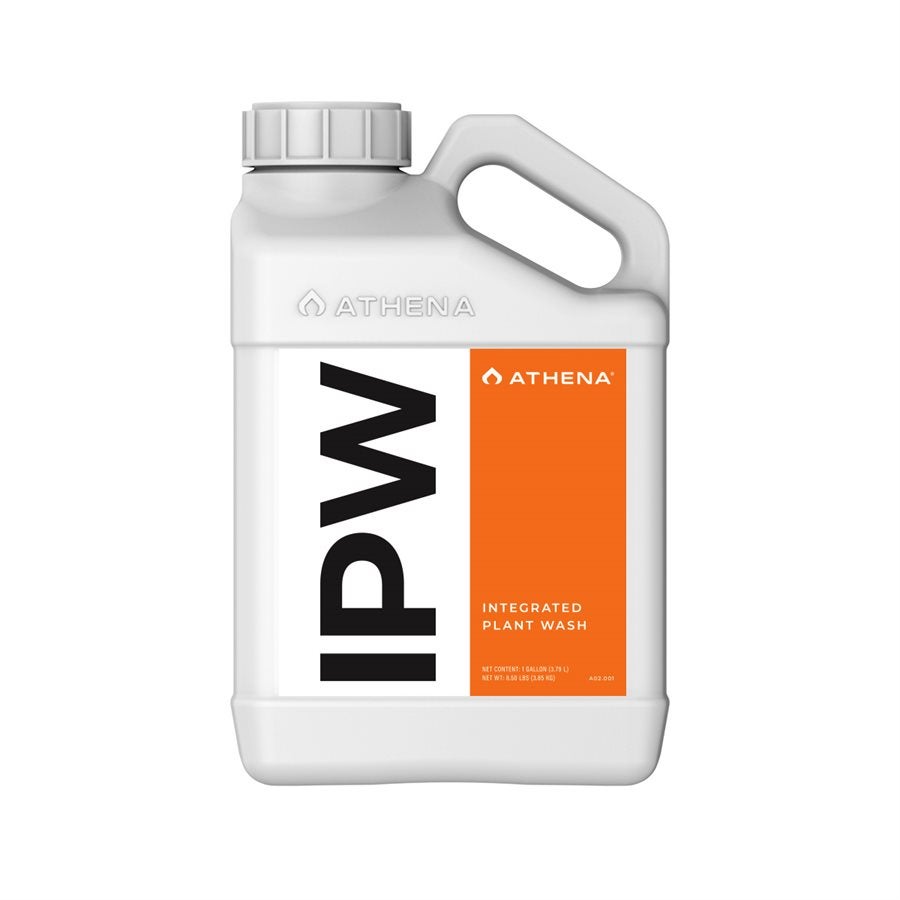
Nettoyant intégré pour plantes Athena Nutrients IPW - 3,78 litres
Newmarket, Ontario (Head Office)
1175 Stellar Drive, Unit #5
Newmarket, ON L3Y 7B8
- Mon10:00am–6:00pm
- Tue10:00am–6:00pm
- Wed10:00am–6:00pm
- Thu10:00am–6:00pm
- Fri10:00am–6:00pm
- Sat10:00am–4:00pm
- SunClosed


Barrie, Ontario
106 Saunders Road, Unit #2A
Barrie, ON L4N 9A8
- Mon10:00am–5:00pm
- Tue10:00am–5:00pm
- Wed10:00am–5:00pm
- Thu10:00am–5:00pm
- Fri10:00am–5:00pm
- Sat10:00am–3:00pm
- SunClosed
Winnipeg, Manitoba
915 McLeod Avenue, Unit #4
Winnipeg, MB R2G 0Y4
- Mon10:00am–6:00pm
- Tue10:00am–6:00pm
- Wed10:00am–6:00pm
- Thu10:00am–6:00pm
- Fri10:00am–6:00pm
- Sat11:00am–3:00pm
- SunClosed
Sign in required
Back-in-stock notification
Select the store locations where you’d like to pick up this item, or choose Shipping to have it delivered.
Special order request
Select the store where you’d prefer to pick up your special order. To choose a different store, unselect your current choice first.
Description
Description
Description
L'IPW se concentre sur la propreté du feuillage en aidant à éliminer la poussière accumulée, les polluants atmosphériques et les contaminants abiotiques potentiels qui s'accumulent sur les surfaces des feuilles au fil du temps. Lorsque les surfaces des feuilles restent plus propres, la capacité de la plante à réaliser une photosynthèse efficace peut s'améliorer, favorisant une croissance optimale et un potentiel de rendement plus élevé. Concrètement, cela signifie que l'IPW vise à restaurer la clarté des feuilles lorsque les plantes semblent recouvertes, ternes ou « fatiguées » par les résidus environnementaux.
Ce nettoyant végétal intégré est conçu pour être utilisé à tous les stades de croissance, avec une adéquation naturelle depuis la croissance végétative jusqu'au début de la floraison. Ce calendrier le rend particulièrement pertinent lorsque les plantes développent leur structure et que la canopée se densifie, de sorte que la propreté de la surface des feuilles est importante. L'IPW est également décrit comme sûr pour toutes les cultures, ce qui le rend polyvalent dans les jardins mixtes et les styles de production où un nettoyant foliaire cohérent est plus facile à standardiser.
Le principe de base est simple : l'IPW est dérivé d'huiles essentielles, choisies pour aider à faire briller et à nettoyer le feuillage. Plutôt que d'agir comme un engrais de base, c'est un nettoyant foliaire dédié destiné à soutenir la présentation de la canopée et la fonction de la surface des feuilles. Le résultat est une finition de feuillage propre qui est plus esthétique et s'aligne avec l'objectif de soutenir une photosynthèse efficace en gardant les surfaces des feuilles plus claires.
L'Athena Nutrients IPW Integrated Plant Wash convient aux cultivateurs confrontés à des environnements poussiéreux, à des résidus atmosphériques ou à un ternissement général des feuilles, et à toute personne souhaitant un nettoyant foliaire simple qui soutient un feuillage propre de la croissance végétative au début de la floraison tout en restant sûr pour toutes les cultures.
Avantages du produit : Stade végétatif ; Stade de floraison ; Intérieur ; Extérieur ; Application foliaire ; Terre ; Sans terre ; Insecticide ; Fongicide ; Arrosage régulier ; Contrôle à large spectre ; Action de contact ; Contrôle du mildiou ; Couverture des crevasses ; Dissuasion des parasites ; Action mécanique ; Soutien à tous les stades ; Formule à risque minimal.
Analyse garantie : Acide citrique : 0,05 % ; Huile de citronnelle : 1,5 % ; Huile de menthe poivrée : 1,5 % ; Huile de géranium : 1,5 %.
Dérivé de : Levure ; Benzoate de sodium ; Sorbate de potassium.
How To Use
How To Use
How to Use Nettoyant intégré pour plantes Athena Nutrients IPW - 3,78 litres
Step-by-step mixing and feeding instructions for Nettoyant intégré pour plantes Athena Nutrients IPW - 3,78 litres.
Mixing & preparation
Fill your reservoir or watering container with clean, room-temperature water first. Shake the bottle of Nettoyant intégré pour plantes Athena Nutrients IPW - 3,78 litres well before every use. Using the feeding schedule below, measure the recommended dose and add it directly to the water while stirring. Allow the solution to mix fully before adding any other fertilizers, additives, or supplements.
Always add nutrients to water — not the other way around. Mix thoroughly between products to ensure an even, stable nutrient solution.
Week-by-week feeding schedule
Vegetative stage — IPW
- Week 1: mix 24.0 ml per litre of water or nutrient solution.
- Week 2: mix 24.0 ml per litre of water or nutrient solution.
- Week 3: mix 24.0 ml per litre of water or nutrient solution.
- Week 4: mix 24.0 ml per litre of water or nutrient solution.
Flowering stage — IPW
- Week 1: mix 24.0 ml per litre of water or nutrient solution.
- Week 2: mix 24.0 ml per litre of water or nutrient solution.
- Week 3: mix 24.0 ml per litre of water or nutrient solution.
Vegetative stage — IPW
- Week 1: mix 32.0 ml per litre of water or nutrient solution.
- Week 2: mix 32.0 ml per litre of water or nutrient solution.
- Week 3: mix 32.0 ml per litre of water or nutrient solution.
- Week 4: mix 32.0 ml per litre of water or nutrient solution.
Flowering stage — IPW
- Week 1: mix 32.0 ml per litre of water or nutrient solution.
- Week 2: mix 32.0 ml per litre of water or nutrient solution.
- Week 3: mix 32.0 ml per litre of water or nutrient solution.
Tips for best results
- Maintain pH and EC/ppm within the range recommended for your growing medium and crop.
- Use fresh nutrient solution whenever possible and avoid leaving mixed solution stagnant for long periods.
- Store nutrients in a cool, dark place away from direct sunlight and extreme temperatures.
- Keep bottles tightly sealed when not in use to reduce air exposure and preserve product quality.
- Use clean measuring tools and regularly rinse or clean your reservoir, lines, and irrigation equipment.
Common mistakes to avoid
- Do not mix different nutrients or additives together in concentrated form before adding them to water.
- Do not exceed the recommended dosage unless you are following a tested, crop-specific feeding plan.
- Do not skip pH or EC/ppm checks when growing in hydroponic or soilless systems.
- Do not allow the nutrient solution to freeze or overheat, as this can damage the formulation.
- Do not ignore the directions on the product label for your specific crop, growth stage, and system type.
Warnings & Safety
Warnings & Safety
General Safety Precautions
First Aid – Skin Contact
First Aid – Eye Contact
First Aid – Ingestion
First aid – Inhalation
Storage And Handling
Important – Medical
Pest & Disease Control Safety
Label & Manufacturer Directions
Application & Placement Safety
Liquid & Spray Handling
Guaranteed Minimum Analysis
Guaranteed Minimum Analysis
| Citric Acid | 0.05% |
|---|---|
| Lemongrass Oil | 1.5% |
| Peppermint Oil | 1.5% |
| Geranium Oil | 1.5% |
Derived From
Derived From
Frequently Asked Questions
Frequently Asked Questions
Why is citric acid important for plant growth?
Why is lemongrass oil important for pest deterrence and foliar care on plants?
Why is peppermint oil important for pest control on plants, and what makes it different from other pest options?
Why is geranium oil important for pest control on plants, and what makes it unique?
Why is yeast used as an ingredient in some fungicides and pesticides?
Is sodium benzoate safe for plants?
What does potassium sorbate do in plant pest and disease sprays?
Safety & Technical Documents
Safety & Technical Documents
Frequently purchased together
-
Pulvérisateur à réservoir de luxe Mondi Mist N' Spray - 1,2 litre
Prix habituel $23.63Prix habituel -
Pulvérisateur à réservoir de luxe Mondi Mist N' Spray - 2 litres
Prix habituel $24.88Prix habituel -
-
Flacon pulvérisateur à brume fine en PEHD blanc - 120 ml
Prix habituel $0.80Prix habituel

Vegetative — Week 1
-
IPW—
-
Stack—
Flowering — Week 1
-
IPW—
-
Stack—
Vegetative — Routine
-
—
Flowering — Routine
-
—
Vegetative — Remedial
-
—
Flowering — Remedial
-
—