Frequently purchased together
-
2.75英寸方形育苗盆 - 白色
常规价格 $0.55常规价格 -
2.75英寸方形育苗盆 - 粉色
常规价格 $0.55常规价格 -
Fafard 仙人掌+多肉植物盆栽土 - 8.8 升
常规价格 $14.77常规价格 -
 HOT ITEM
Hydra Garden 园艺木炭生物炭 (2-20MM) - 1 公斤
常规价格 $12.99常规价格


Reviews are submitted by verified customers after purchase. This section shows a summary of product feedback rather than the full individual review list.

Store Availability
Newmarket, Ontario (Head Office)
1175 Stellar Drive, Unit #5
Newmarket, ON L3Y 7B8
- Mon10:00am–6:00pm
- Tue10:00am–6:00pm
- Wed10:00am–6:00pm
- Thu10:00am–6:00pm
- Fri10:00am–6:00pm
- Sat10:00am–4:00pm
- SunClosed


Barrie, Ontario
106 Saunders Road, Unit #2A
Barrie, ON L4N 9A8
- Mon10:00am–5:00pm
- Tue10:00am–5:00pm
- Wed10:00am–5:00pm
- Thu10:00am–5:00pm
- Fri10:00am–5:00pm
- Sat10:00am–3:00pm
- SunClosed
Winnipeg, Manitoba
915 McLeod Avenue, Unit #4
Winnipeg, MB R2G 0Y4
- Mon10:00am–6:00pm
- Tue10:00am–6:00pm
- Wed10:00am–6:00pm
- Thu10:00am–6:00pm
- Fri10:00am–6:00pm
- Sat11:00am–3:00pm
- SunClosed
Estimated Delivery Date
Order Within
—
Province
Est. Delivery
—
数量
Qualifies for Free Shipping Promotion
Sign in required
Back-in-stock notification
Select the store locations where you’d like to pick up this item, or choose Shipping to have it delivered.
Email notifications are turned off
Turn on email marketing to receive back-in-stock notifications.
Open account profile
Special order request
Select the store where you’d prefer to pick up your special order. To choose a different store, unselect your current choice first.
Description
Description
Description
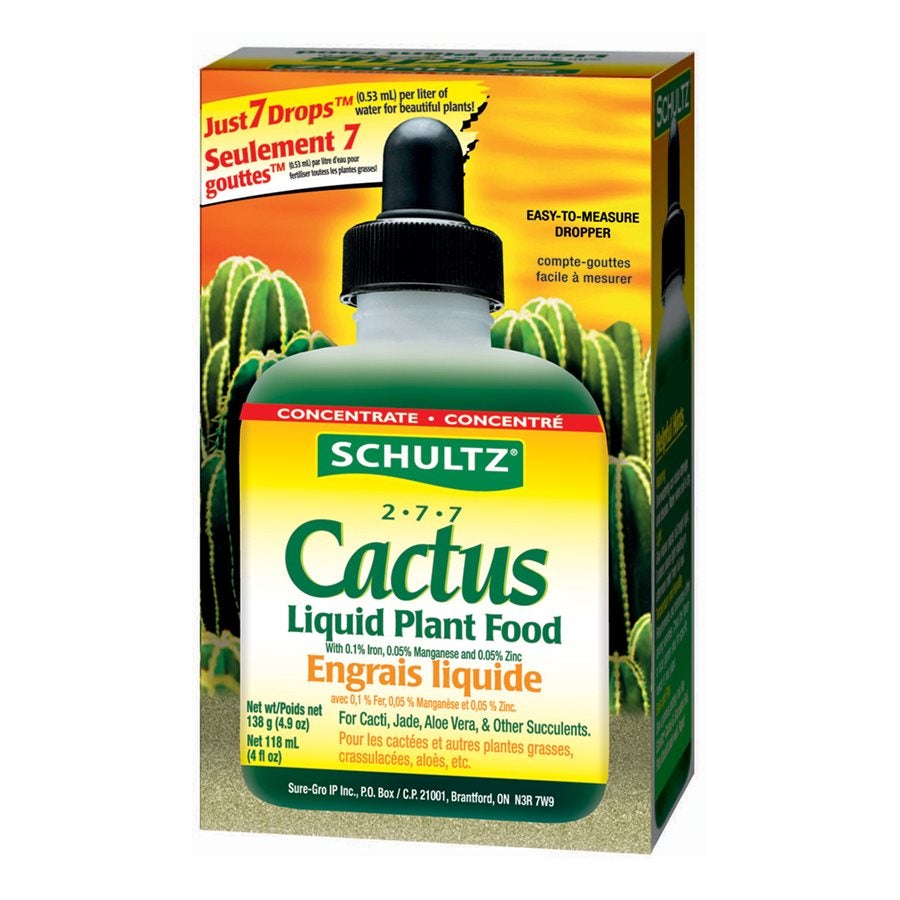
Schultz 液体仙人掌肥料(Schultz™ Cactus Plus™ 液体植物肥料)是一种浓缩液体植物肥料和仙人掌肥料,旨在满足仙人掌及其他多肉植物的独特需求。
这款多肉植物配方专为所有仙人掌及其他常见多肉植物(包括玉树和芦荟)量身定制。它适用于室内多肉植物和室外多肉植物,是您在窗台、阳光房、露台或花园区域混合种植多肉植物的实用选择。如果您注意到仙人掌和多肉植物盆栽土壤干燥迅速且排水快,那么这款产品正适合那些养分容易从根区流失的多孔盆栽土壤。
Schultz 液体仙人掌肥料被描述为非常适合移栽、换盆和生根,这使得它在植物安顿或重建根系期间特别有用。其目标是提供稳定、均衡的营养,以支持多肉植物特有的持续生长习性,而不会导致柔软、徒长的生长。它还包含微量元素,可在植物活跃生长期支持除主要营养之外的整体植物表现。
营养成分为 2-7-7 NPK,低氮配方适合仙人掌和多肉植物的需求。主要成分来源于磷酸铵、磷酸钾、硝酸钾和尿素。微量元素以 EDTA 形式添加,含有铁、锰和锌,可在紧凑、浓缩的液体植物肥料中提供全面营养。
如果您想要一款专为多肉植物设计的仙人掌肥料,这款浓缩多肉植物肥料非常适合那些重视为仙人掌、玉树、芦荟及其他多肉植物提供简单、持续植物营养的种植者——尤其是在根系受益于可靠养分供应的快速排水混合物中。
产品优点:营养生长阶段;室内;定期浇水;椰壳纤维安全;土壤;无土;广泛植物用途;室内使用;室外使用;移栽支持;繁殖支持;均衡营养;微量元素支持;根部浇灌。
保证成分分析:总氮 (N):2.0%;有效磷酸 (P2O5):7.0%;可溶性钾 (K2O):7.0%;螯合铁 (Fe):0.1%;螯合锰 (Mn):0.05%;螯合锌 (Zn):0.05%;EDTA(螯合剂):1.0%。
这款多肉植物配方专为所有仙人掌及其他常见多肉植物(包括玉树和芦荟)量身定制。它适用于室内多肉植物和室外多肉植物,是您在窗台、阳光房、露台或花园区域混合种植多肉植物的实用选择。如果您注意到仙人掌和多肉植物盆栽土壤干燥迅速且排水快,那么这款产品正适合那些养分容易从根区流失的多孔盆栽土壤。
Schultz 液体仙人掌肥料被描述为非常适合移栽、换盆和生根,这使得它在植物安顿或重建根系期间特别有用。其目标是提供稳定、均衡的营养,以支持多肉植物特有的持续生长习性,而不会导致柔软、徒长的生长。它还包含微量元素,可在植物活跃生长期支持除主要营养之外的整体植物表现。
营养成分为 2-7-7 NPK,低氮配方适合仙人掌和多肉植物的需求。主要成分来源于磷酸铵、磷酸钾、硝酸钾和尿素。微量元素以 EDTA 形式添加,含有铁、锰和锌,可在紧凑、浓缩的液体植物肥料中提供全面营养。
如果您想要一款专为多肉植物设计的仙人掌肥料,这款浓缩多肉植物肥料非常适合那些重视为仙人掌、玉树、芦荟及其他多肉植物提供简单、持续植物营养的种植者——尤其是在根系受益于可靠养分供应的快速排水混合物中。
产品优点:营养生长阶段;室内;定期浇水;椰壳纤维安全;土壤;无土;广泛植物用途;室内使用;室外使用;移栽支持;繁殖支持;均衡营养;微量元素支持;根部浇灌。
保证成分分析:总氮 (N):2.0%;有效磷酸 (P2O5):7.0%;可溶性钾 (K2O):7.0%;螯合铁 (Fe):0.1%;螯合锰 (Mn):0.05%;螯合锌 (Zn):0.05%;EDTA(螯合剂):1.0%。
Warnings & Safety
Warnings & Safety
Important – Safety Information
General Safety Precautions
First Aid – Skin Contact
First Aid – Eye Contact
First Aid – Ingestion
First aid – Inhalation
Storage And Handling
Important – Medical
Guaranteed Minimum Analysis
Guaranteed Minimum Analysis
| Total Nitrogen (N) | 2.0% |
|---|---|
| Available Phosphoric Acid (P2O5) | 7.0% |
| Soluble Potash (K2O) | 7.0% |
| Chelated Iron (Fe) | 0.1% |
| Chelated Manganese (Mn) | 0.05% |
| Chelated Zinc (Zn) | 0.05% |
| EDTA (Chelating Agent) | 1.0% |
Frequently Asked Questions
Frequently Asked Questions
Why is total nitrogen (N) important for plant growth, and what makes it different from other nutrients?
What does available phosphoric acid (P₂O₅) do for plants, and how is it different from available phosphate?
Why is soluble potash (K2O) important for plants?
Why is chelated iron important for plants, and what makes it different from other iron sources?
Why is chelated manganese (Mn) important for plant growth?
Why is chelated zinc (Zn) important for plants?
Why is EDTA chelation important for plant nutrition, and what makes it unique?
Safety & Technical Documents
Safety & Technical Documents
Frequently purchased together
-
2.75英寸方形育苗盆 - 白色
常规价格 $0.55常规价格 -
2.75英寸方形育苗盆 - 粉色
常规价格 $0.55常规价格 -
Fafard 仙人掌+多肉植物盆栽土 - 8.8 升
常规价格 $14.77常规价格 -
HOT ITEM
Hydra Garden 园艺木炭生物炭 (2-20MM) - 1 公斤
常规价格 $12.99常规价格
Reviews are submitted by verified customers after purchase. This section shows a summary of product feedback rather than the full individual review list.