Frequently purchased together
-
 HOT ITEM
2.75英寸方形育苗盆 - 透明
常规价格 $0.55常规价格 -
2.75英寸方形育苗盆 - 粉色
常规价格 $0.55常规价格 -
 HOT ITEM
透明育苗盆 - 3 英寸
常规价格 $0.89常规价格 -
Growth Technology Succulent Focus - 250 毫升
常规价格 $18.50常规价格


Reviews are submitted by verified customers after purchase. This section shows a summary of product feedback rather than the full individual review list.

Store Availability
Newmarket, Ontario (Head Office)
1175 Stellar Drive, Unit #5
Newmarket, ON L3Y 7B8
- Mon10:00am–6:00pm
- Tue10:00am–6:00pm
- Wed10:00am–6:00pm
- Thu10:00am–6:00pm
- Fri10:00am–6:00pm
- Sat10:00am–4:00pm
- SunClosed


Barrie, Ontario
106 Saunders Road, Unit #2A
Barrie, ON L4N 9A8
- Mon10:00am–5:00pm
- Tue10:00am–5:00pm
- Wed10:00am–5:00pm
- Thu10:00am–5:00pm
- Fri10:00am–5:00pm
- Sat10:00am–3:00pm
- SunClosed
Winnipeg, Manitoba
915 McLeod Avenue, Unit #4
Winnipeg, MB R2G 0Y4
- Mon10:00am–6:00pm
- Tue10:00am–6:00pm
- Wed10:00am–6:00pm
- Thu10:00am–6:00pm
- Fri10:00am–6:00pm
- Sat11:00am–3:00pm
- SunClosed
Estimated Delivery Date
Order Within
—
Province
Est. Delivery
—
数量
Qualifies for Free Shipping Promotion
Sign in required
Back-in-stock notification
Select the store locations where you’d like to pick up this item, or choose Shipping to have it delivered.
Email notifications are turned off
Turn on email marketing to receive back-in-stock notifications.
Open account profile
Special order request
Select the store where you’d prefer to pick up your special order. To choose a different store, unselect your current choice first.
Description
Description
Description
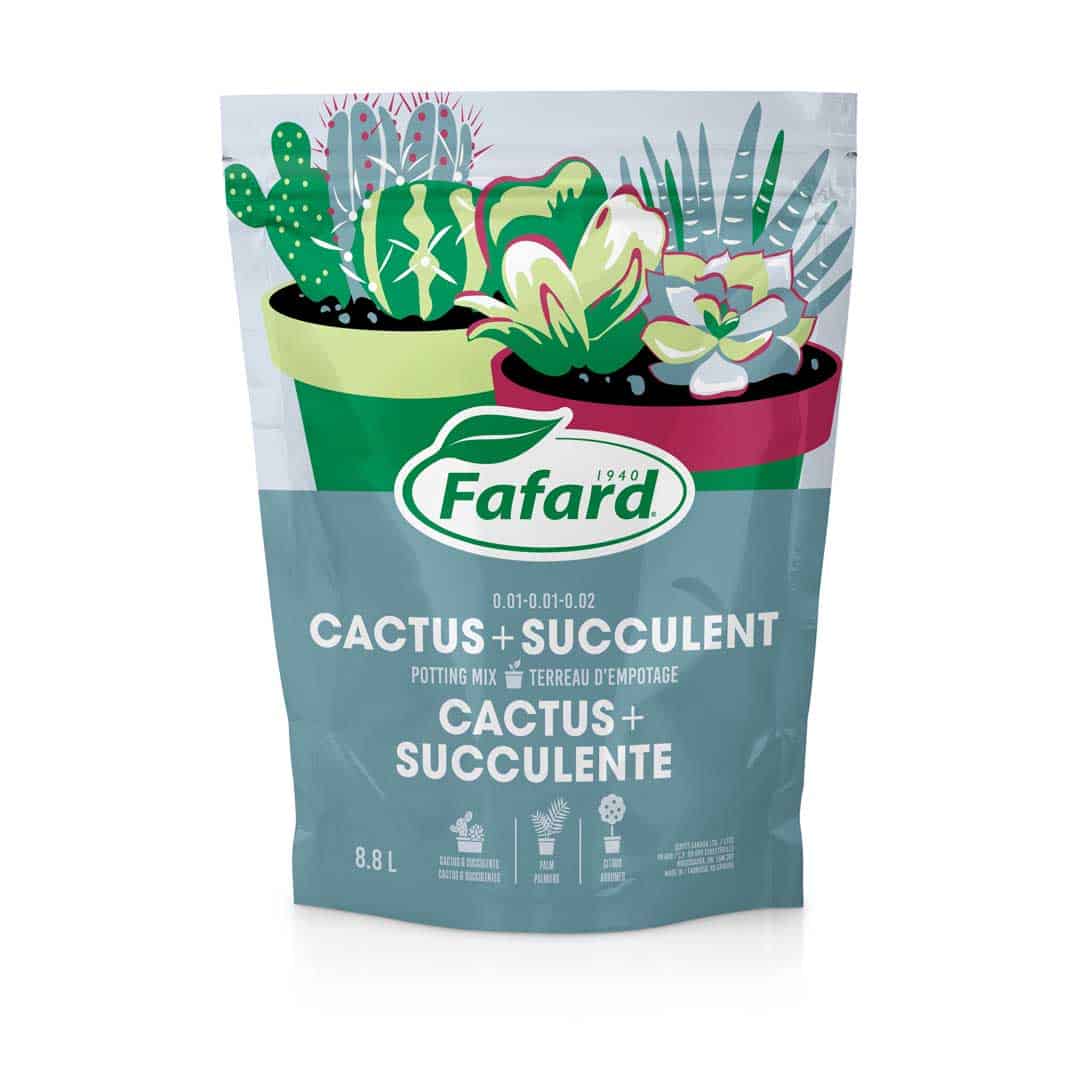
Fafard仙人掌多肉植物盆栽土是一种专为仙人掌和多肉植物设计的盆栽混合物,旨在提供快速排水和稳定的容器湿度。这种盆栽土适用于需要水分快速通过根区的耐旱植物。
本产品以快速排水为核心,有助于防止积水,同时为喜干燥环境的植物保持理想的湿度水平。泥炭藓有助于根据需要保留和释放水分,使植物根部在两次浇水之间不会完全干涸。珍珠岩和沙子改善了排水和通气性,形成了更轻、更开放的结构,有助于促进旺盛的根系生长和随着时间的推移更健康的根系发育。
这种混合土专为仙人掌和多肉植物等沙漠植物配制,同样也适用于多种常见的室内植物。它对于包含虎皮兰、龙血树、金钱树和球兰以及盆栽棕榈和柑橘的植物收藏来说是一个实用的选择。其质地旨在支持不喜滞留水分的植物,从而更容易在混合种植器和单株容器中保持一致的条件。
Fafard仙人掌多肉植物盆栽土的营养成分含量(NPK)为0.01-0.01-0.01,并含有一种由硝酸铵、硫酸钾和磷酸盐来源组成的轻质启动肥料。它适用于室内容器种植和种子萌发,在这些场景中,快速排水的盆栽土是首要考量。对于希望获得一种简单、支持排水、平衡湿度和强大根系建立且不使设置过于复杂的仙人掌和多肉植物盆栽土的种植者来说,这是一个很好的选择。
产品优势:支持排水;降低浇水过量风险;平衡浇水;保持湿度;改善通气;促进根系发育;广泛植物适用性;提供启动营养;室内;室外;开花期;营养生长期;无土。
保证分析:总氮(N): 0.01%;有效磷酸(P2O5): 0.01%;可溶性钾(K2O): 0.01%;钙(Ca): 0.001%;硫(S): 0.005%;亚麻籽油: 0.003%;多元醇: 0.002%;二苯基甲烷二异氰酸酯: 0.003%。
来源:加拿大泥炭藓;珍珠岩;沙子。
本产品以快速排水为核心,有助于防止积水,同时为喜干燥环境的植物保持理想的湿度水平。泥炭藓有助于根据需要保留和释放水分,使植物根部在两次浇水之间不会完全干涸。珍珠岩和沙子改善了排水和通气性,形成了更轻、更开放的结构,有助于促进旺盛的根系生长和随着时间的推移更健康的根系发育。
这种混合土专为仙人掌和多肉植物等沙漠植物配制,同样也适用于多种常见的室内植物。它对于包含虎皮兰、龙血树、金钱树和球兰以及盆栽棕榈和柑橘的植物收藏来说是一个实用的选择。其质地旨在支持不喜滞留水分的植物,从而更容易在混合种植器和单株容器中保持一致的条件。
Fafard仙人掌多肉植物盆栽土的营养成分含量(NPK)为0.01-0.01-0.01,并含有一种由硝酸铵、硫酸钾和磷酸盐来源组成的轻质启动肥料。它适用于室内容器种植和种子萌发,在这些场景中,快速排水的盆栽土是首要考量。对于希望获得一种简单、支持排水、平衡湿度和强大根系建立且不使设置过于复杂的仙人掌和多肉植物盆栽土的种植者来说,这是一个很好的选择。
产品优势:支持排水;降低浇水过量风险;平衡浇水;保持湿度;改善通气;促进根系发育;广泛植物适用性;提供启动营养;室内;室外;开花期;营养生长期;无土。
保证分析:总氮(N): 0.01%;有效磷酸(P2O5): 0.01%;可溶性钾(K2O): 0.01%;钙(Ca): 0.001%;硫(S): 0.005%;亚麻籽油: 0.003%;多元醇: 0.002%;二苯基甲烷二异氰酸酯: 0.003%。
来源:加拿大泥炭藓;珍珠岩;沙子。
Guaranteed Minimum Analysis
Guaranteed Minimum Analysis
| Total Nitrogen (N) | 0.01% |
|---|---|
| Available Phosphoric Acid (P2O5) | 0.01% |
| Soluble Potash (K2O) | 0.01% |
| Calcium (Ca) | 0.001% |
| Sulfur (S) | 0.005% |
| Linseed Oil | 0.003% |
| Polyol | 0.002% |
| Diphenylmethanediisocyanate | 0.003% |
Derived From
Derived From
Frequently Asked Questions
Frequently Asked Questions
Why is total nitrogen (N) important for plant growth, and what makes it different from other nutrients?
What does available phosphoric acid (P₂O₅) do for plants, and how is it different from available phosphate?
Why is soluble potash (K2O) important for plants?
Why is calcium important for plant growth?
Why is sulfur (S) important for plant growth?
Why is linseed oil important in cactus and succulent potting mix?
Why are polyols important in succulent and cactus potting mixes?
Why is diphenylmethanediisocyanate important in cactus and succulent soil mixes?
Why do growers use Canadian sphagnum peat moss in potting mixes?
Why is perlite important for plant growth, and what makes it different from other mix ingredients?
Does sand always improve drainage for plants?
Frequently purchased together
-
HOT ITEM
2.75英寸方形育苗盆 - 透明
常规价格 $0.55常规价格 -
2.75英寸方形育苗盆 - 粉色
常规价格 $0.55常规价格 -
HOT ITEM
透明育苗盆 - 3 英寸
常规价格 $0.89常规价格 -
Growth Technology Succulent Focus - 250 毫升
常规价格 $18.50常规价格
Reviews are submitted by verified customers after purchase. This section shows a summary of product feedback rather than the full individual review list.