跳至产品信息
1 / 1
Dark Earth Soil CA flag

Official Reseller

Provision Gardens is an official reseller of this brand.

Our inventory is sourced directly from the manufacturer and/or authorized distribution partners. We do not sell used items or unverified/old stock. This helps ensure product authenticity, freshness, and the high standard you expect.

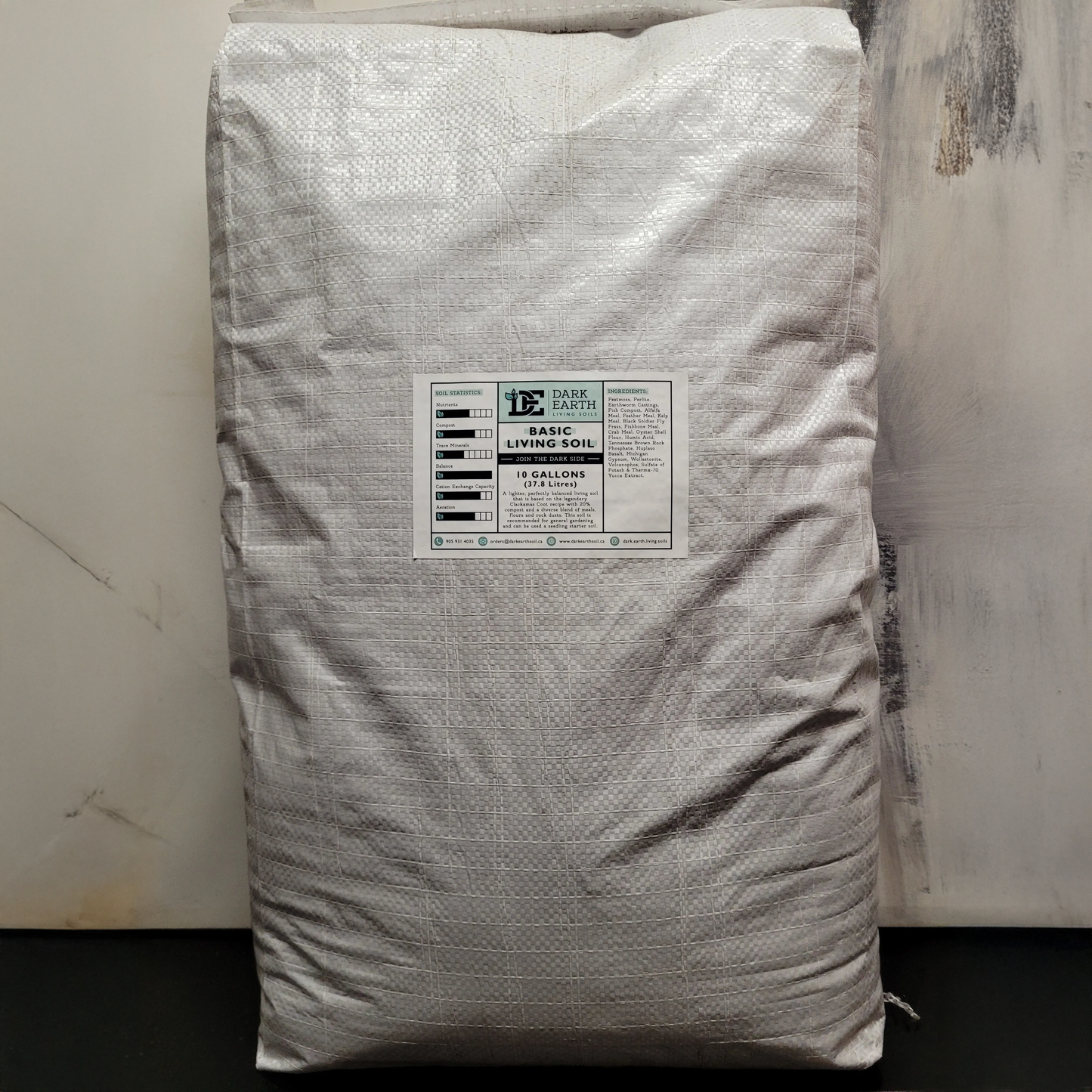
黑土活性土壤 - 37.85 升

门店库存
Delivery Estimate
Province:
Estimated delivery:
Order within:
Choose your province
数量
Not Eligible for Free Shipping
Special Order Item — Please Contact Us

Description

Dark Earth Living Soils基础活性土壤是一种用于有机园艺的活性土壤混合物,通过生物活性活性土壤提供均衡营养,该土壤旨在支持活跃的根区生态系统。

这种营养丰富的活性土壤含有20%(按重量计)的堆肥以及多种粉料、面粉和岩石粉。最终形成了一种基于土壤的种植介质,旨在提供稳定的肥力,同时支持高度活跃的土壤食物网,有助于长期保持根区的活力。

基础活性土壤专为有机种植者设计,他们希望获得一种即用型土壤混合物,在不增加额外复杂性的情况下,满足常见的园艺目标。据称,它非常适合种植蔬菜、香草和花卉,使其成为室内容器、庭院花盆和室外花园空间的实用选择,在这些地方,您希望拥有一个生物活性的基础。

事实层面简单明了且透明。这种活性土壤混合物以泥炭苔和珍珠岩为基础,添加了蚯蚓粪和鱼堆肥,然后用植物和海洋基粉料(如苜蓿粉、羽毛粉和海带粉)以及昆虫粪、鱼骨粉和蟹粉进行强化。矿物质输入和土壤改良剂包括软磷矿粉、火山玄武岩粉、石膏、硅灰石、火山磷、硫酸钾、腐殖酸、牡蛎壳粉和丝兰提取物。

如果土壤重复利用对您的花园很重要,那么基础活性土壤被定位为可重复用于多个周期,通过追肥和重新改良来支持持续维护。这种注重重复利用的定位,加上20%(按重量计)的堆肥和高度活跃的土壤食物网,使其非常适合那些希望获得营养丰富且专注于长期土壤性能的活性土壤的种植者。

Dark Earth Living Soils基础活性土壤非常适合寻求具有均衡营养、多种粉料、面粉和岩石粉的生物活性活性土壤,以及非常适合种植蔬菜、香草和花卉的活性土壤混合物的园丁。

产品优势:完整的超级土壤;养分保持;土壤生物支持;根区生物学;持续性能。

来源于:泥炭苔;珍珠岩;蚯蚓粪;鱼堆肥;苜蓿粉;羽毛粉;海带粉;昆虫粪;鱼骨粉;甲壳类动物粉;牡蛎壳粉;腐殖酸;田纳西褐磷矿;胡普洛萨玄武岩;石膏;硅灰石;火山磷;膨润土。

Frequently Asked Questions

Why is perlite important for plant growth, and what makes it different from other mix ingredients?

Perlite is important because it increases root-zone oxygen and improves drainage, helping roots stay healthy and active; it’s unique because its main benefit is physical structure and airflow—not nutrients or moisture storage—so it fixes “too wet and compact” root problems in a simple, predictable way.

Are earthworm castings a fertilizer or more of a soil conditioner?

Earthworm castings are both, but they’re unique because they feed gently while also improving how the root zone holds moisture, nutrients, and beneficial biology. They matter most for stability, helping roots absorb nutrients more consistently instead of relying on big feeding spikes, which is why they’re often more “conditioning” than a strong fertilizer.

What does fish compost do for plants?

Fish compost feeds plants slowly while also feeding the soil microbes that release nutrients over time, so growth becomes steadier and roots often perform better. It’s unique because it tends to be more nutrient-dense and biologically active than many other composts, which can boost green growth faster but can also cause excess nitrogen or soggy, low-oxygen media if overused.

What makes alfalfa meal important for plant growth compared to other natural amendments?

Alfalfa meal is important because it supports steady, biologically driven growth instead of a quick spike, helping the root zone stay active so nutrient flow stays consistent. What makes it unique is that it can encourage stronger growth momentum while also feeding soil life, which helps plants stay vigorous and resilient when conditions are right.

What does feather meal do for plants?

Feather meal supplies slow-release nitrogen that supports steady green growth over time, especially once roots and soil microbes are active. It’s unique because plants can’t use it immediately the way fast nitrogen sources work, so it’s best for building a long-term baseline rather than fixing a sudden deficiency overnight.

What does fishbone meal do for plant roots?

Fishbone meal slowly supplies phosphorus and calcium that help roots expand and build stronger plant structure over time, which makes it unique compared to fast nutrients that spike quickly and fade. This steady release supports long-term stability while reducing sudden feeding swings that can lead to stress and imbalances.

Why do growers use crustacean meal in soil mixes?

Crustacean meal is valued because it releases nutrition slowly while also feeding a specific kind of soil biology through its shell material, which can support a healthier, more resilient root zone. It is unique because it is not only a nutrient source, but also a chitin-rich amendment that helps build steadier plant performance over time rather than creating a fast, short-lived growth spike.

Why is humic acid important for plant growth?

Humic acid is important because it improves root health and nutrient uptake by keeping minerals available, stabilizing the root zone, and supporting beneficial biology, which makes growth more consistent. It’s unique because it doesn’t act like a direct nutrient boost—its main power is improving the root environment so plants can use what’s already there more efficiently.

Is bentonite clay good for plants in containers and garden beds?

Bentonite clay can be very helpful because it improves water holding and keeps nutrients from washing out too quickly, which makes plant growth steadier and reduces stress in light or sandy soils. It’s unique from many other amendments because it swells when wet and has strong nutrient-holding surfaces that buffer the root zone instead of simply adding nutrients or changing drainage alone.

Is peat moss good for all potting mixes?

Peat moss is valuable because it holds moisture evenly and creates a gentle rooting environment, but it isn’t universal because it can stay too wet, compact over time, and naturally lowers pH. It’s most effective when balanced with airy materials so roots get oxygen, which is what makes it different from ingredients that mainly add structure without changing moisture and acidity as much.

What does kelp meal do for plants?

Kelp meal supports balanced growth and stronger roots by gently enhancing root-zone biology and helping plants handle stress more smoothly than fast-acting inputs, making it unique as a steady “support” amendment rather than a quick nutrient fix.

What makes insect frass different from other organic soil amendments?

Insect frass is unique because it supports plants in two ways at once: it offers mild, steady nutrition while also delivering chitin-related signals that can help “prime” the root zone and plant defenses. That combination makes it especially valuable for building resilience and consistency, not just pushing fast growth like many stronger inputs.

What does oyster shell flour do for plants?

Oyster shell flour slowly releases calcium carbonate to buffer the root zone and help keep nutrient uptake steady over time, which makes it different from fast-acting calcium sources that work quickly but don’t stabilize pH for long. It’s important because stable root-zone conditions reduce pH swings that can trigger deficiency-like symptoms even when nutrients are present.

Is Tennessee brown rock phosphate a fast fix for phosphorus deficiency?

No, it’s usually a slow-release phosphorus reserve that works best as a long-term root-zone builder rather than an emergency correction. Its value is unique because availability depends on soil conditions and biology, so it supports steady rooting and season-long stability instead of a quick, soluble phosphorus surge.

How long does huplosa basalt take to make a difference?

Huplosa basalt works slowly because its minerals become available through natural weathering in the root zone, so noticeable improvements usually build over weeks to months rather than days. That long timeline is exactly what makes it important and unique, because instead of acting like a quick nutrient hit, it rebuilds the soil’s mineral foundation and supports steadier uptake, stronger roots, and fewer recurring imbalance symptoms over time.

Does gypsum change soil pH?

Gypsum is important because it supplies calcium and sulfur while improving soil structure, helping roots breathe and water soak in more evenly, and it is unique because it does this without significantly raising soil pH like lime-based calcium sources.

What does wollastonite do for plants?

Wollastonite supplies calcium and plant-available silicon that help plants build stronger tissues and handle stress more consistently, especially during fast growth. It’s unique because it delivers silicon and calcium together in a slow, steady way that supports structure without acting like a quick-fix fertilizer.

What does volcanophos do for plants?

Volcanophos builds a slow, steady phosphorus reserve in the root zone to support stronger rooting, smoother early growth, and better flowering readiness. It’s unique because it delivers phosphorus as a volcanic mineral amendment that also contributes calcium and trace minerals, making it more of a long-term soil foundation than a quick, highly soluble phosphorus boost.

查看完整详细信息

产品对比