Frequently purchased together
-
Moulages de vers de terre PureLife Soil Premium - 20 litres
Prix habituel $23.99Prix habituel -
Congélateur à micro-ondes Pro-Mix HP AGTIV Reach - Compact 3,8 pi³
Prix habituel $49.99Prix habituel -
Dark Earth Black Magic Super Soil (Terreau vivant de première qualité) - 37,85 litres
Prix habituel $39.99Prix habituel -
Terreau végétal Gaia Green Living Soil - 30 litres
Prix habituel $34.99Prix habituel


Reviews are submitted by verified customers after purchase. This section shows a summary of product feedback rather than the full individual review list.

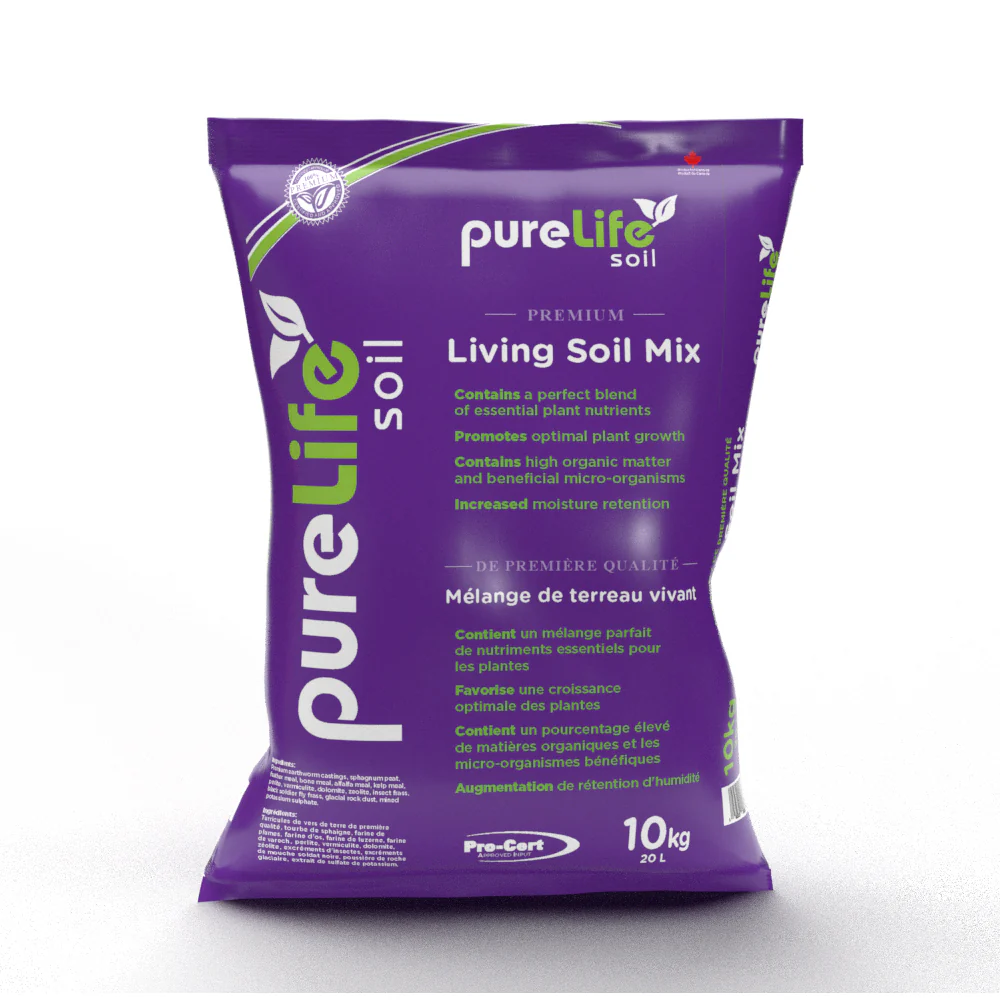
Terreau biologique PureLife - 20 litres
Store Availability
Newmarket, Ontario (Head Office)
1175 Stellar Drive, Unit #5
Newmarket, ON L3Y 7B8
- Mon10:00am–6:00pm
- Tue10:00am–6:00pm
- Wed10:00am–6:00pm
- Thu10:00am–6:00pm
- Fri10:00am–6:00pm
- Sat10:00am–4:00pm
- SunClosed


Barrie, Ontario
106 Saunders Road, Unit #2A
Barrie, ON L4N 9A8
- Mon10:00am–5:00pm
- Tue10:00am–5:00pm
- Wed10:00am–5:00pm
- Thu10:00am–5:00pm
- Fri10:00am–5:00pm
- Sat10:00am–3:00pm
- SunClosed
Winnipeg, Manitoba
915 McLeod Avenue, Unit #4
Winnipeg, MB R2G 0Y4
- Mon10:00am–6:00pm
- Tue10:00am–6:00pm
- Wed10:00am–6:00pm
- Thu10:00am–6:00pm
- Fri10:00am–6:00pm
- Sat11:00am–3:00pm
- SunClosed
Quantité
Sign in required
Back-in-stock notification
Select the store locations where you’d like to pick up this item, or choose Shipping to have it delivered.
Email notifications are turned off
Turn on email marketing to receive back-in-stock notifications.
Open account profile
Special order request
Select the store where you’d prefer to pick up your special order. To choose a different store, unselect your current choice first.
Description
Description
Description
Le terreau organique vivant PureLife de Pure Life Soil est un terreau organique vivant conçu pour soutenir un écosystème de sol équilibré et renforcer la croissance des plantes grâce à un sol biologiquement actif.
Ce terreau vivant de première qualité est construit autour de l'idée qu'une excellente culture commence par le sol lui-même. Il est rempli d'une microbiologie diversifiée qui travaille à créer un écosystème de sol équilibré pour vos plantes, aidant la zone racinaire à rester active et favorable au fil du temps. Si vous voulez un mélange de terreau organique qui place la biologie et la structure du sol au centre de votre installation, ce mélange est fait pour cela.
Le terreau organique vivant PureLife combine également des nutriments essentiels pour les plantes et une teneur élevée en matière organique dans un mélange de terreau prêt à l'emploi. Cette combinaison vise à favoriser et à renforcer la croissance des plantes, en particulier pour les cultivateurs qui préfèrent un sol qui semble « vivant » et productif plutôt qu'inerte. Le résultat est un terreau vivant adapté aux jardiniers qui valorisent une base biologiquement riche et une approche stable et axée sur le sol pour la performance des plantes.
Le profil des ingrédients est une grande partie de ce qui définit ce mélange. Il contient du fumier de vers de terre organique et de la tourbe de sphaigne, complétés par des intrants tels que la farine de plumes, la farine d'os, la farine de luzerne et la farine d'algues. Le mélange contient également de la perlite, de la vermiculite, de la dolomie, des déjections de mouches soldat noires, de la poussière de roche volcanique et du sulfate de potassium extrait, complétant une base diversifiée et riche en amendements.
C'est un bon choix pour les cultivateurs qui veulent un terreau vivant avec une microbiologie diversifiée, une matière organique élevée et un ensemble d'ingrédients bien équilibré, conçu pour soutenir un écosystème de sol équilibré. Si votre objectif est un terreau vivant organique de première qualité qui favorise la croissance des plantes dès le départ, le terreau organique vivant PureLife est un choix simple et clair.
Avantages du produit : Soutien de la biologie du sol ; Vigueur des plantes ; Biologie de la zone racinaire ; Soutien des nutriments essentiels ; Matière organique ; Zone racinaire équilibrée ; Milieu organique ; Prêt à l'emploi ; Intérieur ; Extérieur ; Stade de floraison ; Stade végétatif ; Biologique.
Dérivé de : Fumier de vers ; Tourbe de sphaigne ; Farine de plumes ; Farine d'os ; Farine de luzerne ; Farine d'algues ; Perlite ; Vermiculite ; Dolomite ; Déjections de mouches soldat noires ; Poussière de roche volcanique ; Sulfate de potassium extrait.
Ce terreau vivant de première qualité est construit autour de l'idée qu'une excellente culture commence par le sol lui-même. Il est rempli d'une microbiologie diversifiée qui travaille à créer un écosystème de sol équilibré pour vos plantes, aidant la zone racinaire à rester active et favorable au fil du temps. Si vous voulez un mélange de terreau organique qui place la biologie et la structure du sol au centre de votre installation, ce mélange est fait pour cela.
Le terreau organique vivant PureLife combine également des nutriments essentiels pour les plantes et une teneur élevée en matière organique dans un mélange de terreau prêt à l'emploi. Cette combinaison vise à favoriser et à renforcer la croissance des plantes, en particulier pour les cultivateurs qui préfèrent un sol qui semble « vivant » et productif plutôt qu'inerte. Le résultat est un terreau vivant adapté aux jardiniers qui valorisent une base biologiquement riche et une approche stable et axée sur le sol pour la performance des plantes.
Le profil des ingrédients est une grande partie de ce qui définit ce mélange. Il contient du fumier de vers de terre organique et de la tourbe de sphaigne, complétés par des intrants tels que la farine de plumes, la farine d'os, la farine de luzerne et la farine d'algues. Le mélange contient également de la perlite, de la vermiculite, de la dolomie, des déjections de mouches soldat noires, de la poussière de roche volcanique et du sulfate de potassium extrait, complétant une base diversifiée et riche en amendements.
C'est un bon choix pour les cultivateurs qui veulent un terreau vivant avec une microbiologie diversifiée, une matière organique élevée et un ensemble d'ingrédients bien équilibré, conçu pour soutenir un écosystème de sol équilibré. Si votre objectif est un terreau vivant organique de première qualité qui favorise la croissance des plantes dès le départ, le terreau organique vivant PureLife est un choix simple et clair.
Avantages du produit : Soutien de la biologie du sol ; Vigueur des plantes ; Biologie de la zone racinaire ; Soutien des nutriments essentiels ; Matière organique ; Zone racinaire équilibrée ; Milieu organique ; Prêt à l'emploi ; Intérieur ; Extérieur ; Stade de floraison ; Stade végétatif ; Biologique.
Dérivé de : Fumier de vers ; Tourbe de sphaigne ; Farine de plumes ; Farine d'os ; Farine de luzerne ; Farine d'algues ; Perlite ; Vermiculite ; Dolomite ; Déjections de mouches soldat noires ; Poussière de roche volcanique ; Sulfate de potassium extrait.
Frequently Asked Questions
Frequently Asked Questions
Are earthworm castings a fertilizer or more of a soil conditioner?
What does feather meal do for plants?
When should you use bone meal for plants, and why does it work differently than other amendments?
What makes alfalfa meal important for plant growth compared to other natural amendments?
Why is perlite important for plant growth, and what makes it different from other mix ingredients?
What does dolomite do for plants in the root zone?
Is black soldier fly frass just another fertilizer, or does it actually do something different in the soil?
Are worm castings a fertilizer or a soil builder?
Why do growers use sphagnum peat moss in potting mixes?
What does kelp meal do for plants?
Does volcanic rock dust actually feed plants, or does it just “condition” the soil?
What does mined potassium sulfate do for fruiting plants?
Frequently purchased together
-
Moulages de vers de terre PureLife Soil Premium - 20 litres
Prix habituel $23.99Prix habituel -
Congélateur à micro-ondes Pro-Mix HP AGTIV Reach - Compact 3,8 pi³
Prix habituel $49.99Prix habituel -
Dark Earth Black Magic Super Soil (Terreau vivant de première qualité) - 37,85 litres
Prix habituel $39.99Prix habituel -
Terreau végétal Gaia Green Living Soil - 30 litres
Prix habituel $34.99Prix habituel
Reviews are submitted by verified customers after purchase. This section shows a summary of product feedback rather than the full individual review list.