Passer aux informations produits
1 de 1
Provision Gardens CA flag

Official Reseller

Provision Gardens is an official reseller of this brand.

Our inventory is sourced directly from the manufacturer and/or authorized distribution partners. We do not sell used items or unverified/old stock. This helps ensure product authenticity, freshness, and the high standard you expect.

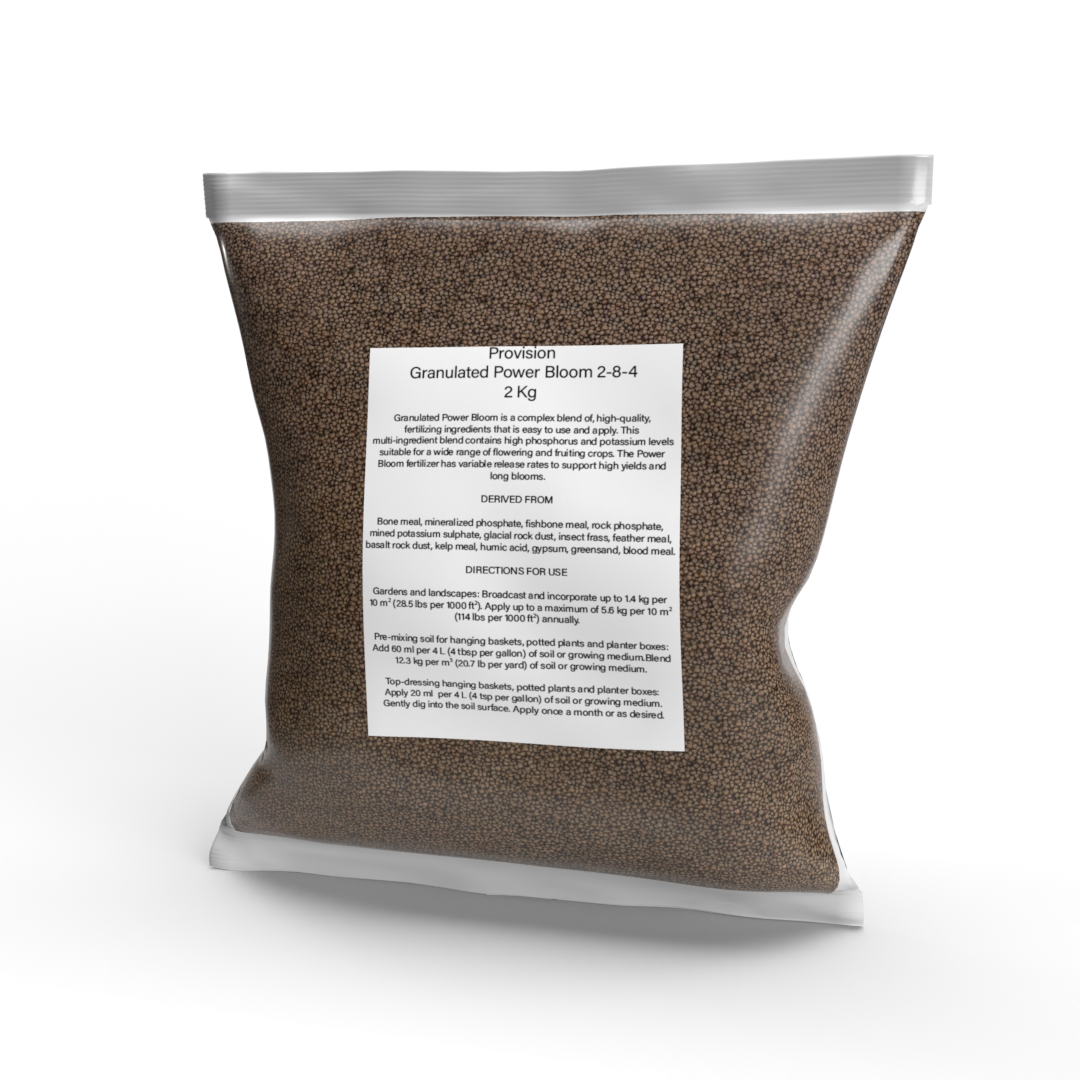
Provision Granulé Power Bloom - 2 kg

Prix habituel $22.75
Prix habituel Prix promotionnel $22.75
Frais d'expédition calculés à l'étape de paiement.
Store Availability
Estimated Delivery Date
Order Within
Province
Est. Delivery
$0.00
Ontario
$125.00
Canada
$149.99
Choose your province
Quantité
Qualifies for Free Shipping Promotion

Description

Description
Granulated Power Bloom est un mélange magistral de nutriments essentiels, issus de sources naturelles, conçu pour enrichir vos plantes en floraison et en fructification. Sa facilité d'utilisation, combinée à sa formulation puissante, en fait un allié indispensable dans vos efforts de jardinage, garantissant que vos plantes fleurissent avec éclat et vigueur.

Analyse garantie : Azote total (N) : 2,0 % ; Azote hydrosoluble (N) : 0,5 % ; Azote non hydrosoluble (N) : 1,5 % ; Phosphate disponible (P2O5) : 8,0 % ; Potasse soluble (K2O) : 4,0 %.

Dérivé de : Farine d'os ; Phosphate minéralisé ; Farine d'arêtes de poisson ; Phosphate de roche ; Sulfate de potassium extrait ; Poudre de roche glaciaire ; Frass d'insectes ; Farine de plumes ; Poudre de roche de basalte ; Farine d'algues ; Acide humique ; Gypse ; Sable vert ; Farine de sang.

Warnings & Safety

Important – Safety Information

This product may cause mild skin irritation and eye irritation. Avoid unnecessary contact with skin, eyes, and clothing. Use only as directed.

General Safety Precautions

Read and follow all instructions on the product label and any accompanying documentation before use. Keep out of reach of children and pets. Do not ingest. Avoid breathing vapours, mist, or dust that may be generated during handling or use.

Wear appropriate personal protective equipment (PPE), such as protective gloves, long sleeves, long pants and closed-toe footwear. When there is a risk of splashing or airborne particles, use safety glasses or other suitable eye and face protection.

First Aid – Skin Contact

IF ON SKIN OR HAIR: Remove contaminated clothing immediately. Rinse skin with clean water for several minutes, then wash with mild soap and water. If irritation or redness develops and persists, seek medical attention. Wash contaminated clothing before reuse.

First Aid – Eye Contact

IF IN EYES: Rinse cautiously with clean water for several minutes, keeping eyelids open. Remove contact lenses if present and easy to do. Continue rinsing. If irritation persists, obtain medical advice.

First Aid – Ingestion

IF SWALLOWED: Rinse mouth thoroughly with water. Do not induce vomiting unless instructed by a medical professional. Seek medical attention if you feel unwell.

First aid – Inhalation

IF INHALED: Move the person to fresh air and keep them comfortable for breathing. If coughing, breathing difficulty, dizziness or other symptoms occur, seek medical assistance.

Storage And Handling

Store this product in its original closed container, in a cool, dry and well-ventilated area. Protect from extreme temperatures and direct sunlight. Keep container tightly sealed when not in use.

Avoid release to drains, natural waterways or outdoor soil. Dispose of unused product and empty containers in accordance with local regulations and the directions on the label.

Important – Medical

If medical advice is needed, keep the product label or container available. Always follow the specific instructions and safety recommendations provided by the manufacturer. This safety notice is intended as general guidance and does not replace official label directions or documentation.

Frequently Asked Questions

Why is total nitrogen (N) important for plant growth, and what makes it different from other nutrients?

Total Nitrogen is important because it directly drives leafy growth, chlorophyll production, and overall growth speed, which sets the pace for the entire plant. It’s unique because the “total” number can include different nitrogen forms that behave differently in the root zone, meaning the same total amount can produce very different results depending on the nitrogen type and plant stage.

Why is water-soluble nitrogen important for plant growth, and what makes it unique compared to other nitrogen sources?

Water-soluble nitrogen is important because it dissolves in water and becomes available to plants quickly, helping drive fast green growth, strong photosynthesis, and rapid recovery from nitrogen deficiency. It’s unique because it works immediately rather than relying on slow breakdown or conversion, so it delivers faster results—but also requires more careful control to avoid overfeeding, soft growth, or nutrient imbalance.

Why is water insoluble nitrogen important for plant growth?

Water Insoluble Nitrogen is important because it acts like a slow-release nitrogen reserve that feeds plants steadily over time, which helps maintain consistent green growth and reduces sudden nutrient swings; it’s unique from faster nitrogen forms because it must be broken down in the root zone before plants can use it, so timing and soil conditions matter as much as the total nitrogen amount.

What does available phosphate (P₂O₅) do for plant growth?

Available Phosphate (P₂O₅) supports root development, energy transfer, and early structural growth by providing a form of phosphorus that plants can absorb and use quickly.

Why is soluble potash (K2O) important for plants?

Soluble potash (K2O) is important because it helps plants control water use, move sugars to new growth and fruit, and build stronger, higher-quality structure under stress. It’s unique from many other nutrients because it acts more like a regulator and transport helper than a direct “building material,” so the biggest benefits show up as steadier growth, stronger stems, and better finishing instead of just bigger leaves.

When should you use bone meal for plants, and why does it work differently than other amendments?

Bone meal is best used before or at planting to support strong roots and steady flowering support because it releases phosphorus and calcium slowly as soil biology breaks it down. It’s unique because it isn’t a quick fix, so timing and soil conditions matter more, and overuse can create long-term imbalances that block micronutrient uptake.

What does fishbone meal do for plant roots?

Fishbone meal slowly supplies phosphorus and calcium that help roots expand and build stronger plant structure over time, which makes it unique compared to fast nutrients that spike quickly and fade. This steady release supports long-term stability while reducing sudden feeding swings that can lead to stress and imbalances.

What does feather meal do for plants?

Feather meal supplies slow-release nitrogen that supports steady green growth over time, especially once roots and soil microbes are active. It’s unique because plants can’t use it immediately the way fast nitrogen sources work, so it’s best for building a long-term baseline rather than fixing a sudden deficiency overnight.

What is basalt rock dust used for in gardening?

Basalt rock dust is used to slowly build mineral diversity and soil stability so plants can grow with fewer nutrient swings and stress problems over time. It’s unique because it works through gradual weathering and soil biology rather than giving a quick, strong nutrient hit like fast fertilizers do.

Why is humic acid important for plant growth?

Humic acid is important because it improves root health and nutrient uptake by keeping minerals available, stabilizing the root zone, and supporting beneficial biology, which makes growth more consistent. It’s unique because it doesn’t act like a direct nutrient boost—its main power is improving the root environment so plants can use what’s already there more efficiently.

Is blood meal good for plants, and what makes it different from other nitrogen sources?

Blood meal can be very good for plants when they truly need nitrogen because it releases nitrogen faster and more strongly than many other organic ingredients, helping pale, slow plants turn greener and grow new leaves quickly. It’s different because it’s highly concentrated, so small overapplications can cause burn, overly soft growth, and imbalances that reduce flowering or fruiting later.

What does mineralized phosphate do for plants?

Mineralized phosphate provides slow-release phosphorus that steadily supports root development and the plant’s internal energy flow over time, making it especially useful for stable growth compared with fast phosphorus sources that act quickly but can be less steady in the root zone.

What makes natural rock phosphate different from other phosphorus sources for plant growth?

Natural rock phosphate is different because it releases phosphorus slowly as the root zone and soil biology unlock it, so it builds long-term fertility instead of causing a fast nutrient spike. That slow, reserve-style supply is important because phosphorus drives root energy and flowering, and it also helps avoid the micronutrient imbalances that can happen when phosphorus is pushed too quickly.

What does mined potassium sulfate do for fruiting plants?

Mined potassium sulfate supplies potassium for moving sugars and managing water, plus sulfate sulfur for building proteins and enzymes, so fruiting plants can fill, ripen, and firm up without adding extra nitrogen. It’s unique because it boosts potassium without chloride, helping quality and stress tolerance with less risk of salt sensitivity issues.

What does glacial rock dust actually do for plants?

Glacial rock dust slowly replenishes a broad range of trace minerals in the root zone, helping plants run key growth processes more efficiently and stay more resilient over time. It’s unique because it’s a long-term, diverse mineral support rather than a fast, single-nutrient fix, so it helps prevent recurring imbalance symptoms instead of just masking them.

What makes insect frass different from other organic soil amendments?

Insect frass is unique because it supports plants in two ways at once: it offers mild, steady nutrition while also delivering chitin-related signals that can help “prime” the root zone and plant defenses. That combination makes it especially valuable for building resilience and consistency, not just pushing fast growth like many stronger inputs.

What does kelp meal do for plants?

Kelp meal supports balanced growth and stronger roots by gently enhancing root-zone biology and helping plants handle stress more smoothly than fast-acting inputs, making it unique as a steady “support” amendment rather than a quick nutrient fix.

Does gypsum change soil pH?

Gypsum is important because it supplies calcium and sulfur while improving soil structure, helping roots breathe and water soak in more evenly, and it is unique because it does this without significantly raising soil pH like lime-based calcium sources.

Is greensand a fast way to fix a potassium deficiency in plants?

Greensand is not a fast fix because its potassium releases slowly as the mineral weathers in the root zone, so it works best for long-term stability rather than immediate correction. Its uniqueness is that it builds a steady potassium and trace-mineral reserve while also helping the soil hold nutrients more evenly, which can reduce future imbalances.

Afficher tous les détails

Product Comparison