
Newmarket, Ontario (Head Office)
1175 Stellar Drive, Unit #5
Newmarket, ON L3Y 7B8
- Mon10:00am–6:00pm
- Tue10:00am–6:00pm
- Wed10:00am–6:00pm
- Thu10:00am–6:00pm
- Fri10:00am–6:00pm
- Sat10:00am–4:00pm
- SunClosed
Vous possédez un compte ?
Connectez-vous pour payer plus vite.
$0.00 CAD
En rupture de stock à votre point de retrait ? Nous transférerons automatiquement le stock d’un autre entrepôt afin qu’il soit disponible à votre point de retrait. (Ontario seulement)
Impossible de charger la disponibilité du service de retrait
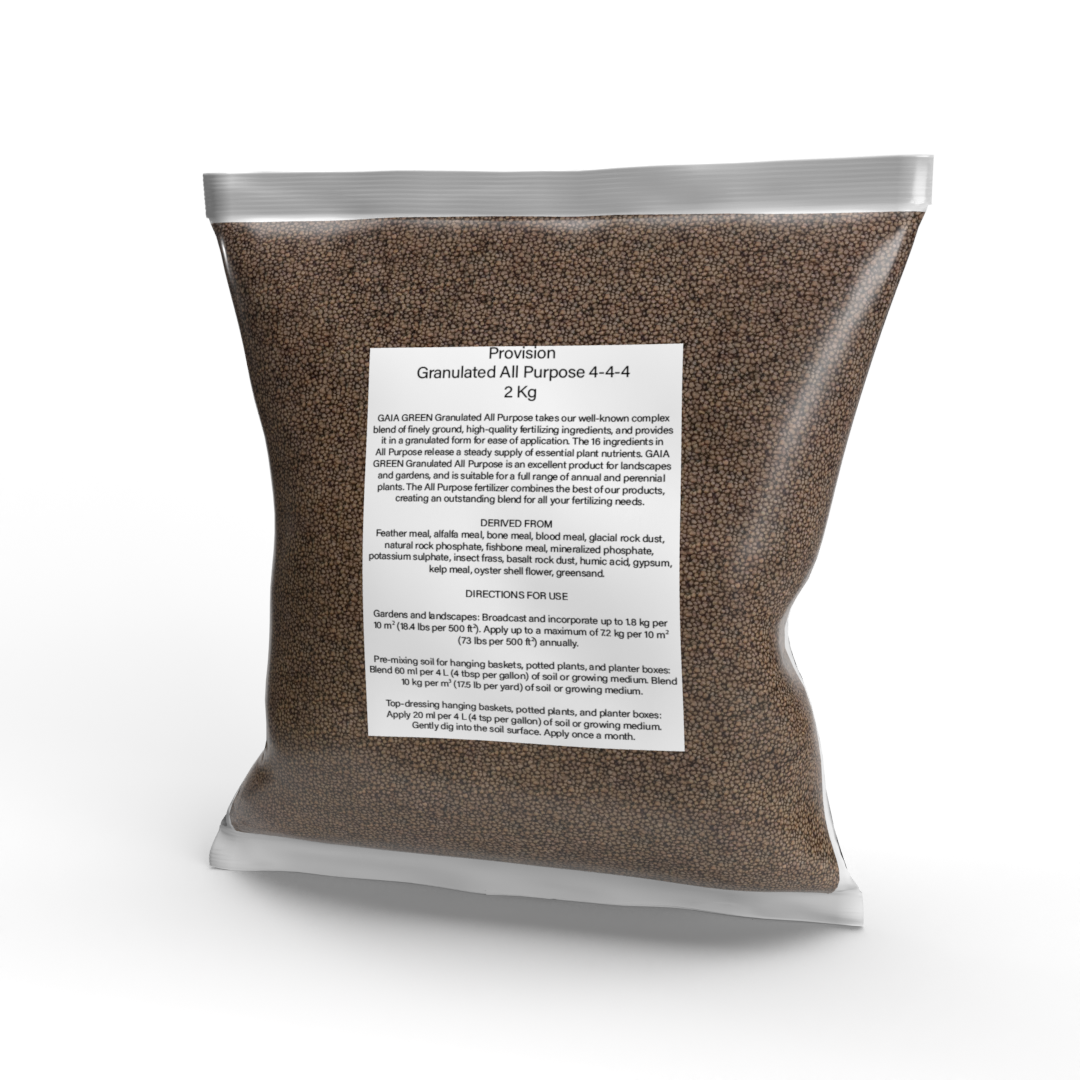
L'engrais granulé tout usage Provision est une solution polyvalente, facile à utiliser et efficace pour tous vos besoins en fertilisation. Que vous soyez un jardinier passionné ou un amateur de plantes, cet engrais offre un mélange équilibré de nutriments d'origine naturelle, adapté à une grande variété de plantes et d'applications. Votre chemin vers un jardin plus dynamique commence avec Provision, la solution simple aux défis complexes du jardinage.
Alfalfa meal is important because it supports steady, biologically driven growth instead of a quick spike, helping the root zone stay active so nutrient flow stays consistent. What makes it unique is that it can encourage stronger growth momentum while also feeding soil life, which helps plants stay vigorous and resilient when conditions are right.
Available phosphoric acid provides a fast-absorbing form of phosphorus that fuels root growth, energy transfer, and strong flowering. It becomes part of the plant’s total available phosphate supply, but the two terms are not the same—available phosphoric acid is one source of phosphorus, while available phosphate refers to the entire pool of plant-available phosphorus overall.
Basalt rock dust is used to slowly build mineral diversity and soil stability so plants can grow with fewer nutrient swings and stress problems over time. It’s unique because it works through gradual weathering and soil biology rather than giving a quick, strong nutrient hit like fast fertilizers do.
Blood meal can be very good for plants when they truly need nitrogen because it releases nitrogen faster and more strongly than many other organic ingredients, helping pale, slow plants turn greener and grow new leaves quickly. It’s different because it’s highly concentrated, so small overapplications can cause burn, overly soft growth, and imbalances that reduce flowering or fruiting later.
Bone meal is best used before or at planting to support strong roots and steady flowering support because it releases phosphorus and calcium slowly as soil biology breaks it down. It’s unique because it isn’t a quick fix, so timing and soil conditions matter more, and overuse can create long-term imbalances that block micronutrient uptake.
Feather meal supplies slow-release nitrogen that supports steady green growth over time, especially once roots and soil microbes are active. It’s unique because plants can’t use it immediately the way fast nitrogen sources work, so it’s best for building a long-term baseline rather than fixing a sudden deficiency overnight.
Fishbone meal slowly supplies phosphorus and calcium that help roots expand and build stronger plant structure over time, which makes it unique compared to fast nutrients that spike quickly and fade. This steady release supports long-term stability while reducing sudden feeding swings that can lead to stress and imbalances.
Humic acid is important because it improves root health and nutrient uptake by keeping minerals available, stabilizing the root zone, and supporting beneficial biology, which makes growth more consistent. It’s unique because it doesn’t act like a direct nutrient boost—its main power is improving the root environment so plants can use what’s already there more efficiently.
Soluble potash (K2O) is important because it helps plants control water use, move sugars to new growth and fruit, and build stronger, higher-quality structure under stress. It’s unique from many other nutrients because it acts more like a regulator and transport helper than a direct “building material,” so the biggest benefits show up as steadier growth, stronger stems, and better finishing instead of just bigger leaves.
Total Nitrogen is important because it directly drives leafy growth, chlorophyll production, and overall growth speed, which sets the pace for the entire plant. It’s unique because the “total” number can include different nitrogen forms that behave differently in the root zone, meaning the same total amount can produce very different results depending on the nitrogen type and plant stage.
Water Insoluble Nitrogen is important because it acts like a slow-release nitrogen reserve that feeds plants steadily over time, which helps maintain consistent green growth and reduces sudden nutrient swings; it’s unique from faster nitrogen forms because it must be broken down in the root zone before plants can use it, so timing and soil conditions matter as much as the total nitrogen amount.
Water-soluble nitrogen is important because it dissolves in water and becomes available to plants quickly, helping drive fast green growth, strong photosynthesis, and rapid recovery from nitrogen deficiency. It’s unique because it works immediately rather than relying on slow breakdown or conversion, so it delivers faster results—but also requires more careful control to avoid overfeeding, soft growth, or nutrient imbalance.
Glacial rock dust slowly replenishes a broad range of trace minerals in the root zone, helping plants run key growth processes more efficiently and stay more resilient over time. It’s unique because it’s a long-term, diverse mineral support rather than a fast, single-nutrient fix, so it helps prevent recurring imbalance symptoms instead of just masking them.
Greensand is not a fast fix because its potassium releases slowly as the mineral weathers in the root zone, so it works best for long-term stability rather than immediate correction. Its uniqueness is that it builds a steady potassium and trace-mineral reserve while also helping the soil hold nutrients more evenly, which can reduce future imbalances.
Gypsum is important because it supplies calcium and sulfur while improving soil structure, helping roots breathe and water soak in more evenly, and it is unique because it does this without significantly raising soil pH like lime-based calcium sources.
Insect frass is unique because it supports plants in two ways at once: it offers mild, steady nutrition while also delivering chitin-related signals that can help “prime” the root zone and plant defenses. That combination makes it especially valuable for building resilience and consistency, not just pushing fast growth like many stronger inputs.
Kelp meal supports balanced growth and stronger roots by gently enhancing root-zone biology and helping plants handle stress more smoothly than fast-acting inputs, making it unique as a steady “support” amendment rather than a quick nutrient fix.
Mineralized phosphate provides slow-release phosphorus that steadily supports root development and the plant’s internal energy flow over time, making it especially useful for stable growth compared with fast phosphorus sources that act quickly but can be less steady in the root zone.
Natural rock phosphate is different because it releases phosphorus slowly as the root zone and soil biology unlock it, so it builds long-term fertility instead of causing a fast nutrient spike. That slow, reserve-style supply is important because phosphorus drives root energy and flowering, and it also helps avoid the micronutrient imbalances that can happen when phosphorus is pushed too quickly.
Oyster shell flour slowly releases calcium carbonate to buffer the root zone and help keep nutrient uptake steady over time, which makes it different from fast-acting calcium sources that work quickly but don’t stabilize pH for long. It’s important because stable root-zone conditions reduce pH swings that can trigger deficiency-like symptoms even when nutrients are present.
Potassium sulfate is often preferred because it supplies potassium without added chloride and also provides sulfur, which supports protein-building and efficient nutrient use, making it a cleaner, balanced option when plants are sensitive to chloride or when you want potassium without pushing extra nitrogen or phosphorus.

1175 Stellar Drive, Unit #5
Newmarket, ON L3Y 7B8
106 Saunders Road, Unit #2A
Barrie, ON L4N 9A8
719 Krosno Boulevard
Pickering, ON L1W 1G4
915 McLeod Avenue, Unit #4
Winnipeg, MB R2G 0Y4