En rupture de stock à votre point de retrait ? Nous transférerons automatiquement le stock d’un autre entrepôt afin qu’il soit disponible à votre point de retrait. (Ontario seulement)
Province:
Order Within:—
Estimated Delivery:—
Free Shipping (Canada):—
Free Shipping (Ontario):—
Quantité
Impossible de charger la disponibilité du service de retrait
📦Éligible à la promotion de livraison gratuite
Description
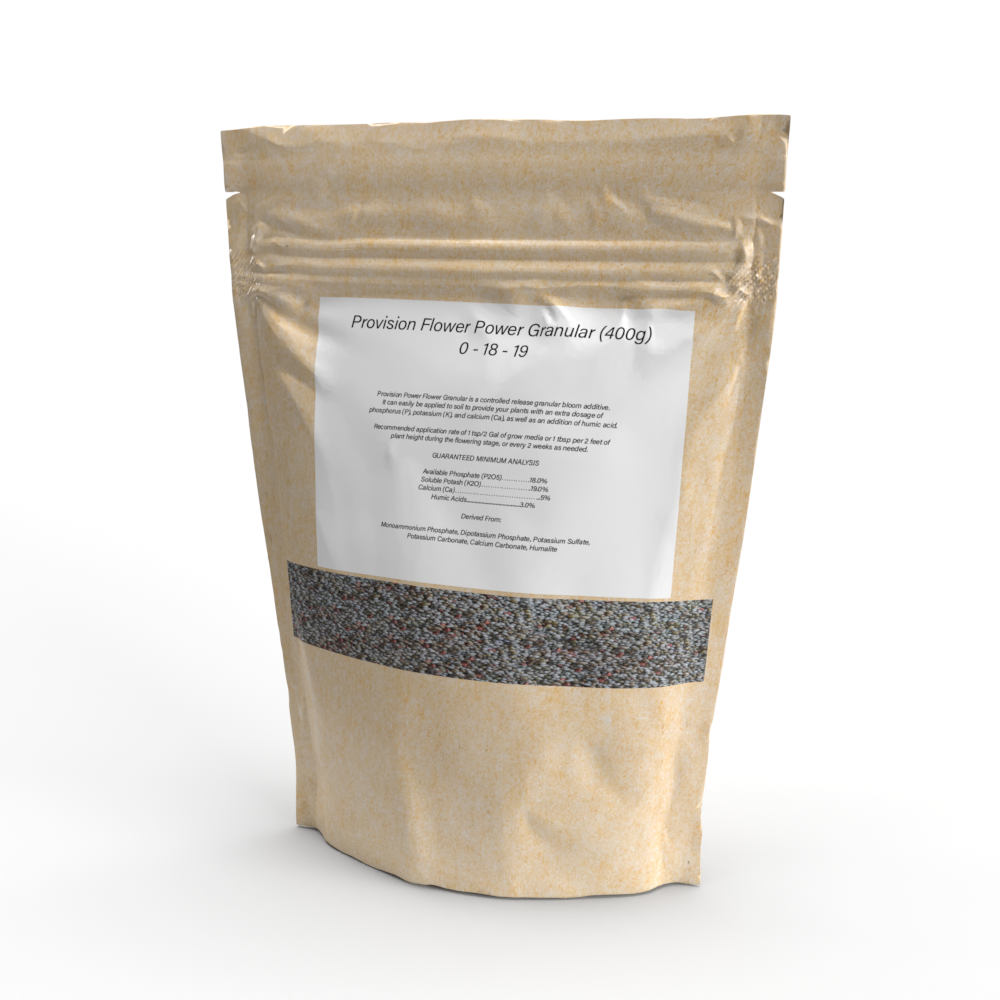
Provision Flower Power Granular est une véritable révolution pour les passionnés de plantes. Son mélange équilibré de nutriments essentiels, associé aux bienfaits de l'acide humique, en fait un complément indispensable à votre programme d'entretien des plantes. Facile à appliquer et incroyablement efficace, c'est le secret pour libérer tout le potentiel de vos plantes à fleurs et obtenir un jardin non seulement vivant, mais aussi spectaculairement florissant.
What does available phosphate (P₂O₅) do for plant growth?
Available Phosphate (P₂O₅) supports root development, energy transfer, and early structural growth by providing a form of phosphorus that plants can absorb and use quickly.
Calcium is important because it builds and stabilizes plant cells as they form, acting as the structural support that keeps new growth strong and functional. Unlike other nutrients that drive color or speed of growth, calcium’s role is unique because it controls cell wall strength and membrane stability, making it essential for healthy roots, shoots, and long-term plant resilience rather than quick visual results.
Why do growers use calcium carbonate for plants instead of a fast calcium source?
Calcium carbonate is important because it supplies calcium while gently buffering acidity in the root zone, helping nutrients stay available and uptake stay consistent over time. It’s unique because it works gradually as a stabilizer, rather than acting like a quick, soluble calcium boost that can spike levels and create new imbalances.
Dipotassium phosphate provides fast, plant-available phosphate and potassium, which supports energy transfer for root and growth processes while improving water control and sugar movement through the plant. It’s important because these two nutrients work together to keep growth steady, but it’s also unique because it can raise root-zone pH compared with similar phosphate sources, so the same dose that helps vigor can also cause micronutrient lockouts if balance and pH stability are ignored.
Humic acid is important because it improves root health and nutrient uptake by keeping minerals available, stabilizing the root zone, and supporting beneficial biology, which makes growth more consistent. It’s unique because it doesn’t act like a direct nutrient boost—its main power is improving the root environment so plants can use what’s already there more efficiently.
Why is potassium carbonate important for plant growth, and what makes it unique compared to other potassium sources?
Potassium carbonate is important because it can supply potassium for water movement, stress tolerance, and strong growth, while also pushing the root zone toward higher pH and alkalinity. It’s unique because it doesn’t just “feed potassium” like many other sources—it also changes solution chemistry, so it must be used carefully to avoid micronutrient lockout and calcium/magnesium imbalance.
Soluble potash (K2O) is important because it helps plants control water use, move sugars to new growth and fruit, and build stronger, higher-quality structure under stress. It’s unique from many other nutrients because it acts more like a regulator and transport helper than a direct “building material,” so the biggest benefits show up as steadier growth, stronger stems, and better finishing instead of just bigger leaves.
Humalite improves the root-zone environment by boosting humic substances that help soil hold water and nutrients more evenly, making uptake steadier and growth less stressful. It is unique because it focuses on long-term buffering and structure rather than acting like a quick nutrient shot.
What does monopotassium phosphate do for flowering plants?
Monopotassium phosphate provides fast phosphorus and potassium that support energy use, nutrient flow, and bloom development without adding nitrogen, so it helps flowering progress cleanly without pushing extra leafy growth. It’s unique because it delivers a focused PK boost in a highly soluble form, which can correct stage-related demand quickly, but it must be used carefully to avoid potassium-heavy imbalances that can block calcium and magnesium uptake.
Is potassium sulfate better than other potassium sources for sensitive plants?
Potassium sulfate is often preferred because it supplies potassium without added chloride and also provides sulfur, which supports protein-building and efficient nutrient use, making it a cleaner, balanced option when plants are sensitive to chloride or when you want potassium without pushing extra nitrogen or phosphorus.