Frequently purchased together
-
 HOT ITEM
BioFish biologique 3-1-2 - 1 kg
Prix habituel $16.21Prix habituel -
Acidifiant de Sol Orgunique - 2 KG
Prix habituel $19.18Prix habituel -


Reviews are submitted by verified customers after purchase. This section shows a summary of product feedback rather than the full individual review list.

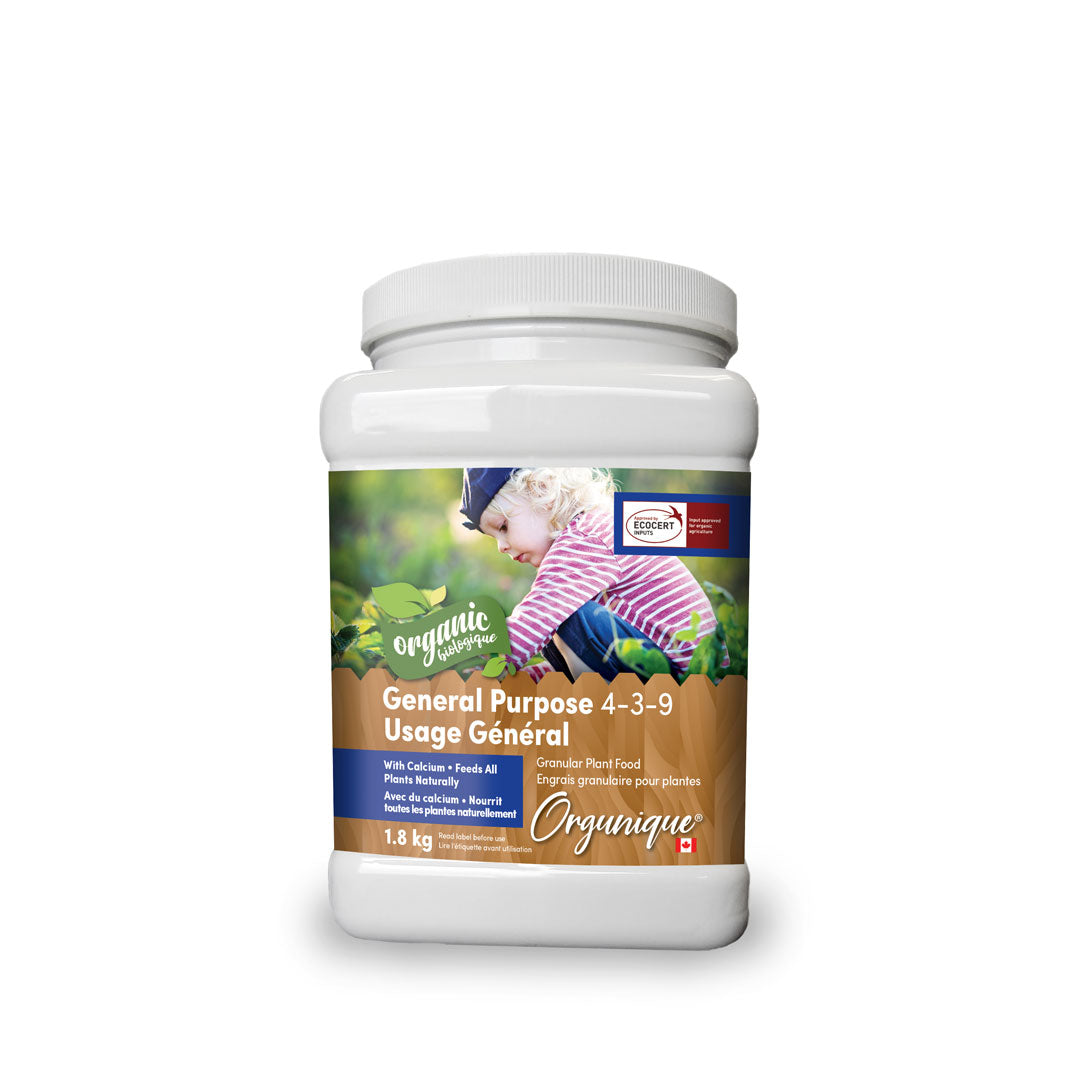
Organique Usage Général 4-3-9 - 1,8 kg
Store Availability
Newmarket, Ontario (Head Office)
1175 Stellar Drive, Unit #5
Newmarket, ON L3Y 7B8
- Mon10:00am–6:00pm
- Tue10:00am–6:00pm
- Wed10:00am–6:00pm
- Thu10:00am–6:00pm
- Fri10:00am–6:00pm
- Sat10:00am–4:00pm
- SunClosed


Barrie, Ontario
106 Saunders Road, Unit #2A
Barrie, ON L4N 9A8
- Mon10:00am–5:00pm
- Tue10:00am–5:00pm
- Wed10:00am–5:00pm
- Thu10:00am–5:00pm
- Fri10:00am–5:00pm
- Sat10:00am–3:00pm
- SunClosed
Winnipeg, Manitoba
915 McLeod Avenue, Unit #4
Winnipeg, MB R2G 0Y4
- Mon10:00am–6:00pm
- Tue10:00am–6:00pm
- Wed10:00am–6:00pm
- Thu10:00am–6:00pm
- Fri10:00am–6:00pm
- Sat11:00am–3:00pm
- SunClosed
Estimated Delivery Date
Order Within
—
Province
Est. Delivery
—
Quantité
Qualifies for Free Shipping Promotion
Sign in required
Back-in-stock notification
Select the store locations where you’d like to pick up this item, or choose Shipping to have it delivered.
Email notifications are turned off
Turn on email marketing to receive back-in-stock notifications.
Open account profile
Special order request
Select the store where you’d prefer to pick up your special order. To choose a different store, unselect your current choice first.
Description
Description
Description
Orgunique® Usage général 4-3-9 est un engrais granulaire pour plantes d'intérieur et d'extérieur, conçu pour fournir des nutriments rapidement disponibles et à libération lente, ainsi que de la matière organique dans la zone racinaire. C'est un engrais polyvalent pour plantes et un mélange nutritif pour le sol destiné à soutenir une croissance constante et équilibrée lorsque vous souhaitez un produit unique qui convient à un large éventail de types de plantes et d'environnements.
Ce nutriment végétal granulaire est décrit comme une excellente source de nutriments facilement disponibles, ce qui en fait une option pratique lorsque vous souhaitez que les plantes accèdent à la nutrition sans délai. Il contient également des nutriments à libération lente, ce qui aide à maintenir une alimentation des plantes plus constante dans le temps. Cette combinaison est associée à un apport de matière organique, favorisant des conditions de sol plus riches et un environnement racinaire plus actif.
Le profil NPK 4-3-9 positionne Orgunique® Usage général 4-3-9 comme un choix polyvalent pour les besoins continus de nutrition des plantes dans de nombreux scénarios de maison et de jardin. Parce qu'il est conçu pour toutes les plantes d'intérieur et d'extérieur, il s'intègre naturellement à la culture en conteneur, aux plates-bandes surélevées, aux plantations en pleine terre et à l'entretien général du paysage où un engrais granulaire à large usage simplifie l'achat et le stockage. Si vous préférez un seul engrais polyvalent plutôt que plusieurs mélanges spécialisés, ce produit met l'accent sur une nutrition fiable des plantes et un soutien en matière organique.
Orgunique® Usage général 4-3-9 est destiné à une utilisation au sol, avec un format granulaire adapté à l'incorporation dans le sol plutôt qu'à une alimentation liquide. Cela en fait un bon choix pour les cultivateurs qui aiment les apports directs axés sur le sol et qui veulent des nutriments délivrés par une approche d'engrais granulaire.
Ce produit convient également à l'agriculture biologique selon la Norme biologique canadienne et est inspecté par Ecocert Canada. Il convient aux jardiniers et aux cultivateurs qui veulent un engrais granulaire polyvalent avec des nutriments rapidement disponibles, des nutriments à libération lente et de la matière organique pour les plantes d'intérieur et d'extérieur, tout en restant conforme aux exigences de l'agriculture biologique.
Avantages du produit : Stade végétatif ; Stade de floraison ; Intérieur ; Extérieur ; Arrosage régulier ; Sol ; Hors sol ; Biologique ; Libération lente des nutriments ; Matière organique ; Utilisation intérieure ; Utilisation extérieure ; Large utilisation pour les plantes ; Performances constantes ; Soutien à la croissance ; Prêt pour les conteneurs.
Analyse garantie : Azote total (N) : 4,0 % ; Acide phosphorique disponible (P2O5) : 3,0 % ; Potasse soluble (K2O) : 9,0 % ; Calcium (Ca) : 3,5 % ; Magnésium (Mg) : 4,7 % ; Soufre (S) : 9,5 %.
Dérivé de : Ingrédients actifs dérivés de matières exemptes.
Ce nutriment végétal granulaire est décrit comme une excellente source de nutriments facilement disponibles, ce qui en fait une option pratique lorsque vous souhaitez que les plantes accèdent à la nutrition sans délai. Il contient également des nutriments à libération lente, ce qui aide à maintenir une alimentation des plantes plus constante dans le temps. Cette combinaison est associée à un apport de matière organique, favorisant des conditions de sol plus riches et un environnement racinaire plus actif.
Le profil NPK 4-3-9 positionne Orgunique® Usage général 4-3-9 comme un choix polyvalent pour les besoins continus de nutrition des plantes dans de nombreux scénarios de maison et de jardin. Parce qu'il est conçu pour toutes les plantes d'intérieur et d'extérieur, il s'intègre naturellement à la culture en conteneur, aux plates-bandes surélevées, aux plantations en pleine terre et à l'entretien général du paysage où un engrais granulaire à large usage simplifie l'achat et le stockage. Si vous préférez un seul engrais polyvalent plutôt que plusieurs mélanges spécialisés, ce produit met l'accent sur une nutrition fiable des plantes et un soutien en matière organique.
Orgunique® Usage général 4-3-9 est destiné à une utilisation au sol, avec un format granulaire adapté à l'incorporation dans le sol plutôt qu'à une alimentation liquide. Cela en fait un bon choix pour les cultivateurs qui aiment les apports directs axés sur le sol et qui veulent des nutriments délivrés par une approche d'engrais granulaire.
Ce produit convient également à l'agriculture biologique selon la Norme biologique canadienne et est inspecté par Ecocert Canada. Il convient aux jardiniers et aux cultivateurs qui veulent un engrais granulaire polyvalent avec des nutriments rapidement disponibles, des nutriments à libération lente et de la matière organique pour les plantes d'intérieur et d'extérieur, tout en restant conforme aux exigences de l'agriculture biologique.
Avantages du produit : Stade végétatif ; Stade de floraison ; Intérieur ; Extérieur ; Arrosage régulier ; Sol ; Hors sol ; Biologique ; Libération lente des nutriments ; Matière organique ; Utilisation intérieure ; Utilisation extérieure ; Large utilisation pour les plantes ; Performances constantes ; Soutien à la croissance ; Prêt pour les conteneurs.
Analyse garantie : Azote total (N) : 4,0 % ; Acide phosphorique disponible (P2O5) : 3,0 % ; Potasse soluble (K2O) : 9,0 % ; Calcium (Ca) : 3,5 % ; Magnésium (Mg) : 4,7 % ; Soufre (S) : 9,5 %.
Dérivé de : Ingrédients actifs dérivés de matières exemptes.
How To Use
How To Use
Mix into soil (general)
Beds
Trees
Potted plants
Soil mix (bulk blending)
Reapplication timing
Warnings & Safety
Warnings & Safety
Important – Safety Information
General Safety Precautions
First Aid – Skin Contact
First Aid – Eye Contact
First Aid – Ingestion
First aid – Inhalation
Storage And Handling
Important – Medical
Guaranteed Minimum Analysis
Guaranteed Minimum Analysis
| Total Nitrogen (N) | 4.0% |
|---|---|
| Available Phosphoric Acid (P2O5) | 3.0% |
| Soluble Potash (K2O) | 9.0% |
| Calcium (Ca) | 3.5% |
| Magnesium (Mg) | 4.7% |
| Sulfur (S) | 9.5% |
Derived From
Derived From
| Active Ingredients derived from exempt materials |
Frequently Asked Questions
Frequently Asked Questions
Why is total nitrogen (N) important for plant growth, and what makes it different from other nutrients?
What does available phosphoric acid (P₂O₅) do for plants, and how is it different from available phosphate?
Why is soluble potash (K2O) important for plants?
Why is calcium important for plant growth?
Why is sulfur (S) important for plant growth?
What are common signs of magnesium deficiency in plants?
Frequently purchased together
-
HOT ITEM
BioFish biologique 3-1-2 - 1 kg
Prix habituel $16.21Prix habituel -
Acidifiant de Sol Orgunique - 2 KG
Prix habituel $19.18Prix habituel -
Reviews are submitted by verified customers after purchase. This section shows a summary of product feedback rather than the full individual review list.