Frequently purchased together
-
Mon accélérateur de compost Bokashi Plus Son de Bonne Qualité - 1 kg
Prix habituel $16.78Prix habituel -
Mon bon Bokashi vert Pro-Gro - 1,5 kg
Prix habituel $44.99Prix habituel -
My Good Green Ferminator Nettoyant pour Plantes - 500 ml
Prix habituel $41.88Prix habituel -
My Good Green Ferminator Nettoyant pour plantes - 1 litre
Prix habituel $66.88Prix habituel


Reviews are submitted by verified customers after purchase. This section shows a summary of product feedback rather than the full individual review list.

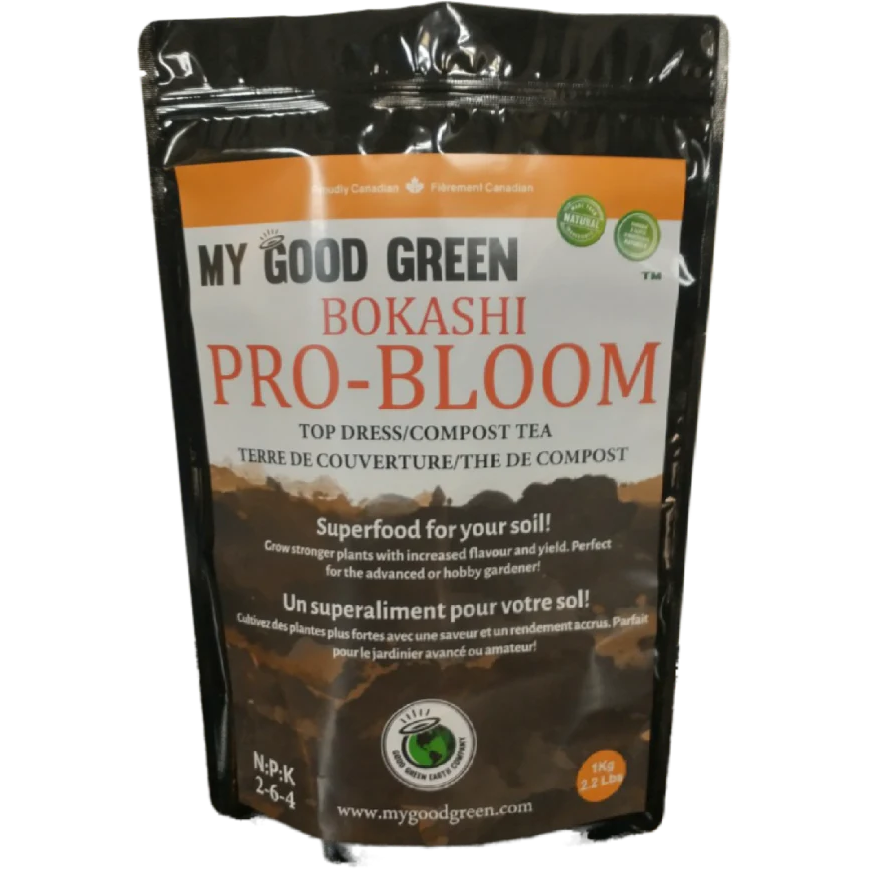
My Good Green Bokashi Pro-Bloom Top Dress & Compost Tea - 1 kg
Prix habituel
$27.99
Prix habituel
Prix promotionnel
$27.99
Frais d'expédition calculés à l'étape de paiement.
Store Availability
Newmarket, Ontario (Head Office)
1175 Stellar Drive, Unit #5
Newmarket, ON L3Y 7B8
- Mon10:00am–6:00pm
- Tue10:00am–6:00pm
- Wed10:00am–6:00pm
- Thu10:00am–6:00pm
- Fri10:00am–6:00pm
- Sat10:00am–4:00pm
- SunClosed


Barrie, Ontario
106 Saunders Road, Unit #2A
Barrie, ON L4N 9A8
- Mon10:00am–5:00pm
- Tue10:00am–5:00pm
- Wed10:00am–5:00pm
- Thu10:00am–5:00pm
- Fri10:00am–5:00pm
- Sat10:00am–3:00pm
- SunClosed
Winnipeg, Manitoba
915 McLeod Avenue, Unit #4
Winnipeg, MB R2G 0Y4
- Mon10:00am–6:00pm
- Tue10:00am–6:00pm
- Wed10:00am–6:00pm
- Thu10:00am–6:00pm
- Fri10:00am–6:00pm
- Sat11:00am–3:00pm
- SunClosed
Estimated Delivery Date
Order Within
—
Province
Est. Delivery
—
Quantité
Qualifies for Free Shipping Promotion
Sign in required
Back-in-stock notification
Select the store locations where you’d like to pick up this item, or choose Shipping to have it delivered.
Email notifications are turned off
Turn on email marketing to receive back-in-stock notifications.
Open account profile
Special order request
Select the store where you’d prefer to pick up your special order. To choose a different store, unselect your current choice first.
Description
Description
Description
Le My Good Green Bokashi Pro-Bloom Top Dress & Compost Tea est un amendement de surface et un thé de compost fermentés, conçus pour soutenir la croissance des plantes et leurs performances avant la récolte grâce à des microbes et des minéraux bénéfiques. Cet engrais organique est destiné aux jardiniers qui souhaitent un amendement vivant, riche en microbes, qui aide à maintenir les nutriments disponibles lorsque les plantes se préparent à une récolte abondante.
La fermentation est la caractéristique déterminante. Le Bokashi Pro-Bloom est présenté comme un amendement de surface fermenté, ce qui signifie qu'il est élaboré à partir d'intrants biologiquement actifs plutôt qu'une simple approche à base de sels minéraux. L'accent mis sur la fermentation s'associe à l'affirmation de la marque d'être « riche en microbes bénéfiques », ce qui en fait un excellent choix pour les cultivateurs soucieux de la vie du sol dans le cadre du processus de culture. Il est également décrit comme un engrais organique autonome, ce qui lui confère une grande utilité dans les jardins et les conteneurs où un seul produit est préféré.
Sous forme compacte et conviviale pour l'acheteur, le Bokashi Pro-Bloom présente un NPK de 2-6-4. Le profil des ingrédients s'articule autour d'un mélange de minéraux comprenant de la roche volcanique Volcanaphos, du phosphate de roche tendre et de la potasse, complétés par du magnésium et du carbonate de calcium. La formule comprend également des intrants organiques tels que le varech et la mélasse de betterave, combinant ainsi des composants végétaux et minéraux dans un seul amendement fermenté.
Les effets sur la plante visent à maintenir une croissance constante et à réduire les revers. My Good Green le décrit spécifiquement comme corrigeant les carences et optimisant la croissance des plantes, ce qui témoigne du rôle du produit comme amendement de surface de soutien lorsque les plantes ont besoin de nutriments pour rester sur la bonne voie. La marque le présente également comme « tout ce dont vos plantes ont besoin pour la récolte », il est donc conçu pour soutenir la période précédant la récolte plutôt que d'être un intrant de niche à usage unique. Le résultat est un produit visant une performance globale plus forte, avec une approche équilibrée qui soutient à la fois les besoins des plantes et l'environnement du sol.
Le Bokashi Pro-Bloom convient à l'amendement de surface et au thé de compost, et il est également présenté comme adapté à l'application foliaire. Cette polyvalence est importante pour les acheteurs qui souhaitent un amendement fermenté unique pouvant s'adapter à différents styles de gestion de jardin sans transformer leur étagère en une multitude de produits à usage unique.
Le My Good Green Bokashi Pro-Bloom Top Dress & Compost Tea convient parfaitement aux jardiniers à la recherche d'un engrais organique fermenté avec des microbes bénéfiques, un profil riche en minéraux et un NPK de 2-6-4, en particulier pour ceux qui privilégient une approche axée sur le sol qui soutient une croissance constante et une récolte réussie.
Avantages du produit : Stade de floraison ; Intérieur ; Extérieur ; Sans danger pour la fibre de coco ; Sol ; Hors-sol ; Organique ; Support microbien ; Formule PK équilibrée ; Support en oligo-éléments ; Prêt pour l'application foliaire ; Prêt pour plusieurs supports ; Nutrition disponible pour les plantes ; Matière organique ; Soutien à la floraison.
Analyse garantie : Azote total (N) : 2,0 % ; Azote hydrosoluble (N) : 1,0 % ; Azote insoluble dans l'eau (N) : 1,0 % ; Acide phosphorique disponible (P2O5) : 6,0 % ; Potasse soluble (K2O) : 4,0 % ; Calcium (Ca) : 1,7 % ; Magnésium total (Mg) : 0,6 % ; Sodium (Na) : 0,15 % ; Matière organique : 86,6 %.
Dérivé de : Son de blé ; Carbonatite ; Poussière de roche Volcanophos ; Sulfate de potasse ; Poudre de protéines de graines de chanvre ; Mélasse noire ; Farine d'algues ; Sel de mer ; Sel de saumure.
La fermentation est la caractéristique déterminante. Le Bokashi Pro-Bloom est présenté comme un amendement de surface fermenté, ce qui signifie qu'il est élaboré à partir d'intrants biologiquement actifs plutôt qu'une simple approche à base de sels minéraux. L'accent mis sur la fermentation s'associe à l'affirmation de la marque d'être « riche en microbes bénéfiques », ce qui en fait un excellent choix pour les cultivateurs soucieux de la vie du sol dans le cadre du processus de culture. Il est également décrit comme un engrais organique autonome, ce qui lui confère une grande utilité dans les jardins et les conteneurs où un seul produit est préféré.
Sous forme compacte et conviviale pour l'acheteur, le Bokashi Pro-Bloom présente un NPK de 2-6-4. Le profil des ingrédients s'articule autour d'un mélange de minéraux comprenant de la roche volcanique Volcanaphos, du phosphate de roche tendre et de la potasse, complétés par du magnésium et du carbonate de calcium. La formule comprend également des intrants organiques tels que le varech et la mélasse de betterave, combinant ainsi des composants végétaux et minéraux dans un seul amendement fermenté.
Les effets sur la plante visent à maintenir une croissance constante et à réduire les revers. My Good Green le décrit spécifiquement comme corrigeant les carences et optimisant la croissance des plantes, ce qui témoigne du rôle du produit comme amendement de surface de soutien lorsque les plantes ont besoin de nutriments pour rester sur la bonne voie. La marque le présente également comme « tout ce dont vos plantes ont besoin pour la récolte », il est donc conçu pour soutenir la période précédant la récolte plutôt que d'être un intrant de niche à usage unique. Le résultat est un produit visant une performance globale plus forte, avec une approche équilibrée qui soutient à la fois les besoins des plantes et l'environnement du sol.
Le Bokashi Pro-Bloom convient à l'amendement de surface et au thé de compost, et il est également présenté comme adapté à l'application foliaire. Cette polyvalence est importante pour les acheteurs qui souhaitent un amendement fermenté unique pouvant s'adapter à différents styles de gestion de jardin sans transformer leur étagère en une multitude de produits à usage unique.
Le My Good Green Bokashi Pro-Bloom Top Dress & Compost Tea convient parfaitement aux jardiniers à la recherche d'un engrais organique fermenté avec des microbes bénéfiques, un profil riche en minéraux et un NPK de 2-6-4, en particulier pour ceux qui privilégient une approche axée sur le sol qui soutient une croissance constante et une récolte réussie.
Avantages du produit : Stade de floraison ; Intérieur ; Extérieur ; Sans danger pour la fibre de coco ; Sol ; Hors-sol ; Organique ; Support microbien ; Formule PK équilibrée ; Support en oligo-éléments ; Prêt pour l'application foliaire ; Prêt pour plusieurs supports ; Nutrition disponible pour les plantes ; Matière organique ; Soutien à la floraison.
Analyse garantie : Azote total (N) : 2,0 % ; Azote hydrosoluble (N) : 1,0 % ; Azote insoluble dans l'eau (N) : 1,0 % ; Acide phosphorique disponible (P2O5) : 6,0 % ; Potasse soluble (K2O) : 4,0 % ; Calcium (Ca) : 1,7 % ; Magnésium total (Mg) : 0,6 % ; Sodium (Na) : 0,15 % ; Matière organique : 86,6 %.
Dérivé de : Son de blé ; Carbonatite ; Poussière de roche Volcanophos ; Sulfate de potasse ; Poudre de protéines de graines de chanvre ; Mélasse noire ; Farine d'algues ; Sel de mer ; Sel de saumure.
Warnings & Safety
Warnings & Safety
Important – Safety Information
General Safety Precautions
First Aid – Skin Contact
First Aid – Eye Contact
First Aid – Ingestion
First aid – Inhalation
Storage And Handling
Important – Medical
Guaranteed Minimum Analysis
Guaranteed Minimum Analysis
| Total Nitrogen (N) | 2.0% |
|---|---|
| Water Soluble Nitrogen (N) | 1.0% |
| Water Insoluble Nitrogen (N) | 1.0% |
| Available Phosphoric Acid (P2O5) | 6.0% |
| Soluble Potash (K2O) | 4.0% |
| Calcium (Ca) | 1.7% |
| Total Magnesium (Mg) | 0.6% |
| Sodium (Na) | 0.15% |
| Organic Matter | 86.6% |
Frequently Asked Questions
Frequently Asked Questions
Why is total nitrogen (N) important for plant growth, and what makes it different from other nutrients?
Why is water-soluble nitrogen important for plant growth, and what makes it unique compared to other nitrogen sources?
Why is water insoluble nitrogen important for plant growth?
What does available phosphoric acid (P₂O₅) do for plants, and how is it different from available phosphate?
Why is soluble potash (K2O) important for plants?
Why is calcium important for plant growth?
Why is total magnesium (Mg) important for plant growth?
Why is sodium (Na) important to manage in plant growing?
Why is organic matter important for plant growth?
What makes carbonatite unique for plant growing compared to more common mineral amendments?
Does blackstrap molasses actually feed plants or just soil microbes?
Is wheat bran good for plant soil?
What makes volcanophos rock dust different from fast phosphorus fertilizers?
What does sulfate of potash do for plants?
Can hemp seed protein powder replace regular nitrogen fertilizer for plants?
What does kelp meal do for plants?
Is sea salt good for plants?
Is pickling salt safe to use around plants?
Frequently purchased together
-
Mon accélérateur de compost Bokashi Plus Son de Bonne Qualité - 1 kg
Prix habituel $16.78Prix habituel -
Mon bon Bokashi vert Pro-Gro - 1,5 kg
Prix habituel $44.99Prix habituel -
My Good Green Ferminator Nettoyant pour Plantes - 500 ml
Prix habituel $41.88Prix habituel -
My Good Green Ferminator Nettoyant pour plantes - 1 litre
Prix habituel $66.88Prix habituel
Reviews are submitted by verified customers after purchase. This section shows a summary of product feedback rather than the full individual review list.