Frequently purchased together
-
Technologie de croissance complète Focus - 1 litre
Prix habituel $32.14Prix habituel -
Technologie de croissance GT Foliaire - 500 ml
Prix habituel $19.99Prix habituel -
Technologie de croissance GT Silica - 1 litre
Prix habituel $31.16Prix habituel -


Reviews are submitted by verified customers after purchase. This section shows a summary of product feedback rather than the full individual review list.

Substrat Lechuza Pon - 6 Litres
Prix habituel
$34.99
Prix habituel
Prix promotionnel
$34.99
Frais d'expédition calculés à l'étape de paiement.
Store Availability
Newmarket, Ontario (Head Office)
1175 Stellar Drive, Unit #5
Newmarket, ON L3Y 7B8
- Mon10:00am–6:00pm
- Tue10:00am–6:00pm
- Wed10:00am–6:00pm
- Thu10:00am–6:00pm
- Fri10:00am–6:00pm
- Sat10:00am–4:00pm
- SunClosed


Barrie, Ontario
106 Saunders Road, Unit #2A
Barrie, ON L4N 9A8
- Mon10:00am–5:00pm
- Tue10:00am–5:00pm
- Wed10:00am–5:00pm
- Thu10:00am–5:00pm
- Fri10:00am–5:00pm
- Sat10:00am–3:00pm
- SunClosed
Winnipeg, Manitoba
915 McLeod Avenue, Unit #4
Winnipeg, MB R2G 0Y4
- Mon10:00am–6:00pm
- Tue10:00am–6:00pm
- Wed10:00am–6:00pm
- Thu10:00am–6:00pm
- Fri10:00am–6:00pm
- Sat11:00am–3:00pm
- SunClosed
Estimated Delivery Date
Order Within
—
Province
Est. Delivery
—
Quantité
Not Eligible for Free Shipping
Sign in required
Back-in-stock notification
Select the store locations where you’d like to pick up this item, or choose Shipping to have it delivered.
Email notifications are turned off
Turn on email marketing to receive back-in-stock notifications.
Open account profile
Special order request
Select the store where you’d prefer to pick up your special order. To choose a different store, unselect your current choice first.
Description
Description
Description
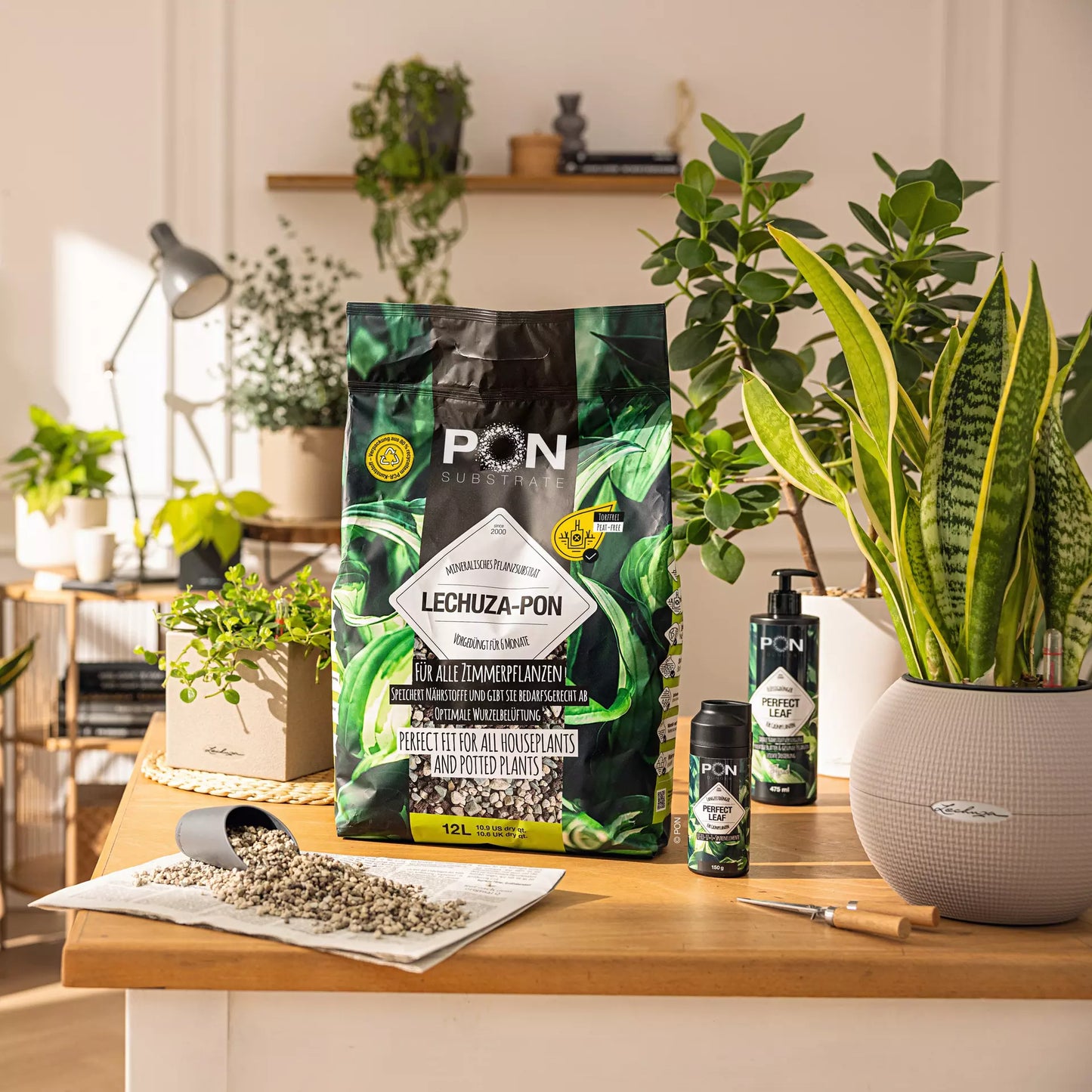
Lechuza Pon est un substrat minéral pour plantes d'intérieur Lechuza, conçu pour favoriser l'aération des racines, le drainage et un apport constant en nutriments dans un milieu de culture propre et sans terre. Ce substrat végétal purement minéral est un substrat de rempotage et un milieu de culture pour plantes d'intérieur conçu autour des besoins des plantes cultivées en pot, en particulier pour les acheteurs recherchant une option propre et sans tourbe pour l'entretien quotidien des plantes.
La formule est conçue autour d'excellentes propriétés de drainage et d'une aération optimale des racines, aidant la zone racinaire à rester ouverte, perméable à l'air et moins sujette au stress de l'engorgement. Sa composition spéciale agit également comme un réservoir d'eau et de nutriments, les retenant dans la structure du substrat et les libérant aux plantes selon les besoins. Cela fait de Lechuza Pon un excellent choix pour les propriétaires de plantes qui souhaitent une sensation de substrat plus contrôlée sans terre lourde et grumeleuse.
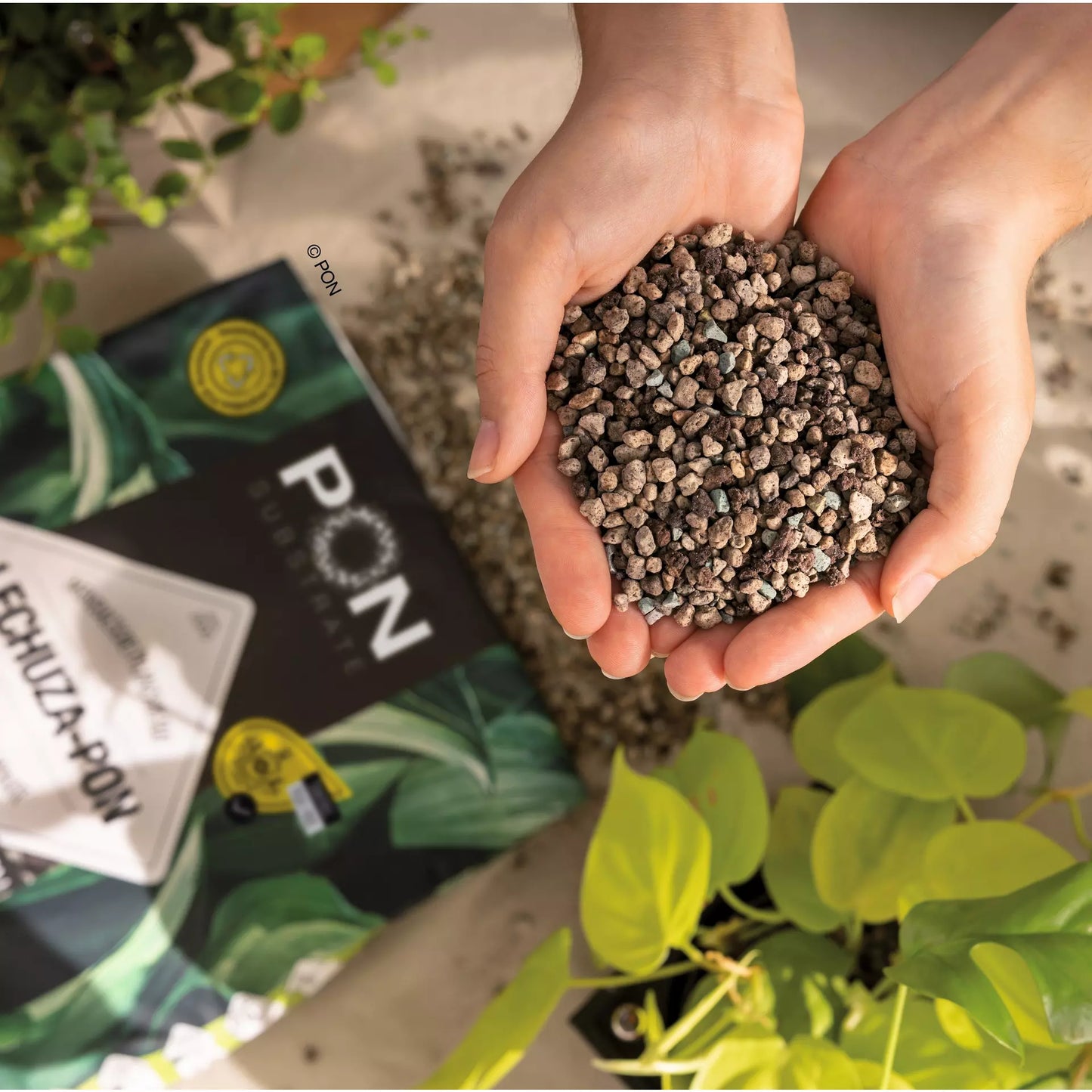
Lechuza Pon est composé de zéolithe, de pierre ponce, de lave et d'engrais à libération lente. La base minérale aide le substrat à conserver son volume, de sorte qu'il maintient sa structure et ne se compacte pas ou ne s'agglomère pas facilement avec le temps. L'engrais à long terme ajouté favorise une croissance verte luxuriante, tandis que le pH stable aide à créer des conditions racinaires plus stables pour les plantes d'intérieur. Il convient également aux plantes comestibles, ce qui lui confère une plus grande flexibilité pour les collections de plantes d'intérieur.
Ce substrat minéral sans tourbe convient à toutes les plantes d'intérieur et est étroitement lié au système d'irrigation Lechuza original. Son stockage de nutriments et d'eau, sa grande capacité de drainage et sa structure réutilisable le rendent pratique pour les jardinières décoratives d'intérieur, les jardinières auto-arrosantes et les présentations de plantes propres. La base purement minérale confère également au substrat un profil plus propre pour les espaces intérieurs où le désordre du sol, les moucherons fongiques et la moisissure sont des préoccupations courantes.
Lechuza Pon convient aux propriétaires de plantes qui souhaitent un substrat végétal de qualité professionnelle, sans tourbe, qui favorise l'aération des racines, l'apport de nutriments, le stockage de l'eau et une structure stable dans un milieu simple.
Avantages du produit : meilleure aération ; soutien au drainage ; rétention d'eau ; rétention de nutriments ; équilibre air-eau ; compaction réduite ; libération lente de nutriments ; défense contre les parasites ; intérieur ; extérieur ; stade de floraison ; stade végétatif ; sans terre ; hydroponie.
Analyse garantie : azote total (N) : 14,7 % ; azote nitrique (N) : 6,6 % ; azote ammoniacal (N) : 8,1 % ; pentoxyde de phosphore (P2O5) : 11,0 % ; oxyde de potassium (K2O) : 14,2 % ; oligo-éléments / éléments traces : 2,0 ME.
Dérivé de : pierre ponce ; roche de lave ; zéolithe ; engrais à libération lente.
La formule est conçue autour d'excellentes propriétés de drainage et d'une aération optimale des racines, aidant la zone racinaire à rester ouverte, perméable à l'air et moins sujette au stress de l'engorgement. Sa composition spéciale agit également comme un réservoir d'eau et de nutriments, les retenant dans la structure du substrat et les libérant aux plantes selon les besoins. Cela fait de Lechuza Pon un excellent choix pour les propriétaires de plantes qui souhaitent une sensation de substrat plus contrôlée sans terre lourde et grumeleuse.
Lechuza Pon est composé de zéolithe, de pierre ponce, de lave et d'engrais à libération lente. La base minérale aide le substrat à conserver son volume, de sorte qu'il maintient sa structure et ne se compacte pas ou ne s'agglomère pas facilement avec le temps. L'engrais à long terme ajouté favorise une croissance verte luxuriante, tandis que le pH stable aide à créer des conditions racinaires plus stables pour les plantes d'intérieur. Il convient également aux plantes comestibles, ce qui lui confère une plus grande flexibilité pour les collections de plantes d'intérieur.
Ce substrat minéral sans tourbe convient à toutes les plantes d'intérieur et est étroitement lié au système d'irrigation Lechuza original. Son stockage de nutriments et d'eau, sa grande capacité de drainage et sa structure réutilisable le rendent pratique pour les jardinières décoratives d'intérieur, les jardinières auto-arrosantes et les présentations de plantes propres. La base purement minérale confère également au substrat un profil plus propre pour les espaces intérieurs où le désordre du sol, les moucherons fongiques et la moisissure sont des préoccupations courantes.
Lechuza Pon convient aux propriétaires de plantes qui souhaitent un substrat végétal de qualité professionnelle, sans tourbe, qui favorise l'aération des racines, l'apport de nutriments, le stockage de l'eau et une structure stable dans un milieu simple.
Avantages du produit : meilleure aération ; soutien au drainage ; rétention d'eau ; rétention de nutriments ; équilibre air-eau ; compaction réduite ; libération lente de nutriments ; défense contre les parasites ; intérieur ; extérieur ; stade de floraison ; stade végétatif ; sans terre ; hydroponie.
Analyse garantie : azote total (N) : 14,7 % ; azote nitrique (N) : 6,6 % ; azote ammoniacal (N) : 8,1 % ; pentoxyde de phosphore (P2O5) : 11,0 % ; oxyde de potassium (K2O) : 14,2 % ; oligo-éléments / éléments traces : 2,0 ME.
Dérivé de : pierre ponce ; roche de lave ; zéolithe ; engrais à libération lente.
How To Use
How To Use
Planting Instructions
Guaranteed Minimum Analysis
Guaranteed Minimum Analysis
| Total Nitrogen (N) | 14.7% |
|---|---|
| Nitrate Nitrogen (N) | 6.6% |
| Ammoniacal Nitrogen (N) | 8.1% |
| Phosphorus Pentoxide (P2O5) | 11.0% |
| Potassium Oxide (K2O) | 14.2% |
| Micronutrients / Trace Elements | 2.0 ME |
Derived From
Derived From
Frequently Asked Questions
Frequently Asked Questions
Why is total nitrogen (N) important for plant growth, and what makes it different from other nutrients?
What does nitrate nitrogen (N) do for plants?
What Is ammoniacal nitrogen (N) and why do plants need It?
Why is phosphorus pentoxide (P2O5) important for plant growth?
Why is potassium oxide (K2O) important for plant growth, and what makes it different from other nutrients?
Is pumice better than perlite for plant soil mixes?
What does lava rock do for plant roots?
What does zeolite do for plants?
What makes slow release fertilizer different from regular fertilizer?
Frequently purchased together
-
Technologie de croissance complète Focus - 1 litre
Prix habituel $32.14Prix habituel -
Technologie de croissance GT Foliaire - 500 ml
Prix habituel $19.99Prix habituel -
Technologie de croissance GT Silica - 1 litre
Prix habituel $31.16Prix habituel -
Reviews are submitted by verified customers after purchase. This section shows a summary of product feedback rather than the full individual review list.