Frequently purchased together
-
-
Booster de fleurs classique de Jack's 10-30-20 - 227 g
Prix habituel $15.95Prix habituel -
-


Reviews are submitted by verified customers after purchase. This section shows a summary of product feedback rather than the full individual review list.

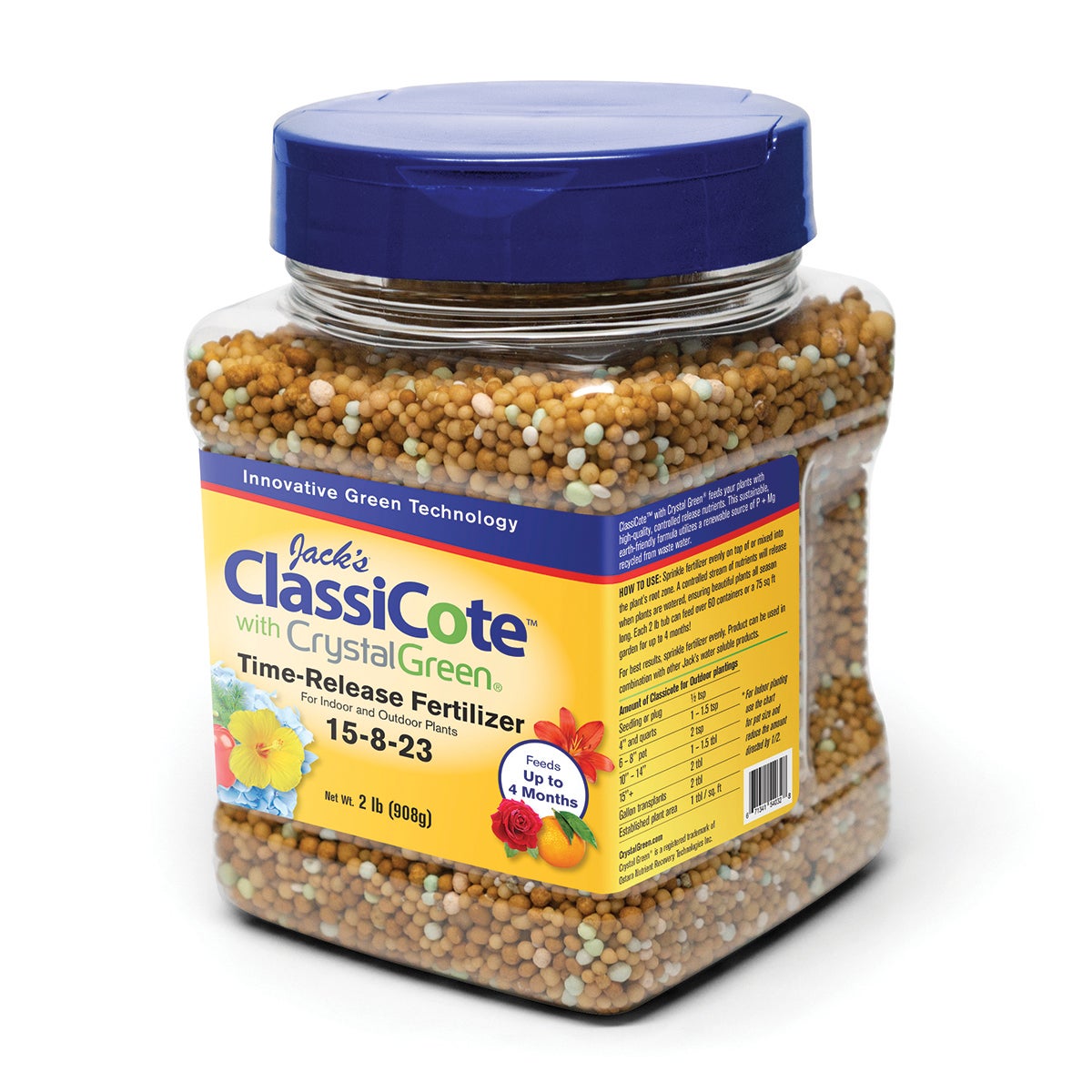
Jack's ClassiCote avec Crystal Green à libération prolongée - 2 lb
Store Availability
Newmarket, Ontario (Head Office)
1175 Stellar Drive, Unit #5
Newmarket, ON L3Y 7B8
- Mon10:00am–6:00pm
- Tue10:00am–6:00pm
- Wed10:00am–6:00pm
- Thu10:00am–6:00pm
- Fri10:00am–6:00pm
- Sat10:00am–4:00pm
- SunClosed


Barrie, Ontario
106 Saunders Road, Unit #2A
Barrie, ON L4N 9A8
- Mon10:00am–5:00pm
- Tue10:00am–5:00pm
- Wed10:00am–5:00pm
- Thu10:00am–5:00pm
- Fri10:00am–5:00pm
- Sat10:00am–3:00pm
- SunClosed
Winnipeg, Manitoba
915 McLeod Avenue, Unit #4
Winnipeg, MB R2G 0Y4
- Mon10:00am–6:00pm
- Tue10:00am–6:00pm
- Wed10:00am–6:00pm
- Thu10:00am–6:00pm
- Fri10:00am–6:00pm
- Sat11:00am–3:00pm
- SunClosed
Estimated Delivery Date
Order Within
—
Province
Est. Delivery
—
Quantité
Sign in required
Back-in-stock notification
Select the store locations where you’d like to pick up this item, or choose Shipping to have it delivered.
Email notifications are turned off
Turn on email marketing to receive back-in-stock notifications.
Open account profile
Special order request
Select the store where you’d prefer to pick up your special order. To choose a different store, unselect your current choice first.
Description
Description
Description
Le ClassiCote de Jack's avec libération lente Crystal Green est un engrais à libération lente qui fournit des nutriments à libération contrôlée pour une nutrition végétale soutenue et une croissance verte constante. Cet engrais végétal à libération contrôlée est conçu pour fournir un apport constant de nutriments au fil du temps tout en favorisant le développement de racines fortes dans une large gamme de milieux de jardin.
Le ClassiCote avec Crystal Green 15-8-23 utilise des nutriments à libération contrôlée qui deviennent disponibles par petites quantités, donnant aux plantes le temps de les absorber au lieu de les laisser s'évacuer. Cette libération progressive de nutriments contribue à maintenir une croissance plus homogène, en particulier lorsque vous souhaitez une nutrition fiable sans fortes variations de disponibilité.
Un différenciateur clé est le Crystal Green®, un composé cristallin très pur fabriqué avec une technologie verte innovante qui capte les nutriments des eaux usées. Dans ce mélange, il sert de source renouvelable et lentement disponible de phosphore et de magnésium, transformant les nutriments récupérés en une nutrition végétale pratique. La formule est également décrite comme un moyen durable et respectueux de l'environnement de soutenir une croissance à long terme.
Cet engrais à libération lente est formulé avec une disponibilité améliorée en micronutriments pour compléter la nutrition végétale au-delà des macronutriments primaires. Le résultat est une nutrition optimale visant des racines fortes et une croissance verte vitale, favorisant un feuillage plus sain et la performance globale de la plante tout au long de la saison. Le NPK 15-8-23 est une option équilibrée pour la croissance générale où une nutrition constante soutient un développement vigoureux.
Le ClassiCote de Jack's avec libération lente Crystal Green convient aux jardins et légumes, au gazon, aux conteneurs et aux arbres. Il convient parfaitement aux cultivateurs qui souhaitent des nutriments à libération contrôlée, le soutien en phosphore et en magnésium renouvelables du Crystal Green, et une nutrition tout au long de la saison conçue autour de racines fortes et d'une croissance verte vitale.
Avantages du produit : Stade végétatif ; Stade de floraison ; Intérieur ; Extérieur ; Arrosage régulier ; Terre ; Hors-sol ; Libération lente des nutriments ; Alimentation constante ; Performance constante ; Développement des racines ; Soutien en phosphore ; Soutien en magnésium ; Soutien en micronutriments ; Large utilisation végétale.
Analyse garantie : Azote total (N) : 15,0 % ; Azote ammoniacal (N) : 1,6 % ; Azote nitrique (N) : 6,3 % ; Azote uréique (N) : 7,1 % ; Phosphate assimilable (P2O5) : 8,0 % ; Potasse soluble (K2O) : 23,0 % ; Magnésium total (Mg) : 1,3 % ; Magnésium soluble dans l'eau (Mg) : 0,3 % ; Soufre (S) : 2,0 % ; Fer soluble dans l'eau (Fe) : 0,6 % ; Manganèse soluble dans l'eau (Mn) : 0,09 % ; Molybdène (Mo) : 0,001 %.
Dérivé de : Nitrate de potassium enrobé de polymère ; Urée enrobée de polymère ; Phosphate monoammonique enrobé de polymère ; Phosphate d'ammonium magnésien hexahydraté ; Sulfate de potasse magnésien ; Sulfate ferreux ; Sulfate de manganèse ; Molybdate de sodium.
Le ClassiCote avec Crystal Green 15-8-23 utilise des nutriments à libération contrôlée qui deviennent disponibles par petites quantités, donnant aux plantes le temps de les absorber au lieu de les laisser s'évacuer. Cette libération progressive de nutriments contribue à maintenir une croissance plus homogène, en particulier lorsque vous souhaitez une nutrition fiable sans fortes variations de disponibilité.
Un différenciateur clé est le Crystal Green®, un composé cristallin très pur fabriqué avec une technologie verte innovante qui capte les nutriments des eaux usées. Dans ce mélange, il sert de source renouvelable et lentement disponible de phosphore et de magnésium, transformant les nutriments récupérés en une nutrition végétale pratique. La formule est également décrite comme un moyen durable et respectueux de l'environnement de soutenir une croissance à long terme.
Cet engrais à libération lente est formulé avec une disponibilité améliorée en micronutriments pour compléter la nutrition végétale au-delà des macronutriments primaires. Le résultat est une nutrition optimale visant des racines fortes et une croissance verte vitale, favorisant un feuillage plus sain et la performance globale de la plante tout au long de la saison. Le NPK 15-8-23 est une option équilibrée pour la croissance générale où une nutrition constante soutient un développement vigoureux.
Le ClassiCote de Jack's avec libération lente Crystal Green convient aux jardins et légumes, au gazon, aux conteneurs et aux arbres. Il convient parfaitement aux cultivateurs qui souhaitent des nutriments à libération contrôlée, le soutien en phosphore et en magnésium renouvelables du Crystal Green, et une nutrition tout au long de la saison conçue autour de racines fortes et d'une croissance verte vitale.
Avantages du produit : Stade végétatif ; Stade de floraison ; Intérieur ; Extérieur ; Arrosage régulier ; Terre ; Hors-sol ; Libération lente des nutriments ; Alimentation constante ; Performance constante ; Développement des racines ; Soutien en phosphore ; Soutien en magnésium ; Soutien en micronutriments ; Large utilisation végétale.
Analyse garantie : Azote total (N) : 15,0 % ; Azote ammoniacal (N) : 1,6 % ; Azote nitrique (N) : 6,3 % ; Azote uréique (N) : 7,1 % ; Phosphate assimilable (P2O5) : 8,0 % ; Potasse soluble (K2O) : 23,0 % ; Magnésium total (Mg) : 1,3 % ; Magnésium soluble dans l'eau (Mg) : 0,3 % ; Soufre (S) : 2,0 % ; Fer soluble dans l'eau (Fe) : 0,6 % ; Manganèse soluble dans l'eau (Mn) : 0,09 % ; Molybdène (Mo) : 0,001 %.
Dérivé de : Nitrate de potassium enrobé de polymère ; Urée enrobée de polymère ; Phosphate monoammonique enrobé de polymère ; Phosphate d'ammonium magnésien hexahydraté ; Sulfate de potasse magnésien ; Sulfate ferreux ; Sulfate de manganèse ; Molybdate de sodium.
Warnings & Safety
Warnings & Safety
Important – Safety Information
General Safety Precautions
First Aid – Skin Contact
First Aid – Eye Contact
First Aid – Ingestion
First aid – Inhalation
Storage And Handling
Important – Medical
Guaranteed Minimum Analysis
Guaranteed Minimum Analysis
| Total Nitrogen (N) | 15.0% |
|---|---|
| Ammoniacal Nitrogen (N) | 1.6% |
| Nitrate Nitrogen (N) | 6.3% |
| Urea Nitrogen (N) | 7.1% |
| Available Phosphate (P2O5) | 8.0% |
| Soluble Potash (K2O) | 23.0% |
| Total Magnesium (Mg) | 1.3% |
| Water Soluble Magnesium (Mg) | 0.3% |
| Sulfur (S) | 2.0% |
| Water Soluble Iron (Fe) | 0.6% |
| Water Soluble Manganese (Mn) | 0.09% |
| Molybdenum (Mo) | 0.001% |
Frequently Asked Questions
Frequently Asked Questions
Why is total nitrogen (N) important for plant growth, and what makes it different from other nutrients?
What Is ammoniacal nitrogen (N) and why do plants need It?
What does nitrate nitrogen (N) do for plants?
Why is urea nitrogen important for plant growth?
What does available phosphate (P₂O₅) do for plant growth?
Why is soluble potash (K2O) important for plants?
Why is total magnesium (Mg) important for plant growth?
Why is water soluble magnesium important for plant growth?
Why is sulfur (S) important for plant growth?
Why is water soluble iron (Fe) important for plants, and what makes it different from other iron forms?
Why is water-soluble manganese important for plant growth?
Why is molybdenum (Mo) important for plant growth?
What does ferrous sulfate do for yellow new leaves on plants?
What makes polymer-coated potassium nitrate different from regular potassium nitrate?
What makes polymer-coated urea release nitrogen more steadily than regular urea?
What makes polymer-coated monoammonium phosphate different from regular phosphate fertilizers?
What makes magnesium ammonium phosphate hexahydrate act like a slow-release fertilizer instead of an instant feed?
What does sulfate of potash magnesia do that plain potassium fertilizers don’t?
What does manganese sulfate do for plants?
What does sodium molybdate do for plants?
Frequently purchased together
-
-
Booster de fleurs classique de Jack's 10-30-20 - 227 g
Prix habituel $15.95Prix habituel -
-
Reviews are submitted by verified customers after purchase. This section shows a summary of product feedback rather than the full individual review list.