

Frequently purchased together
-
Traitement aux aminés pour la maison et le jardin - 1 litre
Prix habituel $207.90Prix habituel -
Bourgeons House & Garden XL - 1 litre
Prix habituel $49.99Prix habituel -
Booster d'azote pour la maison et le jardin - 250 ml
Prix habituel $23.87Prix habituel -
Booster de finition House & Garden - 500 ml
Prix habituel $26.10Prix habituel


Reviews are submitted by verified customers after purchase. This section shows a summary of product feedback rather than the full individual review list.

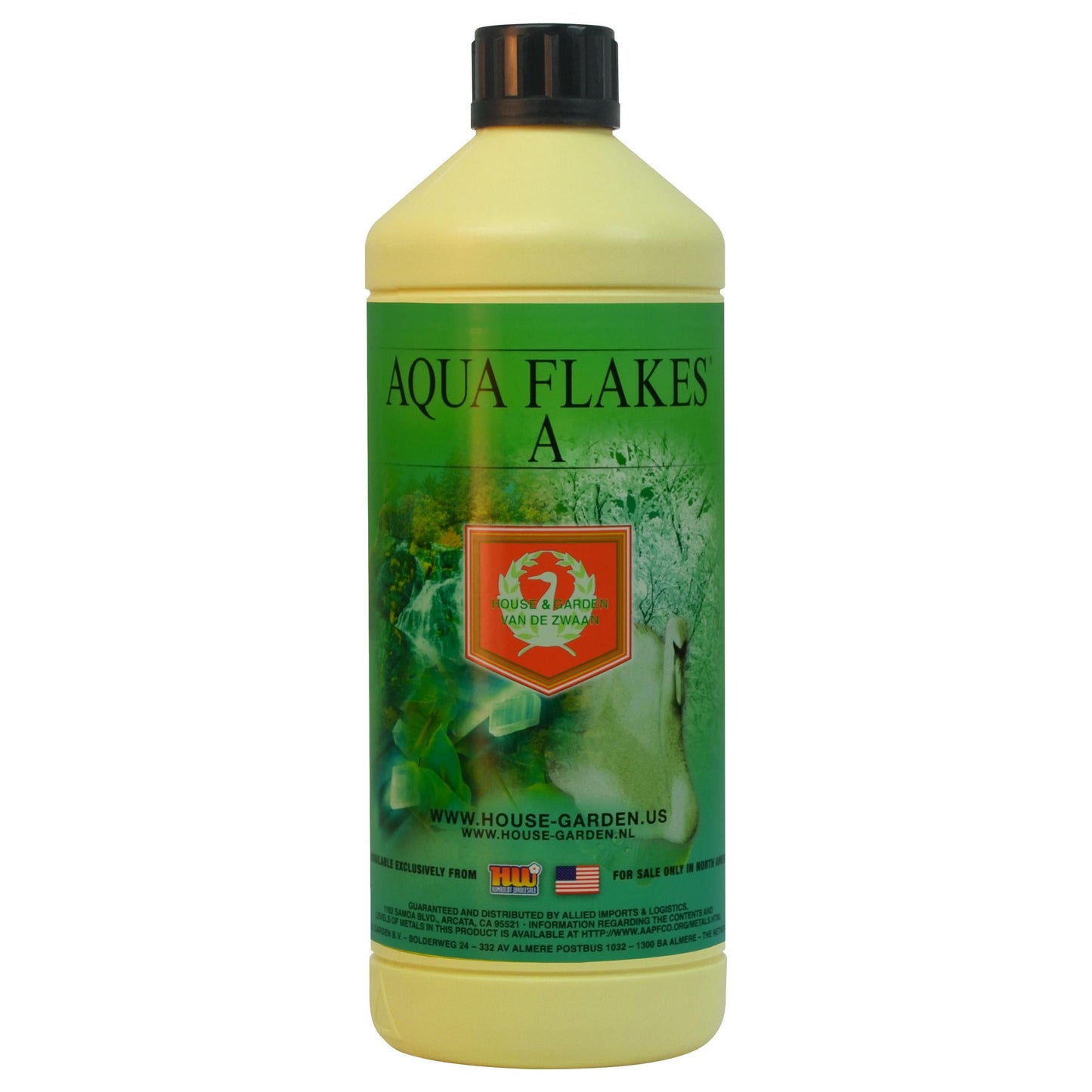
Flocons d'eau House & Garden A - 1 litre
Prix habituel
$20.25
Prix habituel
Prix promotionnel
$20.25
Frais d'expédition calculés à l'étape de paiement.
Store Availability
Newmarket, Ontario (Head Office)
1175 Stellar Drive, Unit #5
Newmarket, ON L3Y 7B8
- Mon10:00am–6:00pm
- Tue10:00am–6:00pm
- Wed10:00am–6:00pm
- Thu10:00am–6:00pm
- Fri10:00am–6:00pm
- Sat10:00am–4:00pm
- SunClosed


Barrie, Ontario
106 Saunders Road, Unit #2A
Barrie, ON L4N 9A8
- Mon10:00am–5:00pm
- Tue10:00am–5:00pm
- Wed10:00am–5:00pm
- Thu10:00am–5:00pm
- Fri10:00am–5:00pm
- Sat10:00am–3:00pm
- SunClosed
Winnipeg, Manitoba
915 McLeod Avenue, Unit #4
Winnipeg, MB R2G 0Y4
- Mon10:00am–6:00pm
- Tue10:00am–6:00pm
- Wed10:00am–6:00pm
- Thu10:00am–6:00pm
- Fri10:00am–6:00pm
- Sat11:00am–3:00pm
- SunClosed
Estimated Delivery Date
Order Within
—
Province
Est. Delivery
—
Quantité
Not Eligible for Free Shipping
Sign in required
Back-in-stock notification
Select the store locations where you’d like to pick up this item, or choose Shipping to have it delivered.
Email notifications are turned off
Turn on email marketing to receive back-in-stock notifications.
Open account profile
Special order request
Select the store where you’d prefer to pick up your special order. To choose a different store, unselect your current choice first.
Manufacturer Recommended Products

Description
Description
Description
House & Garden Aqua Flakes A et B est un nutriment de base en deux parties pour les systèmes hydroponiques à recirculation, offrant une nutrition végétale complète pour la croissance et la floraison. C'est un nutriment liquide de base conçu pour simplifier l'alimentation hydroponique tout en fournissant une base équilibrée et à spectre complet sur laquelle les plantes peuvent compter tout au long de leur cycle de vie.
Aqua Flakes est décrit comme un nutriment de base complet formulé spécifiquement pour les systèmes à recirculation, avec une formulation visant une stabilité du pH plus durable et des niveaux de CE stables et constants. En termes pratiques, cela signifie moins de fluctuations et un environnement plus prévisible pour les racines, ce qui favorise une absorption constante des nutriments et une croissance rapide des plantes sans transformer votre alimentation de base en une cible mouvante.
Ce nutriment de base en deux parties est conçu pour fournir tous les nutriments principaux dont les plantes ont besoin dans la culture hydroponique à recirculation, y compris les macro et oligo-éléments sous des formes absorbables pour une absorption rapide. Cette approche de "nutriment de base complet" est la valeur fondamentale ici : il est censé être l'engrais de base fiable qui soutient un développement vigoureux à la fois pendant les étapes végétatives et de floraison, plutôt qu'une formule limitée à une étape qui vous oblige à changer de base en cours de route.
Aqua Flakes A et B est présenté comme étant parfaitement adapté aux méthodes et configurations hydroponiques à recirculation courantes, y compris la culture en eau profonde, l'aéroponie, la NFT et les systèmes d'inondation et de drainage. Il est également décrit comme idéal pour les substrats hydroponiques populaires utilisés dans les environnements de recirculation, y compris l'argile expansée et la laine minérale (y compris la laine de roche). Si votre objectif est un système hydroponique à recirculation qui fonctionne de manière stable et constante, ce nutriment de base est conçu autour de cette priorité.
Pour les cultivateurs soucieux des intrants propres, Aqua Flakes A et B est déclaré ne contenir ni colorants ni PGR synthétiques, sans métaux lourds détectables. Ses intrants nutritifs sont répertoriés comme étant dérivés du nitrate de calcium, du nitrate d'ammonium, de l'acide nitrique et de l'hydroxyde de potassium, l'objectif étant de fournir la base minérale essentielle attendue par un système de recirculation.
House & Garden Aqua Flakes A et B convient aux cultivateurs utilisant l'hydroponie à recirculation qui souhaitent un nutriment de base complet en deux parties avec une stabilité du pH durable, une absorption constante des nutriments et un support de CE stable de la croissance végétative à la floraison.
Avantages du produit : Stade végétatif ; Stade de floraison ; Intérieur ; Extérieur ; Arrosage régulier ; Systèmes d'arrosage ; Hydroponie ; Compatible avec la fibre de coco ; Terre ; Sans terre ; Nutrition complète ; Soutien végétatif ; Soutien à la floraison ; Stabilité du pH ; Meilleure absorption des nutriments ; Performances constantes ; Croissance et floraison vigoureuses ; Formule propre.
Analyse garantie : Azote total (N) : 0,3 % ; Azote ammoniacal (N) : 0,02 % ; Azote nitrique (N) : 0,28 % ; Potasse soluble (K2O) : 0,3 %.
Dérivé de : Nitrate de calcium ; Nitrate d'ammonium ; Acide nitrique ; Hydroxyde de potassium.
Aqua Flakes est décrit comme un nutriment de base complet formulé spécifiquement pour les systèmes à recirculation, avec une formulation visant une stabilité du pH plus durable et des niveaux de CE stables et constants. En termes pratiques, cela signifie moins de fluctuations et un environnement plus prévisible pour les racines, ce qui favorise une absorption constante des nutriments et une croissance rapide des plantes sans transformer votre alimentation de base en une cible mouvante.
Ce nutriment de base en deux parties est conçu pour fournir tous les nutriments principaux dont les plantes ont besoin dans la culture hydroponique à recirculation, y compris les macro et oligo-éléments sous des formes absorbables pour une absorption rapide. Cette approche de "nutriment de base complet" est la valeur fondamentale ici : il est censé être l'engrais de base fiable qui soutient un développement vigoureux à la fois pendant les étapes végétatives et de floraison, plutôt qu'une formule limitée à une étape qui vous oblige à changer de base en cours de route.
Aqua Flakes A et B est présenté comme étant parfaitement adapté aux méthodes et configurations hydroponiques à recirculation courantes, y compris la culture en eau profonde, l'aéroponie, la NFT et les systèmes d'inondation et de drainage. Il est également décrit comme idéal pour les substrats hydroponiques populaires utilisés dans les environnements de recirculation, y compris l'argile expansée et la laine minérale (y compris la laine de roche). Si votre objectif est un système hydroponique à recirculation qui fonctionne de manière stable et constante, ce nutriment de base est conçu autour de cette priorité.
Pour les cultivateurs soucieux des intrants propres, Aqua Flakes A et B est déclaré ne contenir ni colorants ni PGR synthétiques, sans métaux lourds détectables. Ses intrants nutritifs sont répertoriés comme étant dérivés du nitrate de calcium, du nitrate d'ammonium, de l'acide nitrique et de l'hydroxyde de potassium, l'objectif étant de fournir la base minérale essentielle attendue par un système de recirculation.
House & Garden Aqua Flakes A et B convient aux cultivateurs utilisant l'hydroponie à recirculation qui souhaitent un nutriment de base complet en deux parties avec une stabilité du pH durable, une absorption constante des nutriments et un support de CE stable de la croissance végétative à la floraison.
Avantages du produit : Stade végétatif ; Stade de floraison ; Intérieur ; Extérieur ; Arrosage régulier ; Systèmes d'arrosage ; Hydroponie ; Compatible avec la fibre de coco ; Terre ; Sans terre ; Nutrition complète ; Soutien végétatif ; Soutien à la floraison ; Stabilité du pH ; Meilleure absorption des nutriments ; Performances constantes ; Croissance et floraison vigoureuses ; Formule propre.
Analyse garantie : Azote total (N) : 0,3 % ; Azote ammoniacal (N) : 0,02 % ; Azote nitrique (N) : 0,28 % ; Potasse soluble (K2O) : 0,3 %.
Dérivé de : Nitrate de calcium ; Nitrate d'ammonium ; Acide nitrique ; Hydroxyde de potassium.
Warnings & Safety
Warnings & Safety
Important – Safety Information
General Safety Precautions
First Aid – Skin Contact
First Aid – Eye Contact
First Aid – Ingestion
First aid – Inhalation
Storage And Handling
Important – Medical
Guaranteed Minimum Analysis
Guaranteed Minimum Analysis
| Total Nitrogen (N) | 0.3% |
|---|---|
| Ammoniacal Nitrogen (N) | 0.02% |
| Nitrate Nitrogen (N) | 0.28% |
| Soluble Potash (K2O) | 0.3% |
Derived From
Derived From
Frequently Asked Questions
Frequently Asked Questions
Why is total nitrogen (N) important for plant growth, and what makes it different from other nutrients?
What Is ammoniacal nitrogen (N) and why do plants need It?
What does nitrate nitrogen (N) do for plants?
Why is soluble potash (K2O) important for plants?
Why do growers use calcium nitrate instead of other calcium sources?
What makes ammonium nitrate different from other nitrogen ingredients for plant growth?
Is nitric acid only for pH, or does it feed the plant too?
Is potassium hydroxide just a potassium fertilizer?
Frequently purchased together
-
Traitement aux aminés pour la maison et le jardin - 1 litre
Prix habituel $207.90Prix habituel -
Bourgeons House & Garden XL - 1 litre
Prix habituel $49.99Prix habituel -
Booster d'azote pour la maison et le jardin - 250 ml
Prix habituel $23.87Prix habituel -
Booster de finition House & Garden - 500 ml
Prix habituel $26.10Prix habituel
Reviews are submitted by verified customers after purchase. This section shows a summary of product feedback rather than the full individual review list.

Nutrient Feed Chart
Vegetative — Week 1
-
Aqua Flake A—
-
Aqua Flake B—
-
Roots Excelurator—
-
Multi Zen—
-
Bud-XL—
-
Top Booster—
-
Top Shooter—
Flowering — Week 1
-
Aqua Flake A—
-
Aqua Flake B—
-
Roots Excelurator—
-
Multi Zen—
-
Bud-XL—
-
Top Booster—
-
Top Shooter—
Vegetative — Week 1
-
Aqua Flake A—
-
Aqua Flake B—
-
Drip Clean—
-
Roots Excelurator—
-
Amino Treatment—
-
Multi Zen—
-
Algen Extract—
-
Nitrogen Boost—
-
Bud-XL—
-
Top Booster—
-
Top Shooter—
-
Magic Green—
Flowering — Week 1
-
Aqua Flake A—
-
Aqua Flake B—
-
Drip Clean—
-
Roots Excelurator—
-
Amino Treatment—
-
Multi Zen—
-
Algen Extract—
-
Nitrogen Boost—
-
Bud-XL—
-
Top Booster—
-
Top Shooter—
-
Magic Green—