Passer aux informations produits
1 de 1
Growth Technology AU flag

Official Reseller

Provision Gardens is an official reseller of this brand.

Our inventory is sourced directly from the manufacturer and/or authorized distribution partners. We do not sell used items or unverified/old stock. This helps ensure product authenticity, freshness, and the high standard you expect.

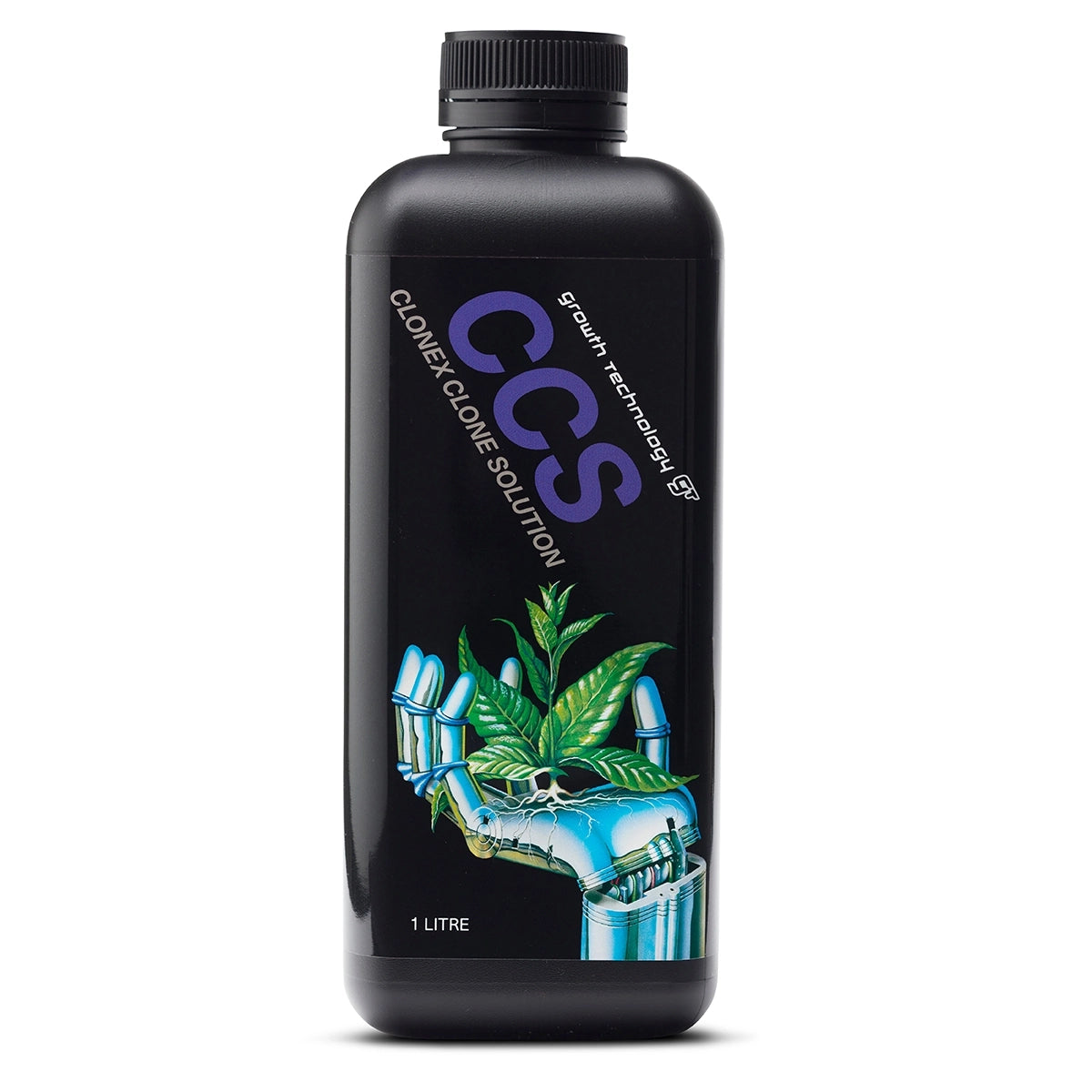
Technologie de croissance CCS (solution de clonage Clonex) - 1 litre

Prix habituel $112.98
Prix habituel Prix promotionnel $112.98
Frais d'expédition calculés à l'étape de paiement.

OTHER AVAILABLE SIZES / MODELS:

Store Availability
Estimated Delivery Date
Order Within
Province
Est. Delivery
$0.00
Ontario
$125.00
Canada
$149.99
Choose your province
Quantité
Qualifies for Free Shipping Promotion

Description

Description
Growth Technology CCS (Clonex Clone Solution) est une solution nutritive pour le clonage et la propagation qui favorise une croissance et un développement racinaire rapides et sains des boutures, des clones et des semis. Ce nutriment de propagation spécialement conçu a été formulé pour donner aux jeunes plantes un bon départ au moment où l'enracinement précoce et l'établissement sont les plus importants.

Le CCS est spécifiquement formulé pour une croissance et un développement racinaire rapides, sains et vigoureux, aidant les nouvelles racines à se former et à prendre de l'élan pendant les premiers stades. Étant donné qu'il est destiné à la propagation, il se concentre sur le soutien d'un développement racinaire fort et d'une croissance précoce saine plutôt que de favoriser une alimentation lourde et mature. Le résultat est une base plus propre et plus contrôlée pour les jeunes plantes, avec une nutrition axée sur les performances des premiers stades.

Il s'agit d'un additif formulé avec précision, avec un profil prêt à l'emploi par les plantes, décrit comme hautement biodisponible. Le CCS est tamponné en pH, aucun ajustement de pH n'étant nécessaire avec la plupart des eaux du robinet, ce qui contribue à rendre la nutrition des premiers stades plus cohérente. Il est également garanti sans chlorures, urée et sodium potentiellement nocifs et inefficaces, un détail que de nombreux cultivateurs recherchent lors du choix des intrants pour les boutures et les semis sensibles. La formule comprend des oligo-éléments chélatés et est fabriquée avec des matières premières de haute qualité pour faciliter l'absorption pendant la propagation.

Pour une flexibilité du système, le CCS convient à l'hydroponie et au sol, et convient à l'application foliaire, à la propagation par l'eau et comme trempage du substrat. Cette gamme d'adaptabilité facilite le maintien d'une approche de propagation cohérente dans différentes configurations, tout en restant concentrée sur le même objectif : un développement racinaire vigoureux et une transition plus douce de la bouture ou du semis à la jeune plante établie.

C'est un bon choix pour les cultivateurs qui recherchent une solution de clonage et un nutriment de propagation dédiés qui favorisent un fort développement racinaire et une croissance précoce saine, en particulier lorsque l'enracinement précoce constant est la priorité.

Avantages du produit : Stade végétatif ; Intérieur ; Extérieur ; Arrosage régulier ; Systèmes d'arrosage ; Hydroponie ; Compatible avec la fibre de coco ; Application foliaire ; Sol ; Sans sol ; Développement racinaire ; Nutrition de démarrage ; Croissance vigoureuse ; Soutien à la transplantation ; Soutien à l'absorption d'azote ; Soutien aux nutriments essentiels ; Soutien aux oligo-éléments ; pH tamponné.

Analyse garantie : Azote nitrique (N) : 1,73 % ; Phosphore disponible (P2O5) : 0,33 % ; Potassium (K) : 2,16 % ; Calcium (Ca) : 1,06 % ; Magnésium total (Mg) : 0,4 % ; Soufre (S) : 0,11 % ; Fer total (Fe) : 0,03 % ; Manganèse total (Mn) : 0,01 % ; Bore (B) : 0,002 % ; Zinc (Zn) : 0,002 % ; Cuivre (Cu) : 0,002 % ; Molybdène (Mo) : 0,001 %.

How To Use

How to Use Technologie de croissance CCS (solution de clonage Clonex) - 1 litre

Step-by-step mixing and feeding instructions for Technologie de croissance CCS (solution de clonage Clonex) - 1 litre.

Mixing & preparation

Fill your reservoir or watering container with clean, room-temperature water first. Shake the bottle of Technologie de croissance CCS (solution de clonage Clonex) - 1 litre well before every use. Using the feeding schedule below, measure the recommended dose and add it directly to the water while stirring. Allow the solution to mix fully before adding any other fertilizers, additives, or supplements.

Always add nutrients to water — not the other way around. Mix thoroughly between products to ensure an even, stable nutrient solution.

Week-by-week feeding schedule

Vegetative stage — Soil

  • Week 1: mix 3.0 ml per litre of water or nutrient solution.
  • Week 2: mix 3.0 ml per litre of water or nutrient solution.
  • Week 3: mix 3.0 ml per litre of water or nutrient solution.
  • Week 4: mix 3.0 ml per litre of water or nutrient solution.

Flowering stage — Soil

  • Week 1: mix 3.0 ml per litre of water or nutrient solution.
  • Week 2: mix 3.0 ml per litre of water or nutrient solution.
  • Week 3: mix 3.0 ml per litre of water or nutrient solution.
  • Week 4: mix 3.0 ml per litre of water or nutrient solution.
  • Week 5: mix 3.0 ml per litre of water or nutrient solution.
  • Week 6: mix 3.0 ml per litre of water or nutrient solution.
  • Week 7: mix 3.0 ml per litre of water or nutrient solution.
  • Week 8: mix 3.0 ml per litre of water or nutrient solution.

Vegetative stage — Hydroponics

  • Week 1: mix 5.0 ml per litre of water or nutrient solution.
  • Week 2: mix 5.0 ml per litre of water or nutrient solution.
  • Week 3: mix 5.0 ml per litre of water or nutrient solution.
  • Week 4: mix 5.0 ml per litre of water or nutrient solution.

Flowering stage — Hydroponics

  • Week 1: mix 5.0 ml per litre of water or nutrient solution.
  • Week 2: mix 5.0 ml per litre of water or nutrient solution.
  • Week 3: mix 5.0 ml per litre of water or nutrient solution.
  • Week 4: mix 5.0 ml per litre of water or nutrient solution.
  • Week 5: mix 5.0 ml per litre of water or nutrient solution.
  • Week 6: mix 5.0 ml per litre of water or nutrient solution.
  • Week 7: mix 5.0 ml per litre of water or nutrient solution.
  • Week 8: mix 5.0 ml per litre of water or nutrient solution.
Tips for best results
  • Maintain pH and EC/ppm within the range recommended for your growing medium and crop.
  • Use fresh nutrient solution whenever possible and avoid leaving mixed solution stagnant for long periods.
  • Store nutrients in a cool, dark place away from direct sunlight and extreme temperatures.
  • Keep bottles tightly sealed when not in use to reduce air exposure and preserve product quality.
  • Use clean measuring tools and regularly rinse or clean your reservoir, lines, and irrigation equipment.
Common mistakes to avoid
  • Do not mix different nutrients or additives together in concentrated form before adding them to water.
  • Do not exceed the recommended dosage unless you are following a tested, crop-specific feeding plan.
  • Do not skip pH or EC/ppm checks when growing in hydroponic or soilless systems.
  • Do not allow the nutrient solution to freeze or overheat, as this can damage the formulation.
  • Do not ignore the directions on the product label for your specific crop, growth stage, and system type.

Warnings & Safety

Important – Safety Information

This product may cause mild skin irritation and eye irritation. Avoid unnecessary contact with skin, eyes, and clothing. Use only as directed.

General Safety Precautions

Read and follow all instructions on the product label and any accompanying documentation before use. Keep out of reach of children and pets. Do not ingest. Avoid breathing vapours, mist, or dust that may be generated during handling or use.

Wear appropriate personal protective equipment (PPE), such as protective gloves, long sleeves, long pants and closed-toe footwear. When there is a risk of splashing or airborne particles, use safety glasses or other suitable eye and face protection.

First Aid – Skin Contact

IF ON SKIN OR HAIR: Remove contaminated clothing immediately. Rinse skin with clean water for several minutes, then wash with mild soap and water. If irritation or redness develops and persists, seek medical attention. Wash contaminated clothing before reuse.

First Aid – Eye Contact

IF IN EYES: Rinse cautiously with clean water for several minutes, keeping eyelids open. Remove contact lenses if present and easy to do. Continue rinsing. If irritation persists, obtain medical advice.

First Aid – Ingestion

IF SWALLOWED: Rinse mouth thoroughly with water. Do not induce vomiting unless instructed by a medical professional. Seek medical attention if you feel unwell.

First aid – Inhalation

IF INHALED: Move the person to fresh air and keep them comfortable for breathing. If coughing, breathing difficulty, dizziness or other symptoms occur, seek medical assistance.

Storage And Handling

Store this product in its original closed container, in a cool, dry and well-ventilated area. Protect from extreme temperatures and direct sunlight. Keep container tightly sealed when not in use.

Avoid release to drains, natural waterways or outdoor soil. Dispose of unused product and empty containers in accordance with local regulations and the directions on the label.

Important – Medical

If medical advice is needed, keep the product label or container available. Always follow the specific instructions and safety recommendations provided by the manufacturer. This safety notice is intended as general guidance and does not replace official label directions or documentation.

Guaranteed Minimum Analysis

Frequently Asked Questions

What does nitrate nitrogen (N) do for plants?

Nitrate Nitrogen provides a stable, easy-to-absorb form of nitrogen that supports steady growth, strong foliage, and reliable plant development without sudden nutrient swings.

What does available phosphorus do for plants?

Available phosphorus supports root growth, energy production, and strong flowering by providing a form of phosphorus that plants can absorb immediately.

Why is potassium (K) important for plant growth and why is it unique compared to other major nutrients?

Potassium is important because it controls key plant systems like water regulation, sugar transport, and nutrient movement, which supports stronger stems and better flowering or fruit quality. It’s unique because it doesn’t mainly build plant tissue like other major nutrients—it helps the plant use and manage what it already has, so small imbalances can affect the whole plant.

Why is calcium important for plant growth?

Calcium is important because it builds and stabilizes plant cells as they form, acting as the structural support that keeps new growth strong and functional. Unlike other nutrients that drive color or speed of growth, calcium’s role is unique because it controls cell wall strength and membrane stability, making it essential for healthy roots, shoots, and long-term plant resilience rather than quick visual results.

Why is total magnesium (Mg) important for plant growth?

Total magnesium is important because magnesium powers chlorophyll and energy use, helping plants stay green, turn light into growth, and use other nutrients efficiently—and it’s unique because its problems often come from nutrient balance and uptake competition, not just a simple shortage.

Why is sulfur (S) important for plant growth?

Sulfur is important because plants need it to build key amino acids and proteins that drive real growth, strong structure, and efficient use of nitrogen, making it uniquely different from “look-alike” nutrients that may change leaf color without supporting the plant’s core building process.

Why is total iron (Fe) important for plant growth?

Total iron (Fe) matters because iron supports chlorophyll development and plant energy systems, keeping new growth green and vigorous; it’s unique from many other nutrients because iron deficiency usually shows up first in young leaves even when older leaves stay green, since iron doesn’t easily move within the plant.

Why is total manganese (Mn) important for plant growth?

Total manganese matters because it supports photosynthesis and enzyme activity that keep new growth green and vigorous, and it’s unique because “total” manganese measures what’s present but not necessarily what the plant can absorb—so pH and root conditions decide whether manganese helps or harms.

Why is boron (B) essential for strong plant development, and what makes it different from other micronutrients?

Boron is essential because it stabilizes cell walls, supports root and shoot growth, and regulates sugar movement throughout the plant. What makes boron unique is its limited mobility and extremely narrow range between deficiency and excess, which causes new growth to show symptoms rapidly when levels fall out of balance.

Why is zinc (Zn) important for plant growth?

Zinc is important because it powers key enzymes and helps regulate growth hormones, which directly controls healthy new leaves, normal internode spacing, and strong growth tips; it’s unique compared to many other micronutrients because zinc problems often show up as distorted, undersized new growth and stunting, not just simple leaf yellowing.

Why is copper (Cu) important for plant growth?

Copper is important because it powers key enzymes that support energy use, tissue strength, and stress protection, and it’s unique from many other micronutrients because plants need it in tiny amounts but can be harmed quickly if copper becomes excessive.

Why is molybdenum (Mo) important for plant growth?

Molybdenum is important because it helps plants convert nitrogen into usable building blocks for chlorophyll and growth, and it’s unique from many nutrients because it mainly supports enzyme-driven “nutrient use” rather than directly building plant tissue.

Afficher tous les détails
Nutrient Feed Chart

Vegetative — Soil

Flowering — Soil

Product Comparison