

Frequently purchased together
-
Mélange de plantes hydroponiques General – 1 pinte
Prix habituel $21.09Prix habituel -
Flora Nova Bloom de General Hydroponics - 1 pinte
Prix habituel $52.99Prix habituel -
Flora Nova Grow de General Hydroponics - 1 pinte
Prix habituel $52.99Prix habituel -
General Hydroponics Floralicious Plus - 1 pinte
Prix habituel $109.99Prix habituel


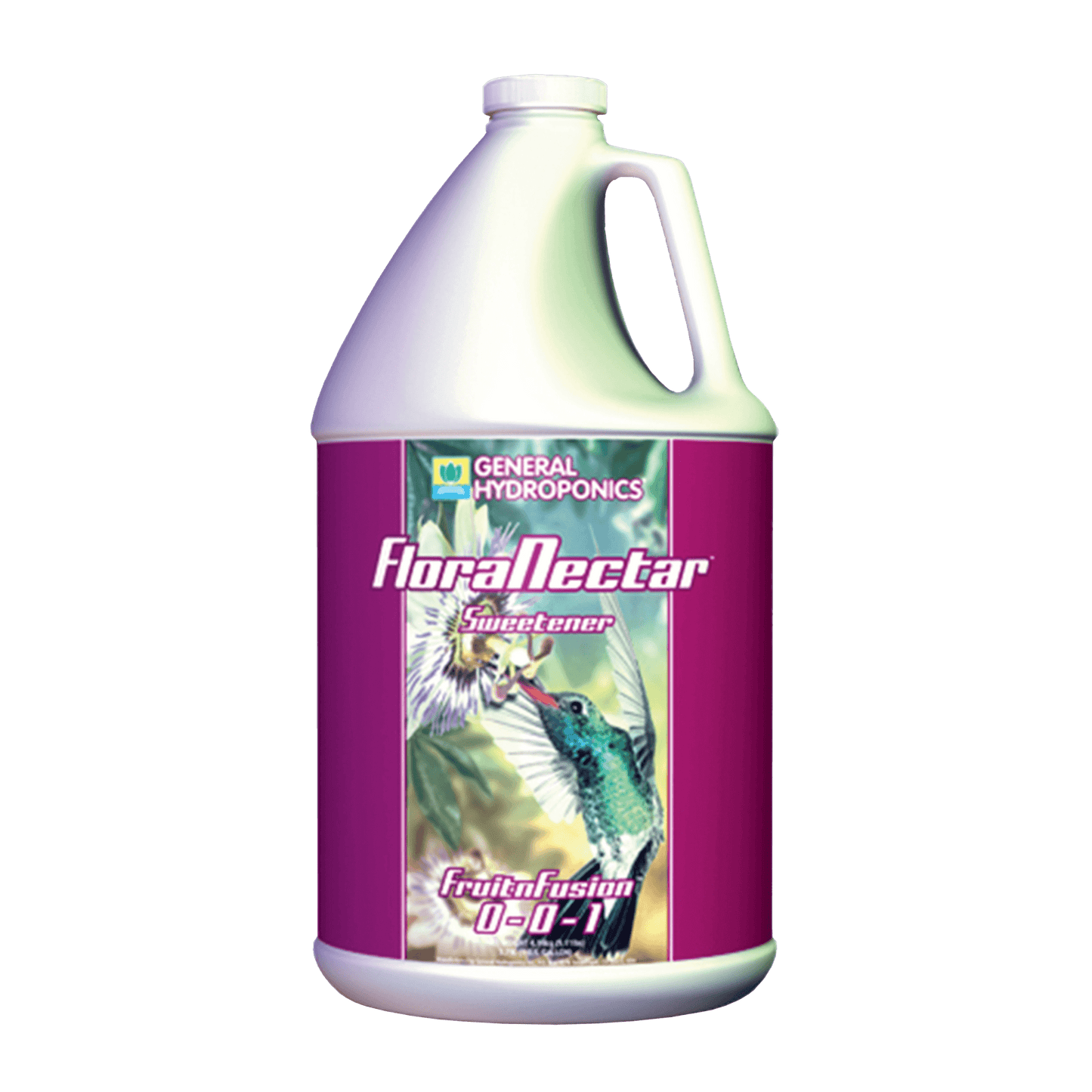
Nectar de floraison General Hydroponics FruitnFusion - 1 gallon
Newmarket, Ontario (Head Office)
1175 Stellar Drive, Unit #5
Newmarket, ON L3Y 7B8
- Mon10:00am–6:00pm
- Tue10:00am–6:00pm
- Wed10:00am–6:00pm
- Thu10:00am–6:00pm
- Fri10:00am–6:00pm
- Sat10:00am–4:00pm
- SunClosed


Barrie, Ontario
106 Saunders Road, Unit #2A
Barrie, ON L4N 9A8
- Mon10:00am–5:00pm
- Tue10:00am–5:00pm
- Wed10:00am–5:00pm
- Thu10:00am–5:00pm
- Fri10:00am–5:00pm
- Sat10:00am–3:00pm
- SunClosed
Winnipeg, Manitoba
915 McLeod Avenue, Unit #4
Winnipeg, MB R2G 0Y4
- Mon10:00am–6:00pm
- Tue10:00am–6:00pm
- Wed10:00am–6:00pm
- Thu10:00am–6:00pm
- Fri10:00am–6:00pm
- Sat11:00am–3:00pm
- SunClosed
Sign in required
Back-in-stock notification
Select the store locations where you’d like to pick up this item, or choose Shipping to have it delivered.
Special order request
Select the store where you’d prefer to pick up your special order. To choose a different store, unselect your current choice first.
Description
Description
Description
FloraNectar FruitnFusion est conçu autour d'un mélange de minéraux et de mélasse naturelle, et il contient également du sucre de canne brut entièrement naturel et du sirop de malt comme base édulcorante. La formule comprend des esters végétaux sélectionnés, des acides aminés L, des acides organiques, des polyflavonoïdes, des vitamines et des minéraux essentiels dans un profil compact et ciblé. Son NPK est de 0-0-1, ce qui met l'accent sur le soutien axé sur la saveur plutôt que sur la nutrition de base.
Dans les environnements de culture à forte intensité, l'équilibre entre la respiration et la photosynthèse peut changer lorsque les plantes brûlent rapidement de l'énergie. FloraNectar FruitnFusion est destiné à aider les plantes à atteindre un meilleur équilibre entre la respiration et la photosynthèse en soutenant l'activité enzymatique liée au maintien d'un métabolisme optimal. Ce soutien métabolique est particulièrement pertinent pendant la phase de floraison et de fructification lorsque les niveaux d'azote ont été réduits, aidant les plantes à rester productives à mesure qu'elles s'engagent plus profondément dans la reproduction.
Les producteurs de fruits et de fleurs recherchent souvent un soutien qui correspond aux objectifs de qualité sans ajouter de complexité. FloraNectar FruitnFusion est positionné pour optimiser le transfert maximal de douceur et d'arôme dans vos fruits et fleurs, tout en soutenant la performance globale de la plante tout au long du cycle de culture. Il favorise également une structure végétale plus robuste pendant la phase végétative lorsque des niveaux élevés d'azote sont présents, aidant les plantes à se tenir avec confiance à mesure que la croissance s'accélère.
Pour une flexibilité d'installation, FloraNectar FruitnFusion convient à la laine de roche, à la fibre de coco, au terreau, au mélange de tourbe légère et au sol en pleine terre. Il est recommandé pour les légumes, les herbes, les fruits, les fleurs et autres cultures de grande valeur, ce qui en fait une option pratique pour les jardins mixtes ainsi que pour les cultures fruitières et florales ciblées. C'est un bon choix pour les cultivateurs qui veulent un édulcorant naturel, un exhausteur de saveur végétale et un soutien métabolique visant une structure plus forte en croissance végétative et une performance de douceur et d'arôme pendant la floraison et la fructification.
Avantages du produit : Stade végétatif ; Stade de floraison ; Intérieur ; Extérieur ; Arrosage régulier ; Systèmes d'arrosage ; Hydroponie ; Compatible fibre de coco ; Sol ; Hors-sol ; Meilleure saveur ; Amélioration de l'arôme ; Soutien du métabolisme ; Équilibre respiratoire ; Soutien de la floraison ; Structure plus forte ; Soutien de la production d'énergie ; Soutien de la transition.
Analyse garantie : Potasse soluble (K2O) : 1,0 % ; Magnésium total (Mg) : 0,5 % ; Soufre (S) : 1,0 %.
Dérivé de : Sulfate de magnésium ; Mélasse ; Sulfate de potassium.
How To Use
How To Use
How to Use Nectar de floraison General Hydroponics FruitnFusion - 1 gallon
Step-by-step mixing and feeding instructions for Nectar de floraison General Hydroponics FruitnFusion - 1 gallon.
Mixing & preparation
Fill your reservoir or watering container with clean, room-temperature water first. Shake the bottle of Nectar de floraison General Hydroponics FruitnFusion - 1 gallon well before every use. Using the feeding schedule below, measure the recommended dose and add it directly to the water while stirring. Allow the solution to mix fully before adding any other fertilizers, additives, or supplements.
Always add nutrients to water — not the other way around. Mix thoroughly between products to ensure an even, stable nutrient solution.
Week-by-week feeding schedule
Vegetative stage — Flora Nectar
- Week 1: mix 1.25 ml per litre of water or nutrient solution.
- Week 2: mix 1.25 ml per litre of water or nutrient solution.
- Week 3: mix 1.25 ml per litre of water or nutrient solution.
- Week 4: mix 1.25 ml per litre of water or nutrient solution.
Flowering stage — Flora Nectar
- Week 1: mix 2.5 ml per litre of water or nutrient solution.
- Week 2: mix 2.5 ml per litre of water or nutrient solution.
- Week 3: mix 2.5 ml per litre of water or nutrient solution.
- Week 4: mix 2.5 ml per litre of water or nutrient solution.
- Week 5: mix 2.5 ml per litre of water or nutrient solution.
- Week 6: mix 2.5 ml per litre of water or nutrient solution.
- Week 7: mix 2.5 ml per litre of water or nutrient solution.
- Week 8: do not use this product during this week of flowering.
Tips for best results
- Maintain pH and EC/ppm within the range recommended for your growing medium and crop.
- Use fresh nutrient solution whenever possible and avoid leaving mixed solution stagnant for long periods.
- Store nutrients in a cool, dark place away from direct sunlight and extreme temperatures.
- Keep bottles tightly sealed when not in use to reduce air exposure and preserve product quality.
- Use clean measuring tools and regularly rinse or clean your reservoir, lines, and irrigation equipment.
Common mistakes to avoid
- Do not mix different nutrients or additives together in concentrated form before adding them to water.
- Do not exceed the recommended dosage unless you are following a tested, crop-specific feeding plan.
- Do not skip pH or EC/ppm checks when growing in hydroponic or soilless systems.
- Do not allow the nutrient solution to freeze or overheat, as this can damage the formulation.
- Do not ignore the directions on the product label for your specific crop, growth stage, and system type.
Warnings & Safety
Warnings & Safety
Important – Safety Information
General Safety Precautions
First Aid – Skin Contact
First Aid – Eye Contact
First Aid – Ingestion
First aid – Inhalation
Storage And Handling
Important – Medical
Guaranteed Minimum Analysis
Guaranteed Minimum Analysis
| Soluble Potash (K2O) | 1.0% |
|---|---|
| Total Magnesium (Mg) | 0.5% |
| Sulfur (S) | 1.0% |
Derived From
Derived From
Frequently Asked Questions
Frequently Asked Questions
Why is soluble potash (K2O) important for plants?
Why is total magnesium (Mg) important for plant growth?
Why is sulfur (S) important for plant growth?
Why is molasses important for plant growth, and what makes it unique compared to other inputs?
What does magnesium sulfate do for plants?
Is potassium sulfate better than other potassium sources for sensitive plants?
Safety & Technical Documents
Safety & Technical Documents
Frequently purchased together
-
Mélange de plantes hydroponiques General – 1 pinte
Prix habituel $21.09Prix habituel -
Flora Nova Bloom de General Hydroponics - 1 pinte
Prix habituel $52.99Prix habituel -
Flora Nova Grow de General Hydroponics - 1 pinte
Prix habituel $52.99Prix habituel -
General Hydroponics Floralicious Plus - 1 pinte
Prix habituel $109.99Prix habituel

Vegetative — Flora Nectar
-
—
Flowering — Flora Nectar
-
—