Frequently purchased together
-
Farine d'os GardenPro 2-11-0 - 1,2 kg
Prix habituel $15.70Prix habituel -
Sulfate d'aluminium GardenPro - 2 kg
Prix habituel $23.56Prix habituel -
-
Engrais pour rosiers GardenPro 8-14-12 + Micro-éléments - 1,8 kg
Prix habituel $15.70Prix habituel


Reviews are submitted by verified customers after purchase. This section shows a summary of product feedback rather than the full individual review list.

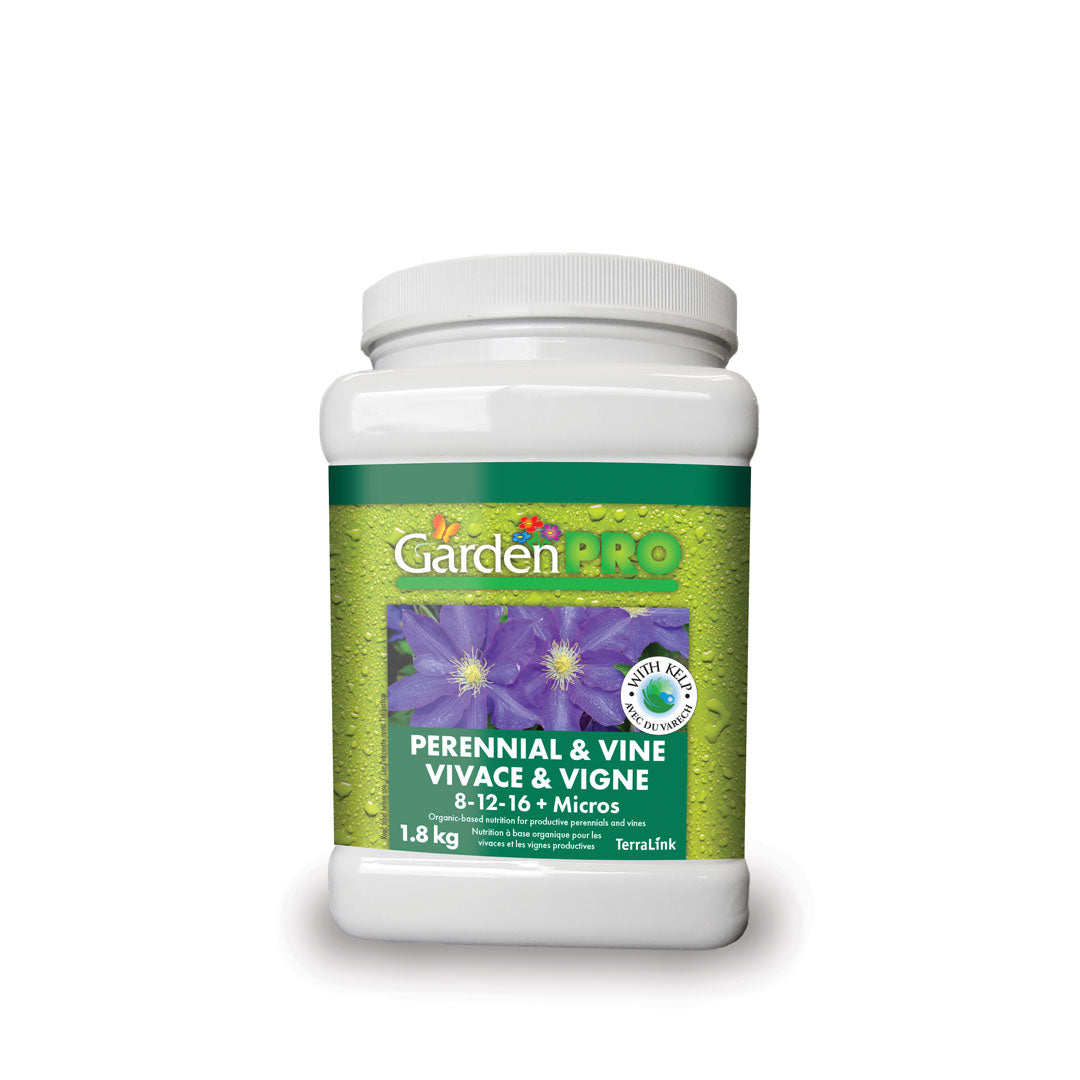
Engrais pour plantes vivaces et grimpantes GardenPro 8-12-16 + Micro-engrais - 1,8 kg
Prix habituel
$15.96
Prix habituel
Prix promotionnel
$15.96
Frais d'expédition calculés à l'étape de paiement.
Store Availability
Newmarket, Ontario (Head Office)
1175 Stellar Drive, Unit #5
Newmarket, ON L3Y 7B8
- Mon10:00am–6:00pm
- Tue10:00am–6:00pm
- Wed10:00am–6:00pm
- Thu10:00am–6:00pm
- Fri10:00am–6:00pm
- Sat10:00am–4:00pm
- SunClosed


Barrie, Ontario
106 Saunders Road, Unit #2A
Barrie, ON L4N 9A8
- Mon10:00am–5:00pm
- Tue10:00am–5:00pm
- Wed10:00am–5:00pm
- Thu10:00am–5:00pm
- Fri10:00am–5:00pm
- Sat10:00am–3:00pm
- SunClosed
Winnipeg, Manitoba
915 McLeod Avenue, Unit #4
Winnipeg, MB R2G 0Y4
- Mon10:00am–6:00pm
- Tue10:00am–6:00pm
- Wed10:00am–6:00pm
- Thu10:00am–6:00pm
- Fri10:00am–6:00pm
- Sat11:00am–3:00pm
- SunClosed
Estimated Delivery Date
Order Within
—
Province
Est. Delivery
—
Quantité
Qualifies for Free Shipping Promotion
Sign in required
Back-in-stock notification
Select the store locations where you’d like to pick up this item, or choose Shipping to have it delivered.
Email notifications are turned off
Turn on email marketing to receive back-in-stock notifications.
Open account profile
Special order request
Select the store where you’d prefer to pick up your special order. To choose a different store, unselect your current choice first.
Description
Description
Description
Le GardenPRO Vivaces et Vignes 8-12-16 est un engrais granulaire pour vivaces et vignes, conçu pour fournir une nutrition organique qui favorise une croissance vigoureuse et une floraison abondante. Cet aliment granulaire pour plantes est destiné aux vivaces productives et aux plantes grimpantes où une performance constante tout au long de la saison et un fort déploiement sont la priorité.
Les plantations vivaces ont souvent besoin d'un engrais qui maintient un feuillage dense tout en favorisant le potentiel de floraison, surtout une fois que les plantes sont établies et reviennent année après année. Le GardenPRO Vivaces et Vignes 8-12-16 est positionné pour toutes les vivaces herbacées et les vignes, ce qui en fait un choix facile pour les bordures mixtes où les vivaces à fleurs partagent l'espace avec les plantes grimpantes ornementales. C'est également un choix pratique pour les jardiniers qui cultivent des clématites, où une nutrition constante aide à soutenir un spectacle fort sans compliquer votre routine.
Cette formule est décrite comme enrichie en soufre, fer, zinc et varech granulaire, ce qui lui confère un angle clair de « soutien supplémentaire » au-delà du NPK de base. Ces ajouts sont inclus pour des avantages tels que le soutien du développement des racines, la stimulation de la photosynthèse et l'amélioration de la résistance des plantes aux conditions difficiles. En termes de jardinage réel, cela se traduit par des habitudes de croissance plus robustes, un feuillage plus beau et une performance plus fiable lorsque les conditions météorologiques et extérieures ne sont pas idéales.
La couche de faits reste simple et conviviale pour le client. L'analyse indiquée est 8-12-16, et les intrants clés mis en évidence sont le soufre, le fer, le zinc et le varech granulaire. Ensemble, ils renforcent le rôle de ce produit en tant qu'engrais pour vivaces et vignes à base organique, axé à la fois sur la vigueur des plantes et la performance de la floraison, plutôt qu'un amendement spécialisé à usage unique.
Le GardenPRO Vivaces et Vignes 8-12-16 convient parfaitement aux jardiniers qui souhaitent un engrais granulaire pour les vivaces herbacées et les vignes en pleine terre ou en pots, avec une nutrition à base organique et des apports supplémentaires qui soutiennent le développement des racines, la photosynthèse et la résilience des plantes pour une couleur et une croissance saisonnières fortes.
Avantages du produit : Stade végétatif ; Stade de floraison ; Intérieur ; Extérieur ; Arrosage régulier ; Sol ; Hors-sol ; Biologique ; Croissance vigoureuse ; Soutien à la floraison ; Performance constante ; Développement des racines ; Soutien à la photosynthèse ; Soutien au stress ; Structure plus forte ; Vigueur des plantes.
Analyse garantie : Azote total (N) : 8,0 % ; Acide phosphorique disponible (P2O5) : 12,0 % ; Potasse soluble (K2O) : 16,0 % ; Calcium (Ca) : 1,0 % ; Fer total (Fe) : 0,1 % ; Zinc (Zn) : 0,1 % ; Matière organique : 15,0 %.
Dérivé de : Phosphate monoammonique ; Urée ; Muriate de potasse ; Sulfate de zinc ; Oxyde de fer ; Farine de varech ; Farine de plumes ; Phosphate de roche tendre ; Calcaire.
Les plantations vivaces ont souvent besoin d'un engrais qui maintient un feuillage dense tout en favorisant le potentiel de floraison, surtout une fois que les plantes sont établies et reviennent année après année. Le GardenPRO Vivaces et Vignes 8-12-16 est positionné pour toutes les vivaces herbacées et les vignes, ce qui en fait un choix facile pour les bordures mixtes où les vivaces à fleurs partagent l'espace avec les plantes grimpantes ornementales. C'est également un choix pratique pour les jardiniers qui cultivent des clématites, où une nutrition constante aide à soutenir un spectacle fort sans compliquer votre routine.
Cette formule est décrite comme enrichie en soufre, fer, zinc et varech granulaire, ce qui lui confère un angle clair de « soutien supplémentaire » au-delà du NPK de base. Ces ajouts sont inclus pour des avantages tels que le soutien du développement des racines, la stimulation de la photosynthèse et l'amélioration de la résistance des plantes aux conditions difficiles. En termes de jardinage réel, cela se traduit par des habitudes de croissance plus robustes, un feuillage plus beau et une performance plus fiable lorsque les conditions météorologiques et extérieures ne sont pas idéales.
La couche de faits reste simple et conviviale pour le client. L'analyse indiquée est 8-12-16, et les intrants clés mis en évidence sont le soufre, le fer, le zinc et le varech granulaire. Ensemble, ils renforcent le rôle de ce produit en tant qu'engrais pour vivaces et vignes à base organique, axé à la fois sur la vigueur des plantes et la performance de la floraison, plutôt qu'un amendement spécialisé à usage unique.
Le GardenPRO Vivaces et Vignes 8-12-16 convient parfaitement aux jardiniers qui souhaitent un engrais granulaire pour les vivaces herbacées et les vignes en pleine terre ou en pots, avec une nutrition à base organique et des apports supplémentaires qui soutiennent le développement des racines, la photosynthèse et la résilience des plantes pour une couleur et une croissance saisonnières fortes.
Avantages du produit : Stade végétatif ; Stade de floraison ; Intérieur ; Extérieur ; Arrosage régulier ; Sol ; Hors-sol ; Biologique ; Croissance vigoureuse ; Soutien à la floraison ; Performance constante ; Développement des racines ; Soutien à la photosynthèse ; Soutien au stress ; Structure plus forte ; Vigueur des plantes.
Analyse garantie : Azote total (N) : 8,0 % ; Acide phosphorique disponible (P2O5) : 12,0 % ; Potasse soluble (K2O) : 16,0 % ; Calcium (Ca) : 1,0 % ; Fer total (Fe) : 0,1 % ; Zinc (Zn) : 0,1 % ; Matière organique : 15,0 %.
Dérivé de : Phosphate monoammonique ; Urée ; Muriate de potasse ; Sulfate de zinc ; Oxyde de fer ; Farine de varech ; Farine de plumes ; Phosphate de roche tendre ; Calcaire.
How To Use
How To Use
Perennials
Clematis & Vines
Warnings & Safety
Warnings & Safety
Important – Safety Information
General Safety Precautions
First Aid – Skin Contact
First Aid – Eye Contact
First Aid – Ingestion
First aid – Inhalation
Storage And Handling
Important – Medical
Guaranteed Minimum Analysis
Guaranteed Minimum Analysis
| Total Nitrogen (N) | 8.0% |
|---|---|
| Available Phosphoric Acid (P2O5) | 12.0% |
| Soluble Potash (K2O) | 16.0% |
| Calcium (Ca) | 1.0% |
| Total Iron (Fe) | 0.1% |
| Zinc (Zn) | 0.1% |
| Organic Matter | 15.0% |
Frequently Asked Questions
Frequently Asked Questions
Why is total nitrogen (N) important for plant growth, and what makes it different from other nutrients?
What does available phosphoric acid (P₂O₅) do for plants, and how is it different from available phosphate?
Why is soluble potash (K2O) important for plants?
Why is calcium important for plant growth?
Why is total iron (Fe) important for plant growth?
Why is zinc (Zn) important for plant growth?
Why is organic matter important for plant growth?
What does feather meal do for plants?
What does monoammonium phosphate actually do for plant roots?
Why can urea burn plants even though it’s a common nitrogen fertilizer?
What does muriate of potash do for plants?
What does zinc sulfate do for plants?
Why can plants show iron deficiency even when iron oxide is listed on the fertilizer label?
What does kelp meal do for plants?
Is soft rock phosphate a good choice for boosting flowering and root growth?
Does limestone help plants grow better?
Frequently purchased together
-
Farine d'os GardenPro 2-11-0 - 1,2 kg
Prix habituel $15.70Prix habituel -
Sulfate d'aluminium GardenPro - 2 kg
Prix habituel $23.56Prix habituel -
-
Engrais pour rosiers GardenPro 8-14-12 + Micro-éléments - 1,8 kg
Prix habituel $15.70Prix habituel
Reviews are submitted by verified customers after purchase. This section shows a summary of product feedback rather than the full individual review list.