Frequently purchased together
-
Gaia Green tout usage - 2 kg
Prix habituel $27.99Prix habituel -
Farine d'os verte Gaia - 2 kg
Prix habituel $23.99Prix habituel -
Farine de plumes vertes Gaia - 1,5 kg
Prix habituel $18.43Prix habituel -


Reviews are submitted by verified customers after purchase. This section shows a summary of product feedback rather than the full individual review list.

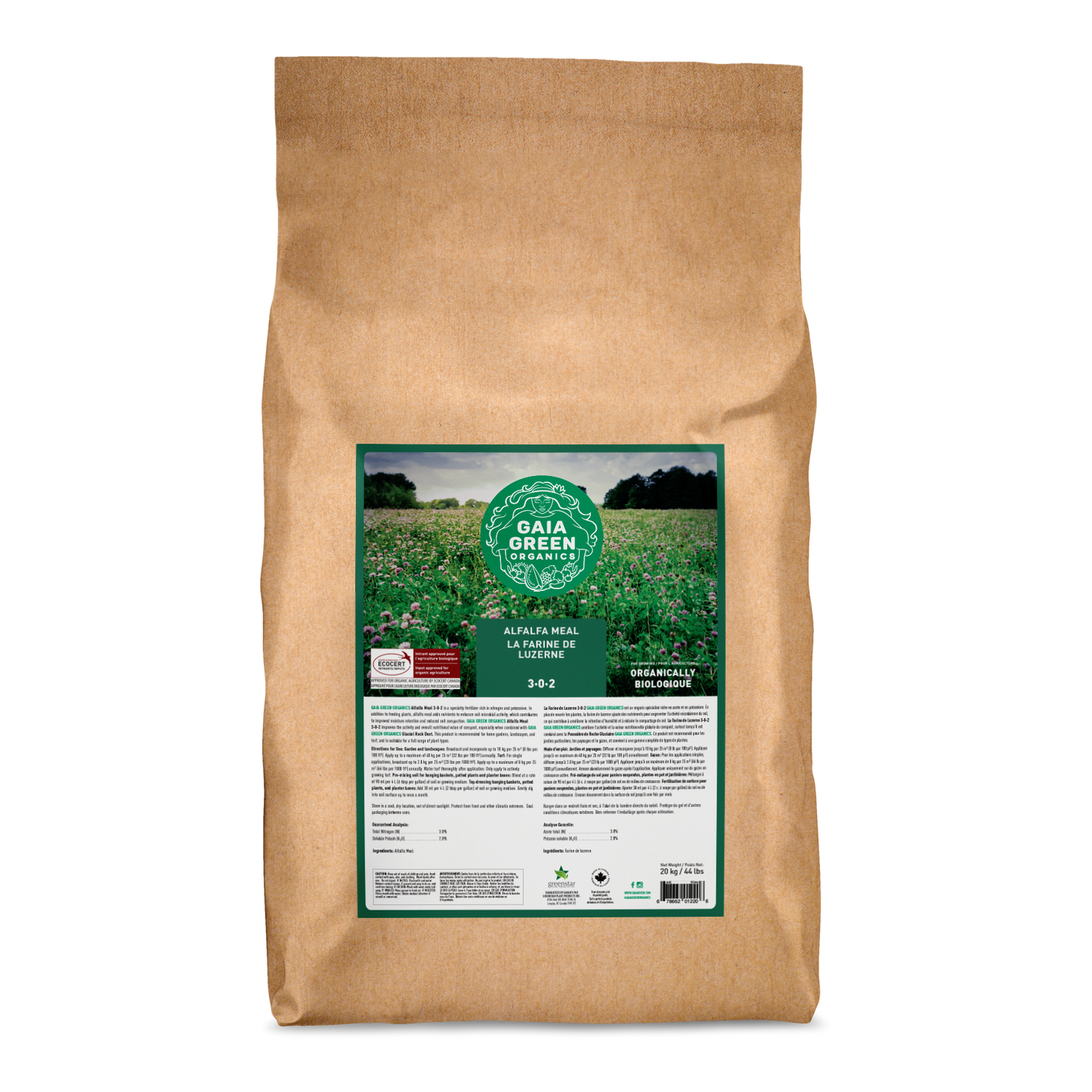
Farine de luzerne verte Gaia - 20 kg
Prix habituel
$65.12
Prix habituel
Prix promotionnel
$65.12
Frais d'expédition calculés à l'étape de paiement.
Store Availability
Newmarket, Ontario (Head Office)
1175 Stellar Drive, Unit #5
Newmarket, ON L3Y 7B8
- Mon10:00am–6:00pm
- Tue10:00am–6:00pm
- Wed10:00am–6:00pm
- Thu10:00am–6:00pm
- Fri10:00am–6:00pm
- Sat10:00am–4:00pm
- SunClosed


Barrie, Ontario
106 Saunders Road, Unit #2A
Barrie, ON L4N 9A8
- Mon10:00am–5:00pm
- Tue10:00am–5:00pm
- Wed10:00am–5:00pm
- Thu10:00am–5:00pm
- Fri10:00am–5:00pm
- Sat10:00am–3:00pm
- SunClosed
Winnipeg, Manitoba
915 McLeod Avenue, Unit #4
Winnipeg, MB R2G 0Y4
- Mon10:00am–6:00pm
- Tue10:00am–6:00pm
- Wed10:00am–6:00pm
- Thu10:00am–6:00pm
- Fri10:00am–6:00pm
- Sat11:00am–3:00pm
- SunClosed
Quantité
In-Store Pickup Only
Sign in required
Back-in-stock notification
Select the store locations where you’d like to pick up this item, or choose Shipping to have it delivered.
Email notifications are turned off
Turn on email marketing to receive back-in-stock notifications.
Open account profile
Special order request
Select the store where you’d prefer to pick up your special order. To choose a different store, unselect your current choice first.
Description
Description
Description
La farine de luzerne Gaia Green est un engrais de spécialité Gaia Green pour améliorer la fertilité du sol et la croissance des plantes, fabriquée à partir de farine de luzerne pour fournir une source naturelle de nutrition au jardin.
Cet engrais de spécialité biologique est décrit comme riche en azote et en potassium, lui conférant un rôle clair lorsque vous souhaitez un apport axé sur les ingrédients qui favorise une croissance régulière. Parce que la farine de luzerne se décompose facilement pour libérer les nutriments, elle convient bien aux cultivateurs qui préfèrent une nutrition qui devient disponible à mesure que le matériau se décompose plutôt que d'un seul coup. Gaia Green note également qu'il n'y a aucun risque de brûlure, ce qui aide à rendre l'approche d'alimentation confortable pour les jardiniers qui veulent une nutrition fiable sans agressivité.
Au-delà de la nutrition de base, la farine de luzerne Gaia Green est positionnée comme un produit de soutien du sol. Elle ajoute des nutriments pour améliorer l'activité microbienne du sol, et ce soutien microbien est lié à des résultats pratiques dans la zone racinaire. Le produit est décrit comme contribuant à une meilleure rétention d'humidité et à une réduction du compactage du sol, deux avantages importants lorsque vous essayez d'empêcher le sol de sécher trop rapidement ou de devenir compact et croûteux. Ces améliorations axées sur le sol peuvent aider les plantes à rester plus constantes dans les conditions quotidiennes, en particulier dans les plates-bandes et les jardins qui connaissent des cycles d'arrosage fréquents ou des changements climatiques.
La farine de luzerne est également présentée comme un excellent activateur de compost, ce qui en fait un choix utile pour les cultivateurs qui entretiennent des tas de compost et souhaitent soutenir l'activité globale du compost et sa valeur nutritionnelle. Dans ce rôle, elle fonctionne comme un moyen simple d'apporter de l'azote et du potassium d'origine végétale dans les processus de compostage, tout en s'inscrivant dans une approche de jardinage biologique.
Gaia Green souligne également qu'au-delà de l'azote et du potassium, la luzerne contient des composés connus pour bénéficier à la croissance des plantes. Cela fait de ce produit un bon choix lorsque vous recherchez un engrais à ingrédient unique qui soutient à la fois la nutrition et l'aspect vivant du sol, sans dépendre d'une liste complexe d'ingrédients.
Recommandée pour les jardins potagers, les aménagements paysagers et le gazon, la farine de luzerne Gaia Green convient parfaitement aux cultivateurs qui souhaitent une source naturelle et biologique d'azote et de potassium avec une valeur ajoutée en tant qu'activateur de compost et amendement de soutien du sol qui favorise une meilleure rétention d'humidité et une réduction du compactage du sol.
Avantages du produit : Stade végétatif ; Stade de floraison ; Intérieur ; Extérieur ; Compatible avec la fibre de coco ; Terre ; Sans terre ; Biologique ; Apport d'azote ; Apport de potassium ; Stimule l'activité microbienne ; Rétention d'humidité ; Compactage réduit ; Libération lente des nutriments ; Alimentation douce ; Activateur de compost.
Analyse garantie : Azote total (N) : 4,0 % ; Azote hydrosoluble (N) : 3,0 % ; Azote insoluble dans l'eau (N) : 1,0 % ; Acide phosphorique disponible (P2O5) : 4,0 % ; Potasse soluble (K2O) : 4,0 %.
Dérivé de : Farine d'arêtes de poisson ; Farine de plumes ; Farine de luzerne ; Phosphate de roche ; Sulfate de potasse ; Déjections d'insectes ; Hydrolysat de protéines de soja ; Gypse ; Extrait d'algues marines (Ascophyllum Nodosum) ; Farine de coquilles d'huîtres ; Sable vert.
Cet engrais de spécialité biologique est décrit comme riche en azote et en potassium, lui conférant un rôle clair lorsque vous souhaitez un apport axé sur les ingrédients qui favorise une croissance régulière. Parce que la farine de luzerne se décompose facilement pour libérer les nutriments, elle convient bien aux cultivateurs qui préfèrent une nutrition qui devient disponible à mesure que le matériau se décompose plutôt que d'un seul coup. Gaia Green note également qu'il n'y a aucun risque de brûlure, ce qui aide à rendre l'approche d'alimentation confortable pour les jardiniers qui veulent une nutrition fiable sans agressivité.
Au-delà de la nutrition de base, la farine de luzerne Gaia Green est positionnée comme un produit de soutien du sol. Elle ajoute des nutriments pour améliorer l'activité microbienne du sol, et ce soutien microbien est lié à des résultats pratiques dans la zone racinaire. Le produit est décrit comme contribuant à une meilleure rétention d'humidité et à une réduction du compactage du sol, deux avantages importants lorsque vous essayez d'empêcher le sol de sécher trop rapidement ou de devenir compact et croûteux. Ces améliorations axées sur le sol peuvent aider les plantes à rester plus constantes dans les conditions quotidiennes, en particulier dans les plates-bandes et les jardins qui connaissent des cycles d'arrosage fréquents ou des changements climatiques.
La farine de luzerne est également présentée comme un excellent activateur de compost, ce qui en fait un choix utile pour les cultivateurs qui entretiennent des tas de compost et souhaitent soutenir l'activité globale du compost et sa valeur nutritionnelle. Dans ce rôle, elle fonctionne comme un moyen simple d'apporter de l'azote et du potassium d'origine végétale dans les processus de compostage, tout en s'inscrivant dans une approche de jardinage biologique.
Gaia Green souligne également qu'au-delà de l'azote et du potassium, la luzerne contient des composés connus pour bénéficier à la croissance des plantes. Cela fait de ce produit un bon choix lorsque vous recherchez un engrais à ingrédient unique qui soutient à la fois la nutrition et l'aspect vivant du sol, sans dépendre d'une liste complexe d'ingrédients.
Recommandée pour les jardins potagers, les aménagements paysagers et le gazon, la farine de luzerne Gaia Green convient parfaitement aux cultivateurs qui souhaitent une source naturelle et biologique d'azote et de potassium avec une valeur ajoutée en tant qu'activateur de compost et amendement de soutien du sol qui favorise une meilleure rétention d'humidité et une réduction du compactage du sol.
Avantages du produit : Stade végétatif ; Stade de floraison ; Intérieur ; Extérieur ; Compatible avec la fibre de coco ; Terre ; Sans terre ; Biologique ; Apport d'azote ; Apport de potassium ; Stimule l'activité microbienne ; Rétention d'humidité ; Compactage réduit ; Libération lente des nutriments ; Alimentation douce ; Activateur de compost.
Analyse garantie : Azote total (N) : 4,0 % ; Azote hydrosoluble (N) : 3,0 % ; Azote insoluble dans l'eau (N) : 1,0 % ; Acide phosphorique disponible (P2O5) : 4,0 % ; Potasse soluble (K2O) : 4,0 %.
Dérivé de : Farine d'arêtes de poisson ; Farine de plumes ; Farine de luzerne ; Phosphate de roche ; Sulfate de potasse ; Déjections d'insectes ; Hydrolysat de protéines de soja ; Gypse ; Extrait d'algues marines (Ascophyllum Nodosum) ; Farine de coquilles d'huîtres ; Sable vert.
Warnings & Safety
Warnings & Safety
Important – Safety Information
General Safety Precautions
First Aid – Skin Contact
First Aid – Eye Contact
First Aid – Ingestion
First aid – Inhalation
Storage And Handling
Important – Medical
Guaranteed Minimum Analysis
Guaranteed Minimum Analysis
Frequently Asked Questions
Frequently Asked Questions
Why is total nitrogen (N) important for plant growth, and what makes it different from other nutrients?
Why is water-soluble nitrogen important for plant growth, and what makes it unique compared to other nitrogen sources?
Why is water insoluble nitrogen important for plant growth?
What does available phosphoric acid (P₂O₅) do for plants, and how is it different from available phosphate?
Why is soluble potash (K2O) important for plants?
What does fishbone meal do for plant roots?
What does feather meal do for plants?
What makes alfalfa meal important for plant growth compared to other natural amendments?
What makes natural rock phosphate different from other phosphorus sources for plant growth?
What does sulfate of potash do for plants?
What makes insect frass different from other organic soil amendments?
What does soy protein hydrolysate do for plants?
Does gypsum change soil pH?
Is seaweed a fertilizer or a plant booster?
What does oyster shell flour do for plants?
Is greensand a fast way to fix a potassium deficiency in plants?
Frequently purchased together
-
Gaia Green tout usage - 2 kg
Prix habituel $27.99Prix habituel -
Farine d'os verte Gaia - 2 kg
Prix habituel $23.99Prix habituel -
Farine de plumes vertes Gaia - 1,5 kg
Prix habituel $18.43Prix habituel -
Reviews are submitted by verified customers after purchase. This section shows a summary of product feedback rather than the full individual review list.