Frequently purchased together
-
Technologie de croissance complète Focus - 1 litre
Prix habituel $32.14Prix habituel -
Technologie de croissance Flower Focus - 1 litre
Prix habituel $32.14Prix habituel -
Technologie de croissance Foliage Focus - 1 litre
Prix habituel $32.14Prix habituel -
Technologie de croissance GT Silica - 1 litre
Prix habituel $31.16Prix habituel


Reviews are submitted by verified customers after purchase. This section shows a summary of product feedback rather than the full individual review list.

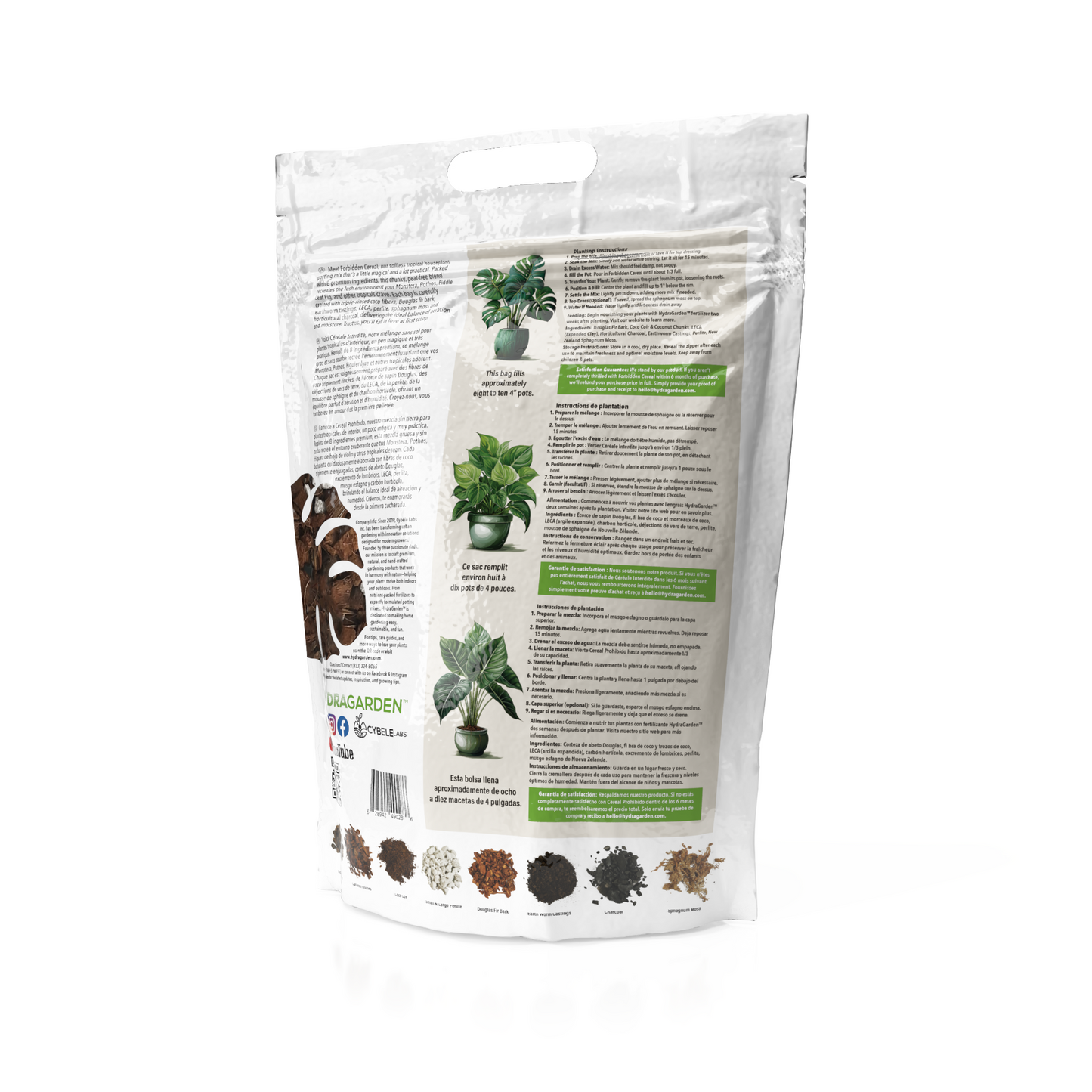
Terreau sans terre pour plantes d'intérieur Forbidden Cereal - 7,1 litres
Prix habituel
$28.99
Prix habituel
Prix promotionnel
$28.99
Frais d'expédition calculés à l'étape de paiement.
Store Availability
Newmarket, Ontario (Head Office)
1175 Stellar Drive, Unit #5
Newmarket, ON L3Y 7B8
- Mon10:00am–6:00pm
- Tue10:00am–6:00pm
- Wed10:00am–6:00pm
- Thu10:00am–6:00pm
- Fri10:00am–6:00pm
- Sat10:00am–4:00pm
- SunClosed


Barrie, Ontario
106 Saunders Road, Unit #2A
Barrie, ON L4N 9A8
- Mon10:00am–5:00pm
- Tue10:00am–5:00pm
- Wed10:00am–5:00pm
- Thu10:00am–5:00pm
- Fri10:00am–5:00pm
- Sat10:00am–3:00pm
- SunClosed
Winnipeg, Manitoba
915 McLeod Avenue, Unit #4
Winnipeg, MB R2G 0Y4
- Mon10:00am–6:00pm
- Tue10:00am–6:00pm
- Wed10:00am–6:00pm
- Thu10:00am–6:00pm
- Fri10:00am–6:00pm
- Sat11:00am–3:00pm
- SunClosed
Estimated Delivery Date
Order Within
—
Province
Est. Delivery
—
Quantité
Qualifies for Free Shipping Promotion
Sign in required
Back-in-stock notification
Select the store locations where you’d like to pick up this item, or choose Shipping to have it delivered.
Email notifications are turned off
Turn on email marketing to receive back-in-stock notifications.
Open account profile
Special order request
Select the store where you’d prefer to pick up your special order. To choose a different store, unselect your current choice first.
Description
Description
Description
Le terreau sans terre Forbidden Cereal pour plantes d'intérieur est un terreau sans terre destiné aux plantes tropicales d'intérieur de type aroïdes, conçu pour faciliter l'arrosage en pot. Il s'agit d'un mélange sans tourbe ni terre qui fonctionne comme un terreau sans terre lorsque vous souhaitez une zone racinaire structurée et aérée pour les plantes en pot d'intérieur et d'extérieur.
Ce mélange extra-grossier est conçu pour aider à prévenir les problèmes de sur-arrosage tout en favorisant la croissance des plantes. Sa texture aérée permet à l'air de circuler dans le pot, ce qui favorise la santé des racines et aide à prévenir la pourriture des racines. Lorsque les racines restent actives, les plantes sont mieux positionnées pour maintenir une croissance constante au lieu de stagner après des cycles d'humidité répétés.
Vous obtenez un ensemble de fonctionnalités propres et spécifiques, adaptées à l'entretien moderne des plantes d'intérieur. Il est sans engrais et de pH neutre, de sorte que le substrat se concentre sur la structure plutôt que d'agir comme un sol pré-chargé. Il est également décrit comme exempt de parasites, ce qui est important lorsque vous rempotez à l'intérieur et que vous souhaitez une expérience plus propre, du sac au pot. Pour les espaces partagés avec des animaux de compagnie, il est indiqué comme étant sûr pour les animaux et non toxique.
Les « 8 ingrédients organiques de première qualité » sont sélectionnés pour leur équilibre entre aération et humidité. Le mélange comprend de l'écorce de douglas traitée à la chaleur et cueillie à la main (écorce d'orchidée), un mélange de perlite fine et grossière, du coco coir et des fibres triple-rincées, des copeaux de coco, du charbon horticole (biochar), des turricules de vers riches en nutriments et des billes d'argile expansée (leca), avec de la mousse de sphaigne de Nouvelle-Zélande séparée et étalée sur le dessus. Il est fabriqué en petites quantités pour assurer une distribution uniforme des ingrédients dans le sac.
Le terreau sans terre Forbidden Cereal pour plantes d'intérieur est présenté comme une option polyvalente pour les plantes en pot d'intérieur et d'extérieur, y compris les plantes tropicales populaires comme le monstera, le pothos, le philodendron, l'anthurium, l'alocasia, le hoya et les orchidées. Il convient parfaitement aux cultivateurs qui souhaitent un terreau exempt de parasites, sans tourbe ni terre, avec une texture de mélange extra-grossière qui favorise la santé des racines tout en simplifiant l'entretien des plantes.
Avantages du produit : Moins de risques de sur-arrosage ; Zone racinaire respirante ; Circulation de l'air ; Développement des racines ; Santé des plantes ; Équilibre air-eau ; Substrat durable ; pH neutre ; Intérieur ; Extérieur ; Stade de floraison ; Stade végétatif ; Sans terre.
Dérivé de : Écorce de douglas ; Coco coir ; Morceaux de noix de coco ; LECA (argile expansée) ; Charbon horticole ; Turricules de vers de terre ; Perlite ; Mousse de sphaigne de Nouvelle-Zélande.
Ce mélange extra-grossier est conçu pour aider à prévenir les problèmes de sur-arrosage tout en favorisant la croissance des plantes. Sa texture aérée permet à l'air de circuler dans le pot, ce qui favorise la santé des racines et aide à prévenir la pourriture des racines. Lorsque les racines restent actives, les plantes sont mieux positionnées pour maintenir une croissance constante au lieu de stagner après des cycles d'humidité répétés.
Vous obtenez un ensemble de fonctionnalités propres et spécifiques, adaptées à l'entretien moderne des plantes d'intérieur. Il est sans engrais et de pH neutre, de sorte que le substrat se concentre sur la structure plutôt que d'agir comme un sol pré-chargé. Il est également décrit comme exempt de parasites, ce qui est important lorsque vous rempotez à l'intérieur et que vous souhaitez une expérience plus propre, du sac au pot. Pour les espaces partagés avec des animaux de compagnie, il est indiqué comme étant sûr pour les animaux et non toxique.
Les « 8 ingrédients organiques de première qualité » sont sélectionnés pour leur équilibre entre aération et humidité. Le mélange comprend de l'écorce de douglas traitée à la chaleur et cueillie à la main (écorce d'orchidée), un mélange de perlite fine et grossière, du coco coir et des fibres triple-rincées, des copeaux de coco, du charbon horticole (biochar), des turricules de vers riches en nutriments et des billes d'argile expansée (leca), avec de la mousse de sphaigne de Nouvelle-Zélande séparée et étalée sur le dessus. Il est fabriqué en petites quantités pour assurer une distribution uniforme des ingrédients dans le sac.
Le terreau sans terre Forbidden Cereal pour plantes d'intérieur est présenté comme une option polyvalente pour les plantes en pot d'intérieur et d'extérieur, y compris les plantes tropicales populaires comme le monstera, le pothos, le philodendron, l'anthurium, l'alocasia, le hoya et les orchidées. Il convient parfaitement aux cultivateurs qui souhaitent un terreau exempt de parasites, sans tourbe ni terre, avec une texture de mélange extra-grossière qui favorise la santé des racines tout en simplifiant l'entretien des plantes.
Avantages du produit : Moins de risques de sur-arrosage ; Zone racinaire respirante ; Circulation de l'air ; Développement des racines ; Santé des plantes ; Équilibre air-eau ; Substrat durable ; pH neutre ; Intérieur ; Extérieur ; Stade de floraison ; Stade végétatif ; Sans terre.
Dérivé de : Écorce de douglas ; Coco coir ; Morceaux de noix de coco ; LECA (argile expansée) ; Charbon horticole ; Turricules de vers de terre ; Perlite ; Mousse de sphaigne de Nouvelle-Zélande.
Frequently Asked Questions
Frequently Asked Questions
What does Douglas fir bark do in a potting mix?
Why is coconut coir important for plant growth?
Are coconut chunks good for plant roots in containers?
Are earthworm castings a fertilizer or more of a soil conditioner?
Why is perlite important for plant growth, and what makes it different from other mix ingredients?
What does LECA actually do for plant roots?
Does charcoal help plants grow better in containers?
Why is New Zealand sphagnum moss so effective for rooting and moisture control?
Frequently purchased together
-
Technologie de croissance complète Focus - 1 litre
Prix habituel $32.14Prix habituel -
Technologie de croissance Flower Focus - 1 litre
Prix habituel $32.14Prix habituel -
Technologie de croissance Foliage Focus - 1 litre
Prix habituel $32.14Prix habituel -
Technologie de croissance GT Silica - 1 litre
Prix habituel $31.16Prix habituel
Reviews are submitted by verified customers after purchase. This section shows a summary of product feedback rather than the full individual review list.