

Frequently purchased together
-
Seringue doseuse de 12 ml
Prix habituel $1.31Prix habituel -
Seringue doseuse de 60 ml
Prix habituel $2.99Prix habituel -
Gobelet doseur Hydrofarm - 500 ml
Prix habituel $4.99Prix habituel -
 HOT ITEM
Jardinage extrême MYKOS - 1 lb
Prix habituel $28.95Prix habituel


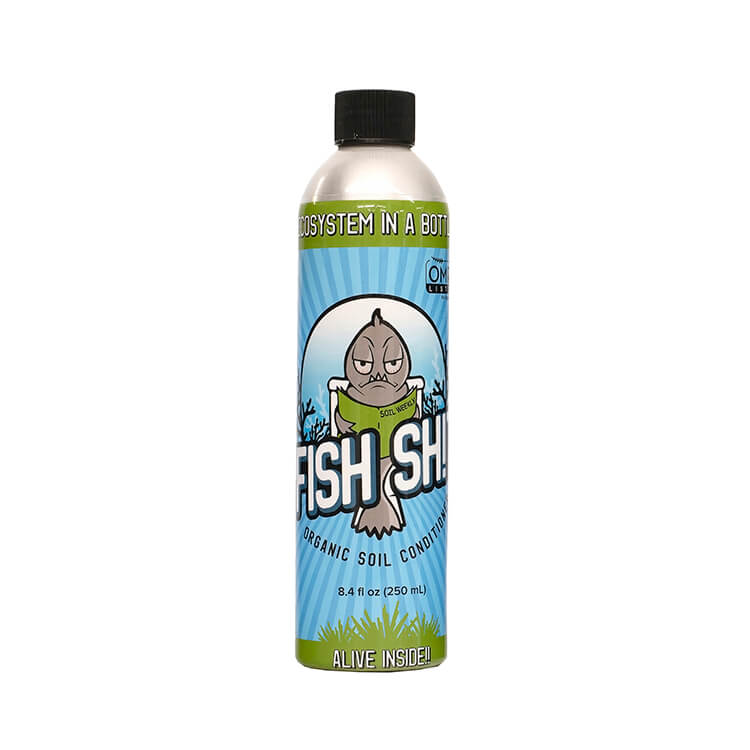
Fish Head Farms Poisson Merde - 250 ml
Newmarket, Ontario (Head Office)
1175 Stellar Drive, Unit #5
Newmarket, ON L3Y 7B8
- Mon10:00am–6:00pm
- Tue10:00am–6:00pm
- Wed10:00am–6:00pm
- Thu10:00am–6:00pm
- Fri10:00am–6:00pm
- Sat10:00am–4:00pm
- SunClosed


Barrie, Ontario
106 Saunders Road, Unit #2A
Barrie, ON L4N 9A8
- Mon10:00am–5:00pm
- Tue10:00am–5:00pm
- Wed10:00am–5:00pm
- Thu10:00am–5:00pm
- Fri10:00am–5:00pm
- Sat10:00am–3:00pm
- SunClosed
Winnipeg, Manitoba
915 McLeod Avenue, Unit #4
Winnipeg, MB R2G 0Y4
- Mon10:00am–6:00pm
- Tue10:00am–6:00pm
- Wed10:00am–6:00pm
- Thu10:00am–6:00pm
- Fri10:00am–6:00pm
- Sat11:00am–3:00pm
- SunClosed
Sign in required
Back-in-stock notification
Select the store locations where you’d like to pick up this item, or choose Shipping to have it delivered.
Special order request
Select the store where you’d prefer to pick up your special order. To choose a different store, unselect your current choice first.
Description
Description
Description
Ce biostimulant se caractérise par sa large biologie : plus de 4 000 microbes distincts, avec des milliards de microbes dans chaque dose. Le Fish Sh!t est décrit comme étant « vivant à l'intérieur » de la bouteille, avec des tests microbiens effectués sur les bouteilles finies pour aider à maintenir des performances constantes d'une culture à l'autre. Il est également fabriqué dans notre ferme, et non dans un laboratoire, pour les cultivateurs qui souhaitent un produit biologique basé sur une production réelle, et non sur une approche stérile à souche unique.
Dans la zone racinaire, la combinaison unique de micro-organismes est conçue pour décomposer les matières organiques et synthétiques complexes et libérer les nutriments essentiels dans le sol. Cette activité favorise la disponibilité des nutriments et peut conduire à une meilleure absorption des nutriments, en particulier lorsque l'on vise une croissance et un développement constants des plantes tout au long du cycle. La même biologie est positionnée pour soutenir la croissance de la racine pivotante, le diamètre des racines et le développement des poils absorbants, ce qui aide à construire une base plus performante pour la capture de l'eau et des nutriments dès le début.
Le Fish Sh!t est fabriqué à partir de fumier de poisson et est présenté comme un produit sans NPK disponible, mettant l'accent sur la biologie plutôt que sur les chiffres des engrais. Le produit est certifié 100 % biologique par l'OMRI, ce qui en fait un choix simple pour les cultivateurs qui privilégient les intrants biologiques. Pour la flexibilité du système, il est décrit comme adapté à tout substrat, y compris le sol, le coco et l'hydro, ce qui facilite la standardisation d'un seul outil microbien pour différents styles de culture. C'est un bon choix pour les cultivateurs qui veulent un conditionneur de sol organique et un amendement unique qui favorise un écosystème vivant et une performance constante de la zone racinaire tout au long du cycle de culture.
Avantages du produit : Stade végétatif ; Stade de floraison ; Intérieur ; Extérieur ; Arrosage régulier ; Systèmes d'arrosage ; Hydroponie ; Sans danger pour la fibre de coco ; Sol ; Hors-sol ; Meilleure absorption des nutriments ; Soutien de la masse racinaire ; Stimule l'activité microbienne ; Biologie de la zone racinaire ; Compatible multi-substrats ; Soutien à tous les stades ; Soutien microbien ; Soin complet des racines.
Dérivé de : Protéobactéries ; Bactéroïdètes ; Planctomycètes ; Actinobactéries ; Firmicutes ; Verrucomicrobia ; Gemmatimonadetes ; Cyanobactéries ; Nitrospirae ; Tenericutes.
How To Use
How To Use
How to Use Fish Head Farms Poisson Merde - 250 ml
Step-by-step mixing and feeding instructions for Fish Head Farms Poisson Merde - 250 ml.
Mixing & preparation
Fill your reservoir or watering container with clean, room-temperature water first. Shake the bottle of Fish Head Farms Poisson Merde - 250 ml well before every use. Using the feeding schedule below, measure the recommended dose and add it directly to the water while stirring. Allow the solution to mix fully before adding any other fertilizers, additives, or supplements.
Always add nutrients to water — not the other way around. Mix thoroughly between products to ensure an even, stable nutrient solution.
Week-by-week feeding schedule
Vegetative stage — Fish Sh!t
- Week 1: mix 0.79 ml per litre of water or nutrient solution.
- Week 2: mix 0.79 ml per litre of water or nutrient solution.
- Week 3: mix 0.79 ml per litre of water or nutrient solution.
- Week 4: mix 0.79 ml per litre of water or nutrient solution.
Flowering stage — Fish Sh!t
- Week 1: mix 0.79 ml per litre of water or nutrient solution.
- Week 2: mix 0.79 ml per litre of water or nutrient solution.
- Week 3: mix 0.79 ml per litre of water or nutrient solution.
- Week 4: mix 0.79 ml per litre of water or nutrient solution.
- Week 5: mix 0.79 ml per litre of water or nutrient solution.
- Week 6: mix 0.79 ml per litre of water or nutrient solution.
- Week 7: mix 0.79 ml per litre of water or nutrient solution.
- Week 8: mix 0.79 ml per litre of water or nutrient solution.
Tips for best results
- Maintain pH and EC/ppm within the range recommended for your growing medium and crop.
- Use fresh nutrient solution whenever possible and avoid leaving mixed solution stagnant for long periods.
- Store nutrients in a cool, dark place away from direct sunlight and extreme temperatures.
- Keep bottles tightly sealed when not in use to reduce air exposure and preserve product quality.
- Use clean measuring tools and regularly rinse or clean your reservoir, lines, and irrigation equipment.
Common mistakes to avoid
- Do not mix different nutrients or additives together in concentrated form before adding them to water.
- Do not exceed the recommended dosage unless you are following a tested, crop-specific feeding plan.
- Do not skip pH or EC/ppm checks when growing in hydroponic or soilless systems.
- Do not allow the nutrient solution to freeze or overheat, as this can damage the formulation.
- Do not ignore the directions on the product label for your specific crop, growth stage, and system type.
Warnings & Safety
Warnings & Safety
Important – Safety Information
General Safety Precautions
First Aid – Skin Contact
First Aid – Eye Contact
First Aid – Ingestion
First aid – Inhalation
Storage And Handling
Important – Medical
Frequently Asked Questions
Frequently Asked Questions
What do bacteroidetes do in soil, and why do they matter for plant growth?
Why are actinobacteria important for plant growth?
What do firmicutes do for plants in the root zone?
Why does cyanobacteria show up in pots and hydro systems, and why can it slow plant growth?
What do proteobacteria do for plant roots?
What do planctomycetes do in the root zone?
What do gemmatimonadetes tell you about the health of your root zone?
What do nitrospirae do in the root zone?
How can you tell if tenericutes in the microbiome are helping instead of causing problems?
Frequently purchased together
-
Seringue doseuse de 12 ml
Prix habituel $1.31Prix habituel -
Seringue doseuse de 60 ml
Prix habituel $2.99Prix habituel -
Gobelet doseur Hydrofarm - 500 ml
Prix habituel $4.99Prix habituel -
HOT ITEM
Jardinage extrême MYKOS - 1 lb
Prix habituel $28.95Prix habituel

Vegetative — Fish Sh!t
-
—
Flowering — Fish Sh!t
-
—