

Frequently purchased together
-
Canna Cannazym - 250 ml
Prix habituel $16.18Prix habituel -
Canna PK 13/14 - 250 ml
Prix habituel $10.88Prix habituel -
Canna Rhizotonic XP - 250 ml
Prix habituel $29.02Prix habituel -
Canna Start - 500 ml
Prix habituel $16.94Prix habituel


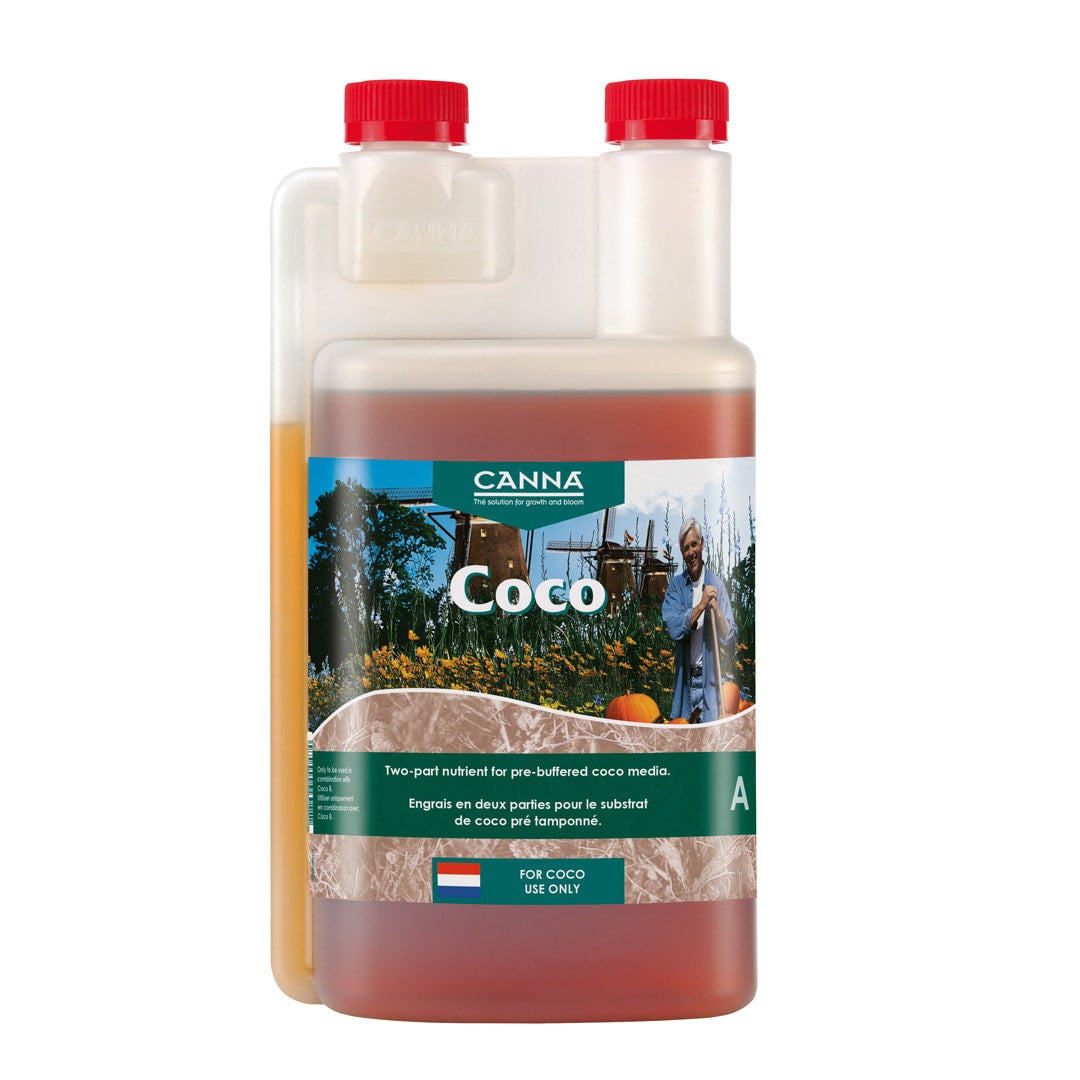
Canna Coco A - 1 litre
Newmarket, Ontario (Head Office)
1175 Stellar Drive, Unit #5
Newmarket, ON L3Y 7B8
- Mon10:00am–6:00pm
- Tue10:00am–6:00pm
- Wed10:00am–6:00pm
- Thu10:00am–6:00pm
- Fri10:00am–6:00pm
- Sat10:00am–4:00pm
- SunClosed


Barrie, Ontario
106 Saunders Road, Unit #2A
Barrie, ON L4N 9A8
- Mon10:00am–5:00pm
- Tue10:00am–5:00pm
- Wed10:00am–5:00pm
- Thu10:00am–5:00pm
- Fri10:00am–5:00pm
- Sat10:00am–3:00pm
- SunClosed
Winnipeg, Manitoba
915 McLeod Avenue, Unit #4
Winnipeg, MB R2G 0Y4
- Mon10:00am–6:00pm
- Tue10:00am–6:00pm
- Wed10:00am–6:00pm
- Thu10:00am–6:00pm
- Fri10:00am–6:00pm
- Sat11:00am–3:00pm
- SunClosed
This item is available by special order and can be purchased online for in-store pickup only. For availability, lead times, or other store-specific details, please contact your preferred Provision Gardens location or submit a Special Order Request below.
Special-order items are not eligible for cancellation, return, or exchange once the order is placed.
By purchasing this item, you acknowledge and agree to our Terms of Service and Return & Refund Policy .
Sign in required
Back-in-stock notification
Select the store locations where you’d like to pick up this item, or choose Shipping to have it delivered.
Special order request
Select the store where you’d prefer to pick up your special order. To choose a different store, unselect your current choice first.
Manufacturer Recommended Products

Description
Description
Description
La fibre de coco a des qualités tampon uniques, et CANNA Coco A & B est spécifiquement adapté aux caractéristiques des substrats de coco afin que la nutrition des plantes reste optimale lorsque le milieu interagit avec la solution nutritive. Ce nutriment professionnel complet est décrit comme contenant tous les éléments essentiels pour une croissance et une floraison optimales, ce qui en fait une base pratique pour les cultivateurs qui veulent une fondation unique axée sur la noix de coco qui couvre à la fois la croissance et la floraison.
La formule est composée de minéraux de haute qualité, développés par la recherche et l'analyse pour soutenir une absorption optimale des nutriments dans la culture à base de coco. Cela est important dans la noix de coco, où une disponibilité constante et une livraison équilibrée des minéraux sont essentielles pour maintenir un fort élan de la plante. Les cultivateurs choisissent ce style de nutriment de coco lorsqu'ils veulent une croissance vigoureuse et une floraison abondante dans un milieu de coco tamponné sans transformer l'alimentation de base en un projet de correction constant.
CANNA Coco A & B est également décrit comme facile à utiliser et se dissout directement, ce qui favorise une manipulation propre dans les programmes de coco quotidiens. Il est extrêmement adapté à la culture en pot et est positionné pour les systèmes à perte, y compris la culture par drainage à perte dans un milieu de coco tamponné. Cette adaptation au système en fait un choix simple pour les cultivateurs de coco qui veulent un nutriment de base qui correspond à la façon dont le coco est couramment utilisé dans des configurations réelles.
Le format en deux parties A et B existe pour maintenir les éléments clés stables sous forme concentrée. CANNA sépare la partie A et la partie B car certains éléments hautement concentrés, y compris le calcium et le phosphate, peuvent entrer en conflit dans une seule bouteille et créer des résidus qui réduisent la disponibilité. Garder les composants séparés aide à maintenir un concentré fiable et utilisable afin que le profil nutritif fonctionne comme prévu une fois qu'il est préparé pour la culture.
CANNA Coco A & B convient parfaitement aux cultivateurs utilisant la fibre de coco en pots ou en culture par drainage à perte qui souhaitent un nutriment de base en deux parties spécifique à la noix de coco, conçu pour les phases de croissance et de floraison, avec des minéraux de haute qualité, une performance de dissolution directe et une concentration sur le milieu de coco tamponné.
Avantages du produit : Stade végétatif ; Stade de floraison ; Intérieur ; Extérieur ; Arrosage régulier ; Systèmes d'arrosage ; Compatible fibre de coco ; Nutrition complète ; Prêt pour système coco ; Soutien toutes phases ; Croissance et floraison vigoureuses ; Utilisation multi-systèmes ; Plus de fleurs ; Formule liquide facile ; Soutien de la floraison.
Analyse garantie : Azote total (N) : 3,8 % ; Azote nitrique (N) : 3,8 % ; Oxyde de potassium (K2O) : 0,7 % ; Calcium (Ca) : 4,5 % ; Magnésium total (Mg) : 0,4 % ; Fer chélaté (Fe) : 0,02 %.
How To Use
How To Use
How to Use Canna Coco A - 1 litre
Step-by-step mixing and feeding instructions for Canna Coco A - 1 litre.
Mixing & preparation
Fill your reservoir or watering container with clean, room-temperature water first. Shake the bottle of Canna Coco A - 1 litre well before every use. Using the feeding schedule below, measure the recommended dose and add it directly to the water while stirring. Allow the solution to mix fully before adding any other fertilizers, additives, or supplements.
Always add nutrients to water — not the other way around. Mix thoroughly between products to ensure an even, stable nutrient solution.
Week-by-week feeding schedule
Vegetative stage — Coco A
- Week 1: mix 2.3 ml per litre of water or nutrient solution.
- Week 2: mix 2.3 ml per litre of water or nutrient solution.
- Week 3: mix 2.7 ml per litre of water or nutrient solution.
- Week 4: mix 2.7 ml per litre of water or nutrient solution.
Flowering stage — Coco A
- Week 1: mix 3.4 ml per litre of water or nutrient solution.
- Week 2: mix 3.4 ml per litre of water or nutrient solution.
- Week 3: mix 3.4 ml per litre of water or nutrient solution.
- Week 4: mix 3.8 ml per litre of water or nutrient solution.
- Week 5: mix 2.5 ml per litre of water or nutrient solution.
- Week 6: mix 2.5 ml per litre of water or nutrient solution.
- Week 7: mix 2.5 ml per litre of water or nutrient solution.
- Week 8: do not use this product during this week of flowering.
Tips for best results
- Maintain pH and EC/ppm within the range recommended for your growing medium and crop.
- Use fresh nutrient solution whenever possible and avoid leaving mixed solution stagnant for long periods.
- Store nutrients in a cool, dark place away from direct sunlight and extreme temperatures.
- Keep bottles tightly sealed when not in use to reduce air exposure and preserve product quality.
- Use clean measuring tools and regularly rinse or clean your reservoir, lines, and irrigation equipment.
Common mistakes to avoid
- Do not mix different nutrients or additives together in concentrated form before adding them to water.
- Do not exceed the recommended dosage unless you are following a tested, crop-specific feeding plan.
- Do not skip pH or EC/ppm checks when growing in hydroponic or soilless systems.
- Do not allow the nutrient solution to freeze or overheat, as this can damage the formulation.
- Do not ignore the directions on the product label for your specific crop, growth stage, and system type.
Warnings & Safety
Warnings & Safety
Important – Safety Information
General Safety Precautions
First Aid – Skin Contact
First Aid – Eye Contact
First Aid – Ingestion
First aid – Inhalation
Storage And Handling
Important – Medical
Guaranteed Minimum Analysis
Guaranteed Minimum Analysis
| Total Nitrogen (N) | 3.8% |
|---|---|
| Nitric Nitrogen (N) | 3.8% |
| Potassium Oxide (K2O) | 0.7% |
| Calcium (Ca) | 4.5% |
| Total Magnesium (Mg) | 0.4% |
| Chelated Iron (Fe) | 0.02% |
Frequently Asked Questions
Frequently Asked Questions
Why is total nitrogen (N) important for plant growth, and what makes it different from other nutrients?
Why is nitric nitrogen important for plant growth, and what makes it different from other nitrogen forms?
Why is potassium oxide (K2O) important for plant growth, and what makes it different from other nutrients?
Why is calcium important for plant growth?
Why is total magnesium (Mg) important for plant growth?
Why is chelated iron important for plants, and what makes it different from other iron sources?
Frequently purchased together
-
Canna Cannazym - 250 ml
Prix habituel $16.18Prix habituel -
Canna PK 13/14 - 250 ml
Prix habituel $10.88Prix habituel -
Canna Rhizotonic XP - 250 ml
Prix habituel $29.02Prix habituel -
Canna Start - 500 ml
Prix habituel $16.94Prix habituel
Vegetative — Week 1
-
Coco A—
-
Coco B—
-
Rhizotonic XP—
-
Cannazym—
-
PK 13/14—
-
Boost Accelerator—
Flowering — Week 1
-
Coco A—
-
Coco B—
-
Rhizotonic XP—
-
Cannazym—
-
PK 13/14—
-
Boost Accelerator—