

Frequently purchased together
-
Engrais B-52 Advanced Nutrients - 1 litre
Prix habituel $54.99Prix habituel -
Advanced Nutrients Nirvana - 1 litre
Prix habituel $34.93Prix habituel -
Champignons bénéfiques Piranha Advanced Nutrients - 1 litre
Prix habituel $89.99Prix habituel -
Advanced Nutrients Sensi Cal-Mag Xtra - 1 litre
Prix habituel $22.99Prix habituel


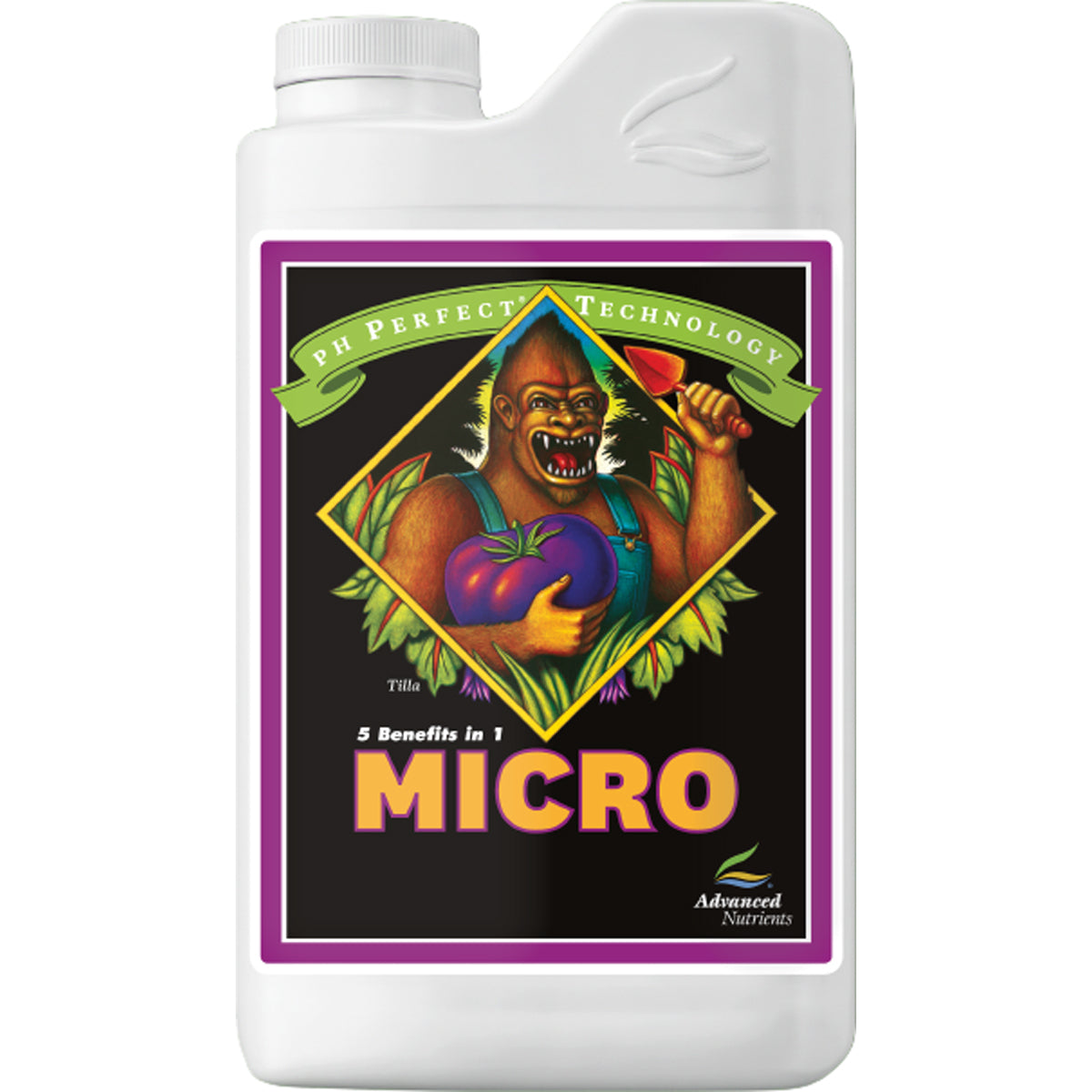
Advanced Nutrients pH Perfect Micro - 1 litre
Newmarket, Ontario (Head Office)
1175 Stellar Drive, Unit #5
Newmarket, ON L3Y 7B8
- Mon10:00am–6:00pm
- Tue10:00am–6:00pm
- Wed10:00am–6:00pm
- Thu10:00am–6:00pm
- Fri10:00am–6:00pm
- Sat10:00am–4:00pm
- SunClosed


Barrie, Ontario
106 Saunders Road, Unit #2A
Barrie, ON L4N 9A8
- Mon10:00am–5:00pm
- Tue10:00am–5:00pm
- Wed10:00am–5:00pm
- Thu10:00am–5:00pm
- Fri10:00am–5:00pm
- Sat10:00am–3:00pm
- SunClosed
Winnipeg, Manitoba
915 McLeod Avenue, Unit #4
Winnipeg, MB R2G 0Y4
- Mon10:00am–6:00pm
- Tue10:00am–6:00pm
- Wed10:00am–6:00pm
- Thu10:00am–6:00pm
- Fri10:00am–6:00pm
- Sat11:00am–3:00pm
- SunClosed
Sign in required
Back-in-stock notification
Select the store locations where you’d like to pick up this item, or choose Shipping to have it delivered.
Special order request
Select the store where you’d prefer to pick up your special order. To choose a different store, unselect your current choice first.
Manufacturer Recommended Products


Description
Description
Description
Conçu comme une solution de base de nouvelle génération, cet engrais de base en 3 parties vise une performance constante des plantes tout au long du cycle. La formule est axée sur des ratios optimaux de micro, secondaires et macronutriments pour aider à libérer le potentiel des plantes, afin que votre culture soit soutenue lors de sa transition d'une croissance vigoureuse à une floraison abondante. La technologie pH Perfect est la caractéristique principale ici, créée pour réduire les tracas quotidiens de l'ajustement du pH tout en maintenant la cohérence de votre routine.
pH Perfect® Grow, Micro, Bloom est également conçu pour la flexibilité dans les jardins modernes. Il est spécialement conçu pour être utilisé avec divers milieux de culture hydroponiques, et il s'adapte aux systèmes de culture à alimentation liquide continue tels que l'aéroponie, l'irrigation goutte à goutte et les émetteurs, la NFT, le flux et le reflux, et la culture en eau profonde. Il est également positionné pour une utilisation intérieure/extérieure, ce qui en fait un choix de base simple lorsque votre installation comprend des systèmes d'arrosage automatisés ou des soins de jardinage manuels.
Pour les acheteurs qui aiment les informations rapides, les profils NPK indiqués pour le trio sont Grow 1-0-4, Micro 2-0-0 et Bloom 1-3-4. Pour soutenir la disponibilité des nutriments, il met également l'accent sur un tensioactif et une chélation fournis par les acides humiques dans le milieu, ce qui est souligné comme une voie pour une absorption maximale des nutriments. En tant que note de formulation supplémentaire, le produit indique qu'il n'utilise pas de paclobutrazol, de daminozide ou d'autres régulateurs de croissance des plantes interdits.
C'est un bon choix pour les cultivateurs qui veulent un nutriment de base en trois parties avec la technologie pH Perfect, ainsi qu'une large couverture système pour l'hydroponie et la fibre de coco sans transformer leur programme de base en un processus compliqué.
Avantages du produit : Stade végétatif ; Stade de floraison ; Intérieur ; Extérieur ; Arrosage régulier ; Systèmes d'arrosage ; Hydroponie ; Compatible fibre de coco ; Nutrition complète ; Plage de pH idéale ; Pas d'ajustement de pH ; Soutien toutes phases ; Nutriments biodisponibles ; Ratios personnalisés ; Meilleure absorption des nutriments ; Utilisation multi-systèmes.
Analyse garantie : Azote nitrique (N) : 2,0 % ; Calcium (Ca) : 2,4 % ; Magnésium (Mg) hydrosoluble : 0,1 % ; Bore (B) : 0,02 % ; Cobalt (Co) : 0,0001 % ; Cuivre (Cu) : 0,001 % ; Fer total (Fe) : 0,05 % ; Fer chélaté (Fe) : 0,04 % ; Fer hydrosoluble (Fe) : 0,01 % ; Manganèse total (Mn) : 0,05 % ; Manganèse chélaté (Mn) : 0,04 % ; Manganèse hydrosoluble (Mn) : 0,01 % ; Molybdène (Mo) : 0,0002 % ; Zinc total (Zn) : 0,02 % ; Zinc hydrosoluble (Zn) : 0,01 % ; Acides aminés : 0,5 % ; Acide humique : 0,128 % ; Polyoxyéthylène (40) sorbitol hexaoléate : 0,1 %.
Dérivé de : Acide borique ; Complexe d'acides aminés de calcium ; Nitrate de calcium ; Chélate d'acides aminés de cobalt ; Chélate d'acides aminés de cuivre ; EDTA de cuivre ; Complexe d'acides aminés de fer ; DTPA de fer ; EDDHA de fer ; EDTA de fer ; Léonardite ; Complexe d'acides aminés de magnésium ; Nitrate de magnésium ; Complexe d'acides aminés de manganèse ; EDTA de manganèse ; Glycinate d'acides aminés de molybdène ; Complexe d'acides aminés de zinc ; EDTA de zinc.
How To Use
How To Use
How to Use Advanced Nutrients pH Perfect Micro - 1 litre
Step-by-step mixing and feeding instructions for Advanced Nutrients pH Perfect Micro - 1 litre.
Mixing & preparation
Fill your reservoir or watering container with clean, room-temperature water first. Shake the bottle of Advanced Nutrients pH Perfect Micro - 1 litre well before every use. Using the feeding schedule below, measure the recommended dose and add it directly to the water while stirring. Allow the solution to mix fully before adding any other fertilizers, additives, or supplements.
Always add nutrients to water — not the other way around. Mix thoroughly between products to ensure an even, stable nutrient solution.
Week-by-week feeding schedule
Vegetative stage — Micro
- Week 1: mix 1.0 ml per litre of water or nutrient solution.
- Week 2: mix 2.0 ml per litre of water or nutrient solution.
- Week 3: mix 3.0 ml per litre of water or nutrient solution.
- Week 4: mix 4.0 ml per litre of water or nutrient solution.
Flowering stage — Micro
- Week 1: mix 4.0 ml per litre of water or nutrient solution.
- Week 2: mix 4.0 ml per litre of water or nutrient solution.
- Week 3: mix 4.0 ml per litre of water or nutrient solution.
- Week 4: mix 4.0 ml per litre of water or nutrient solution.
- Week 5: mix 4.0 ml per litre of water or nutrient solution.
- Week 6: mix 4.0 ml per litre of water or nutrient solution.
- Week 7: mix 4.0 ml per litre of water or nutrient solution.
- Week 8: do not use this product during this week of flowering.
Tips for best results
- Maintain pH and EC/ppm within the range recommended for your growing medium and crop.
- Use fresh nutrient solution whenever possible and avoid leaving mixed solution stagnant for long periods.
- Store nutrients in a cool, dark place away from direct sunlight and extreme temperatures.
- Keep bottles tightly sealed when not in use to reduce air exposure and preserve product quality.
- Use clean measuring tools and regularly rinse or clean your reservoir, lines, and irrigation equipment.
Common mistakes to avoid
- Do not mix different nutrients or additives together in concentrated form before adding them to water.
- Do not exceed the recommended dosage unless you are following a tested, crop-specific feeding plan.
- Do not skip pH or EC/ppm checks when growing in hydroponic or soilless systems.
- Do not allow the nutrient solution to freeze or overheat, as this can damage the formulation.
- Do not ignore the directions on the product label for your specific crop, growth stage, and system type.
Warnings & Safety
Warnings & Safety
Important – Safety Information
General Safety Precautions
First Aid – Skin Contact
First Aid – Eye Contact
First Aid – Ingestion
First aid – Inhalation
Storage And Handling
Important – Medical
Guaranteed Minimum Analysis
Guaranteed Minimum Analysis
| Nitrate Nitrogen (N) | 2.0% |
|---|---|
| Calcium (Ca) | 2.4% |
| Water Soluble Magnesium (Mg) | 0.1% |
| Boron (B) | 0.02% |
| Cobalt (Co) | 0.0001% |
| Copper (Cu) | 0.001% |
| Total Iron (Fe) | 0.05% |
| Chelated Iron (Fe) | 0.04% |
| Water Soluble Iron (Fe) | 0.01% |
| Total Manganese (Mn) | 0.05% |
| Chelated Manganese (Mn) | 0.04% |
| Water Soluble Manganese (Mn) | 0.01% |
| Molybdenum (Mo) | 0.0002% |
| Total Zinc (Zn) | 0.02% |
| Water Soluble Zinc (Zn) | 0.01% |
| Amino Acids | 0.5% |
| Humic Acid | 0.128% |
| Polyoxyethylene (40) Sorbitol Hexaoleate | 0.1% |
Derived From
Derived From
Frequently Asked Questions
Frequently Asked Questions
What does nitrate nitrogen (N) do for plants?
Why is calcium important for plant growth?
Why is water soluble magnesium important for plant growth?
Why is boron (B) essential for strong plant development, and what makes it different from other micronutrients?
Why is cobalt (Co) important for plant growth?
Why is copper (Cu) important for plant growth?
Why is total iron (Fe) important for plant growth?
Why is chelated iron important for plants, and what makes it different from other iron sources?
Why is water soluble iron (Fe) important for plants, and what makes it different from other iron forms?
Why is total manganese (Mn) important for plant growth?
Why is chelated manganese (Mn) important for plant growth?
Why is water-soluble manganese important for plant growth?
Why is molybdenum (Mo) important for plant growth?
Why is total zinc (Zn) important for plant growth?
Why is water-soluble zinc important for plants?
What do amino acids do for plants?
Why is humic acid important for plant growth?
Why is polyoxyethylene (40) Sorbitol Hexaoleate important in soil and hydroponic fertilizers, and what makes it unique?
What makes boric acid important for plants compared to other micronutrients?
What makes calcium amino acid complex different from other calcium sources for plant growth?
Why do growers use calcium nitrate instead of other calcium sources?
What is cobalt amino acid chelate used for in plant growth?
Why is copper amino acid chelate important for healthy plant growth?
Why is copper EDTA used in plant nutrition instead of plain copper?
What makes iron amino acid complex better for fixing iron chlorosis in new leaves?
What does Iron DTPA do for pale new growth?
Why is Iron EDDHA better for plants growing in high-pH soil?
What makes iron EDTA effective for fixing pale new leaves?
What does leonardite do for plant roots?
What makes magnesium amino acid complex different from other magnesium forms for plants?
What does magnesium nitrate do for plants?
What does manganese amino acid complex do for plant growth?
What makes manganese EDTA different from other manganese sources?
What does molybdenum amino acid glycinate do for plants?
What makes zinc amino acid complex better for correcting zinc deficiency than other zinc forms?
What makes zinc EDTA better for preventing zinc lockout?
Safety & Technical Documents
Safety & Technical Documents
Frequently purchased together
-
Engrais B-52 Advanced Nutrients - 1 litre
Prix habituel $54.99Prix habituel -
Advanced Nutrients Nirvana - 1 litre
Prix habituel $34.93Prix habituel -
Champignons bénéfiques Piranha Advanced Nutrients - 1 litre
Prix habituel $89.99Prix habituel -
Advanced Nutrients Sensi Cal-Mag Xtra - 1 litre
Prix habituel $22.99Prix habituel

Vegetative — Week 1
-
Micro—
-
Grow—
-
Bloom—
-
B-52—
-
Voodoo Juice—
-
Big Bud—
-
Overdrive—
Flowering — Week 1
-
Micro—
-
Grow—
-
Bloom—
-
B-52—
-
Voodoo Juice—
-
Big Bud—
-
Overdrive—
Vegetative — Week 1
-
Micro—
-
Grow—
-
Bloom—
-
B-52—
-
Voodoo Juice—
-
Big Bud—
-
Overdrive—
-
Piranha—
-
Bud Candy—
-
Flawless Finish—
Flowering — Week 1
-
Micro—
-
Grow—
-
Bloom—
-
B-52—
-
Voodoo Juice—
-
Big Bud—
-
Overdrive—
-
Piranha—
-
Bud Candy—
-
Flawless Finish—
Vegetative — Week 1
-
Micro—
-
Grow—
-
Bloom—
-
B-52—
-
Voodoo Juice—
-
Tarantula—
-
Piranha—
-
Rhino Skin—
-
Sensizym—
-
Bud Candy—
-
Big Bud—
-
Overdrive—
-
Flawless Finish—
-
Tasty Terpenes (Formerly Nirvana)—
Flowering — Week 1
-
Micro—
-
Grow—
-
Bloom—
-
B-52—
-
Voodoo Juice—
-
Tarantula—
-
Piranha—
-
Rhino Skin—
-
Sensizym—
-
Bud Candy—
-
Big Bud—
-
Overdrive—
-
Flawless Finish—
-
Tasty Terpenes (Formerly Nirvana)—
Vegetative — Week 1
-
Micro—
-
Grow—
-
Bloom—
-
B-52—
-
Voodoo Juice—
-
Tarantula—
-
Piranha—
-
Rhino Skin—
-
Sensizym—
-
Bud Candy—
-
Big Bud—
-
Overdrive—
-
Flawless Finish—
-
Tasty Terpenes (Formerly Nirvana)—
-
Bud Ignitor—
-
Bud Factor X—
Flowering — Week 1
-
Micro—
-
Grow—
-
Bloom—
-
B-52—
-
Voodoo Juice—
-
Tarantula—
-
Piranha—
-
Rhino Skin—
-
Sensizym—
-
Bud Candy—
-
Big Bud—
-
Overdrive—
-
Flawless Finish—
-
Tasty Terpenes (Formerly Nirvana)—
-
Bud Ignitor—
-
Bud Factor X—