

Frequently purchased together
-
Engrais B-52 Advanced Nutrients - 1 litre
Prix habituel $59.99Prix habituel -
Champignons bénéfiques Piranha Advanced Nutrients - 1 litre
Prix habituel $99.99Prix habituel -
Advanced Nutrients Peau de rhinocéros - 1 litre
Prix habituel $39.99Prix habituel -
Advanced Nutrients Sensi Cal-Mag Xtra - 1 litre
Prix habituel $24.05Prix habituel


Reviews are submitted by verified customers after purchase. This section shows a summary of product feedback rather than the full individual review list.

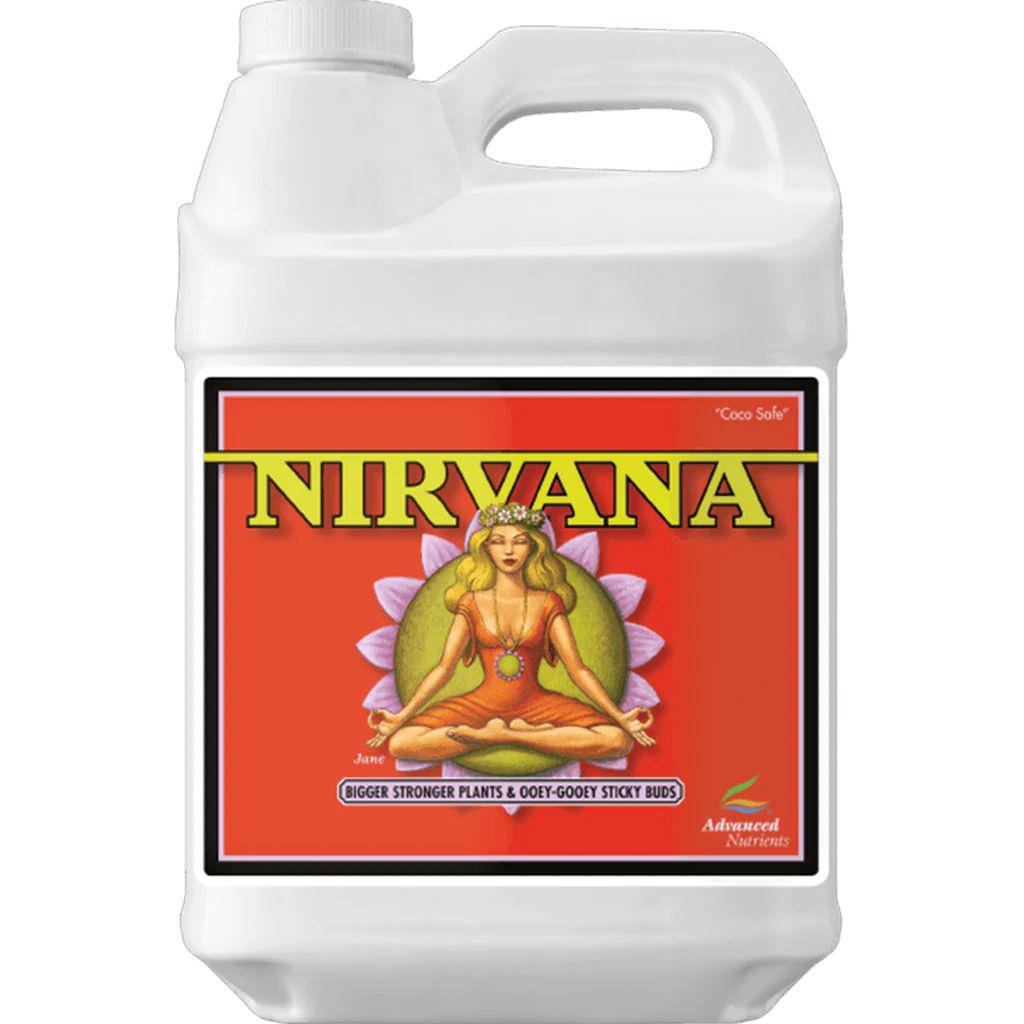
Advanced Nutrients Nirvana - 500 ml
Store Availability
Newmarket, Ontario (Head Office)
1175 Stellar Drive, Unit #5
Newmarket, ON L3Y 7B8
- Mon10:00am–6:00pm
- Tue10:00am–6:00pm
- Wed10:00am–6:00pm
- Thu10:00am–6:00pm
- Fri10:00am–6:00pm
- Sat10:00am–4:00pm
- SunClosed


Barrie, Ontario
106 Saunders Road, Unit #2A
Barrie, ON L4N 9A8
- Mon10:00am–5:00pm
- Tue10:00am–5:00pm
- Wed10:00am–5:00pm
- Thu10:00am–5:00pm
- Fri10:00am–5:00pm
- Sat10:00am–3:00pm
- SunClosed
Winnipeg, Manitoba
915 McLeod Avenue, Unit #4
Winnipeg, MB R2G 0Y4
- Mon10:00am–6:00pm
- Tue10:00am–6:00pm
- Wed10:00am–6:00pm
- Thu10:00am–6:00pm
- Fri10:00am–6:00pm
- Sat11:00am–3:00pm
- SunClosed
Estimated Delivery Date
Order Within
—
Province
Est. Delivery
—
Quantité
Qualifies for Free Shipping Promotion
Sign in required
Back-in-stock notification
Select the store locations where you’d like to pick up this item, or choose Shipping to have it delivered.
Email notifications are turned off
Turn on email marketing to receive back-in-stock notifications.
Open account profile
Special order request
Select the store where you’d prefer to pick up your special order. To choose a different store, unselect your current choice first.
Description
Description
Description
Advanced Nutrients Nirvana® (également connu sous le nom de Tasty Terpenes™) est un biostimulant pour l'épaississement des bourgeons et le renforcement des tiges, conçu pour les jardins en phase de floraison intermédiaire où une structure plus robuste et des fleurs plus denses sont la priorité. C'est un booster de floraison conçu pour soutenir la taille des fleurs et la qualité globale des fleurs pendant l'étirement floral.
Nirvana® se concentre sur deux résultats liés : des tiges plus solides et des fleurs plus denses. La formule met en avant des acides aminés qui peuvent aider les plantes à développer des tiges plus solides et des bourgeons plus gros, aidant ainsi les plantes à fleurs à supporter un poids plus important avec un meilleur soutien. Elle met également l'accent sur les multivitamines pour une performance optimale, maintenant un développement stable pendant la phase de floraison alors que les fleurs s'empilent et se remplissent.
Un moteur clé de ce booster de floraison est le potassium stimulant la floraison, décrit comme accélérant la production florale et soutenant les demandes énergétiques supplémentaires de la floraison. Nirvana® est également décrit comme créant des conditions qui augmentent la capacité d'une plante à produire sa propre nourriture par photosynthèse, ce qui soutient l'élan de la phase de floraison lorsque les fleurs se développent rapidement. La saveur et l'arôme font également partie du positionnement du produit, dans le but de soutenir une finition plus satisfaisante à mesure que les fleurs mûrissent.
Les informations factuelles restent simples et vérifiables : les intrants clés comprennent le potassium ainsi que l'extrait de varech et la farine de luzerne, plus les acides aminés. La formule est également décrite comme contenant des protéines de lactosérum prédigérées, du guano de chauve-souris et un tensioactif dans son profil d'ingrédients naturels.
Pour une flexibilité de configuration, Nirvana® est recommandé pour une utilisation en phase de floraison dans les jardins intérieurs et extérieurs et est spécialement conçu pour divers substrats de culture hydroponique. Il est également positionné pour l'arrosage régulier, les systèmes d'arrosage et l'hydroponie, avec une adéquation notée pour l'application foliaire et les configurations sûres pour la fibre de coco, y compris les systèmes de culture à alimentation liquide continue tels que l'aéroponie, l'irrigation goutte à goutte et les émetteurs, le NFT, l'inondation et le drainage, et la culture en eau profonde.
Ceci convient aux cultivateurs qui souhaitent un biostimulant en phase de floraison intermédiaire qui soutient la force des tiges, l'épaississement des bourgeons et la performance en phase de floraison dans les jardins hydroponiques ou les systèmes d'arrosage.
Avantages du produit : Stade de floraison ; Intérieur ; Extérieur ; Arrosage régulier ; Systèmes d'arrosage ; Application foliaire ; Sans danger pour la fibre de coco ; Hydroponie ; Sol ; Hors-sol ; Tiges plus fortes ; Fleurs plus denses ; Fleurs plus grandes ; Soutien des acides aminés ; Mélange multivitaminique ; Soutien de la photosynthèse ; Utilisation multi-système ; Soutien de la floraison.
Analyse garantie : Potasse soluble (K2O) : 1,0 %.
Dérivé de : Sulfate de potassium ; Acide fulvique ; Acide humique ; Phosphate de roche ; Farine de luzerne (Medicago) ; Azomite ; Extrait d'algues ; Extrait de yucca ; Extrait de quillaja ; Extrait de levure ; Hydrolysat de protéines de lactosérum ; L-Alanine ; L-Arginine ; Acide L-aspartique ; L-Cystine/Cystéine ; L-Glutamine ; Acide L-glutamique ; L-Glycine ; L-Histidine ; L-Hydroxyproline ; L-Isoleucine ; L-Leucine ; L-Lysine ; L-Méthionine ; L-Phénylalanine ; L-Proline ; L-Sérine ; L-Thréonine ; L-Tryptophane ; L-Tyrosine ; L-Valine.
Nirvana® se concentre sur deux résultats liés : des tiges plus solides et des fleurs plus denses. La formule met en avant des acides aminés qui peuvent aider les plantes à développer des tiges plus solides et des bourgeons plus gros, aidant ainsi les plantes à fleurs à supporter un poids plus important avec un meilleur soutien. Elle met également l'accent sur les multivitamines pour une performance optimale, maintenant un développement stable pendant la phase de floraison alors que les fleurs s'empilent et se remplissent.
Un moteur clé de ce booster de floraison est le potassium stimulant la floraison, décrit comme accélérant la production florale et soutenant les demandes énergétiques supplémentaires de la floraison. Nirvana® est également décrit comme créant des conditions qui augmentent la capacité d'une plante à produire sa propre nourriture par photosynthèse, ce qui soutient l'élan de la phase de floraison lorsque les fleurs se développent rapidement. La saveur et l'arôme font également partie du positionnement du produit, dans le but de soutenir une finition plus satisfaisante à mesure que les fleurs mûrissent.
Les informations factuelles restent simples et vérifiables : les intrants clés comprennent le potassium ainsi que l'extrait de varech et la farine de luzerne, plus les acides aminés. La formule est également décrite comme contenant des protéines de lactosérum prédigérées, du guano de chauve-souris et un tensioactif dans son profil d'ingrédients naturels.
Pour une flexibilité de configuration, Nirvana® est recommandé pour une utilisation en phase de floraison dans les jardins intérieurs et extérieurs et est spécialement conçu pour divers substrats de culture hydroponique. Il est également positionné pour l'arrosage régulier, les systèmes d'arrosage et l'hydroponie, avec une adéquation notée pour l'application foliaire et les configurations sûres pour la fibre de coco, y compris les systèmes de culture à alimentation liquide continue tels que l'aéroponie, l'irrigation goutte à goutte et les émetteurs, le NFT, l'inondation et le drainage, et la culture en eau profonde.
Ceci convient aux cultivateurs qui souhaitent un biostimulant en phase de floraison intermédiaire qui soutient la force des tiges, l'épaississement des bourgeons et la performance en phase de floraison dans les jardins hydroponiques ou les systèmes d'arrosage.
Avantages du produit : Stade de floraison ; Intérieur ; Extérieur ; Arrosage régulier ; Systèmes d'arrosage ; Application foliaire ; Sans danger pour la fibre de coco ; Hydroponie ; Sol ; Hors-sol ; Tiges plus fortes ; Fleurs plus denses ; Fleurs plus grandes ; Soutien des acides aminés ; Mélange multivitaminique ; Soutien de la photosynthèse ; Utilisation multi-système ; Soutien de la floraison.
Analyse garantie : Potasse soluble (K2O) : 1,0 %.
Dérivé de : Sulfate de potassium ; Acide fulvique ; Acide humique ; Phosphate de roche ; Farine de luzerne (Medicago) ; Azomite ; Extrait d'algues ; Extrait de yucca ; Extrait de quillaja ; Extrait de levure ; Hydrolysat de protéines de lactosérum ; L-Alanine ; L-Arginine ; Acide L-aspartique ; L-Cystine/Cystéine ; L-Glutamine ; Acide L-glutamique ; L-Glycine ; L-Histidine ; L-Hydroxyproline ; L-Isoleucine ; L-Leucine ; L-Lysine ; L-Méthionine ; L-Phénylalanine ; L-Proline ; L-Sérine ; L-Thréonine ; L-Tryptophane ; L-Tyrosine ; L-Valine.
Warnings & Safety
Warnings & Safety
Important – Safety Information
General Safety Precautions
First Aid – Skin Contact
First Aid – Eye Contact
First Aid – Ingestion
First aid – Inhalation
Storage And Handling
Important – Medical
Guaranteed Minimum Analysis
Guaranteed Minimum Analysis
| Soluble Potash (K2O) | 1.0% |
|---|
Derived From
Derived From
Frequently Asked Questions
Frequently Asked Questions
Why is soluble potash (K2O) important for plants?
Why is fulvic acid important for plant growth?
Why is humic acid important for plant growth?
What makes alfalfa meal unique for plant growth compared to other organic meals?
Is azomite a fertilizer or a soil mineral supplement for plants?
Is potassium sulfate better than other potassium sources for sensitive plants?
What makes natural rock phosphate different from other phosphorus sources for plant growth?
Is seaweed a fertilizer or a plant booster?
What does yucca extract do in the root zone?
What does quillaja extract do in a foliar spray?
What does yeast extract do for plants in the root zone?
What does whey protein hydrolysate do for plants?
What does L-alanine do for plants?
What does L-arginine do for plants?
What does L-aspartic acid do for plants?
Is L-cysteine mainly a growth booster or a stress protector in plants?
What does L-glutamine do for plants?
What does L-glutamic acid do for plants?
What does L-glycine do for plants?
How does L-histidine help plants handle micronutrients?
What does L-hydroxyproline do for plants?
What does L-isoleucine do for plant growth?
What does L-leucine do for plants?
What does L-lysine do for plants?
What does L-methionine do for plants?
What does L-phenylalanine do for plants?
What does L-proline do for plants under stress?
What does L-serine do for plants?
What does L-threonine do for plant growth?
Why does L-tryptophan matter so much for root development?
Is L-tyrosine mainly for growth or stress resistance?
What does L-Valine do for plants?
Safety & Technical Documents
Safety & Technical Documents
Frequently purchased together
-
Engrais B-52 Advanced Nutrients - 1 litre
Prix habituel $59.99Prix habituel -
Champignons bénéfiques Piranha Advanced Nutrients - 1 litre
Prix habituel $99.99Prix habituel -
Advanced Nutrients Peau de rhinocéros - 1 litre
Prix habituel $39.99Prix habituel -
Advanced Nutrients Sensi Cal-Mag Xtra - 1 litre
Prix habituel $24.05Prix habituel
Reviews are submitted by verified customers after purchase. This section shows a summary of product feedback rather than the full individual review list.

Nutrient Feed Chart
Vegetative — Nirvana
-
—
Flowering — Nirvana
-
—