Frequently purchased together
-
EverGarden 软质育苗塑料盆 - 1.64 加仑
常规价格 $1.23常规价格 -
-
GeoPot 带把手布艺花盆 - 5 加仑
常规价格 $10.83常规价格 -
GeoPot 带把手布艺花盆 - 7 加仑
常规价格 $12.76常规价格


Reviews are submitted by verified customers after purchase. This section shows a summary of product feedback rather than the full individual review list.

Store Availability
Newmarket, Ontario (Head Office)
1175 Stellar Drive, Unit #5
Newmarket, ON L3Y 7B8
- Mon10:00am–6:00pm
- Tue10:00am–6:00pm
- Wed10:00am–6:00pm
- Thu10:00am–6:00pm
- Fri10:00am–6:00pm
- Sat10:00am–4:00pm
- SunClosed


Barrie, Ontario
106 Saunders Road, Unit #2A
Barrie, ON L4N 9A8
- Mon10:00am–5:00pm
- Tue10:00am–5:00pm
- Wed10:00am–5:00pm
- Thu10:00am–5:00pm
- Fri10:00am–5:00pm
- Sat10:00am–3:00pm
- SunClosed
Winnipeg, Manitoba
915 McLeod Avenue, Unit #4
Winnipeg, MB R2G 0Y4
- Mon10:00am–6:00pm
- Tue10:00am–6:00pm
- Wed10:00am–6:00pm
- Thu10:00am–6:00pm
- Fri10:00am–6:00pm
- Sat11:00am–3:00pm
- SunClosed
Estimated Delivery Date
Order Within
—
Province
Est. Delivery
—
数量
Qualifies for Free Shipping Promotion
Sign in required
Back-in-stock notification
Select the store locations where you’d like to pick up this item, or choose Shipping to have it delivered.
Email notifications are turned off
Turn on email marketing to receive back-in-stock notifications.
Open account profile
Special order request
Select the store where you’d prefer to pick up your special order. To choose a different store, unselect your current choice first.
Description
Description
Description
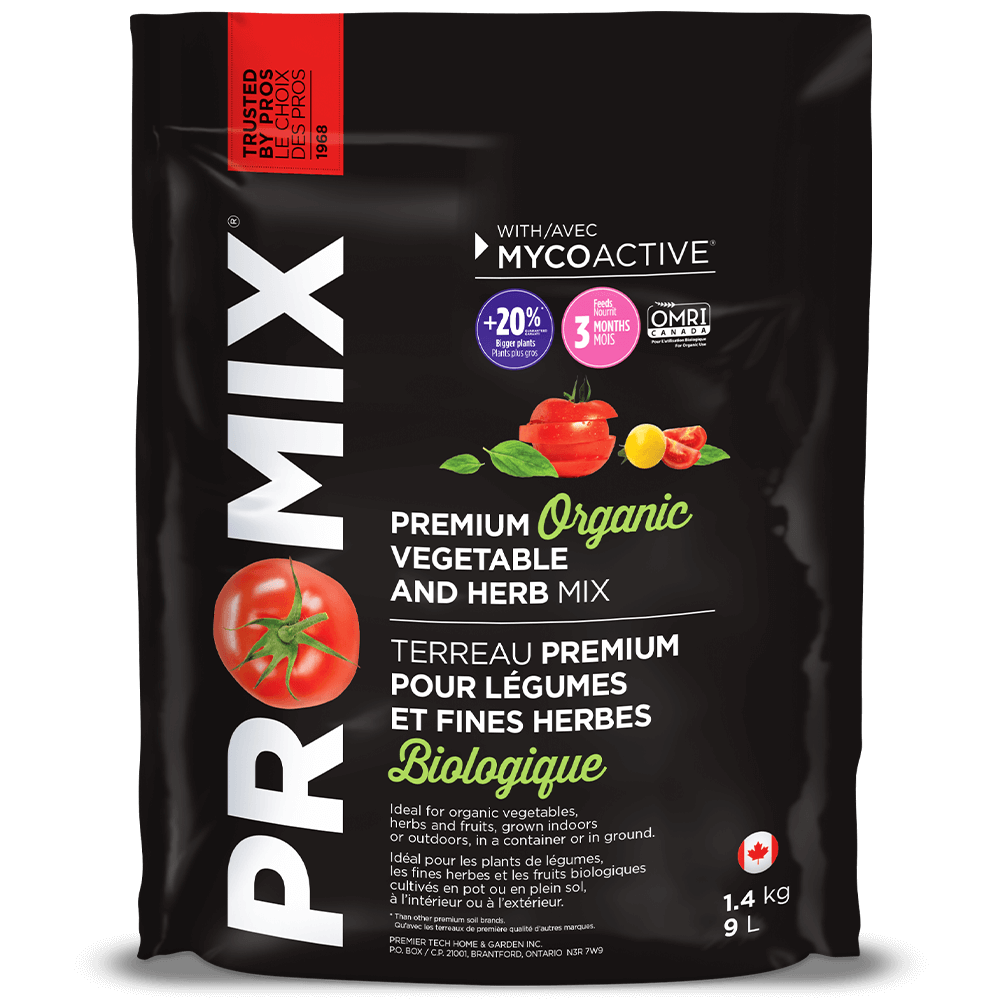
PRO-MIX有机蔬菜香草混合物是一种经OMRI认证的即用型有机蔬菜和香草混合物,以泥炭为基质的生长介质,可促进花园植物旺盛生长、高产丰收。它是一种以泥炭为基质的有机盆栽混合物,也是一种简单的有机盆栽介质,适用于在容器或土地种植的蔬菜、水果和香草。
这种混合物旨在支持植物在整个生长季节中强劲启动并保持稳定生长势头。产品中含有MYCOACTIVE技术,可刺激植物旺盛生长,并在植物发育过程中提高抗逆性。它还能促进根系更大,从而增加养分和水分吸收,在日常花园条件下培育出更大、更健康的植物。
为了提供持续的支持,产品中含有一种有机肥料,可为植物提供长达3个月的缓释养分。这种延长施肥的特性有助于保持植物生长更稳定,让您专注于花园本身。配方中还含有带有PTB297技术的菌根,可强化以根系为中心的生长特性,支持更活跃、高效的根区。
配料以加拿大泥炭藓和泥炭腐殖质为基础,并添加了堆肥、珍珠岩、石膏和石灰石用于调节pH值。这些成分共同作用,为容器花园、高架花床和土壤准备项目创造了平衡、易于操作的质地,在这些项目中,可靠的有机蔬菜和香草混合物至关重要。
PRO-MIX有机蔬菜香草混合物非常适合那些希望获得OMRI认证、以泥炭为基质的有机盆栽混合物的种植者,该混合物含有MYCOACTIVE技术、带有PTB297技术的菌根以及可为植物提供长达3个月缓释养分的有机肥料——尤其适用于在土地或容器中种植的蔬菜、水果、香草以及其他一年生和多年生植物。
产品优点:有机介质;可用于容器;可用于花园花床;促进旺盛生长;提供抗逆支持;促进根系发育;提高养分吸收;提供起始养分;室内适用;室外适用;开花期适用;营养生长期适用。
源自:加拿大泥炭藓;泥炭腐殖质;堆肥;珍珠岩;石膏;石灰石;有机基肥料;菌根 - PTB297;椰壳纤维。
这种混合物旨在支持植物在整个生长季节中强劲启动并保持稳定生长势头。产品中含有MYCOACTIVE技术,可刺激植物旺盛生长,并在植物发育过程中提高抗逆性。它还能促进根系更大,从而增加养分和水分吸收,在日常花园条件下培育出更大、更健康的植物。
为了提供持续的支持,产品中含有一种有机肥料,可为植物提供长达3个月的缓释养分。这种延长施肥的特性有助于保持植物生长更稳定,让您专注于花园本身。配方中还含有带有PTB297技术的菌根,可强化以根系为中心的生长特性,支持更活跃、高效的根区。
配料以加拿大泥炭藓和泥炭腐殖质为基础,并添加了堆肥、珍珠岩、石膏和石灰石用于调节pH值。这些成分共同作用,为容器花园、高架花床和土壤准备项目创造了平衡、易于操作的质地,在这些项目中,可靠的有机蔬菜和香草混合物至关重要。
PRO-MIX有机蔬菜香草混合物非常适合那些希望获得OMRI认证、以泥炭为基质的有机盆栽混合物的种植者,该混合物含有MYCOACTIVE技术、带有PTB297技术的菌根以及可为植物提供长达3个月缓释养分的有机肥料——尤其适用于在土地或容器中种植的蔬菜、水果、香草以及其他一年生和多年生植物。
产品优点:有机介质;可用于容器;可用于花园花床;促进旺盛生长;提供抗逆支持;促进根系发育;提高养分吸收;提供起始养分;室内适用;室外适用;开花期适用;营养生长期适用。
源自:加拿大泥炭藓;泥炭腐殖质;堆肥;珍珠岩;石膏;石灰石;有机基肥料;菌根 - PTB297;椰壳纤维。
Frequently Asked Questions
Frequently Asked Questions
Why do growers use Canadian sphagnum peat moss in potting mixes?
What does compost actually do for plant growth?
Why is perlite important for plant growth, and what makes it different from other mix ingredients?
Why is coconut coir important for plant growth?
What is peat humus actually doing in the root zone?
Does gypsum change soil pH?
Does limestone help plants grow better?
Why does organic-based fertilizer take longer to show results than other fertilizers?
What do mycorrhizae actually do for plant roots?
Frequently purchased together
-
EverGarden 软质育苗塑料盆 - 1.64 加仑
常规价格 $1.23常规价格 -
-
GeoPot 带把手布艺花盆 - 5 加仑
常规价格 $10.83常规价格 -
GeoPot 带把手布艺花盆 - 7 加仑
常规价格 $12.76常规价格
Reviews are submitted by verified customers after purchase. This section shows a summary of product feedback rather than the full individual review list.