Frequently purchased together
-
-
杰克经典花卉增效剂 10-30-20 - 8 盎司
常规价格 $15.95常规价格 -
-


Reviews are submitted by verified customers after purchase. This section shows a summary of product feedback rather than the full individual review list.

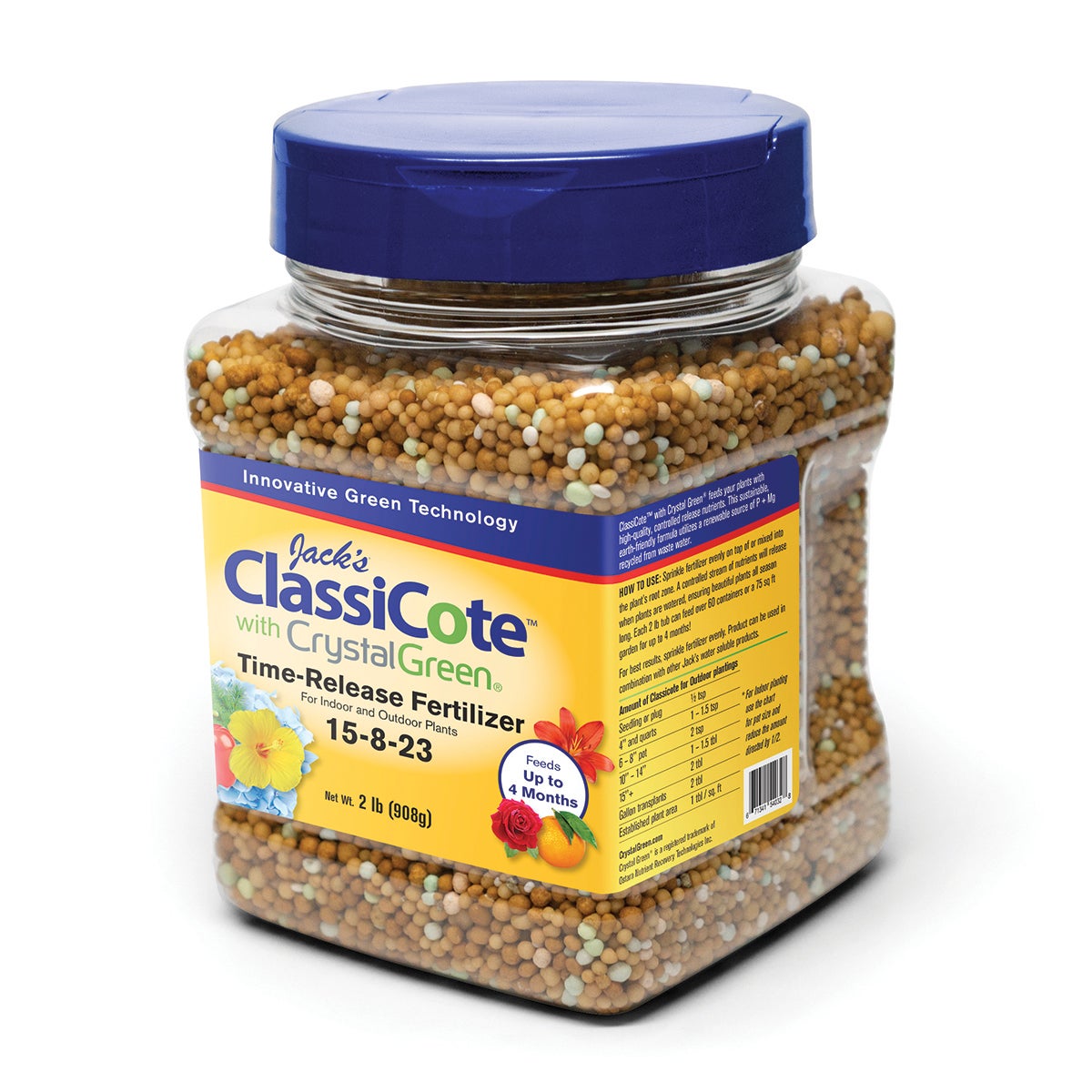
Jack's ClassiCote 水晶绿缓释剂 - 4 磅
Store Availability
Newmarket, Ontario (Head Office)
1175 Stellar Drive, Unit #5
Newmarket, ON L3Y 7B8
- Mon10:00am–6:00pm
- Tue10:00am–6:00pm
- Wed10:00am–6:00pm
- Thu10:00am–6:00pm
- Fri10:00am–6:00pm
- Sat10:00am–4:00pm
- SunClosed


Barrie, Ontario
106 Saunders Road, Unit #2A
Barrie, ON L4N 9A8
- Mon10:00am–5:00pm
- Tue10:00am–5:00pm
- Wed10:00am–5:00pm
- Thu10:00am–5:00pm
- Fri10:00am–5:00pm
- Sat10:00am–3:00pm
- SunClosed
Winnipeg, Manitoba
915 McLeod Avenue, Unit #4
Winnipeg, MB R2G 0Y4
- Mon10:00am–6:00pm
- Tue10:00am–6:00pm
- Wed10:00am–6:00pm
- Thu10:00am–6:00pm
- Fri10:00am–6:00pm
- Sat11:00am–3:00pm
- SunClosed
数量
Qualifies for Free Shipping Promotion
Sign in required
Back-in-stock notification
Select the store locations where you’d like to pick up this item, or choose Shipping to have it delivered.
Email notifications are turned off
Turn on email marketing to receive back-in-stock notifications.
Open account profile
Special order request
Select the store where you’d prefer to pick up your special order. To choose a different store, unselect your current choice first.
Description
Description
Description
Jack's ClassiCote w/ Crystal Green 缓释肥是一种缓释肥料,可提供控释养分,以实现植物的持续营养和稳定的绿色生长。这款控释植物肥料旨在随着时间的推移提供持续的养分供应,同时在各种园艺环境中支持强壮的根系。
含有 Crystal Green 的 ClassiCote 15-8-23 使用控释养分,这些养分以小增量释放,使植物有时间吸收,而不是被冲走。这种渐进的养分输送有助于保持生长更均匀,尤其是在您需要可靠营养而没有大幅波动的情况下。
一个关键的特点是 Crystal Green®,这是一种高度纯净的结晶化合物,采用创新的绿色技术从废水中捕获养分。在这种混合物中,它作为磷和镁的可再生、缓慢可用的来源,将回收的养分转化为实用的植物营养。该配方也被描述为一种可持续、环保的方式来支持长期生长。
这种缓释肥料配方中增强了微量营养素的可用性,以补充植物除主要大量营养素之外的营养。结果是旨在促进强壮根系和旺盛绿色生长的最佳营养,支持整个生长季节中更健康的叶片和整体植物表现。15-8-23 NPK 是一种平衡的选择,适用于需要持续营养以支持旺盛生长的通用种植。
Jack's ClassiCote w/ Crystal Green 缓释肥适用于花园和蔬菜、草坪、盆栽和树木。它非常适合那些需要控释养分、Crystal Green 的可再生磷和镁支持以及围绕强壮根系和旺盛绿色生长设计的全季营养的种植者。
产品优点:营养生长阶段;开花阶段;室内;室外;定期浇水;土壤;无土;养分缓慢释放;稳定施肥;性能稳定;根系发育;磷支持;镁支持;微量元素支持;广泛的植物用途。
保证分析:总氮 (N): 15.0%;氨态氮 (N): 1.6%;硝态氮 (N): 6.3%;尿素氮 (N): 7.1%;有效磷 (P2O5): 8.0%;可溶性钾 (K2O): 23.0%;总镁 (Mg): 1.3%;水溶性镁 (Mg): 0.3%;硫 (S): 2.0%;水溶性铁 (Fe): 0.6%;水溶性锰 (Mn): 0.09%;钼 (Mo): 0.001%。
源自:聚合物包膜硝酸钾;聚合物包膜尿素;聚合物包膜磷酸一铵;磷酸铵镁六水合物;硫酸钾镁;硫酸亚铁;硫酸锰;钼酸钠。
含有 Crystal Green 的 ClassiCote 15-8-23 使用控释养分,这些养分以小增量释放,使植物有时间吸收,而不是被冲走。这种渐进的养分输送有助于保持生长更均匀,尤其是在您需要可靠营养而没有大幅波动的情况下。
一个关键的特点是 Crystal Green®,这是一种高度纯净的结晶化合物,采用创新的绿色技术从废水中捕获养分。在这种混合物中,它作为磷和镁的可再生、缓慢可用的来源,将回收的养分转化为实用的植物营养。该配方也被描述为一种可持续、环保的方式来支持长期生长。
这种缓释肥料配方中增强了微量营养素的可用性,以补充植物除主要大量营养素之外的营养。结果是旨在促进强壮根系和旺盛绿色生长的最佳营养,支持整个生长季节中更健康的叶片和整体植物表现。15-8-23 NPK 是一种平衡的选择,适用于需要持续营养以支持旺盛生长的通用种植。
Jack's ClassiCote w/ Crystal Green 缓释肥适用于花园和蔬菜、草坪、盆栽和树木。它非常适合那些需要控释养分、Crystal Green 的可再生磷和镁支持以及围绕强壮根系和旺盛绿色生长设计的全季营养的种植者。
产品优点:营养生长阶段;开花阶段;室内;室外;定期浇水;土壤;无土;养分缓慢释放;稳定施肥;性能稳定;根系发育;磷支持;镁支持;微量元素支持;广泛的植物用途。
保证分析:总氮 (N): 15.0%;氨态氮 (N): 1.6%;硝态氮 (N): 6.3%;尿素氮 (N): 7.1%;有效磷 (P2O5): 8.0%;可溶性钾 (K2O): 23.0%;总镁 (Mg): 1.3%;水溶性镁 (Mg): 0.3%;硫 (S): 2.0%;水溶性铁 (Fe): 0.6%;水溶性锰 (Mn): 0.09%;钼 (Mo): 0.001%。
源自:聚合物包膜硝酸钾;聚合物包膜尿素;聚合物包膜磷酸一铵;磷酸铵镁六水合物;硫酸钾镁;硫酸亚铁;硫酸锰;钼酸钠。
Warnings & Safety
Warnings & Safety
Important – Safety Information
General Safety Precautions
First Aid – Skin Contact
First Aid – Eye Contact
First Aid – Ingestion
First aid – Inhalation
Storage And Handling
Important – Medical
Guaranteed Minimum Analysis
Guaranteed Minimum Analysis
| Total Nitrogen (N) | 15.0% |
|---|---|
| Ammoniacal Nitrogen (N) | 1.6% |
| Nitrate Nitrogen (N) | 6.3% |
| Urea Nitrogen (N) | 7.1% |
| Available Phosphate (P2O5) | 8.0% |
| Soluble Potash (K2O) | 23.0% |
| Total Magnesium (Mg) | 1.3% |
| Water Soluble Magnesium (Mg) | 0.3% |
| Sulfur (S) | 2.0% |
| Water Soluble Iron (Fe) | 0.6% |
| Water Soluble Manganese (Mn) | 0.09% |
| Molybdenum (Mo) | 0.001% |
Frequently Asked Questions
Frequently Asked Questions
Why is total nitrogen (N) important for plant growth, and what makes it different from other nutrients?
What Is ammoniacal nitrogen (N) and why do plants need It?
What does nitrate nitrogen (N) do for plants?
Why is urea nitrogen important for plant growth?
What does available phosphate (P₂O₅) do for plant growth?
Why is soluble potash (K2O) important for plants?
Why is total magnesium (Mg) important for plant growth?
Why is water soluble magnesium important for plant growth?
Why is sulfur (S) important for plant growth?
Why is water soluble iron (Fe) important for plants, and what makes it different from other iron forms?
Why is water-soluble manganese important for plant growth?
Why is molybdenum (Mo) important for plant growth?
What does ferrous sulfate do for yellow new leaves on plants?
What makes polymer-coated potassium nitrate different from regular potassium nitrate?
What makes polymer-coated urea release nitrogen more steadily than regular urea?
What makes polymer-coated monoammonium phosphate different from regular phosphate fertilizers?
What makes magnesium ammonium phosphate hexahydrate act like a slow-release fertilizer instead of an instant feed?
What does sulfate of potash magnesia do that plain potassium fertilizers don’t?
What does manganese sulfate do for plants?
What does sodium molybdate do for plants?
Frequently purchased together
-
-
杰克经典花卉增效剂 10-30-20 - 8 盎司
常规价格 $15.95常规价格 -
-
Reviews are submitted by verified customers after purchase. This section shows a summary of product feedback rather than the full individual review list.