

Frequently purchased together
-
 HOT ITEM
量筒 - 12 毫升
常规价格 $1.31常规价格 -
 HOT ITEM
量筒 - 60 毫升
常规价格 $2.99常规价格 -
Hydrofarm 量杯 - 500 毫升
常规价格 $4.99常规价格 -
Bluelab pH笔
常规价格 $169.99常规价格


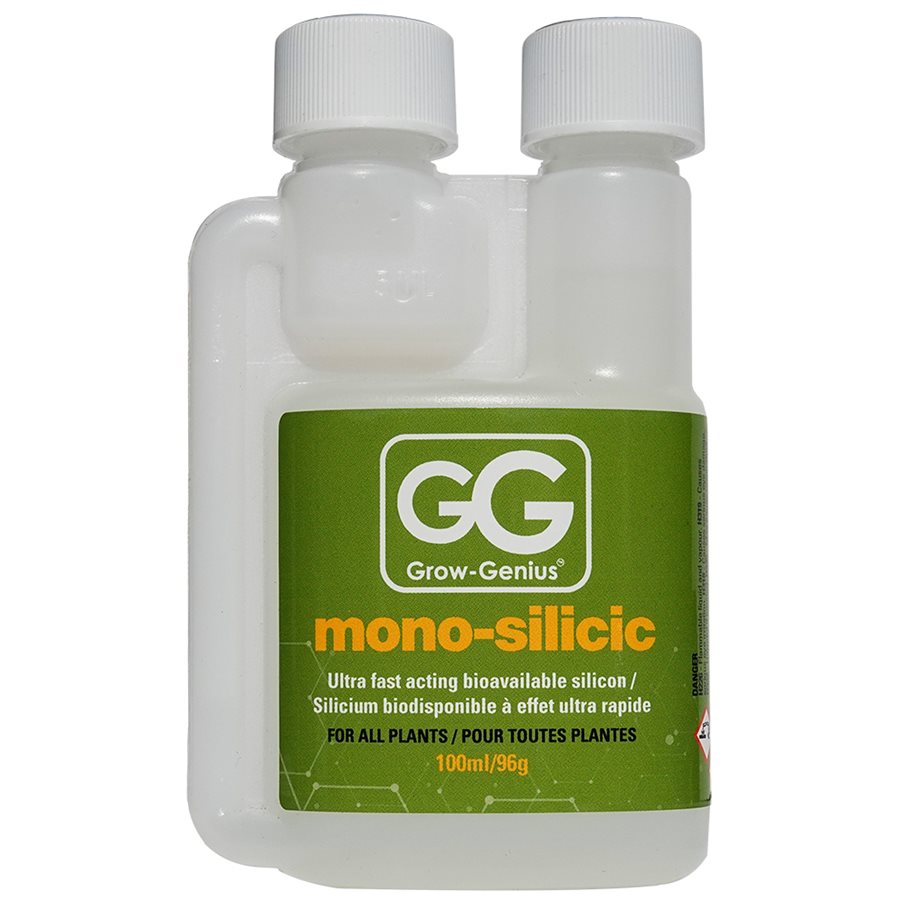
Grow Genius 单硅酸 - 100 毫升
Newmarket, Ontario (Head Office)
1175 Stellar Drive, Unit #5
Newmarket, ON L3Y 7B8
- Mon10:00am–6:00pm
- Tue10:00am–6:00pm
- Wed10:00am–6:00pm
- Thu10:00am–6:00pm
- Fri10:00am–6:00pm
- Sat10:00am–4:00pm
- SunClosed


Barrie, Ontario
106 Saunders Road, Unit #2A
Barrie, ON L4N 9A8
- Mon10:00am–5:00pm
- Tue10:00am–5:00pm
- Wed10:00am–5:00pm
- Thu10:00am–5:00pm
- Fri10:00am–5:00pm
- Sat10:00am–3:00pm
- SunClosed
Winnipeg, Manitoba
915 McLeod Avenue, Unit #4
Winnipeg, MB R2G 0Y4
- Mon10:00am–6:00pm
- Tue10:00am–6:00pm
- Wed10:00am–6:00pm
- Thu10:00am–6:00pm
- Fri10:00am–6:00pm
- Sat11:00am–3:00pm
- SunClosed
Sign in required
Back-in-stock notification
Select the store locations where you’d like to pick up this item, or choose Shipping to have it delivered.
Special order request
Select the store where you’d prefer to pick up your special order. To choose a different store, unselect your current choice first.
Description
Description
Description
本产品以单硅酸为核心,以植物可直接利用的形式提供硅。单硅酸又称原硅酸(硅酸),是与硅快速吸收和明显结构支持相关的形式。Grow Genius 将其描述为一种 pH 值中性的植物可用硅源,这使得它能够专注于清洁地支持植物强度,而无需让您的整体计划围绕它展开。
硅在这里的作用很简单:强化植物,使其在常见压力点造成的减速较小的情况下继续生长。Grow Genius 强调了更大、更健康的植物和更强的自然防御能力,以及对白粉病、灰霉病和黑斑病等真菌病原体的抵抗力增强。当这些问题反复出现时,植物可用硅可以是一种实用的方法,用于支持更坚固的组织,并帮助植物在整个生长周期中保持质量。
Grow Genius 单硅酸还旨在提高对刺吸式害虫的抵抗力,特别是蓟马、螨虫和蚜虫。除了害虫和病原体压力之外,它还被描述为能增强对热应激和水分胁迫以及大风和修剪造成的损害的抵抗力。这使得它成为希望植物在温度波动、水分不稳定或常规处理过程中出现物理应激时保持镇定的种植者的一个有用选择。
对于根区条件,Grow Genius 指出它支持与土壤中重金属和其他不良元素毒性相关的方面。这种对弹性的关注与广泛的通用性相结合:它被描述为适用于所有环境中的所有植物,并且适合根区和叶面施用。结果是一种硅添加剂,可以适应各种园艺风格,从早期繁殖到后期生长,此时植物强度和抗逆性最为重要。
这非常适合那些希望获得一种 pH 值中性、以单硅酸为核心的植物可用硅养分,以支持更强壮的植物、抗逆性以及对常见真菌病原体和刺吸式害虫提供更可靠保护的种植者。
产品益处:营养生长期;开花期;室内;室外;常规浇水;浇水系统;水培;椰糠安全;叶面施用;土壤;无土;生物可利用二氧化硅;更强的结构;旺盛的生长;植物健康;抗逆支持;植物防御支持;真菌防御;害虫防御。
保证分析:二氧化硅 (SiO2):19.0%;醇乙氧基化物:15.0%。
来源:四乙氧基硅烷(四乙酸乙酯);聚醚;C11-C15 仲醇乙氧基化物;乙基聚硅酸酯。
How To Use
How To Use
How to Use Grow Genius 单硅酸 - 100 毫升
Step-by-step mixing and feeding instructions for Grow Genius 单硅酸 - 100 毫升.
Mixing & preparation
Fill your reservoir or watering container with clean, room-temperature water first. Shake the bottle of Grow Genius 单硅酸 - 100 毫升 well before every use. Using the feeding schedule below, measure the recommended dose and add it directly to the water while stirring. Allow the solution to mix fully before adding any other fertilizers, additives, or supplements.
Always add nutrients to water — not the other way around. Mix thoroughly between products to ensure an even, stable nutrient solution.
Week-by-week feeding schedule
Vegetative stage — Mono Silicic Acid
- Week 1: mix 0.03 ml per litre of water or nutrient solution.
- Week 2: mix 0.03 ml per litre of water or nutrient solution.
- Week 3: mix 0.03 ml per litre of water or nutrient solution.
- Week 4: mix 0.03 ml per litre of water or nutrient solution.
Flowering stage — Mono Silicic Acid
- Week 1: mix 0.03 ml per litre of water or nutrient solution.
- Week 2: mix 0.03 ml per litre of water or nutrient solution.
- Week 3: mix 0.03 ml per litre of water or nutrient solution.
- Week 4: mix 0.03 ml per litre of water or nutrient solution.
- Week 5: mix 0.03 ml per litre of water or nutrient solution.
- Week 6: mix 0.03 ml per litre of water or nutrient solution.
- Week 7: mix 0.03 ml per litre of water or nutrient solution.
- Week 8: do not use this product during this week of flowering.
Tips for best results
- Maintain pH and EC/ppm within the range recommended for your growing medium and crop.
- Use fresh nutrient solution whenever possible and avoid leaving mixed solution stagnant for long periods.
- Store nutrients in a cool, dark place away from direct sunlight and extreme temperatures.
- Keep bottles tightly sealed when not in use to reduce air exposure and preserve product quality.
- Use clean measuring tools and regularly rinse or clean your reservoir, lines, and irrigation equipment.
Common mistakes to avoid
- Do not mix different nutrients or additives together in concentrated form before adding them to water.
- Do not exceed the recommended dosage unless you are following a tested, crop-specific feeding plan.
- Do not skip pH or EC/ppm checks when growing in hydroponic or soilless systems.
- Do not allow the nutrient solution to freeze or overheat, as this can damage the formulation.
- Do not ignore the directions on the product label for your specific crop, growth stage, and system type.
Warnings & Safety
Warnings & Safety
Important – Safety Information
General Safety Precautions
First Aid – Skin Contact
First Aid – Eye Contact
First Aid – Ingestion
First aid – Inhalation
Storage And Handling
Important – Medical
Guaranteed Minimum Analysis
Guaranteed Minimum Analysis
| Silicon Dioxide (SiO2) | 19.0% |
|---|---|
| Alcohol Ethoxylates | 15.0% |
Frequently Asked Questions
Frequently Asked Questions
Why is silicon dioxide important for plant growth, and what makes it different from other nutrients?
What do alcohol ethoxylates do in plant growth?
Why is alcohols C11–C15 secondary ethoxylated important in plant sprays?
What does ethylpolysilicate do for plants?
What makes tetraethyl silicate different from other silicon ingredients used for plant support?
What does polyether do for plants if it isn’t a nutrient?
Safety & Technical Documents
Safety & Technical Documents
Frequently purchased together
-
HOT ITEM
量筒 - 12 毫升
常规价格 $1.31常规价格 -
HOT ITEM
量筒 - 60 毫升
常规价格 $2.99常规价格 -
Hydrofarm 量杯 - 500 毫升
常规价格 $4.99常规价格 -
Bluelab pH笔
常规价格 $169.99常规价格

Vegetative — Mono Silicic Acid
-
—
Flowering — Mono Silicic Acid
-
—