Newmarket, Ontario (Head Office)
1175 Stellar Drive, Unit #5
Newmarket, ON L3Y 7B8
- Mon10:00am–6:00pm
- Tue10:00am–6:00pm
- Wed10:00am–6:00pm
- Thu10:00am–6:00pm
- Fri10:00am–6:00pm
- Sat10:00am–4:00pm
- SunClosed
您选择的取货地点缺货?我们会自动从其他地点调货,确保您选择的取货地点有货。(仅限安大略省)
无法加载取货服务可用情况
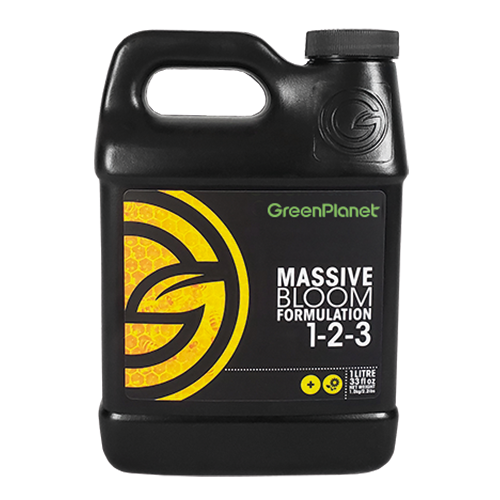
GreenPlanet Nutrients 强效开花配方是一款顶级开花添加剂,旨在促进开花期花朵更大更饱满。这款开花期液体肥料专注于促进花朵发育和增大花朵尺寸,采用简单易懂的 1-2-3 NPK 配比。
强效开花配方是一款全面的开花添加剂,富含植物生长所需的大量元素和微量元素,能够促进花朵硕大健康。它采用L型氨基酸、特制维生素和独特的碳水化合物混合物配制而成,使其功能比普通的磷钾复合型促花剂更为全面。螯合矿物质配方以易于吸收的方式确保微量元素的有效性,同时,配方中还包含磷和钾等必需营养素,以满足植物开花阶段的需求。
GreenPlanet 还将 Massive Bloom 配方与多种在生长后期对开花至关重要的植物益处联系起来。该配方据称能够促进芳香物质和精油的生成,同时还能在花朵生长过程中提升叶绿素含量、光合作用和二氧化碳利用率。此外,它还能促进细胞扩张、细胞壁增厚和花朵成分的形成,从而直接实现花朵更加饱满、发育更完善的目标。对于那些希望获得优异开花效果却又不想使用过多不同瓶装肥料的种植者来说,这些叠加的益处正是这款综合性开花添加剂的核心价值所在。
该系统适用范围广泛且说明清晰,方便您根据自身需求进行匹配。“强效开花配方”适用于水培、排水式花园、循环系统以及土壤/无土栽培。此外,它还具有增强植物抗逆性的作用,即使在条件不理想的情况下也能帮助维持稳定的开花势头。
对于想要一款能够增加花朵大小、促进芳香物质和精油生成、并通过螯合矿物质、L 型氨基酸和维生素成分在一个精简的 1-2-3 配方中增强开花期表现的开花期添加剂的种植者来说,这是一款非常合适的产品。
Step-by-step mixing and feeding instructions for 绿星球营养液 强效开花配方 - 1 升.
Fill your reservoir or watering container with clean, room-temperature water first. Shake the bottle of 绿星球营养液 强效开花配方 - 1 升 well before every use. Using the feeding schedule below, measure the recommended dose and add it directly to the water while stirring. Allow the solution to mix fully before adding any other fertilizers, additives, or supplements.
Always add nutrients to water — not the other way around. Mix thoroughly between products to ensure an even, stable nutrient solution.
Vegetative stage — Massive
Flowering stage — Massive
Warning – Important Safety Information
This product may cause mild skin irritation and eye irritation. Avoid unnecessary contact with skin, eyes, and clothing. Use only as directed.
General safety precautions
Read and follow all instructions on the product label and any accompanying documentation before use. Keep out of reach of children and pets. Do not ingest. Avoid breathing vapours, mist, or dust that may be generated during handling or use.
Wear appropriate personal protective equipment (PPE), such as protective gloves, long sleeves, long pants and closed-toe footwear. When there is a risk of splashing or airborne particles, use safety glasses or other suitable eye and face protection.
First aid – skin contact
IF ON SKIN OR HAIR: Remove contaminated clothing immediately. Rinse skin with clean water for several minutes, then wash with mild soap and water. If irritation or redness develops and persists, seek medical attention. Wash contaminated clothing before reuse.
First aid – eye contact
IF IN EYES: Rinse cautiously with clean water for several minutes, keeping eyelids open. Remove contact lenses if present and easy to do. Continue rinsing. If irritation persists, obtain medical advice.
First aid – ingestion and inhalation
IF SWALLOWED: Rinse mouth thoroughly with water. Do not induce vomiting unless instructed by a medical professional. Seek medical attention if you feel unwell.
IF INHALED: Move the person to fresh air and keep them comfortable for breathing. If coughing, breathing difficulty, dizziness or other symptoms occur, seek medical assistance.
Storage and handling
Store this product in its original closed container, in a cool, dry and well-ventilated area. Protect from extreme temperatures and direct sunlight. Keep container tightly sealed when not in use.
Avoid release to drains, natural waterways or outdoor soil. Dispose of unused product and empty containers in accordance with local regulations and the directions on the label.
Important: If medical advice is needed, keep the product label or container available. Always follow the specific instructions and safety recommendations provided by the manufacturer. This safety notice is intended as general guidance and does not replace official label directions or documentation.
| Total Nitrogen (N) | 1.0% |
|---|---|
| Ammoniacal Nitrogen (N) | 0.1% |
| Nitrate Nitrogen (N) | 0.8% |
| Water Soluble Nitrogen (N) | 0.1% |
| Available Phosphate (P2O5) | 2.0% |
| Soluble Potash (K2O) | 3.0% |
| Total Iron (Fe) | 0.05% |
| Chelated Iron (Fe) | 0.05% |
| Molybdenum (Mo) | 0.0002% |
| Sucrose | 0.1% |
Ammoniacal Nitrogen (N) is a plant-available form of ammonium (NH₄⁺) that provides a steady, gentle source of nitrogen for healthy green growth. Unlike fast-release nitrogen types, ammoniacal nitrogen feeds plants slowly, helps stabilize root-zone pH, and works well in cooler temperatures. It is commonly used during early vegetative growth because it supports strong leaf development without burning young roots. If plants show pale leaves, slow growth, or weak stems, they may need more available ammoniacal nitrogen.
Even in tiny amounts, molybdenum is crucial because it helps plants convert absorbed nitrogen, especially nitrate, into forms they can actually use to build new growth. That makes ammonium molybdate unique from many other micronutrient sources: it supports nitrogen-use efficiency, so a shortage can make plants look nitrogen-deficient even when feeding is adequate, leading to slow growth, pale leaves, and weak vigor unless the bottleneck is fixed.
Ammonium phosphate is unique because it delivers phosphorus alongside ammonium nitrogen, which can slightly lower pH right at the root surface and help plants access phosphorus more efficiently. That matters because phosphorus fuels root energy and early establishment, while ammonium supports immediate growth, making this ingredient especially useful for strong starts when used in balanced amounts.
Available Phosphate (P₂O₅) supports root development, energy transfer, and early structural growth by providing a form of phosphorus that plants can absorb and use quickly.
Chelated iron is important because it keeps iron usable for plants even when growing conditions would normally lock iron out, helping prevent the classic yellow-new-leaf symptom caused by low chlorophyll production. It is unique from other iron sources because the chelation protects iron from becoming insoluble, making it a more reliable way to correct iron-related chlorosis when regular iron can fail.
Dipotassium phosphate provides fast, plant-available phosphate and potassium, which supports energy transfer for root and growth processes while improving water control and sugar movement through the plant. It’s important because these two nutrients work together to keep growth steady, but it’s also unique because it can raise root-zone pH compared with similar phosphate sources, so the same dose that helps vigor can also cause micronutrient lockouts if balance and pH stability are ignored.
Molasses is important because it feeds beneficial microbes that support nutrient cycling and root-zone health, which can help plants grow more steadily. It’s unique because it works mainly by energizing the living ecosystem around roots rather than directly supplying plant nutrients like most feed ingredients.
Molybdenum is important because it helps plants convert nitrogen into usable building blocks for chlorophyll and growth, and it’s unique from many nutrients because it mainly supports enzyme-driven “nutrient use” rather than directly building plant tissue.
Nitrate Nitrogen provides a stable, easy-to-absorb form of nitrogen that supports steady growth, strong foliage, and reliable plant development without sudden nutrient swings.
Soluble potash (K2O) is important because it helps plants control water use, move sugars to new growth and fruit, and build stronger, higher-quality structure under stress. It’s unique from many other nutrients because it acts more like a regulator and transport helper than a direct “building material,” so the biggest benefits show up as steadier growth, stronger stems, and better finishing instead of just bigger leaves.
Sucrose matters because it is the plant’s main “transport sugar—” the energy form plants naturally move from leaves to roots, flowers, and fruits, and when added externally it mainly fuels root-zone microbes that influence nutrient cycling and root health. It’s unique because it isn’t a mineral nutrient you “correct” like a deficiency; instead, it can shift the biology and oxygen balance around roots, helping in well-aerated systems but causing problems if conditions are too wet or stagnant.
Total iron (Fe) matters because iron supports chlorophyll development and plant energy systems, keeping new growth green and vigorous; it’s unique from many other nutrients because iron deficiency usually shows up first in young leaves even when older leaves stay green, since iron doesn’t easily move within the plant.
Total Nitrogen is important because it directly drives leafy growth, chlorophyll production, and overall growth speed, which sets the pace for the entire plant. It’s unique because the “total” number can include different nitrogen forms that behave differently in the root zone, meaning the same total amount can produce very different results depending on the nitrogen type and plant stage.
Water-soluble nitrogen is important because it dissolves in water and becomes available to plants quickly, helping drive fast green growth, strong photosynthesis, and rapid recovery from nitrogen deficiency. It’s unique because it works immediately rather than relying on slow breakdown or conversion, so it delivers faster results—but also requires more careful control to avoid overfeeding, soft growth, or nutrient imbalance.
Iron EDTA keeps iron dissolved and available long enough for roots to absorb it, which is why it can quickly improve new growth color when iron is tied up in the root zone. It’s unique because the EDTA chelate balances stability and accessibility, making iron more reliably usable in mildly acidic to near-neutral conditions compared to many non-chelated iron forms.
Monopotassium phosphate provides fast phosphorus and potassium that support energy use, nutrient flow, and bloom development without adding nitrogen, so it helps flowering progress cleanly without pushing extra leafy growth. It’s unique because it delivers a focused PK boost in a highly soluble form, which can correct stage-related demand quickly, but it must be used carefully to avoid potassium-heavy imbalances that can block calcium and magnesium uptake.
Potassium nitrate is often better for quick correction when the plant needs both potassium and fast nitrate nitrogen, because it dissolves cleanly and is taken up quickly, unlike potassium sources that don’t supply nitrogen. It’s unique because it can restore leaf color and growth momentum while also improving water regulation, but it can backfire if nitrogen is already high or if salt levels are already stressing the roots.
Potassium sulfate is often preferred because it supplies potassium without added chloride and also provides sulfur, which supports protein-building and efficient nutrient use, making it a cleaner, balanced option when plants are sensitive to chloride or when you want potassium without pushing extra nitrogen or phosphorus.
Soy protein hydrolysate supplies small peptides and amino acids that can support faster stress recovery and more efficient nutrient use, especially when roots are establishing or plants are under high demand. It is unique because it acts like both a quick organic building-block source and a gentle biological cue, rather than simply adding another mineral nutrient.

works very well
My flowers came in larger and lasted longer than usual
I tried a bargain fertilizer before and didn’t notice much. This one actually shows results
1175 Stellar Drive, Unit #5
Newmarket, ON L3Y 7B8
106 Saunders Road, Unit #2A
Barrie, ON L4N 9A8
719 Krosno Boulevard
Pickering, ON L1W 1G4
915 McLeod Avenue, Unit #4
Winnipeg, MB R2G 0Y4