Frequently purchased together
-
GardenPro 白云石石灰 - 2 公斤
常规价格 $13.25常规价格 -
-
GardenPro 骨粉 2-11-0 - 1.2 公斤
常规价格 $15.70常规价格 -


Reviews are submitted by verified customers after purchase. This section shows a summary of product feedback rather than the full individual review list.

GardenPro Superbloom 10-40-25 + 微量元素水溶性肥料 - 400 克
Store Availability
Newmarket, Ontario (Head Office)
1175 Stellar Drive, Unit #5
Newmarket, ON L3Y 7B8
- Mon10:00am–6:00pm
- Tue10:00am–6:00pm
- Wed10:00am–6:00pm
- Thu10:00am–6:00pm
- Fri10:00am–6:00pm
- Sat10:00am–4:00pm
- SunClosed


Barrie, Ontario
106 Saunders Road, Unit #2A
Barrie, ON L4N 9A8
- Mon10:00am–5:00pm
- Tue10:00am–5:00pm
- Wed10:00am–5:00pm
- Thu10:00am–5:00pm
- Fri10:00am–5:00pm
- Sat10:00am–3:00pm
- SunClosed
Winnipeg, Manitoba
915 McLeod Avenue, Unit #4
Winnipeg, MB R2G 0Y4
- Mon10:00am–6:00pm
- Tue10:00am–6:00pm
- Wed10:00am–6:00pm
- Thu10:00am–6:00pm
- Fri10:00am–6:00pm
- Sat11:00am–3:00pm
- SunClosed
Estimated Delivery Date
Order Within
—
Province
Est. Delivery
—
数量
Sign in required
Back-in-stock notification
Select the store locations where you’d like to pick up this item, or choose Shipping to have it delivered.
Email notifications are turned off
Turn on email marketing to receive back-in-stock notifications.
Open account profile
Special order request
Select the store where you’d prefer to pick up your special order. To choose a different store, unselect your current choice first.
Description
Description
Description
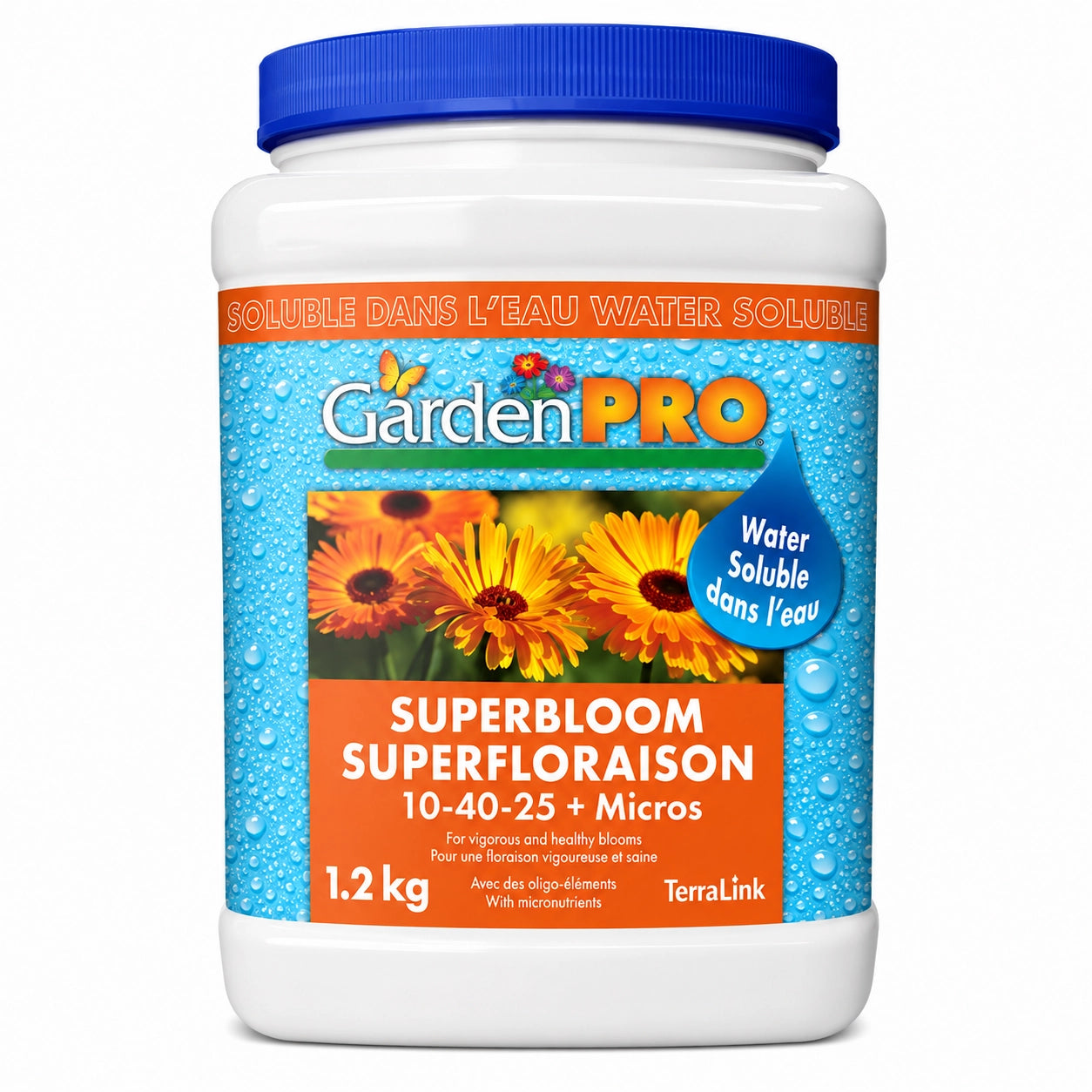
GardenPRO Superbloom 10-40-25 水溶性肥料是一种专为促进开花而设计的水溶性肥料,有助于在花园和容器中开出大而繁盛的花朵,并使花色更加鲜艳。这是一种以高磷配方为基础的水溶性植物肥料,适用于以开花性能为首要任务的情况。
当您希望获得清晰、以开花为重点的营养方向而无需同时使用多种产品时,可以选择 Superbloom。该配方被描述为能够开出大而繁盛的花朵,非常适合注重视觉效果的观赏植物。它也适用于高磷应用,其益处包括在植物开花期帮助改善花朵大小和颜色。
这款 GardenPRO 水溶性肥料适用于室内和室外种植,如果您在窗台、露台和季节性户外花坛上种植开花植物,这将非常有用。由于它是水溶性的,它适合喜欢可溶性肥料形式的园丁,这种肥料可以很好地融入日常植物护理中,特别是当您希望产品专注于开花效果而非宽泛、笼统的施肥声明时。
事实摘要,简洁明了:标明的 NPK 为 10-40-25。除了主要的 NPK 养分外,产品还包含微量元素,配方中列出了硼、铜、铁、锰、钼和锌。其中一些微量元素以螯合形式提供,并由 EDTA 螯合剂支持,这有助于保持溶液中微量养分的持续可用性。
GardenPRO Superbloom 10-40-25 水溶性肥料非常适合寻求含有微量元素的水溶性开花肥料的园丁,特别是当目标是在室内和室外开花植物环境中获得更大、更繁盛的花朵,并改善花朵大小和颜色时。
产品优点:营养生长阶段;开花阶段;室内;室外;定期浇水;土壤;无土;开花支持;更大花朵;鲜艳花朵;磷支持;微量元素支持;完全水溶性;室内使用;室外使用。
保证分析:总氮 (N):10.0%;有效磷酸 (P2O5):40.0%;可溶性钾 (K2O):25.0%;硼 (B):0.02%;钼 (Mo):0.0005%;铜 (Cu):0.05%;总铁 (Fe):0.05%;总锰 (Mn):0.05%;锌 (Zn):0.05%。
源自:活性成分源自豁免材料。
当您希望获得清晰、以开花为重点的营养方向而无需同时使用多种产品时,可以选择 Superbloom。该配方被描述为能够开出大而繁盛的花朵,非常适合注重视觉效果的观赏植物。它也适用于高磷应用,其益处包括在植物开花期帮助改善花朵大小和颜色。
这款 GardenPRO 水溶性肥料适用于室内和室外种植,如果您在窗台、露台和季节性户外花坛上种植开花植物,这将非常有用。由于它是水溶性的,它适合喜欢可溶性肥料形式的园丁,这种肥料可以很好地融入日常植物护理中,特别是当您希望产品专注于开花效果而非宽泛、笼统的施肥声明时。
事实摘要,简洁明了:标明的 NPK 为 10-40-25。除了主要的 NPK 养分外,产品还包含微量元素,配方中列出了硼、铜、铁、锰、钼和锌。其中一些微量元素以螯合形式提供,并由 EDTA 螯合剂支持,这有助于保持溶液中微量养分的持续可用性。
GardenPRO Superbloom 10-40-25 水溶性肥料非常适合寻求含有微量元素的水溶性开花肥料的园丁,特别是当目标是在室内和室外开花植物环境中获得更大、更繁盛的花朵,并改善花朵大小和颜色时。
产品优点:营养生长阶段;开花阶段;室内;室外;定期浇水;土壤;无土;开花支持;更大花朵;鲜艳花朵;磷支持;微量元素支持;完全水溶性;室内使用;室外使用。
保证分析:总氮 (N):10.0%;有效磷酸 (P2O5):40.0%;可溶性钾 (K2O):25.0%;硼 (B):0.02%;钼 (Mo):0.0005%;铜 (Cu):0.05%;总铁 (Fe):0.05%;总锰 (Mn):0.05%;锌 (Zn):0.05%。
源自:活性成分源自豁免材料。
How To Use
How To Use
Mix Rate (Water-Soluble Feeding)
Feeding Schedule
How to Apply
Warnings & Safety
Warnings & Safety
Important – Safety Information
General Safety Precautions
First Aid – Skin Contact
First Aid – Eye Contact
First Aid – Ingestion
First aid – Inhalation
Storage And Handling
Important – Medical
Guaranteed Minimum Analysis
Guaranteed Minimum Analysis
| Total Nitrogen (N) | 10.0% |
|---|---|
| Available Phosphoric Acid (P2O5) | 40.0% |
| Soluble Potash (K2O) | 25.0% |
| Boron (B) | 0.02% |
| Molybdenum (Mo) | 0.0005% |
| Copper (Cu) | 0.05% |
| Total Iron (Fe) | 0.05% |
| Total Manganese (Mn) | 0.05% |
| Zinc (Zn) | 0.05% |
Derived From
Derived From
| Active Ingredients derived from exempt materials |
Frequently Asked Questions
Frequently Asked Questions
Why is total nitrogen (N) important for plant growth, and what makes it different from other nutrients?
What does available phosphoric acid (P₂O₅) do for plants, and how is it different from available phosphate?
Why is soluble potash (K2O) important for plants?
Why is boron (B) essential for strong plant development, and what makes it different from other micronutrients?
Why is molybdenum (Mo) important for plant growth?
Why is copper (Cu) important for plant growth?
Why is total iron (Fe) important for plant growth?
Why is total manganese (Mn) important for plant growth?
Why is zinc (Zn) important for plant growth?
Frequently purchased together
-
GardenPro 白云石石灰 - 2 公斤
常规价格 $13.25常规价格 -
-
GardenPro 骨粉 2-11-0 - 1.2 公斤
常规价格 $15.70常规价格 -
Reviews are submitted by verified customers after purchase. This section shows a summary of product feedback rather than the full individual review list.