Frequently purchased together
-
 HOT ITEM
Gaia Green 多用途 - 2 公斤
常规价格 $27.99常规价格 -
 HOT ITEM
Gaia 绿色能量绽放 - 2 公斤
常规价格 $29.99常规价格 -
Gaia 绿色蚯蚓粪 - 2 升
常规价格 $16.87常规价格 -


Reviews are submitted by verified customers after purchase. This section shows a summary of product feedback rather than the full individual review list.

Store Availability
Newmarket, Ontario (Head Office)
1175 Stellar Drive, Unit #5
Newmarket, ON L3Y 7B8
- Mon10:00am–6:00pm
- Tue10:00am–6:00pm
- Wed10:00am–6:00pm
- Thu10:00am–6:00pm
- Fri10:00am–6:00pm
- Sat10:00am–4:00pm
- SunClosed


Barrie, Ontario
106 Saunders Road, Unit #2A
Barrie, ON L4N 9A8
- Mon10:00am–5:00pm
- Tue10:00am–5:00pm
- Wed10:00am–5:00pm
- Thu10:00am–5:00pm
- Fri10:00am–5:00pm
- Sat10:00am–3:00pm
- SunClosed
Winnipeg, Manitoba
915 McLeod Avenue, Unit #4
Winnipeg, MB R2G 0Y4
- Mon10:00am–6:00pm
- Tue10:00am–6:00pm
- Wed10:00am–6:00pm
- Thu10:00am–6:00pm
- Fri10:00am–6:00pm
- Sat11:00am–3:00pm
- SunClosed
数量
In-Store Pickup Only
Sign in required
Back-in-stock notification
Select the store locations where you’d like to pick up this item, or choose Shipping to have it delivered.
Email notifications are turned off
Turn on email marketing to receive back-in-stock notifications.
Open account profile
Special order request
Select the store where you’d prefer to pick up your special order. To choose a different store, unselect your current choice first.
Description
Description
Description
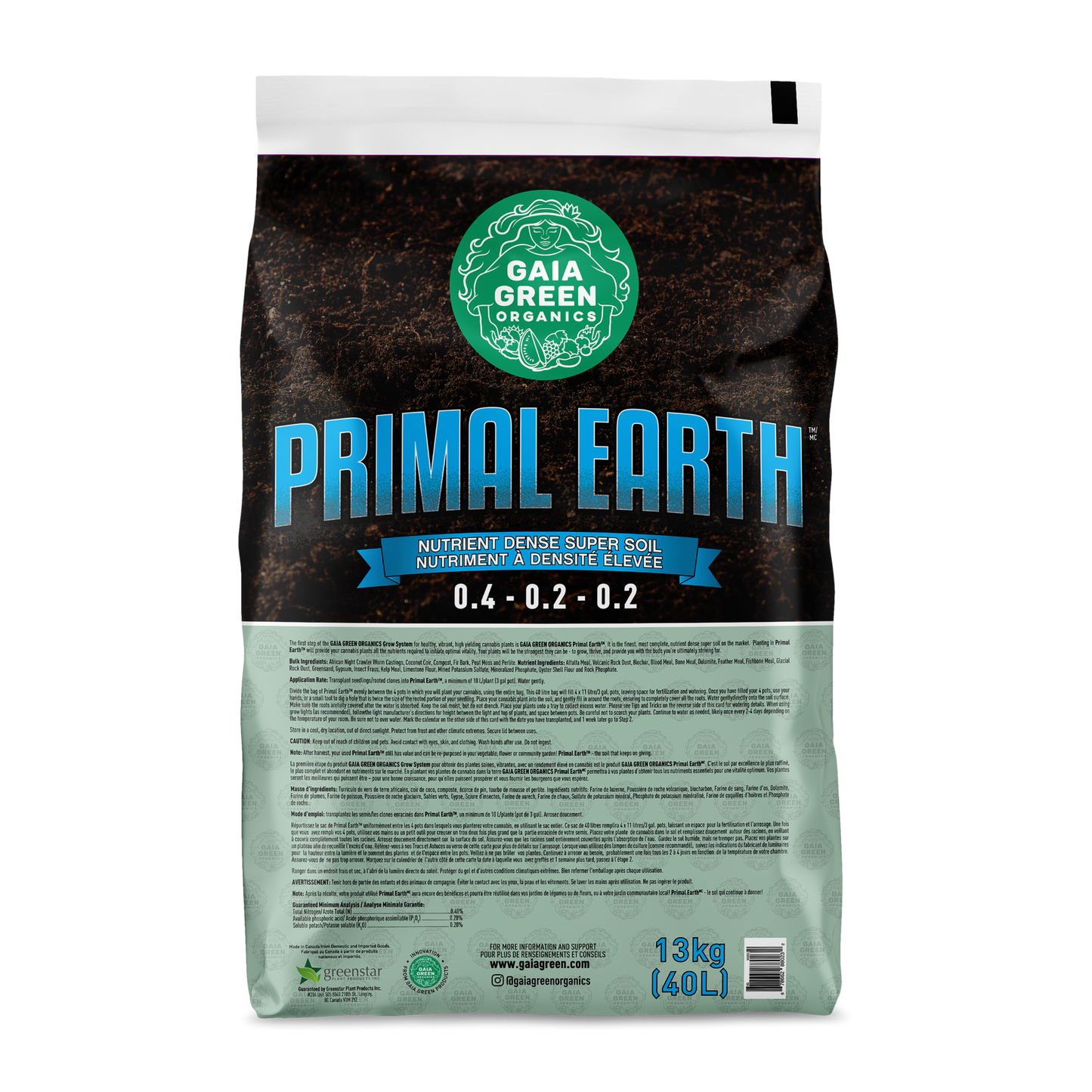
Gaia Green Primal Earth 是一种营养丰富的有机超级土壤和盆栽土壤,从一开始就支持健康、充满活力、高产的有机植物。它被设计成一种完整的、基于土壤的生长介质,旨在为植物提供启动最佳活力所需的营养,同时保持操作简单和以土壤为中心。
Primal Earth 专为那些希望获得“一体化”土壤基础的种植者而设计,这种介质本身就含有有意义的营养。这种营养丰富的有机超级土壤并非依赖单一的改良剂,而是旨在以自然的方式支持强劲、稳定的生长和植物的整体活力。目标很简单:一个充满活力的根区和持续的性能,帮助植物在丰富、生物支持的环境中生长和茁壮成长。
一个简洁的事实层:Primal Earth 具有 0.4-0.2-0.2 的轻微营养成分,这反映了它作为一种营养丰富的土壤而非高强度肥料的作用。这种平衡与广泛的成分基础相结合,旨在长期支持营养和土壤质量,帮助介质保持生产力,而不是很快就“耗尽”。
这种混合物首先包含构成其结构的关键大宗成分:非洲夜行蚯蚓粪、椰壳纤维、堆肥、冷杉树皮、泥炭藓和珍珠岩。在此基础上,它富含多种营养成分,包括植物和动物粉和矿物质投入物。这些投入物包括苜蓿粉、血粉、骨粉、羽毛粉、鱼骨粉、海带粉、昆虫粪便、生物炭、化石碳复合物,以及玄武岩粉、冰川岩粉、绿砂、石膏、石灰石粉、牡蛎壳粉、矿化磷酸盐、磷矿粉和开采的硫酸钾等矿物质改良剂。它们共同构成了一种围绕广泛、稳定营养而设计的完整有机超级土壤。
Primal Earth 作为土壤基础也具有长期价值。它被定位为一种介质,在收获后可用于蔬菜、花卉或社区花园环境,这对于喜欢建造土壤并让投入物在一个周期后继续发挥作用的种植者来说非常有用。
这非常适合那些想要完整、营养丰富的有机超级土壤盆栽混合物,其中含有蚯蚓粪、堆肥和富含矿物质的改良剂的园丁——特别是当目标是健康、充满活力的有机植物和值得重复利用的土壤基础时。
产品优势:完整超级土壤;预充营养;郁郁葱葱的叶片;生长支持;完整营养;稳定喂养;缓慢养分释放;有机质;室内;室外;开花期;营养生长期;无土;有机。
保证分析:总氮 (N):0.4%;有效磷酸 (P2O5):0.2%;可溶性钾 (K2O):0.2%。
来源:非洲夜行蚯蚓粪;生物炭;椰壳纤维;堆肥;冷杉树皮;泥炭藓;珍珠岩;苜蓿粉;霞石;玄武岩粉;血粉;骨粉;羽毛粉;鱼骨粉;化石碳复合物;冰川岩粉;绿砂;石膏;昆虫粪便;海带粉;石灰石粉;开采的硫酸钾;矿化磷酸盐;牡蛎壳粉;磷矿粉。
Primal Earth 专为那些希望获得“一体化”土壤基础的种植者而设计,这种介质本身就含有有意义的营养。这种营养丰富的有机超级土壤并非依赖单一的改良剂,而是旨在以自然的方式支持强劲、稳定的生长和植物的整体活力。目标很简单:一个充满活力的根区和持续的性能,帮助植物在丰富、生物支持的环境中生长和茁壮成长。
一个简洁的事实层:Primal Earth 具有 0.4-0.2-0.2 的轻微营养成分,这反映了它作为一种营养丰富的土壤而非高强度肥料的作用。这种平衡与广泛的成分基础相结合,旨在长期支持营养和土壤质量,帮助介质保持生产力,而不是很快就“耗尽”。
这种混合物首先包含构成其结构的关键大宗成分:非洲夜行蚯蚓粪、椰壳纤维、堆肥、冷杉树皮、泥炭藓和珍珠岩。在此基础上,它富含多种营养成分,包括植物和动物粉和矿物质投入物。这些投入物包括苜蓿粉、血粉、骨粉、羽毛粉、鱼骨粉、海带粉、昆虫粪便、生物炭、化石碳复合物,以及玄武岩粉、冰川岩粉、绿砂、石膏、石灰石粉、牡蛎壳粉、矿化磷酸盐、磷矿粉和开采的硫酸钾等矿物质改良剂。它们共同构成了一种围绕广泛、稳定营养而设计的完整有机超级土壤。
Primal Earth 作为土壤基础也具有长期价值。它被定位为一种介质,在收获后可用于蔬菜、花卉或社区花园环境,这对于喜欢建造土壤并让投入物在一个周期后继续发挥作用的种植者来说非常有用。
这非常适合那些想要完整、营养丰富的有机超级土壤盆栽混合物,其中含有蚯蚓粪、堆肥和富含矿物质的改良剂的园丁——特别是当目标是健康、充满活力的有机植物和值得重复利用的土壤基础时。
产品优势:完整超级土壤;预充营养;郁郁葱葱的叶片;生长支持;完整营养;稳定喂养;缓慢养分释放;有机质;室内;室外;开花期;营养生长期;无土;有机。
保证分析:总氮 (N):0.4%;有效磷酸 (P2O5):0.2%;可溶性钾 (K2O):0.2%。
来源:非洲夜行蚯蚓粪;生物炭;椰壳纤维;堆肥;冷杉树皮;泥炭藓;珍珠岩;苜蓿粉;霞石;玄武岩粉;血粉;骨粉;羽毛粉;鱼骨粉;化石碳复合物;冰川岩粉;绿砂;石膏;昆虫粪便;海带粉;石灰石粉;开采的硫酸钾;矿化磷酸盐;牡蛎壳粉;磷矿粉。
Guaranteed Minimum Analysis
Guaranteed Minimum Analysis
Derived From
Derived From
Frequently Asked Questions
Frequently Asked Questions
Why is total nitrogen (N) important for plant growth, and what makes it different from other nutrients?
What does available phosphoric acid (P₂O₅) do for plants, and how is it different from available phosphate?
Why is soluble potash (K2O) important for plants?
Why are african night crawler worm castings important for plant growth?
What does biochar actually do in soil for plant growth?
Why is coconut coir important for plant growth?
What does compost actually do for plant growth?
What does fir bark do in potting soil?
Why is perlite important for plant growth, and what makes it different from other mix ingredients?
What makes alfalfa meal important for plant growth compared to other natural amendments?
Is azomite a fertilizer or a soil mineral supplement for plants?
What is basalt rock dust used for in gardening?
Is blood meal good for plants, and what makes it different from other nitrogen sources?
When should you use bone meal for plants, and why does it work differently than other amendments?
What does feather meal do for plants?
What does fishbone meal do for plant roots?
Is peat moss good for all potting mixes?
What does a fossilized carbon complex actually do in the root zone?
What does glacial rock dust actually do for plants?
Is greensand a fast way to fix a potassium deficiency in plants?
Does gypsum change soil pH?
What makes insect frass different from other organic soil amendments?
What does kelp meal do for plants?
What does limestone flour do for plants?
What does mined potassium sulfate do for fruiting plants?
What does mineralized phosphate do for plants?
What does oyster shell flour do for plants?
What makes natural rock phosphate different from other phosphorus sources for plant growth?
Frequently purchased together
-
HOT ITEM
Gaia Green 多用途 - 2 公斤
常规价格 $27.99常规价格 -
HOT ITEM
Gaia 绿色能量绽放 - 2 公斤
常规价格 $29.99常规价格 -
Gaia 绿色蚯蚓粪 - 2 升
常规价格 $16.87常规价格 -
Reviews are submitted by verified customers after purchase. This section shows a summary of product feedback rather than the full individual review list.