跳至产品信息
1 / 1
Gaia Green Organics CA flag

Official Reseller

Provision Gardens is an official reseller of this brand.

Our inventory is sourced directly from the manufacturer and/or authorized distribution partners. We do not sell used items or unverified/old stock. This helps ensure product authenticity, freshness, and the high standard you expect.

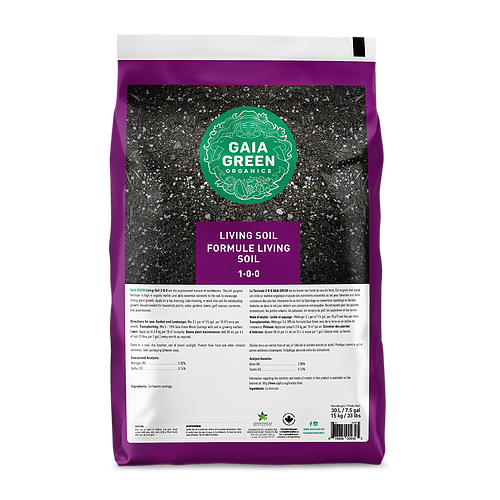
Gaia Green 活性土壤 - 30 升

常规价格 $34.99
常规价格 促销价 $34.99
结账时计算的运费
门店库存
预计送达日期
秩序井然
预计送达时间
Choose your province
数量
Not Eligible for Free Shipping

Description

Gaia Green生物活性盆栽土是一种用于盆栽植物的生物活性盆栽混合土,旨在创造一个支持有益微生物活动的根系环境。对于那些希望以整体、生态方式种植盆栽植物的种植者来说,这是一种优质的盆栽混合土和容器栽培介质。

这种专有的优质成分混合物预先注入了精选的Gaia Green有机物,因此它已准备好支持容器中植物的早期稳定生长。该混合物经过精心设计,具有生物活性,以实现高营养可用性,帮助根区在介质的活性部分发挥作用时保持营养供应。对于喜欢土壤构建式种植的种植者来说,这种生物活性特性是这种生物活性盆栽土脱颖而出的核心原因。

Gaia Green生物活性盆栽土以高孔隙率和保水性为基础,以支持最佳的根系环境。高孔隙率支持介质中的气流,而保水性有助于在盆中保持更一致的水分缓冲。这些特性共同作用,有助于使根系处于更稳定、通气良好的空间中,从而支持更健康的整体生长,而无需每天追逐盆中感受的不断变化。<!--nl--进一步支持植物的健康生长。
配料基础将土壤改良成分与广泛的有机和矿物投入相结合。土壤改良成分包括泥炭藓、珍珠岩、椰壳纤维、冷杉树皮、堆肥猪粪和非洲夜蚯蚓粪便,形成了一个结构化、水分智能的基础。该混合物还通过精选的矿物和有机成分(如岩石粉、腐殖酸、海带粉、石膏和天然粉末)进一步支持,增强了其作为一种生物活性土壤的作用,该土壤旨在提供养分可用性和强大的根系环境。

这种生物活性盆栽土非常适合那些想要一种优质盆栽混合土的种植者,它能支持有益微生物活动、高营养可用性以及高孔隙率和保水性的平衡组合。如果您的目标是为盆栽植物提供一种生物活性容器栽培介质,以支持最佳根系环境,那么Gaia Green生物活性盆栽土非常适合这种种植方式。

产品优势:刺激微生物活性;根区生物学;预充营养;植物可用营养;根区氧气;保水性;生长支持;微生物友好;室内;室外;开花期;营养生长期;无土;有机。

保证分析:总氮 (N):1.0%;总镁 (Mg):0.5%;总铁 (Fe):0.3%。

来源:非洲夜蚯蚓粪;冰川岩粉;白云石;羽毛粉;苜蓿粉;骨粉;磷矿粉;血粉;鱼骨粉;矿化磷酸盐;昆虫粪;开采硫酸钾;玄武岩粉;腐殖酸;石膏;海带粉;牡蛎壳粉;海绿石;泥炭藓;珍珠岩;椰壳纤维;冷杉树皮;堆肥猪粪。

Guaranteed Minimum Analysis

Frequently Asked Questions

Why is total nitrogen (N) important for plant growth, and what makes it different from other nutrients?

Total Nitrogen is important because it directly drives leafy growth, chlorophyll production, and overall growth speed, which sets the pace for the entire plant. It’s unique because the “total” number can include different nitrogen forms that behave differently in the root zone, meaning the same total amount can produce very different results depending on the nitrogen type and plant stage.

Why is total magnesium (Mg) important for plant growth?

Total magnesium is important because magnesium powers chlorophyll and energy use, helping plants stay green, turn light into growth, and use other nutrients efficiently—and it’s unique because its problems often come from nutrient balance and uptake competition, not just a simple shortage.

Why is total iron (Fe) important for plant growth?

Total iron (Fe) matters because iron supports chlorophyll development and plant energy systems, keeping new growth green and vigorous; it’s unique from many other nutrients because iron deficiency usually shows up first in young leaves even when older leaves stay green, since iron doesn’t easily move within the plant.

Why are african night crawler worm castings important for plant growth?

They are important because they improve root-zone biology, moisture balance, and nutrient availability in a gentle, steady way, helping plants grow stronger and more resilient without the harsh spikes that can happen with stronger nutrient sources—making them uniquely effective as both a soil builder and a biological booster.

What does dolomite do for plants in the root zone?

Dolomite gently raises and stabilizes pH while supplying calcium and magnesium, helping roots absorb nutrients more consistently and supporting strong new growth and greener leaves. It’s unique because it buffers acidity and feeds two key minerals at the same time, unlike materials that only change pH or only provide a single nutrient.

What does feather meal do for plants?

Feather meal supplies slow-release nitrogen that supports steady green growth over time, especially once roots and soil microbes are active. It’s unique because plants can’t use it immediately the way fast nitrogen sources work, so it’s best for building a long-term baseline rather than fixing a sudden deficiency overnight.

What makes alfalfa meal important for plant growth compared to other natural amendments?

Alfalfa meal is important because it supports steady, biologically driven growth instead of a quick spike, helping the root zone stay active so nutrient flow stays consistent. What makes it unique is that it can encourage stronger growth momentum while also feeding soil life, which helps plants stay vigorous and resilient when conditions are right.

When should you use bone meal for plants, and why does it work differently than other amendments?

Bone meal is best used before or at planting to support strong roots and steady flowering support because it releases phosphorus and calcium slowly as soil biology breaks it down. It’s unique because it isn’t a quick fix, so timing and soil conditions matter more, and overuse can create long-term imbalances that block micronutrient uptake.

Is blood meal good for plants, and what makes it different from other nitrogen sources?

Blood meal can be very good for plants when they truly need nitrogen because it releases nitrogen faster and more strongly than many other organic ingredients, helping pale, slow plants turn greener and grow new leaves quickly. It’s different because it’s highly concentrated, so small overapplications can cause burn, overly soft growth, and imbalances that reduce flowering or fruiting later.

What does fishbone meal do for plant roots?

Fishbone meal slowly supplies phosphorus and calcium that help roots expand and build stronger plant structure over time, which makes it unique compared to fast nutrients that spike quickly and fade. This steady release supports long-term stability while reducing sudden feeding swings that can lead to stress and imbalances.

What is basalt rock dust used for in gardening?

Basalt rock dust is used to slowly build mineral diversity and soil stability so plants can grow with fewer nutrient swings and stress problems over time. It’s unique because it works through gradual weathering and soil biology rather than giving a quick, strong nutrient hit like fast fertilizers do.

Why is humic acid important for plant growth?

Humic acid is important because it improves root health and nutrient uptake by keeping minerals available, stabilizing the root zone, and supporting beneficial biology, which makes growth more consistent. It’s unique because it doesn’t act like a direct nutrient boost—its main power is improving the root environment so plants can use what’s already there more efficiently.

Why is perlite important for plant growth, and what makes it different from other mix ingredients?

Perlite is important because it increases root-zone oxygen and improves drainage, helping roots stay healthy and active; it’s unique because its main benefit is physical structure and airflow—not nutrients or moisture storage—so it fixes “too wet and compact” root problems in a simple, predictable way.

Why is coconut coir important for plant growth?

Coconut coir is important because it holds water while still keeping roots oxygenated, creating a more stable root zone that supports faster, healthier growth, and it’s unique compared to similar media because it combines soil-like moisture buffering with more controllable, predictable nutrient and drainage behavior.

What does fir bark do in potting soil?

Fir bark keeps potting soil more open and breathable, improving drainage while still holding a thin usable moisture film for roots, which makes it different from ingredients that mainly add nutrition or fine water-holding texture.

Can composted porcine litter burn plants?

Yes, it can if it’s used too heavily or if it isn’t fully finished, because it can be richer in nutrients and sometimes higher in salts than many other composts. It’s important because it can boost growth and soil health for a long time, and it’s unique because a composted manure source often delivers more fertility per scoop than plant-only composts, which means the correct amount matters more.

What does glacial rock dust actually do for plants?

Glacial rock dust slowly replenishes a broad range of trace minerals in the root zone, helping plants run key growth processes more efficiently and stay more resilient over time. It’s unique because it’s a long-term, diverse mineral support rather than a fast, single-nutrient fix, so it helps prevent recurring imbalance symptoms instead of just masking them.

What makes natural rock phosphate different from other phosphorus sources for plant growth?

Natural rock phosphate is different because it releases phosphorus slowly as the root zone and soil biology unlock it, so it builds long-term fertility instead of causing a fast nutrient spike. That slow, reserve-style supply is important because phosphorus drives root energy and flowering, and it also helps avoid the micronutrient imbalances that can happen when phosphorus is pushed too quickly.

What does mineralized phosphate do for plants?

Mineralized phosphate provides slow-release phosphorus that steadily supports root development and the plant’s internal energy flow over time, making it especially useful for stable growth compared with fast phosphorus sources that act quickly but can be less steady in the root zone.

What makes insect frass different from other organic soil amendments?

Insect frass is unique because it supports plants in two ways at once: it offers mild, steady nutrition while also delivering chitin-related signals that can help “prime” the root zone and plant defenses. That combination makes it especially valuable for building resilience and consistency, not just pushing fast growth like many stronger inputs.

What does mined potassium sulfate do for fruiting plants?

Mined potassium sulfate supplies potassium for moving sugars and managing water, plus sulfate sulfur for building proteins and enzymes, so fruiting plants can fill, ripen, and firm up without adding extra nitrogen. It’s unique because it boosts potassium without chloride, helping quality and stress tolerance with less risk of salt sensitivity issues.

Does gypsum change soil pH?

Gypsum is important because it supplies calcium and sulfur while improving soil structure, helping roots breathe and water soak in more evenly, and it is unique because it does this without significantly raising soil pH like lime-based calcium sources.

What does kelp meal do for plants?

Kelp meal supports balanced growth and stronger roots by gently enhancing root-zone biology and helping plants handle stress more smoothly than fast-acting inputs, making it unique as a steady “support” amendment rather than a quick nutrient fix.

What does oyster shell flour do for plants?

Oyster shell flour slowly releases calcium carbonate to buffer the root zone and help keep nutrient uptake steady over time, which makes it different from fast-acting calcium sources that work quickly but don’t stabilize pH for long. It’s important because stable root-zone conditions reduce pH swings that can trigger deficiency-like symptoms even when nutrients are present.

Is greensand a fast way to fix a potassium deficiency in plants?

Greensand is not a fast fix because its potassium releases slowly as the mineral weathers in the root zone, so it works best for long-term stability rather than immediate correction. Its uniqueness is that it builds a steady potassium and trace-mineral reserve while also helping the soil hold nutrients more evenly, which can reduce future imbalances.

Is peat moss good for all potting mixes?

Peat moss is valuable because it holds moisture evenly and creates a gentle rooting environment, but it isn’t universal because it can stay too wet, compact over time, and naturally lowers pH. It’s most effective when balanced with airy materials so roots get oxygen, which is what makes it different from ingredients that mainly add structure without changing moisture and acidity as much.

查看完整详细信息

产品对比