跳至产品信息
1 / 1
Canna NL flag

Official Reseller

Provision Gardens is an official reseller of this brand.

Our inventory is sourced directly from the manufacturer and/or authorized distribution partners. We do not sell used items or unverified/old stock. This helps ensure product authenticity, freshness, and the high standard you expect.

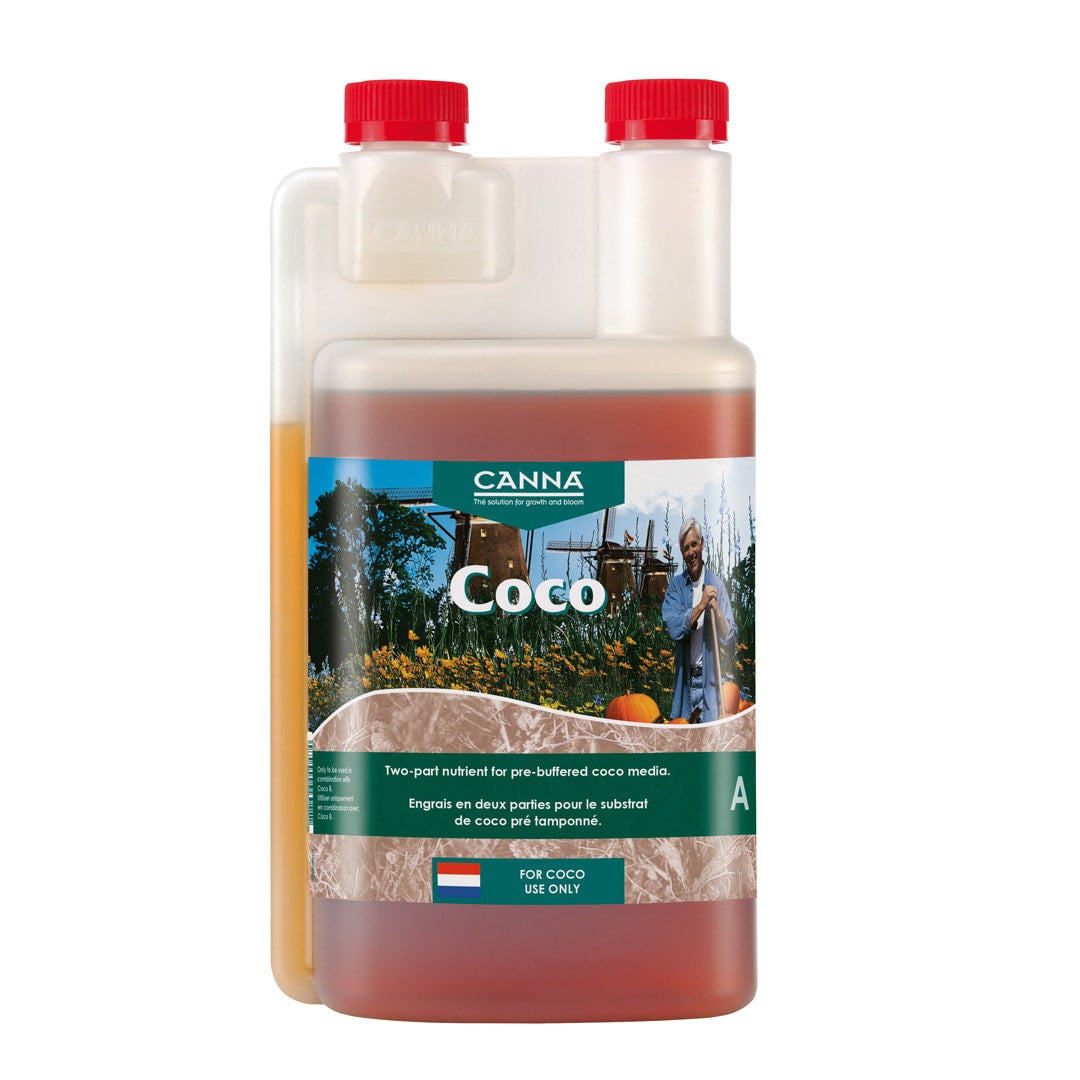
大麻椰子A - 1升

大麻椰子A - 1升

门店库存
Barrie, Ontario
不可用
Newmarket, Ontario
不可用
Pickering, Ontario
不可用
Winnipeg, Manitoba
不可用

您选择的取货地点缺货?我们会自动从其他地点调货,确保您选择的取货地点有货。(仅限安大略省)

Province:
Choose your province
Order Within:
Estimated Delivery:
Free Shipping (Canada):
Free Shipping (Ontario):
数量
符合免运费促销条件

Description

CANNA Coco A & B 是一种双组分椰糠基质营养液和专业植物肥料,旨在为缓冲椰糠基质中的植物提供全面的营养,以实现最佳生长和开花。

椰糠具有独特的缓冲性能,CANNA Coco A & B 专为椰糠基质的特性而定制,确保植物在与营养液相互作用的过程中获得充足的营养。这款专业的全效营养液包含植物生长和开花所需的所有必需元素,是希望以椰糠为核心,同时促进植物生长和开花的种植者的理想之选。

该配方由多种高价值矿物质组成,经研究和分析开发,旨在支持椰糠基质植物的最佳养分吸收。这一点在椰糠种植中至关重要,因为稳定且均衡的矿物质供应是维持植物旺盛生长的关键。种植者若希望在缓冲椰糠基质中实现植物旺盛生长和繁花盛开,同时又不想将基础营养液的配比调整变成一项持续的工作,那么他们就会选择这种椰糠营养液。

CANNA Coco A & B 也以易于使用且可直接溶解而著称,这有助于在日常椰糠种植过程中进行清洁操作。它非常适合盆栽种植,并适用于流水式系统,包括在缓冲椰糠基质中进行排水式种植。这种系统兼容性使其成为椰糠种植者的理想之选,他们希望找到一种与实际椰糠种植方式相匹配的基础营养液。

采用A、B两部分配方是为了保持关键元素在浓缩状态下的稳定性。CANNA将A部分和B部分分开,是因为某些高浓度元素,例如钙和磷酸盐,在同一瓶中可能会相互冲突,产生残留物,降低植物的吸收利用率。将各成分分开有助于保持浓缩液的可靠性和有效性,从而确保在施用于作物时,营养成分能够发挥预期作用。

CANNA Coco A & B 非常适合在盆栽或排水式种植中使用椰糠的种植者,他们想要一种专为椰糠生长和开花阶段设计的双组分基础营养液,含有高价值矿物质、直接溶解性能和缓冲椰糠介质。

How To Use

How to Use 大麻椰子A - 1升

Step-by-step mixing and feeding instructions for 大麻椰子A - 1升.

Mixing & preparation

Fill your reservoir or watering container with clean, room-temperature water first. Shake the bottle of 大麻椰子A - 1升 well before every use. Using the feeding schedule below, measure the recommended dose and add it directly to the water while stirring. Allow the solution to mix fully before adding any other fertilizers, additives, or supplements.

Always add nutrients to water — not the other way around. Mix thoroughly between products to ensure an even, stable nutrient solution.

Week-by-week feeding schedule

Vegetative stage — Coco A

  • Week 1: mix 2.3 ml per litre of water or nutrient solution.
  • Week 2: mix 2.3 ml per litre of water or nutrient solution.
  • Week 3: mix 2.7 ml per litre of water or nutrient solution.
  • Week 4: mix 2.7 ml per litre of water or nutrient solution.

Flowering stage — Coco A

  • Week 1: mix 3.4 ml per litre of water or nutrient solution.
  • Week 2: mix 3.4 ml per litre of water or nutrient solution.
  • Week 3: mix 3.4 ml per litre of water or nutrient solution.
  • Week 4: mix 3.8 ml per litre of water or nutrient solution.
  • Week 5: mix 2.5 ml per litre of water or nutrient solution.
  • Week 6: mix 2.5 ml per litre of water or nutrient solution.
  • Week 7: mix 2.5 ml per litre of water or nutrient solution.
  • Week 8: do not use this product during this week of flowering.

Vegetative stage — Coco B

  • Week 1: mix 2.3 ml per litre of water or nutrient solution.
  • Week 2: mix 2.3 ml per litre of water or nutrient solution.
  • Week 3: mix 2.7 ml per litre of water or nutrient solution.
  • Week 4: mix 2.7 ml per litre of water or nutrient solution.

Flowering stage — Coco B

  • Week 1: mix 3.4 ml per litre of water or nutrient solution.
  • Week 2: mix 3.4 ml per litre of water or nutrient solution.
  • Week 3: mix 3.4 ml per litre of water or nutrient solution.
  • Week 4: mix 3.8 ml per litre of water or nutrient solution.
  • Week 5: mix 2.5 ml per litre of water or nutrient solution.
  • Week 6: mix 2.5 ml per litre of water or nutrient solution.
  • Week 7: mix 2.5 ml per litre of water or nutrient solution.
  • Week 8: do not use this product during this week of flowering.

Vegetative stage — Rhizotonic XP

  • Week 1: mix 2.0 ml per litre of water or nutrient solution.
  • Week 2: mix 2.0 ml per litre of water or nutrient solution.
  • Week 3: mix 2.0 ml per litre of water or nutrient solution.
  • Week 4: mix 2.0 ml per litre of water or nutrient solution.

Flowering stage — Rhizotonic XP

  • Week 1: mix 0.5 ml per litre of water or nutrient solution.
  • Week 2: mix 0.5 ml per litre of water or nutrient solution.
  • Week 3: mix 0.5 ml per litre of water or nutrient solution.
  • Week 4: mix 0.5 ml per litre of water or nutrient solution.
  • Week 5: mix 0.5 ml per litre of water or nutrient solution.
  • Week 6: mix 0.5 ml per litre of water or nutrient solution.
  • Week 7: mix 0.5 ml per litre of water or nutrient solution.
  • Week 8: do not use this product during this week of flowering.

Vegetative stage — Cannazym

  • Week 1: mix 2.5 ml per litre of water or nutrient solution.
  • Week 2: mix 2.5 ml per litre of water or nutrient solution.
  • Week 3: mix 2.5 ml per litre of water or nutrient solution.
  • Week 4: mix 2.5 ml per litre of water or nutrient solution.

Flowering stage — Cannazym

  • Week 1: mix 2.5 ml per litre of water or nutrient solution.
  • Week 2: mix 2.5 ml per litre of water or nutrient solution.
  • Week 3: mix 2.5 ml per litre of water or nutrient solution.
  • Week 4: mix 2.5 ml per litre of water or nutrient solution.
  • Week 5: mix 2.5 ml per litre of water or nutrient solution.
  • Week 6: mix 2.5 ml per litre of water or nutrient solution.
  • Week 7: mix 2.5 ml per litre of water or nutrient solution.
  • Week 8: mix 2.5 ml per litre of water or nutrient solution.

Vegetative stage — PK 13/14

  • Week 1: do not use this product during this week of vegetative growth.
  • Week 2: do not use this product during this week of vegetative growth.
  • Week 3: do not use this product during this week of vegetative growth.
  • Week 4: do not use this product during this week of vegetative growth.

Flowering stage — PK 13/14

  • Week 1: do not use this product during this week of flowering.
  • Week 2: do not use this product during this week of flowering.
  • Week 3: do not use this product during this week of flowering.
  • Week 4: mix 1.5 ml per litre of water or nutrient solution.
  • Week 5: do not use this product during this week of flowering.
  • Week 6: do not use this product during this week of flowering.
  • Week 7: do not use this product during this week of flowering.
  • Week 8: do not use this product during this week of flowering.

Vegetative stage — Boost Accelerator

  • Week 1: do not use this product during this week of vegetative growth.
  • Week 2: do not use this product during this week of vegetative growth.
  • Week 3: mix 2.0 ml per litre of water or nutrient solution.
  • Week 4: mix 2.0 ml per litre of water or nutrient solution.

Flowering stage — Boost Accelerator

  • Week 1: mix 2.0 ml per litre of water or nutrient solution.
  • Week 2: mix 2.0 ml per litre of water or nutrient solution.
  • Week 3: mix 2.0 ml per litre of water or nutrient solution.
  • Week 4: mix 2.0 ml per litre of water or nutrient solution.
  • Week 5: mix 2.0 ml per litre of water or nutrient solution.
  • Week 6: mix 2.0 ml per litre of water or nutrient solution.
  • Week 7: mix 2.0 ml per litre of water or nutrient solution.
  • Week 8: mix 2.0 ml per litre of water or nutrient solution.

Tips for best results

  • Maintain pH and EC/ppm within the range recommended for your growing medium and crop.
  • Use fresh nutrient solution whenever possible and avoid leaving mixed solution stagnant for long periods.
  • Store nutrients in a cool, dark place away from direct sunlight and extreme temperatures.
  • Keep bottles tightly sealed when not in use to reduce air exposure and preserve product quality.
  • Use clean measuring tools and regularly rinse or clean your reservoir, lines, and irrigation equipment.

Common mistakes to avoid

  • Do not mix different nutrients or additives together in concentrated form before adding them to water.
  • Do not exceed the recommended dosage unless you are following a tested, crop-specific feeding plan.
  • Do not skip pH or EC/ppm checks when growing in hydroponic or soilless systems.
  • Do not allow the nutrient solution to freeze or overheat, as this can damage the formulation.
  • Do not ignore the directions on the product label for your specific crop, growth stage, and system type.

Warnings & Safety

Warning – Important Safety Information

This product may cause mild skin irritation and eye irritation. Avoid unnecessary contact with skin, eyes, and clothing. Use only as directed.

General safety precautions

Read and follow all instructions on the product label and any accompanying documentation before use. Keep out of reach of children and pets. Do not ingest. Avoid breathing vapours, mist, or dust that may be generated during handling or use.

Wear appropriate personal protective equipment (PPE), such as protective gloves, long sleeves, long pants and closed-toe footwear. When there is a risk of splashing or airborne particles, use safety glasses or other suitable eye and face protection.

First aid – skin contact

IF ON SKIN OR HAIR: Remove contaminated clothing immediately. Rinse skin with clean water for several minutes, then wash with mild soap and water. If irritation or redness develops and persists, seek medical attention. Wash contaminated clothing before reuse.

First aid – eye contact

IF IN EYES: Rinse cautiously with clean water for several minutes, keeping eyelids open. Remove contact lenses if present and easy to do. Continue rinsing. If irritation persists, obtain medical advice.

First aid – ingestion and inhalation

IF SWALLOWED: Rinse mouth thoroughly with water. Do not induce vomiting unless instructed by a medical professional. Seek medical attention if you feel unwell.

IF INHALED: Move the person to fresh air and keep them comfortable for breathing. If coughing, breathing difficulty, dizziness or other symptoms occur, seek medical assistance.

Storage and handling

Store this product in its original closed container, in a cool, dry and well-ventilated area. Protect from extreme temperatures and direct sunlight. Keep container tightly sealed when not in use.

Avoid release to drains, natural waterways or outdoor soil. Dispose of unused product and empty containers in accordance with local regulations and the directions on the label.

Important: If medical advice is needed, keep the product label or container available. Always follow the specific instructions and safety recommendations provided by the manufacturer. This safety notice is intended as general guidance and does not replace official label directions or documentation.

Guaranteed Minimum Analysis

Frequently Asked Questions

Why is calcium important for plant growth?

Calcium is important because it builds and stabilizes plant cells as they form, acting as the structural support that keeps new growth strong and functional. Unlike other nutrients that drive color or speed of growth, calcium’s role is unique because it controls cell wall strength and membrane stability, making it essential for healthy roots, shoots, and long-term plant resilience rather than quick visual results.

Why is chelated iron important for plants, and what makes it different from other iron sources?

Chelated iron is important because it keeps iron usable for plants even when growing conditions would normally lock iron out, helping prevent the classic yellow-new-leaf symptom caused by low chlorophyll production. It is unique from other iron sources because the chelation protects iron from becoming insoluble, making it a more reliable way to correct iron-related chlorosis when regular iron can fail.

Why is nitric nitrogen important for plant growth, and what makes it different from other nitrogen forms?

Nitric nitrogen is important because plants can absorb it quickly to build chlorophyll and steady green growth, which powers photosynthesis. It’s unique because it tends to influence root-zone pH differently than other nitrogen forms and often supports more predictable, balanced growth when paired with the right mineral and environmental conditions.

Why is potassium oxide (K2O) important for plant growth, and what makes it different from other nutrients?

Potassium oxide (K2O) is important because it shows how much potassium is available to support water control, sugar movement, and strong plant structure, which directly impacts growth quality and stress tolerance. It’s unique because K2O is mainly a label standard for potassium content, not a separate nutrient form the plant absorbs, so understanding it helps you avoid mixing up label numbers with real potassium needs.

Why is total magnesium (Mg) important for plant growth?

Total magnesium is important because magnesium powers chlorophyll and energy use, helping plants stay green, turn light into growth, and use other nutrients efficiently—and it’s unique because its problems often come from nutrient balance and uptake competition, not just a simple shortage.

Why is total nitrogen (N) important for plant growth, and what makes it different from other nutrients?

Total Nitrogen is important because it directly drives leafy growth, chlorophyll production, and overall growth speed, which sets the pace for the entire plant. It’s unique because the “total” number can include different nitrogen forms that behave differently in the root zone, meaning the same total amount can produce very different results depending on the nitrogen type and plant stage.

查看完整详细信息
营养饲料表

Vegetative — Week 1

  1. Coco A
  2. Coco B
  3. Rhizotonic XP
  4. Cannazym
  5. PK 13/14
  6. Boost Accelerator

Flowering — Week 1

  1. Coco A
  2. Coco B
  3. Rhizotonic XP
  4. Cannazym
  5. PK 13/14
  6. Boost Accelerator

产品对比