跳至产品信息
1 / 1
Advanced Nutrients US flag

Official Reseller

Provision Gardens is an official reseller of this brand.

Our inventory is sourced directly from the manufacturer and/or authorized distribution partners. We do not sell used items or unverified/old stock. This helps ensure product authenticity, freshness, and the high standard you expect.

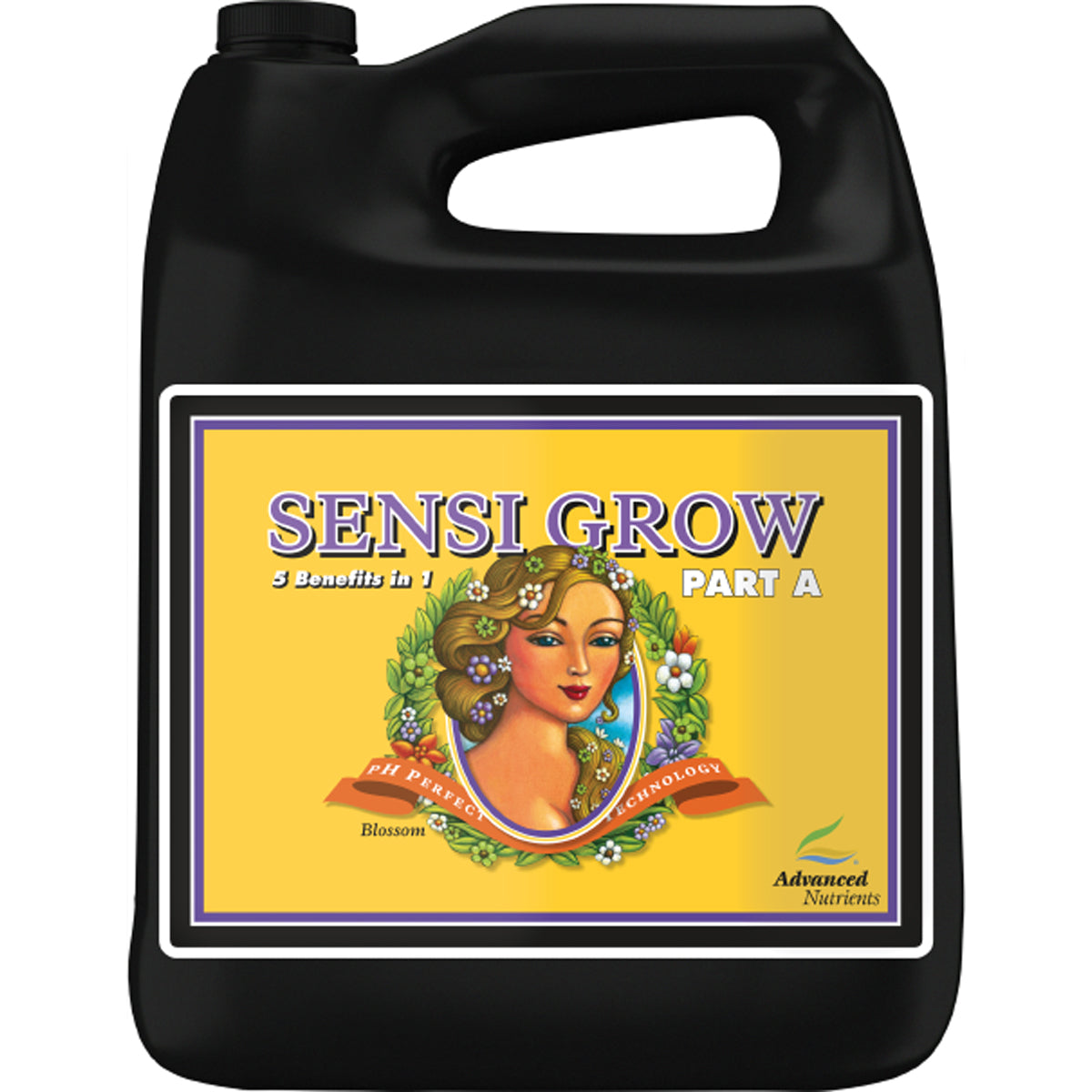
Advanced Nutrients pH Perfect Sensi Grow A - 4 升

常规价格 $62.99
常规价格 促销价 $62.99
结账时计算的运费

OTHER AVAILABLE SIZES / MODELS:

门店库存
Delivery Estimate
Province:
Estimated delivery:
Order within:
$0.00
Ontario
$125.00
Canada
$149.99
Choose your province
数量
Qualifies for Free Shipping Promotion

制造商推荐产品

Description

Advanced Nutrients pH Perfect® Sensi Grow A剂和B剂是一种用于营养生长期的两部分基础营养液,旨在支持植物的旺盛生长,同时将pH值保持在理想范围。它是一种基础营养液,专为植物在生长阶段的稳定、均衡发育而设计。

这种两部分基础营养液采用精确的氮磷钾配比,以确保植物在构建结构和冠层时营养供给的一致性。pH Perfect®技术将pH值锁定在最佳范围,有助于维持稳定的条件以实现最佳的营养吸收。配方中包含金属氨基酸络合物,以支持微量营养素的吸收,从而强化了产品在营养生长期提供生物可利用营养的重点。

Sensi Grow还围绕实际系统中的吸收支持而设计。它具有超强吸收的螯合作用,以及来自褐煤的腐植酸,可为更好的螯合和pH缓冲提供条件。其中包含非离子表面活性剂,以支持根区吸收。该配方还强调了理想的铁和硫含量,以优化氮的吸收,使营养生长表现以强劲、健康的生长为中心。

为了实现系统灵活性,pH Perfect® Sensi Grow 专门设计用于各种水培生长介质和连续液体喂养生长系统,例如气雾栽培、滴灌和滴头、NFT、潮汐和排水,以及深水培。它适用于室内/室外花园、常规浇水和浇水系统,并且被描述为对椰糠安全,使其更容易在不同设置中保持一种可靠的基础营养选择。

对于紧凑的事实层,A剂的氮磷钾比例为3-0-0,B剂的氮磷钾比例为1-2-6。这非常适合那些想要在营养生长期使用两部分基础营养液的种植者,它具有pH Perfect®技术、螯合和表面活性剂支持,并且广泛覆盖水培和自动化浇水系统。

产品优点:营养生长期;室内;室外;常规浇水;浇水系统;椰糠安全;水培;土壤;无土;优质基肥;均衡生长营养;理想pH范围;无需调节pH;pH稳定性;更好的营养吸收;多系统使用;氮吸收支持。

保证分析:总氮 (N):3.0%;总钙 (Ca):3.0%;总镁 (Mg):0.5%;水溶性镁 (Mg):0.5%;硼 (B):0.03%;钴 (Co):0.0001%;铜 (Cu):0.001%;总铁 (Fe):0.03%;螯合铁 (Fe):0.01%;总锰 (Mn):0.05%;螯合锰 (Mn):0.04%;水溶性锰 (Mn):0.01%;钼 (Mo):0.0001%;总锌 (Zn):0.02%;氨基酸:0.73%;腐植酸:0.089%;聚氧乙烯 (40) 山梨醇六油酸酯:0.1%。

来源:硼酸;氨基酸钙络合物;硝酸钙;氨基酸钴螯合物;氨基酸铜螯合物;EDTA铜;氨基酸铁络合物;DTPA铁;EDDHA铁;EDTA铁;褐煤;氨基酸镁络合物;硝酸镁;氨基酸锰络合物;EDTA锰;甘氨酸钼;氨基酸锌络合物;EDTA锌。

How To Use

How to Use Advanced Nutrients pH Perfect Sensi Grow A - 4 升

Step-by-step mixing and feeding instructions for Advanced Nutrients pH Perfect Sensi Grow A - 4 升.

Mixing & preparation

Fill your reservoir or watering container with clean, room-temperature water first. Shake the bottle of Advanced Nutrients pH Perfect Sensi Grow A - 4 升 well before every use. Using the feeding schedule below, measure the recommended dose and add it directly to the water while stirring. Allow the solution to mix fully before adding any other fertilizers, additives, or supplements.

Always add nutrients to water — not the other way around. Mix thoroughly between products to ensure an even, stable nutrient solution.

Week-by-week feeding schedule

Vegetative stage — Grow A

  • Week 1: mix 1.0 ml per litre of water or nutrient solution.
  • Week 2: mix 2.0 ml per litre of water or nutrient solution.
  • Week 3: mix 3.0 ml per litre of water or nutrient solution.
  • Week 4: mix 4.0 ml per litre of water or nutrient solution.

Flowering stage — Grow A

  • Week 1: do not use this product during this week of flowering.
  • Week 2: do not use this product during this week of flowering.
  • Week 3: do not use this product during this week of flowering.
  • Week 4: do not use this product during this week of flowering.
  • Week 5: do not use this product during this week of flowering.
  • Week 6: do not use this product during this week of flowering.
  • Week 7: do not use this product during this week of flowering.
  • Week 8: do not use this product during this week of flowering.

Tips for best results

  • Maintain pH and EC/ppm within the range recommended for your growing medium and crop.
  • Use fresh nutrient solution whenever possible and avoid leaving mixed solution stagnant for long periods.
  • Store nutrients in a cool, dark place away from direct sunlight and extreme temperatures.
  • Keep bottles tightly sealed when not in use to reduce air exposure and preserve product quality.
  • Use clean measuring tools and regularly rinse or clean your reservoir, lines, and irrigation equipment.

Common mistakes to avoid

  • Do not mix different nutrients or additives together in concentrated form before adding them to water.
  • Do not exceed the recommended dosage unless you are following a tested, crop-specific feeding plan.
  • Do not skip pH or EC/ppm checks when growing in hydroponic or soilless systems.
  • Do not allow the nutrient solution to freeze or overheat, as this can damage the formulation.
  • Do not ignore the directions on the product label for your specific crop, growth stage, and system type.

Warnings & Safety

Warning – Important Safety Information

This product may cause mild skin irritation and eye irritation. Avoid unnecessary contact with skin, eyes, and clothing. Use only as directed.

General safety precautions

Read and follow all instructions on the product label and any accompanying documentation before use. Keep out of reach of children and pets. Do not ingest. Avoid breathing vapours, mist, or dust that may be generated during handling or use.

Wear appropriate personal protective equipment (PPE), such as protective gloves, long sleeves, long pants and closed-toe footwear. When there is a risk of splashing or airborne particles, use safety glasses or other suitable eye and face protection.

First aid – skin contact

IF ON SKIN OR HAIR: Remove contaminated clothing immediately. Rinse skin with clean water for several minutes, then wash with mild soap and water. If irritation or redness develops and persists, seek medical attention. Wash contaminated clothing before reuse.

First aid – eye contact

IF IN EYES: Rinse cautiously with clean water for several minutes, keeping eyelids open. Remove contact lenses if present and easy to do. Continue rinsing. If irritation persists, obtain medical advice.

First aid – ingestion and inhalation

IF SWALLOWED: Rinse mouth thoroughly with water. Do not induce vomiting unless instructed by a medical professional. Seek medical attention if you feel unwell.

IF INHALED: Move the person to fresh air and keep them comfortable for breathing. If coughing, breathing difficulty, dizziness or other symptoms occur, seek medical assistance.

Storage and handling

Store this product in its original closed container, in a cool, dry and well-ventilated area. Protect from extreme temperatures and direct sunlight. Keep container tightly sealed when not in use.

Avoid release to drains, natural waterways or outdoor soil. Dispose of unused product and empty containers in accordance with local regulations and the directions on the label.

Important: If medical advice is needed, keep the product label or container available. Always follow the specific instructions and safety recommendations provided by the manufacturer. This safety notice is intended as general guidance and does not replace official label directions or documentation.

Frequently Asked Questions

Why is total nitrogen (N) important for plant growth, and what makes it different from other nutrients?

Total Nitrogen is important because it directly drives leafy growth, chlorophyll production, and overall growth speed, which sets the pace for the entire plant. It’s unique because the “total” number can include different nitrogen forms that behave differently in the root zone, meaning the same total amount can produce very different results depending on the nitrogen type and plant stage.

Why is total calcium (Ca) important for plant growth, and what makes it different from other nutrients?

Total calcium is important because it builds strong cell walls and supports healthy new growth, roots, and overall plant stability. It’s unique because plants can’t easily move calcium from old leaves to new growth, so calcium problems show up first at the tips and newest leaves when delivery through water movement and transpiration falls behind.

Why is total magnesium (Mg) important for plant growth?

Total magnesium is important because magnesium powers chlorophyll and energy use, helping plants stay green, turn light into growth, and use other nutrients efficiently—and it’s unique because its problems often come from nutrient balance and uptake competition, not just a simple shortage.

Why is water soluble magnesium important for plant growth?

Water soluble magnesium is important because it quickly restores the plant’s ability to make chlorophyll and produce energy, which helps stop interveinal yellowing on older leaves and improves overall nutrient use; it’s unique because it becomes available immediately in water, making it faster and more predictable than slower magnesium sources.

Why is boron (B) essential for strong plant development, and what makes it different from other micronutrients?

Boron is essential because it stabilizes cell walls, supports root and shoot growth, and regulates sugar movement throughout the plant. What makes boron unique is its limited mobility and extremely narrow range between deficiency and excess, which causes new growth to show symptoms rapidly when levels fall out of balance.

Why is cobalt (Co) important for plant growth?

Cobalt matters because tiny amounts can support nitrogen-fixing microbes in legume root nodules, helping plants access nitrogen naturally, and it is unique from most micronutrients because its biggest impact often comes through root-zone biology rather than a simple, universal leaf deficiency pattern.

Why is copper (Cu) important for plant growth?

Copper is important because it powers key enzymes that support energy use, tissue strength, and stress protection, and it’s unique from many other micronutrients because plants need it in tiny amounts but can be harmed quickly if copper becomes excessive.

Why is total iron (Fe) important for plant growth?

Total iron (Fe) matters because iron supports chlorophyll development and plant energy systems, keeping new growth green and vigorous; it’s unique from many other nutrients because iron deficiency usually shows up first in young leaves even when older leaves stay green, since iron doesn’t easily move within the plant.

Why is chelated iron important for plants, and what makes it different from other iron sources?

Chelated iron is important because it keeps iron usable for plants even when growing conditions would normally lock iron out, helping prevent the classic yellow-new-leaf symptom caused by low chlorophyll production. It is unique from other iron sources because the chelation protects iron from becoming insoluble, making it a more reliable way to correct iron-related chlorosis when regular iron can fail.

Why is total manganese (Mn) important for plant growth?

Total manganese matters because it supports photosynthesis and enzyme activity that keep new growth green and vigorous, and it’s unique because “total” manganese measures what’s present but not necessarily what the plant can absorb—so pH and root conditions decide whether manganese helps or harms.

Why is chelated manganese (Mn) important for plant growth?

Chelated manganese is important because it keeps manganese available for photosynthesis and enzyme activity even when pH or water chemistry would normally lock it out, and it’s unique from similar micronutrients because it strongly supports the plant’s energy-processing systems that drive healthy, resilient new growth.

Why is water-soluble manganese important for plant growth?

Water-soluble manganese is important because it becomes available quickly to power photosynthesis and enzyme activity, helping plants stay greener and grow more efficiently. It’s unique from many other nutrients because it acts like an internal “growth engine” that drives key reactions rather than simply serving as a building material.

Why is molybdenum (Mo) important for plant growth?

Molybdenum is important because it helps plants convert nitrogen into usable building blocks for chlorophyll and growth, and it’s unique from many nutrients because it mainly supports enzyme-driven “nutrient use” rather than directly building plant tissue.

Why is total zinc (Zn) important for plant growth?

Total Zinc (Zn) matters because zinc controls key growth processes that affect leaf size, healthy new shoots, and normal development, and low zinc often causes stunting even when everything else seems correct. It’s unique from many other nutrients because plants need it in tiny amounts and it’s often present but “locked up” by pH or nutrient imbalance, so the challenge is availability—not just quantity.

What do amino acids do for plants?

Amino acids help plants grow by supporting protein formation, nutrient absorption, root development, stress recovery, and overall metabolic function, making them essential for strong and resilient plant growth.

Why is humic acid important for plant growth?

Humic acid is important because it improves root health and nutrient uptake by keeping minerals available, stabilizing the root zone, and supporting beneficial biology, which makes growth more consistent. It’s unique because it doesn’t act like a direct nutrient boost—its main power is improving the root environment so plants can use what’s already there more efficiently.

Why is polyoxyethylene (40) Sorbitol Hexaoleate important in soil and hydroponic fertilizers, and what makes it unique?

It’s important because it helps nutrient solutions stay evenly mixed and physically stable so roots receive a more consistent feed through soil drenches or hydroponic reservoirs. It’s unique because it supports oil-and-water dispersion and wetting behavior as a nonionic emulsifier, improving delivery consistency without acting like a nutrient or a mineral-binding chelator.

What makes boric acid important for plants compared to other micronutrients?

Boric acid supplies boron, which plants need in extremely small amounts to build healthy new growth and support flowering and fruit development, but the safe range is very narrow. It’s unique because deficiency shows up first in the newest tissues while excess often burns older leaf edges, so accurate diagnosis and tiny, careful corrections matter more than with most nutrients.

What makes calcium amino acid complex different from other calcium sources for plant growth?

Calcium amino acid complex is important because it delivers calcium in a gentler, more plant-friendly form that supports steady movement into fast-growing tissues, where calcium is needed most. It’s unique because the amino acid pairing can improve usability during stress and help avoid the harsh side effects that can come with more reactive calcium forms.

Why do growers use calcium nitrate instead of other calcium sources?

Calcium nitrate is important because it supplies calcium in a fast, highly available form that supports strong new growth and healthy root tips, while also providing nitrate nitrogen for steady, usable growth energy. It’s unique because it delivers calcium together with nitrate nitrogen, making it especially effective during rapid growth phases when plants need both structure-building calcium and immediately available nitrogen at the same time.

What is cobalt amino acid chelate used for in plant growth?

Cobalt amino acid chelate supplies cobalt in a gentle, highly available form that can be especially important for legumes because it supports healthy root nodules and better nitrogen use, and it’s unique because it works at tiny trace levels where too much can quickly cause imbalance.

Why is copper amino acid chelate important for healthy plant growth?

Copper amino acid chelate supplies copper in a gentle, highly usable form that supports plant energy movement, strong new growth, and better stress tolerance, especially when copper would otherwise get tied up in the root zone. It’s unique because the amino acid chelate helps keep copper available and controlled in tiny amounts, which matters because copper has a narrow window between deficiency and excess.

Why is copper EDTA used in plant nutrition instead of plain copper?

Copper EDTA helps keep copper dissolved and available to roots longer, so plants can absorb it more consistently when copper would otherwise tie up in the growing medium. It’s important because copper supports enzyme activity and healthy new growth, and it’s unique because the chelate improves predictability while allowing very small, controlled copper dosing.

What makes iron amino acid complex better for fixing iron chlorosis in new leaves?

Iron amino acid complex keeps iron in a more plant-friendly, usable form, so it stays available when iron commonly gets tied up and blocked in the root zone. It’s especially important because iron drives chlorophyll-building processes in new growth, and this form is uniquely gentle and biologically compatible compared to many other iron sources that can lose availability more easily under challenging conditions.

What does Iron DTPA do for pale new growth?

Iron DTPA keeps iron dissolved and available in the root zone so plants can build chlorophyll properly in new leaves, which is why it’s so effective for yellowing at the growing tips. It’s unique because the DTPA chelate protects iron from becoming tied up as quickly as many non-chelated sources, making it a dependable fix when pH drift or water alkalinity would otherwise cause iron lockout.

Why is Iron EDDHA better for plants growing in high-pH soil?

Iron EDDHA is important because it keeps iron usable when alkaline conditions would normally lock iron away, helping new leaves stay green and growth stay strong. It’s unique because it remains stable and plant-available at higher pH where many other iron forms quickly stop working.

What makes iron EDTA effective for fixing pale new leaves?

Iron EDTA keeps iron dissolved and available long enough for roots to absorb it, which is why it can quickly improve new growth color when iron is tied up in the root zone. It’s unique because the EDTA chelate balances stability and accessibility, making iron more reliably usable in mildly acidic to near-neutral conditions compared to many non-chelated iron forms.

What does leonardite do for plant roots?

Leonardite helps roots by improving the root zone’s ability to hold and deliver nutrients and moisture more smoothly, making uptake steadier instead of swingy. It’s unique because it mostly conditions the soil system through humic substances rather than directly feeding the plant like a typical nutrient source.

What makes magnesium amino acid complex different from other magnesium forms for plants?

Magnesium Amino Acid Complex pairs magnesium with amino acids to keep it more plant-friendly and efficiently available for uptake, which can make corrections smoother and gentler than salt-heavy magnesium sources. It’s important because magnesium drives chlorophyll function and energy transfer, and this form focuses on reliable delivery when magnesium is being blocked or demand is high, rather than simply adding more magnesium in a harsher format.

What does magnesium nitrate do for plants?

Magnesium nitrate supplies fast-available magnesium for chlorophyll and photosynthesis while also adding nitrate nitrogen that can speed up greening and growth. It’s unique because it can correct magnesium-related yellowing quickly but also changes growth momentum, so it’s most valuable when magnesium is truly limiting and the plant can safely use extra nitrate.

What does manganese amino acid complex do for plant growth?

Manganese amino acid complex delivers manganese in a gentler, more consistently available form that supports photosynthesis and key enzyme systems, helping new growth stay greener and more even. It’s unique because the amino acid binding improves manganese access when basic manganese forms would more easily get tied up or spike too harshly.

What makes manganese EDTA different from other manganese sources?

Manganese EDTA is unique because the EDTA chelate keeps manganese stable and more available during delivery, helping plants absorb it more reliably when manganese would otherwise lock up. This matters because manganese drives key enzyme functions tied to photosynthesis and healthy new growth, so consistent availability can prevent pale, chlorotic young leaves and stalled vigor.

What does molybdenum glycinate do for plants?

Molybdenum glycinate supplies trace molybdenum in a gentle, stable form that helps plants convert nitrate into usable nitrogen for building proteins and steady new growth, which is why it can fix “fed but pale” plants better than simply adding more nitrogen.

What makes zinc amino acid complex better for correcting zinc deficiency than other zinc forms?

Zinc amino acid complex is important because it delivers zinc in a bio-compatible carrier that can stay more usable through the root zone and into new growth, where zinc demand is highest. It’s unique because the amino acid pairing helps zinc remain gentler and more reliably available across changing conditions, which can improve leaf expansion and tip growth without the harsh swings some other zinc forms can cause.

What makes zinc EDTA better for preventing zinc lockout?

Zinc EDTA is important because it keeps zinc available in the root zone when pH or water chemistry would normally tie zinc up, helping new growth develop normally before deficiency symptoms get worse. It’s unique from other zinc forms because the EDTA chelate shields zinc in solution, making delivery more consistent when conditions are not ideal.

Safety & Technical Documents

查看完整详细信息
营养饲料表

Vegetative — Week 1

  1. Grow A
  2. Grow B
  3. Bloom A
  4. Bloom B
  5. B-52
  6. Voodoo Juice
  7. Big Bud
  8. Overdrive

Flowering — Week 1

  1. Grow A
  2. Grow B
  3. Bloom A
  4. Bloom B
  5. B-52
  6. Voodoo Juice
  7. Big Bud
  8. Overdrive

产品对比