Newmarket, Ontario (Head Office)
1175 Stellar Drive, Unit #5
Newmarket, ON L3Y 7B8
- Mon10:00am–6:00pm
- Tue10:00am–6:00pm
- Wed10:00am–6:00pm
- Thu10:00am–6:00pm
- Fri10:00am–6:00pm
- Sat10:00am–4:00pm
- SunClosed
您选择的取货地点缺货?我们会自动从其他地点调货,确保您选择的取货地点有货。(仅限安大略省)
无法加载取货服务可用情况
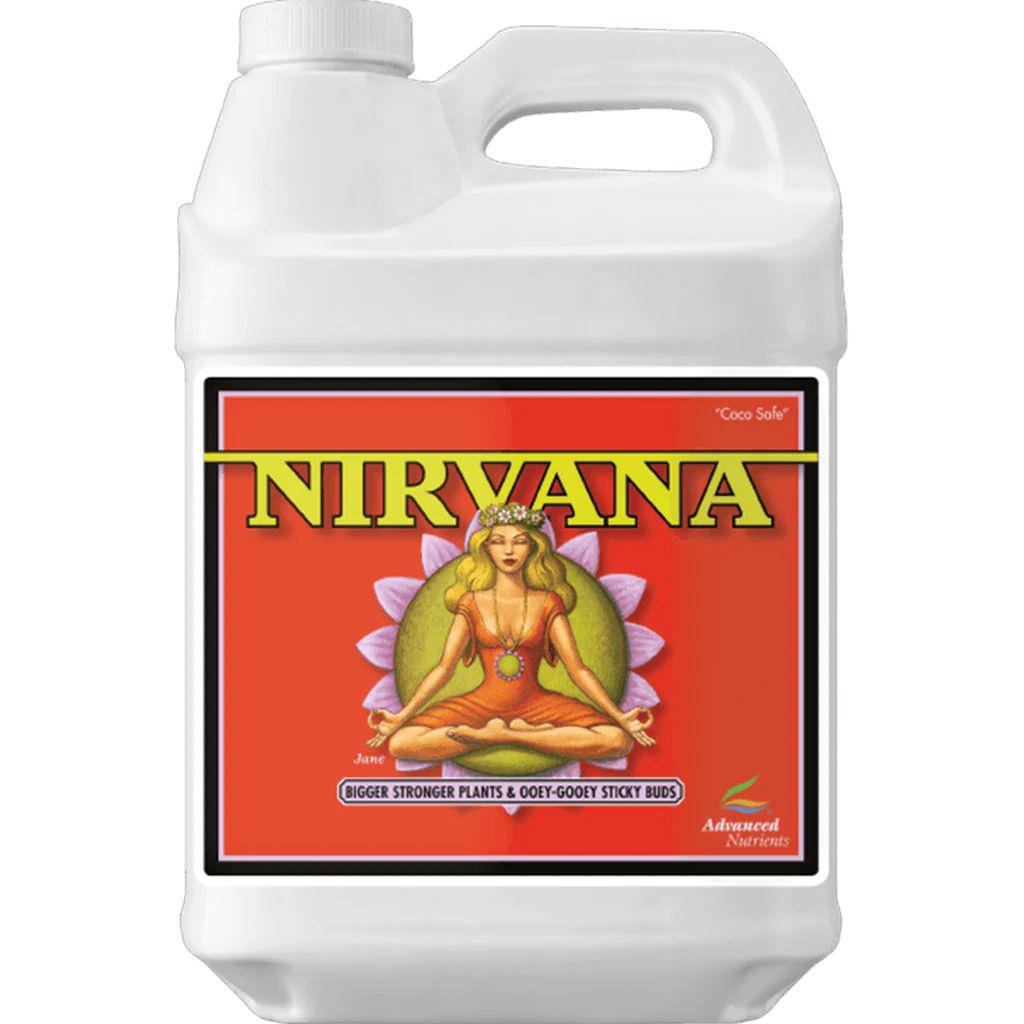
Advanced Nutrients Nirvana®(又名 Tasty Terpenes™)是一种花蕾增大剂和茎秆强化剂,专为处于开花中期、需要更强健的植株结构和更饱满的花朵的花园而设计。它是一种促花剂,旨在促进花朵在开花期增大并提升整体花朵品质。
Nirvana® 专注于两个相互关联的目标:更粗壮的茎秆和更饱满的花朵。该配方强调氨基酸,有助于植物生长出更粗壮的茎秆和更大的花蕾,从而帮助开花植物更好地支撑自身重量。此外,它还强调多种维生素,以促进植物达到最佳生长状态,确保开花期的发育稳步进行,使花朵层层堆叠、饱满丰盈。
这款促花剂的关键成分是钾,它能促进花朵生长,满足开花期额外的能量需求。Nirvana® 还能创造有利于植物通过光合作用制造自身养分的环境,从而在花朵快速发育的阶段为其提供强劲的生长动力。此外,该产品还注重提升花朵的风味和香气,旨在让花朵成熟后呈现出更令人愉悦的余韵。
成分表简洁明了,易于验证:主要成分包括钾、海带提取物、苜蓿粉以及氨基酸。此外,该配方还含有预消化乳清蛋白、蝙蝠粪和表面活性剂,这些都是其天然成分。
为了便于安装,Nirvana® 适用于室内外花园的开花期,并专为多种水培基质而设计。它也适用于常规浇水、灌溉系统和水培,尤其适合叶面喷施和椰糠安全型种植系统,包括气培、滴灌、营养液膜栽培(NFT)、潮汐式灌溉和深水培等连续液肥系统。
对于希望在水培或浇水系统中种植植物,并希望在中期开花阶段使用生物刺激剂来增强茎秆强度、促进花蕾膨大和提高开花期表现的种植者来说,这是一个很好的选择。
Step-by-step mixing and feeding instructions for 高级营养素 Nirvana - 500 毫升.
Fill your reservoir or watering container with clean, room-temperature water first. Shake the bottle of 高级营养素 Nirvana - 500 毫升 well before every use. Using the feeding schedule below, measure the recommended dose and add it directly to the water while stirring. Allow the solution to mix fully before adding any other fertilizers, additives, or supplements.
Always add nutrients to water — not the other way around. Mix thoroughly between products to ensure an even, stable nutrient solution.
Vegetative stage — Tasty Terpenes (Formerly Nirvana)
Flowering stage — Tasty Terpenes (Formerly Nirvana)
Warning – Important Safety Information
This product may cause mild skin irritation and eye irritation. Avoid unnecessary contact with skin, eyes, and clothing. Use only as directed.
General safety precautions
Read and follow all instructions on the product label and any accompanying documentation before use. Keep out of reach of children and pets. Do not ingest. Avoid breathing vapours, mist, or dust that may be generated during handling or use.
Wear appropriate personal protective equipment (PPE), such as protective gloves, long sleeves, long pants and closed-toe footwear. When there is a risk of splashing or airborne particles, use safety glasses or other suitable eye and face protection.
First aid – skin contact
IF ON SKIN OR HAIR: Remove contaminated clothing immediately. Rinse skin with clean water for several minutes, then wash with mild soap and water. If irritation or redness develops and persists, seek medical attention. Wash contaminated clothing before reuse.
First aid – eye contact
IF IN EYES: Rinse cautiously with clean water for several minutes, keeping eyelids open. Remove contact lenses if present and easy to do. Continue rinsing. If irritation persists, obtain medical advice.
First aid – ingestion and inhalation
IF SWALLOWED: Rinse mouth thoroughly with water. Do not induce vomiting unless instructed by a medical professional. Seek medical attention if you feel unwell.
IF INHALED: Move the person to fresh air and keep them comfortable for breathing. If coughing, breathing difficulty, dizziness or other symptoms occur, seek medical assistance.
Storage and handling
Store this product in its original closed container, in a cool, dry and well-ventilated area. Protect from extreme temperatures and direct sunlight. Keep container tightly sealed when not in use.
Avoid release to drains, natural waterways or outdoor soil. Dispose of unused product and empty containers in accordance with local regulations and the directions on the label.
Important: If medical advice is needed, keep the product label or container available. Always follow the specific instructions and safety recommendations provided by the manufacturer. This safety notice is intended as general guidance and does not replace official label directions or documentation.
| Soluble Potash (K2O) | 1.0% |
|---|
Alfalfa meal is unique because it feeds plants gently while also energizing soil biology, which helps roots access nutrients and water more consistently over time. That makes it important for steady, resilient growth instead of fast, fragile growth that can happen with more aggressive nitrogen-heavy inputs.
Azomite is best thought of as a soil mineral supplement because it’s mainly used to add a broad range of trace minerals that help plants use their main nutrients more efficiently over time. It’s important because trace minerals support enzyme activity, root function, and overall resilience, and it’s unique because it focuses on mineral diversity rather than delivering a big, fast dose of primary nutrients.
Fulvic acid is important because it helps nutrients stay available and move more efficiently into the plant, which can improve overall nutrient use and reduce hidden micronutrient issues. What makes it unique is its small, highly soluble structure that supports fast nutrient delivery differently than broader organic soil-building materials.
Humic acid is important because it improves root health and nutrient uptake by keeping minerals available, stabilizing the root zone, and supporting beneficial biology, which makes growth more consistent. It’s unique because it doesn’t act like a direct nutrient boost—its main power is improving the root environment so plants can use what’s already there more efficiently.
Soluble potash (K2O) is important because it helps plants control water use, move sugars to new growth and fruit, and build stronger, higher-quality structure under stress. It’s unique from many other nutrients because it acts more like a regulator and transport helper than a direct “building material,” so the biggest benefits show up as steadier growth, stronger stems, and better finishing instead of just bigger leaves.
L-alanine supports steady plant metabolism by helping the plant process nitrogen and carbon smoothly during growth and mild stress, which can improve consistency and recovery rather than forcing a dramatic surge. It’s unique because it works inside the plant’s internal chemistry as a flexible building-block amino acid, not as a mineral nutrient supply or a root-zone changer.
L-Arginine helps plants rebuild and restart growth by supplying a nitrogen-rich amino acid that supports internal protein building and nitrogen handling, especially during stress recovery. It’s unique because it carries a dense amount of nitrogen compared to many other amino acids, making it closely tied to strong rebound growth when conditions improve.
L-aspartic acid helps plants handle nitrogen more efficiently and keeps core metabolism running smoothly, which supports steadier growth and faster recovery after stress. It’s unique because it acts like a central “routing” amino acid that feeds multiple growth pathways instead of targeting just one visible function.
L-cysteine is primarily a stress protector because its sulfur-based chemistry supports redox balance, antioxidant buffering, and stable protein function, which keeps growth steady under real conditions. It’s unique from most amino acids because its thiol and disulfide switching with L-cystine links plant nutrition directly to stress recovery rather than just building tissue.
L-glutamic acid helps plants process and move nitrogen into usable building blocks that support steady green growth and recovery, making it important because it improves nutrient efficiency rather than just adding more nutrition. It’s unique because it acts as a central nitrogen “connector” in plant metabolism, influencing many growth functions indirectly instead of creating one narrow, single-effect result.
L-glutamine helps plants carry and use nitrogen efficiently for steady growth and recovery, especially when demand is high. What makes it unique is that it acts like a central nitrogen shuttle inside the plant, supporting how nitrogen becomes new tissue rather than simply adding another basic nitrogen source.
L-glycine helps plants build proteins and maintain efficient leaf function, which supports smoother growth and cleaner recovery from stress. It is unique because it works as a core internal building block that improves how plants use what they already have, rather than acting like a single-purpose nutrient or external trigger.
L-histidine helps plants keep certain micronutrient metals in controlled, usable forms so they can be moved and used in new growth without causing stress, which makes it especially important for steady color and faster recovery during demanding conditions. Unlike many similar amino acids that mainly act as simple building blocks, L-histidine is unique because its chemistry supports enzyme stability and metal handling that directly affects nutrient balance.
L-Hydroxyproline supports stronger plant structure by helping tissues build and reinforce themselves, which can improve posture, rooting stability, and recovery after stress. It’s unique because it’s more connected to tissue strength and resilience than to simple “greening” or basic feeding effects.
L-isoleucine helps plants maintain steady growth by supporting protein rebuilding and stress recovery, so they lose less time to heat, transplant shock, or other common setbacks. It’s unique because it functions less like a “push” input and more like a resilience amino acid that helps the plant stay metabolically stable when conditions fluctuate.
L-Leucine supports efficient protein rebuilding and nitrogen handling, which helps plants recover faster after stress and maintain steadier, sturdier growth. It’s unique because it works more like a recovery-focused building block than a classic nutrient that fixes a clear deficiency pattern.
L-Lysine supports steady protein building and stress recovery, helping plants restart consistent growth after setbacks instead of swinging between stalling and pushing. It’s unique because it’s a true protein amino acid tied to balanced rebuilding, not just a quick greening effect.
L-methionine helps plants build proteins while also supporting sulfur-based growth signals and protective compounds, which is why it often shows up as steadier new growth and better recovery after stress. It is unique because it carries sulfur and feeds into regulation and resilience at the same time, rather than acting like a simple generic building block.
L-phenylalanine helps plants build key structural and protective compounds that support sturdier tissues and steadier stress response, making it especially useful for resilience and “plant strength” rather than fast, bulk growth like more general inputs.
L-Proline helps plants hold onto water and protect cells during heat, drought, salinity, or cold, which supports steadier growth and faster recovery. It’s unique because it acts like a stress-protection molecule, not just a building block like many other amino acids.
L-serine helps plants build proteins and cell membranes while supporting the metabolic pathways that keep photosynthesis and stress recovery running smoothly, making it unique because it feeds multiple growth systems at once instead of driving just one targeted effect.
L-threonine helps plants build new tissues more consistently by supporting protein formation in fast-growing parts like roots and new leaves, which matters most during transitions and mild stress. It is unique because it tends to improve growth quality and steadiness rather than causing a single dramatic change, so plants keep forming clean, sturdy new growth instead of stop-start development.
L-Tryptophan matters because plants use it not only to build proteins, but also as a key starting material for growth signals that guide root branching and fine root hair formation. That makes it unique from many other amino acids, because it can influence how growth is organized and directed, not just how fast new tissue is built.
L-Tyrosine is important because it helps plants build protective and structural compounds that support steady performance under stress, not just fast growth. What makes it unique is its strong connection to pathways that influence tissue strength, color stability, and defense chemistry, so it’s most noticeable when plants need resilience and recovery rather than a simple nutrient “push.”
L-Valine helps plants maintain steady growth and recover faster from stress by supporting protein-building and energy-linked metabolism, which makes it unique from many other amino acids that focus more on nitrogen storage or specialized pathways.
Potassium sulfate is often preferred because it supplies potassium without added chloride and also provides sulfur, which supports protein-building and efficient nutrient use, making it a cleaner, balanced option when plants are sensitive to chloride or when you want potassium without pushing extra nitrogen or phosphorus.
Quillaja extract acts as a natural surfactant that makes spray droplets spread and stick more evenly on leaves, which improves coverage and consistency so the spray can work predictably. It’s unique because it supports both spreading and mixing stability rather than acting like a fertilizer or a harsh soap that can strip leaf surfaces when overused.
Natural rock phosphate is different because it releases phosphorus slowly as the root zone and soil biology unlock it, so it builds long-term fertility instead of causing a fast nutrient spike. That slow, reserve-style supply is important because phosphorus drives root energy and flowering, and it also helps avoid the micronutrient imbalances that can happen when phosphorus is pushed too quickly.
Seaweed is mainly a plant booster because it supports roots, stress tolerance, and nutrient efficiency more than it supplies full nutrition. It’s unique because ocean-derived compounds help the root zone and plant growth signals in a gentle way, so plants often recover faster and grow more steadily when the basics are already covered.
Whey protein hydrolysate supplies small peptides and amino acids that can support root-zone biology and make nutrient uptake more efficient, helping plants grow steadily and recover faster from stress. It’s unique because it works as both gentle organic nitrogen and a fast-available peptide signal, so it can improve performance without relying on heavy salt strength when used correctly.
Yeast extract supports roots by feeding beneficial microbes and supplying bioactive compounds that help nutrient cycling and stress resilience, which often leads to steadier growth and healthier leaf tone. It’s unique because it combines highly available microbial food with functional building blocks in one ingredient, instead of acting mainly like a sugar source or a chemistry-driven additive.
Yucca extract helps water spread and soak into growing media more evenly, reducing dry pockets and channeling so roots can access moisture and dissolved nutrients consistently. It’s unique because its main benefit is improving water behavior rather than directly feeding the plant like most inputs.

1175 Stellar Drive, Unit #5
Newmarket, ON L3Y 7B8
106 Saunders Road, Unit #2A
Barrie, ON L4N 9A8
719 Krosno Boulevard
Pickering, ON L1W 1G4
915 McLeod Avenue, Unit #4
Winnipeg, MB R2G 0Y4