

Frequently purchased together
-
高级营养素芽血 - 300克
常规价格 $145.99常规价格 -
高级营养素 Bud Candy - 1 升
常规价格 $36.99常规价格 -
高级营养素芽因子 X - 500 毫升
常规价格 $59.99常规价格 -
Advanced Nutrients 芽点亮剂 - 500 毫升
常规价格 $57.99常规价格


Newmarket, Ontario (Head Office)
1175 Stellar Drive, Unit #5
Newmarket, ON L3Y 7B8
- Mon10:00am–6:00pm
- Tue10:00am–6:00pm
- Wed10:00am–6:00pm
- Thu10:00am–6:00pm
- Fri10:00am–6:00pm
- Sat10:00am–4:00pm
- SunClosed


Barrie, Ontario
106 Saunders Road, Unit #2A
Barrie, ON L4N 9A8
- Mon10:00am–5:00pm
- Tue10:00am–5:00pm
- Wed10:00am–5:00pm
- Thu10:00am–5:00pm
- Fri10:00am–5:00pm
- Sat10:00am–3:00pm
- SunClosed
Winnipeg, Manitoba
915 McLeod Avenue, Unit #4
Winnipeg, MB R2G 0Y4
- Mon10:00am–6:00pm
- Tue10:00am–6:00pm
- Wed10:00am–6:00pm
- Thu10:00am–6:00pm
- Fri10:00am–6:00pm
- Sat11:00am–3:00pm
- SunClosed
Sign in required
Back-in-stock notification
Select the store locations where you’d like to pick up this item, or choose Shipping to have it delivered.
Special order request
Select the store where you’d prefer to pick up your special order. To choose a different store, unselect your current choice first.
Description
Description
Description
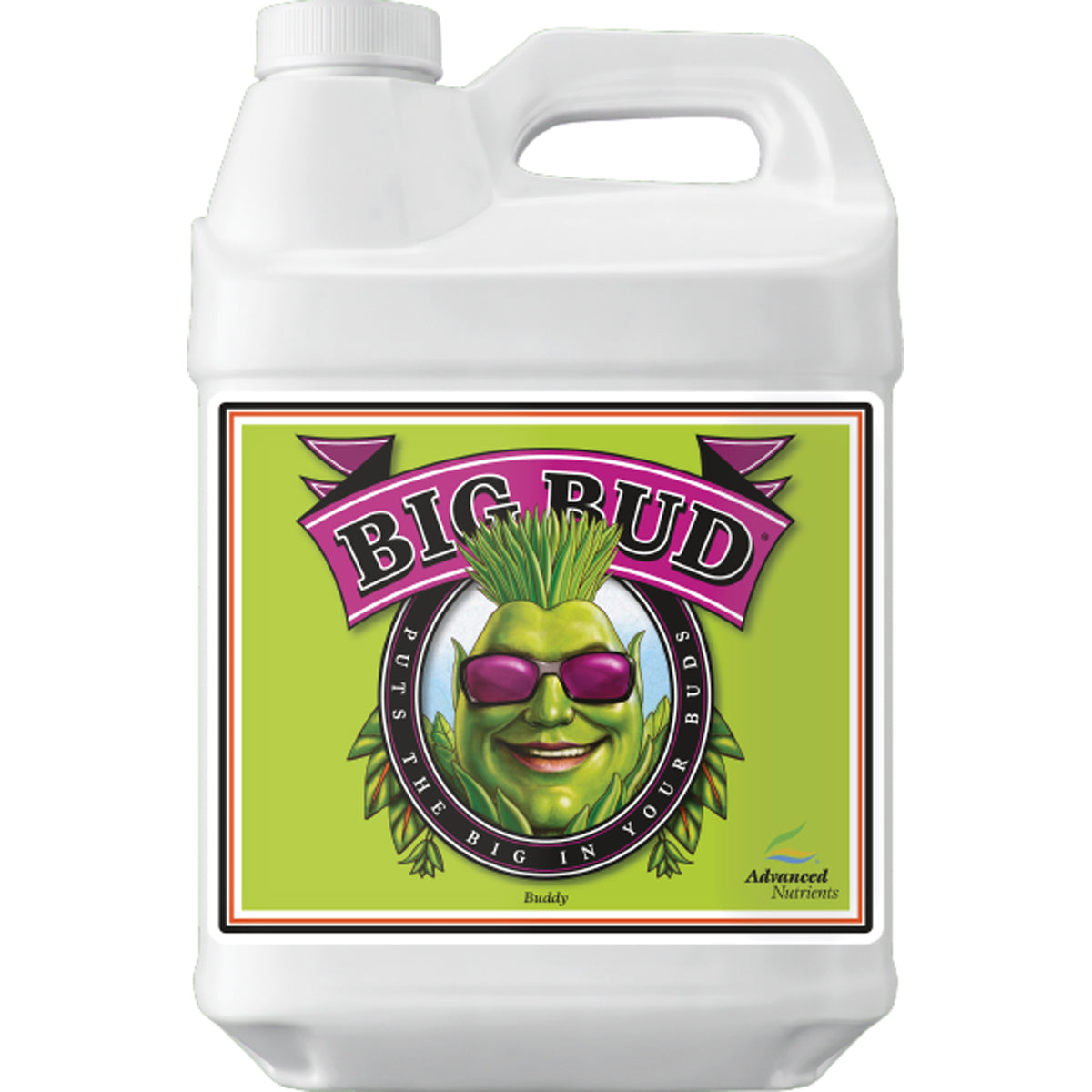
Big Bud® 以精确的磷钾配比为核心,专注于可见的开花性能,且不含冗余成分。Advanced Nutrients 将其定位为一种经典的开花促进剂,支持开花阶段的生长和光合作用,帮助开花植物在整个周期中最具挑战性的阶段保持正常生长。它还被呈现为一种由优质原材料制成的可靠液体肥料,其质量控制标准旨在延长保质期。
Big Bud® 被描述为提供极易吸收的钾和磷形式,以增强和增加花朵结构。目标很简单:支持更重、更密集的开花发育,并在开花周期中鼓励持续的开花结果。对于想要直接有效的开花促进剂的购物者来说,这款开花促进剂肥料将重点放在以磷钾为驱动的开花支持上,而不是增加额外的复杂性。
基本事实层很简单:Big Bud® 的等级为 0-1-3,在开花期提供了以磷和钾为主的养分配比。该配方来源于磷酸二氢钾和硫酸钾,以及乳清蛋白水解物,将矿物质输入与蛋白质水解物成分结合在一个专注于开花的产品中。
在设置方面,Big Bud® 适用于开花阶段的室内/室外花园,并适用于水培、常规浇水和浇水系统。它还被标注为对椰糠安全。Advanced Nutrients 进一步描述它专为各种水培种植介质和连续液体喂养系统设计,如气雾栽培、滴灌和滴头、营养液膜技术 (NFT)、潮汐式系统和深水培。
这非常适合那些希望在水培或其他浇水系统设置中,在开花中期支持花朵结构、开花阶段表现和以磷钾为主的营养的液体肥料开花促进剂的种植者。
产品优点:开花阶段;室内;室外;常规浇水;浇水系统;椰糠安全;水培;土壤;无土;更高产量;更密花朵;更饱满花朵;快速磷钾吸收;开花支持;稳定结果;多系统使用;简易液体配方。
保证分析:有效磷酸(P2O5):1.0%;可溶性钾(K2O):3.0%;氨基酸:0.5%;抗坏血酸:0.01%;柠檬酸:0.01%。
来源:磷酸二氢钾;硫酸钾;乳清蛋白水解物。
How To Use
How To Use
How to Use 高级营养液 Big Bud - 500 毫升
Step-by-step mixing and feeding instructions for 高级营养液 Big Bud - 500 毫升.
Mixing & preparation
Fill your reservoir or watering container with clean, room-temperature water first. Shake the bottle of 高级营养液 Big Bud - 500 毫升 well before every use. Using the feeding schedule below, measure the recommended dose and add it directly to the water while stirring. Allow the solution to mix fully before adding any other fertilizers, additives, or supplements.
Always add nutrients to water — not the other way around. Mix thoroughly between products to ensure an even, stable nutrient solution.
Week-by-week feeding schedule
Vegetative stage — Big Bud
- Week 1: do not use this product during this week of vegetative growth.
- Week 2: do not use this product during this week of vegetative growth.
- Week 3: do not use this product during this week of vegetative growth.
- Week 4: do not use this product during this week of vegetative growth.
Flowering stage — Big Bud
- Week 1: do not use this product during this week of flowering.
- Week 2: mix 2.0 ml per litre of water or nutrient solution.
- Week 3: mix 2.0 ml per litre of water or nutrient solution.
- Week 4: mix 2.0 ml per litre of water or nutrient solution.
- Week 5: mix 2.0 ml per litre of water or nutrient solution.
- Week 6: do not use this product during this week of flowering.
- Week 7: do not use this product during this week of flowering.
- Week 8: do not use this product during this week of flowering.
Tips for best results
- Maintain pH and EC/ppm within the range recommended for your growing medium and crop.
- Use fresh nutrient solution whenever possible and avoid leaving mixed solution stagnant for long periods.
- Store nutrients in a cool, dark place away from direct sunlight and extreme temperatures.
- Keep bottles tightly sealed when not in use to reduce air exposure and preserve product quality.
- Use clean measuring tools and regularly rinse or clean your reservoir, lines, and irrigation equipment.
Common mistakes to avoid
- Do not mix different nutrients or additives together in concentrated form before adding them to water.
- Do not exceed the recommended dosage unless you are following a tested, crop-specific feeding plan.
- Do not skip pH or EC/ppm checks when growing in hydroponic or soilless systems.
- Do not allow the nutrient solution to freeze or overheat, as this can damage the formulation.
- Do not ignore the directions on the product label for your specific crop, growth stage, and system type.
Warnings & Safety
Warnings & Safety
Important – Safety Information
General Safety Precautions
First Aid – Skin Contact
First Aid – Eye Contact
First Aid – Ingestion
First aid – Inhalation
Storage And Handling
Important – Medical
Guaranteed Minimum Analysis
Guaranteed Minimum Analysis
| Available Phosphate (P2O5) | 1.0% |
|---|---|
| Soluble Potash (K2O) | 3.0% |
| Amino Acids | 0.5% |
| Ascorbic Acid | 0.01% |
| Citric Acid | 0.01% |
Frequently Asked Questions
Frequently Asked Questions
What does available phosphate (P₂O₅) do for plant growth?
Why is soluble potash (K2O) important for plants?
What do amino acids do for plants?
What does ascorbic acid do for plant growth?
Why is citric acid important for plant growth?
What does monopotassium phosphate do for flowering plants?
Is potassium sulfate better than other potassium sources for sensitive plants?
What does whey protein hydrolysate do for plants?
Safety & Technical Documents
Safety & Technical Documents
Frequently purchased together
-
高级营养素芽血 - 300克
常规价格 $145.99常规价格 -
高级营养素 Bud Candy - 1 升
常规价格 $36.99常规价格 -
高级营养素芽因子 X - 500 毫升
常规价格 $59.99常规价格 -
Advanced Nutrients 芽点亮剂 - 500 毫升
常规价格 $57.99常规价格

Vegetative — Big Bud
-
—
Flowering — Big Bud
-
—