Skip to product information
1 of 1
Green Planet Nutrients CA flag

Official Reseller

Provision Gardens is an official reseller of this brand.

Our inventory is sourced directly from the manufacturer and/or authorized distribution partners. We do not sell used items or unverified/old stock. This helps ensure product authenticity, freshness, and the high standard you expect.

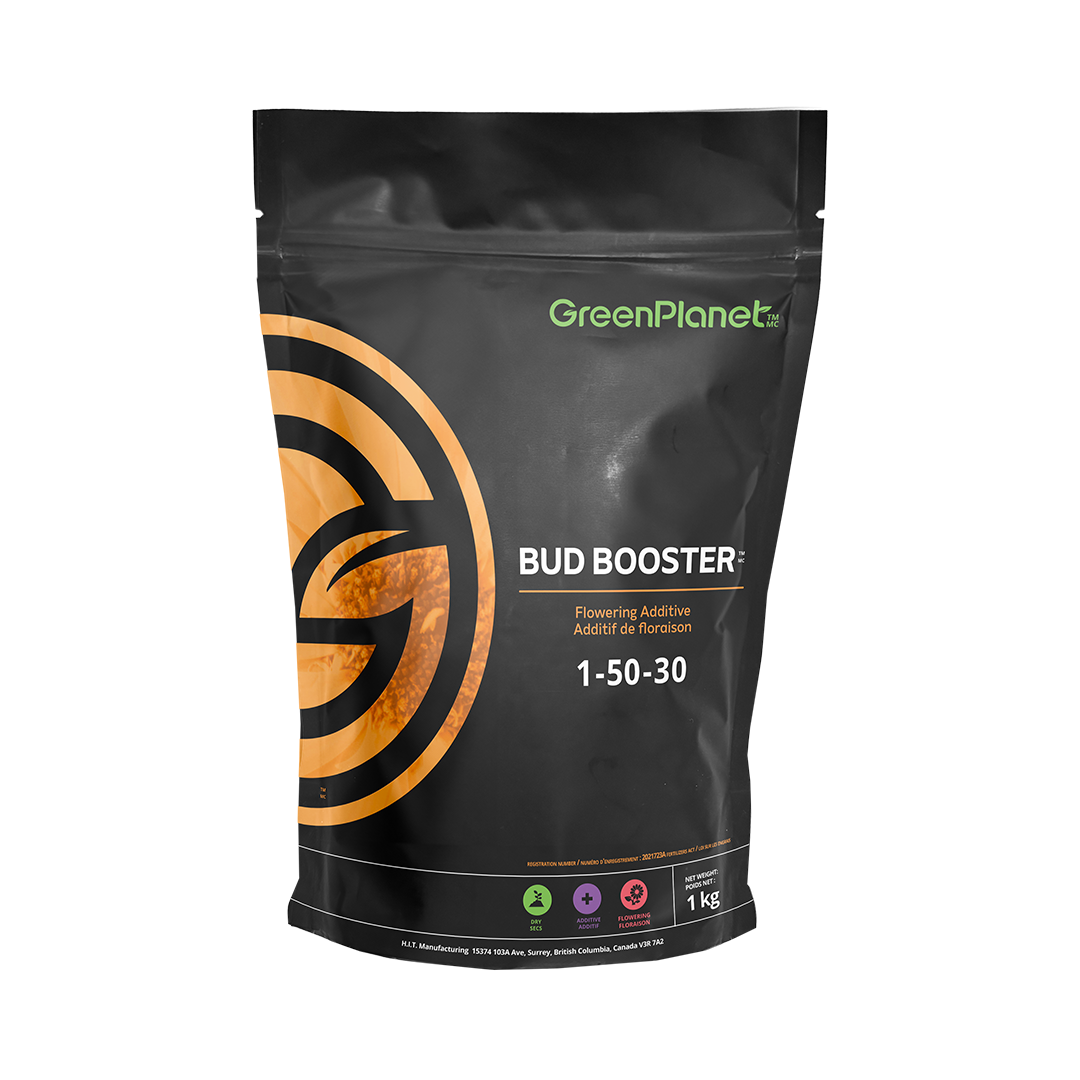
Green Planet Nutrients Bud Booster - 1 KG

Regular price $59.90
Regular price Sale price $59.90
Shipping calculated at checkout.
Store Availability
Estimated Delivery Date
Order Within
Province
Est. Delivery
$0.00
Ontario
$125.00
Canada
$149.99
Choose your province
Quantity
Qualifies for Free Shipping Promotion

Description

GreenPlanet Nutrients Bud Booster is a powdered bloom additive and specialty flowering additive for the flowering stage, made to promote heavy flowering through focused phosphorus and potassium.

This phosphorus and potassium additive is built around bloom-stage plant needs. Phosphorus is tied to flower formation and is described as a driver for increased overall yields during the flowering stage. GreenPlanet also links added phosphorus to photosynthesis and to the plant’s ability to uptake nutrients. Potassium is positioned for improving flower quality, and it is also tied to starch production, which supports bloom-stage development.

Bud Booster includes added boron and nitrogen as part of its flowering-stage support. Boron is associated with sugar transport and the development of a healthier flower. Nitrogen is connected to core plant functions such as photosynthesis, which supports the plant’s overall performance through bloom. The combined focus is described around practical outcomes: increased flower mass, overall size, and higher yields during flowering.

A compact facts layer helps clarify what this product is at a glance. Bud Booster is labeled 1-50-30, reflecting a high-phosphorus, high-potassium bloom additive profile. The formula is derived from monopotassium phosphate, dipotassium phosphate, potassium sulfate, and boric acid. It also contains vitamin B1 (thiamine hydrochloride), providing an additional input called out directly by GreenPlanet.

Bud Booster is presented as a versatile dry fertilizer additive across common gardening setups. It is marked as suitable for outdoors, hydroponics, soil/soilless media, recirculating systems, and drain-to-waste systems. That range makes it a practical choice when you want one powdered bloom additive that fits a wide set of grow styles while keeping the purpose tightly centered on flowering performance.

This is a good fit for entry-level growers who want an original powdered bloom additive to support the flowering stage, promote blooming, and improve flower quality with a straightforward phosphorus and potassium focus.

Product benefits: Flowering Stage; Indoor; Outdoor; Regular Watering; Watering Systems; Hydroponics; Coco Coir Safe; Soil; Soilless; Bloom Support; Extra PK Support; Fuller Flowers; Flower Energy; Metabolism Support; Photosynthesis Support; Better Nutrient Uptake; Finish Quality Support.

Guaranteed analysis: Water Soluble Nitrogen (N): 1.0%; Available Phosphate (P2O5): 50.0%; Soluble Potash (K2O): 30.0%; Boron (B): 0.08%; Thiamine Hydrochloride (Vitamin B1): 1.0%.

Derived from: Monopotassium Phosphate; Dipotassium Phosphate; Potassium Sulfate; Boric Acid.

How To Use

How to Use Green Planet Nutrients Bud Booster - 1 KG

Step-by-step mixing and feeding instructions for Green Planet Nutrients Bud Booster - 1 KG.

Mixing & preparation

Fill your reservoir or watering container with clean, room-temperature water first. Shake the bottle of Green Planet Nutrients Bud Booster - 1 KG well before every use. Using the feeding schedule below, measure the recommended dose and add it directly to the water while stirring. Allow the solution to mix fully before adding any other fertilizers, additives, or supplements.

Always add nutrients to water — not the other way around. Mix thoroughly between products to ensure an even, stable nutrient solution.

Week-by-week feeding schedule

Vegetative stage — Bud Booster

  • Week 1: do not use this product during this week of vegetative growth.
  • Week 2: do not use this product during this week of vegetative growth.
  • Week 3: do not use this product during this week of vegetative growth.
  • Week 4: do not use this product during this week of vegetative growth.

Flowering stage — Bud Booster

  • Week 1: do not use this product during this week of flowering.
  • Week 2: do not use this product during this week of flowering.
  • Week 3: mix 0.3 g per litre of water or nutrient solution.
  • Week 4: mix 0.3 g per litre of water or nutrient solution.
  • Week 5: mix 0.3 g per litre of water or nutrient solution.
  • Week 6: mix 0.3 g per litre of water or nutrient solution.
  • Week 7: mix 0.3 g per litre of water or nutrient solution.
  • Week 8: do not use this product during this week of flowering.

Tips for best results

  • Maintain pH and EC/ppm within the range recommended for your growing medium and crop.
  • Use fresh nutrient solution whenever possible and avoid leaving mixed solution stagnant for long periods.
  • Store nutrients in a cool, dark place away from direct sunlight and extreme temperatures.
  • Keep bottles tightly sealed when not in use to reduce air exposure and preserve product quality.
  • Use clean measuring tools and regularly rinse or clean your reservoir, lines, and irrigation equipment.

Common mistakes to avoid

  • Do not mix different nutrients or additives together in concentrated form before adding them to water.
  • Do not exceed the recommended dosage unless you are following a tested, crop-specific feeding plan.
  • Do not skip pH or EC/ppm checks when growing in hydroponic or soilless systems.
  • Do not allow the nutrient solution to freeze or overheat, as this can damage the formulation.
  • Do not ignore the directions on the product label for your specific crop, growth stage, and system type.

Warnings & Safety

Warning – Important Safety Information

This product may cause mild skin irritation and eye irritation. Avoid unnecessary contact with skin, eyes, and clothing. Use only as directed.

General safety precautions

Read and follow all instructions on the product label and any accompanying documentation before use. Keep out of reach of children and pets. Do not ingest. Avoid breathing vapours, mist, or dust that may be generated during handling or use.

Wear appropriate personal protective equipment (PPE), such as protective gloves, long sleeves, long pants and closed-toe footwear. When there is a risk of splashing or airborne particles, use safety glasses or other suitable eye and face protection.

First aid – skin contact

IF ON SKIN OR HAIR: Remove contaminated clothing immediately. Rinse skin with clean water for several minutes, then wash with mild soap and water. If irritation or redness develops and persists, seek medical attention. Wash contaminated clothing before reuse.

First aid – eye contact

IF IN EYES: Rinse cautiously with clean water for several minutes, keeping eyelids open. Remove contact lenses if present and easy to do. Continue rinsing. If irritation persists, obtain medical advice.

First aid – ingestion and inhalation

IF SWALLOWED: Rinse mouth thoroughly with water. Do not induce vomiting unless instructed by a medical professional. Seek medical attention if you feel unwell.

IF INHALED: Move the person to fresh air and keep them comfortable for breathing. If coughing, breathing difficulty, dizziness or other symptoms occur, seek medical assistance.

Storage and handling

Store this product in its original closed container, in a cool, dry and well-ventilated area. Protect from extreme temperatures and direct sunlight. Keep container tightly sealed when not in use.

Avoid release to drains, natural waterways or outdoor soil. Dispose of unused product and empty containers in accordance with local regulations and the directions on the label.

Important: If medical advice is needed, keep the product label or container available. Always follow the specific instructions and safety recommendations provided by the manufacturer. This safety notice is intended as general guidance and does not replace official label directions or documentation.

Frequently Asked Questions

Why is water-soluble nitrogen important for plant growth, and what makes it unique compared to other nitrogen sources?

Water-soluble nitrogen is important because it dissolves in water and becomes available to plants quickly, helping drive fast green growth, strong photosynthesis, and rapid recovery from nitrogen deficiency. It’s unique because it works immediately rather than relying on slow breakdown or conversion, so it delivers faster results—but also requires more careful control to avoid overfeeding, soft growth, or nutrient imbalance.

What does available phosphate (P₂O₅) do for plant growth?

Available Phosphate (P₂O₅) supports root development, energy transfer, and early structural growth by providing a form of phosphorus that plants can absorb and use quickly.

Why is soluble potash (K2O) important for plants?

Soluble potash (K2O) is important because it helps plants control water use, move sugars to new growth and fruit, and build stronger, higher-quality structure under stress. It’s unique from many other nutrients because it acts more like a regulator and transport helper than a direct “building material,” so the biggest benefits show up as steadier growth, stronger stems, and better finishing instead of just bigger leaves.

Why is boron (B) essential for strong plant development, and what makes it different from other micronutrients?

Boron is essential because it stabilizes cell walls, supports root and shoot growth, and regulates sugar movement throughout the plant. What makes boron unique is its limited mobility and extremely narrow range between deficiency and excess, which causes new growth to show symptoms rapidly when levels fall out of balance.

Why is thiamine hydrochloride (vitamin B1) important for plants after stress or transplanting?

Thiamine hydrochloride can support plant recovery by helping key metabolic pathways that turn sugars into usable energy during repair, making it uniquely helpful after stress because it supports internal energy handling rather than acting like a typical fertilizer nutrient.

What does dipotassium phosphate do for plants?

Dipotassium phosphate provides fast, plant-available phosphate and potassium, which supports energy transfer for root and growth processes while improving water control and sugar movement through the plant. It’s important because these two nutrients work together to keep growth steady, but it’s also unique because it can raise root-zone pH compared with similar phosphate sources, so the same dose that helps vigor can also cause micronutrient lockouts if balance and pH stability are ignored.

What makes boric acid important for plants compared to other micronutrients?

Boric acid supplies boron, which plants need in extremely small amounts to build healthy new growth and support flowering and fruit development, but the safe range is very narrow. It’s unique because deficiency shows up first in the newest tissues while excess often burns older leaf edges, so accurate diagnosis and tiny, careful corrections matter more than with most nutrients.

What does monopotassium phosphate do for flowering plants?

Monopotassium phosphate provides fast phosphorus and potassium that support energy use, nutrient flow, and bloom development without adding nitrogen, so it helps flowering progress cleanly without pushing extra leafy growth. It’s unique because it delivers a focused PK boost in a highly soluble form, which can correct stage-related demand quickly, but it must be used carefully to avoid potassium-heavy imbalances that can block calcium and magnesium uptake.

Is potassium sulfate better than other potassium sources for sensitive plants?

Potassium sulfate is often preferred because it supplies potassium without added chloride and also provides sulfur, which supports protein-building and efficient nutrient use, making it a cleaner, balanced option when plants are sensitive to chloride or when you want potassium without pushing extra nitrogen or phosphorus.

Safety & Technical Documents

View full details
Nutrient Feed Chart

Vegetative — Bud Booster

Flowering — Bud Booster

Product Comparison