Frequently purchased together
-
GardenPro Aluminum Sulphate - 2 KG
Regular price $23.56Regular price -
-
GardenPro Superbloom 10-40-25 + Micros Water Soluble - 1.2 KG
Regular price $23.80Regular price -
GardenPro Rose Food 8-14-12 + Micros - 1.8 KG
Regular price $15.70Regular price


Reviews are submitted by verified customers after purchase. This section shows a summary of product feedback rather than the full individual review list.

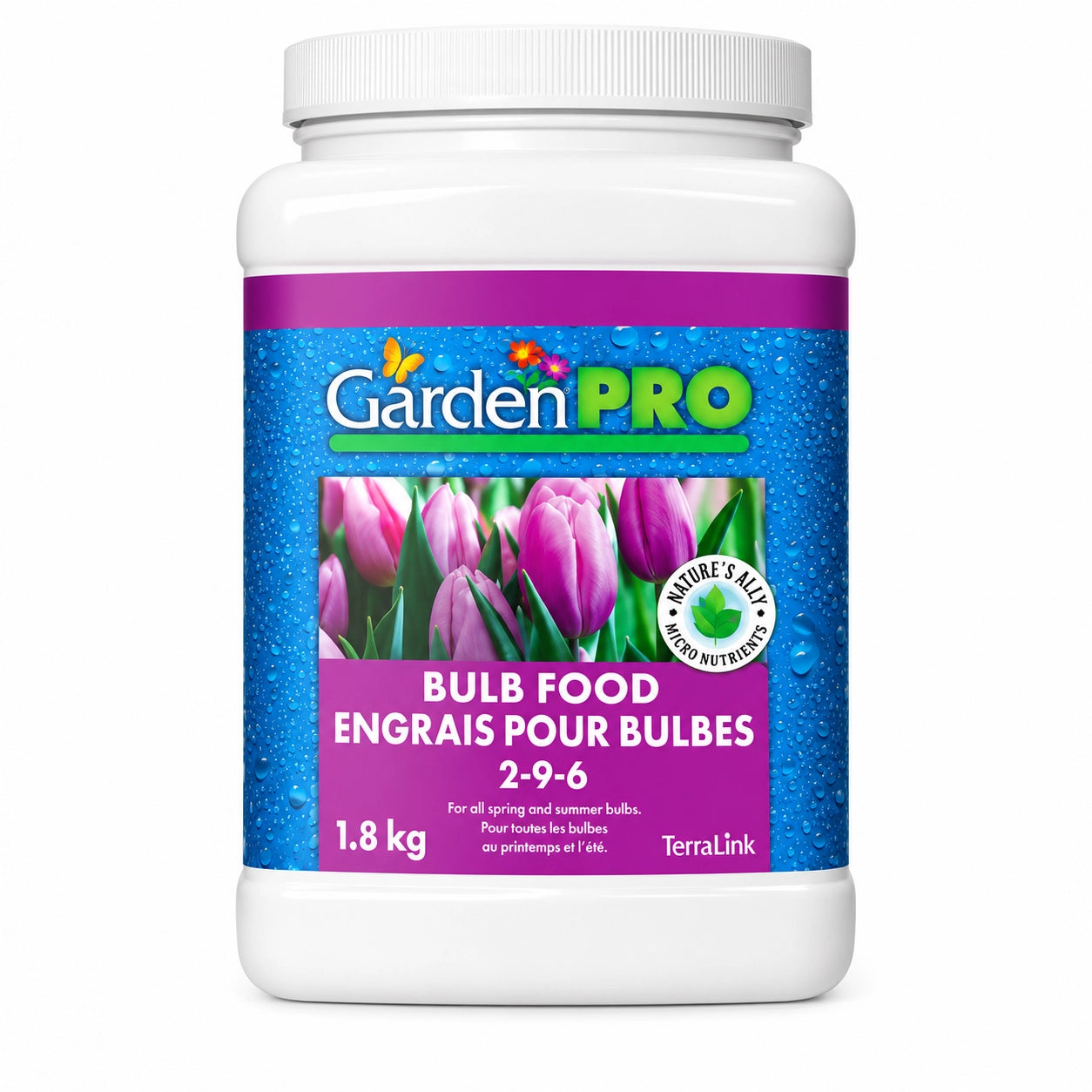
GardenPro Bulb Food 2-9-6 - 1.8 KG
Store Availability
Newmarket, Ontario (Head Office)
1175 Stellar Drive, Unit #5
Newmarket, ON L3Y 7B8
- Mon10:00am–6:00pm
- Tue10:00am–6:00pm
- Wed10:00am–6:00pm
- Thu10:00am–6:00pm
- Fri10:00am–6:00pm
- Sat10:00am–4:00pm
- SunClosed


Barrie, Ontario
106 Saunders Road, Unit #2A
Barrie, ON L4N 9A8
- Mon10:00am–5:00pm
- Tue10:00am–5:00pm
- Wed10:00am–5:00pm
- Thu10:00am–5:00pm
- Fri10:00am–5:00pm
- Sat10:00am–3:00pm
- SunClosed
Winnipeg, Manitoba
915 McLeod Avenue, Unit #4
Winnipeg, MB R2G 0Y4
- Mon10:00am–6:00pm
- Tue10:00am–6:00pm
- Wed10:00am–6:00pm
- Thu10:00am–6:00pm
- Fri10:00am–6:00pm
- Sat11:00am–3:00pm
- SunClosed
Estimated Delivery Date
Order Within
—
Province
Est. Delivery
—
Quantity
Qualifies for Free Shipping Promotion
Sign in required
Back-in-stock notification
Select the store locations where you’d like to pick up this item, or choose Shipping to have it delivered.
Email notifications are turned off
Turn on email marketing to receive back-in-stock notifications.
Open account profile
Special order request
Select the store where you’d prefer to pick up your special order. To choose a different store, unselect your current choice first.
Description
Description
Description
GardenPRO Bulb Food 2-9-6 is a GardenPRO bulb fertilizer designed for spring and summer bulbs, providing targeted bulb nutrition with an emphasis on winter hardiness support. It’s a bulb food fertilizer blend for gardeners who want a purpose-built option for bulb plantings rather than a general all-purpose nutrient.
Bulbs perform best when early growth is strong and consistent, and this formula is positioned around that need with a bulb-focused nutrient profile. GardenPRO Bulb Food 2-9-6 is also a practical match for gardens where bulbs return season after season and maintaining resilient overwintering performance is part of the goal. In plain terms, it’s built for the bulb cycle: steady establishment, confident seasonal growth, and support for hardy carryover.
This product is described as a granular bulb fertilizer, which makes it a familiar choice for outdoor beds and bulb plantings where a granular format is preferred. It keeps your bulb care simple and direct: one bulb fertilizer that fits spring and summer bulbs without adding extra complexity or specialty claims that are hard to validate at the garden level.
The facts layer is compact and buyer-focused. The stated analysis is 2-9-6, and the key inputs called out are kelp and potash. That combination pairs a bulb food profile with a simple, recognizable ingredient set that gardeners often look for when the goal includes winter hardiness support for bulb plantings.
GardenPRO Bulb Food 2-9-6 is a good fit for gardeners who want a granular bulb fertilizer for spring and summer bulbs, especially when the priority is straightforward bulb nutrition with kelp and potash and a clear winter hardiness support focus.
Bulbs perform best when early growth is strong and consistent, and this formula is positioned around that need with a bulb-focused nutrient profile. GardenPRO Bulb Food 2-9-6 is also a practical match for gardens where bulbs return season after season and maintaining resilient overwintering performance is part of the goal. In plain terms, it’s built for the bulb cycle: steady establishment, confident seasonal growth, and support for hardy carryover.
This product is described as a granular bulb fertilizer, which makes it a familiar choice for outdoor beds and bulb plantings where a granular format is preferred. It keeps your bulb care simple and direct: one bulb fertilizer that fits spring and summer bulbs without adding extra complexity or specialty claims that are hard to validate at the garden level.
The facts layer is compact and buyer-focused. The stated analysis is 2-9-6, and the key inputs called out are kelp and potash. That combination pairs a bulb food profile with a simple, recognizable ingredient set that gardeners often look for when the goal includes winter hardiness support for bulb plantings.
GardenPRO Bulb Food 2-9-6 is a good fit for gardeners who want a granular bulb fertilizer for spring and summer bulbs, especially when the priority is straightforward bulb nutrition with kelp and potash and a clear winter hardiness support focus.
How to use
At Planting Time:
Use GardenPRO Bulb Food 2-9-6 when planting to help bulbs get established and set up for strong flowering.
Broadcast rate: Mix 1 kg (2.2 lb) per 5 m² (54 sq. ft.) into the planting area.
Per-hole option: Apply one small handful into each planting hole.
Cover before planting: Always cover the fertilizer with about 2 cm (1 in.) of soil before placing the bulb.
Finish: Plant as normal and water well.
For Established Bulbs:
Keep bulbs feeding steadily for better seasonal performance.
Frequency: Apply once per month throughout spring and summer.
Rate: Use ½ the planting rate.
How: Mix lightly into the top layer of soil and water well after application.
Use GardenPRO Bulb Food 2-9-6 when planting to help bulbs get established and set up for strong flowering.
Broadcast rate: Mix 1 kg (2.2 lb) per 5 m² (54 sq. ft.) into the planting area.
Per-hole option: Apply one small handful into each planting hole.
Cover before planting: Always cover the fertilizer with about 2 cm (1 in.) of soil before placing the bulb.
Finish: Plant as normal and water well.
For Established Bulbs:
Keep bulbs feeding steadily for better seasonal performance.
Frequency: Apply once per month throughout spring and summer.
Rate: Use ½ the planting rate.
How: Mix lightly into the top layer of soil and water well after application.
Product benefits
Vegetative Stage; Indoor; Outdoor; Regular Watering; Soil; Soilless; Phosphorus Support; Potassium Support; Root Development; Bloom Support; Steady Feeding; Easy Granule Application; Outdoor Use; Targeted Support.
Guaranteed analysis
Total Nitrogen (N): 2.0%; Available Phosphoric Acid (P2O5): 9.0%; Soluble Potash (K2O): 6.0%.
Derived from
Bone Meal; Muriate of Potash; Urea; Kelp Meal.
How To Use
How To Use
At Planting Time
For Established Bulbs
Warnings & Safety
Warnings & Safety
Important – Safety Information
General Safety Precautions
First Aid – Skin Contact
First Aid – Eye Contact
First Aid – Ingestion
First aid – Inhalation
Storage And Handling
Important – Medical
Guaranteed Minimum Analysis
Guaranteed Minimum Analysis
Derived From
Derived From
Frequently Asked Questions
Frequently Asked Questions
Why is total nitrogen (N) important for plant growth, and what makes it different from other nutrients?
What does available phosphoric acid (P₂O₅) do for plants, and how is it different from available phosphate?
Why is soluble potash (K2O) important for plants?
When should you use bone meal for plants, and why does it work differently than other amendments?
What does muriate of potash do for plants?
Why can urea burn plants even though it’s a common nitrogen fertilizer?
What does kelp meal do for plants?
Frequently purchased together
-
GardenPro Aluminum Sulphate - 2 KG
Regular price $23.56Regular price -
-
GardenPro Superbloom 10-40-25 + Micros Water Soluble - 1.2 KG
Regular price $23.80Regular price -
GardenPro Rose Food 8-14-12 + Micros - 1.8 KG
Regular price $15.70Regular price
Reviews are submitted by verified customers after purchase. This section shows a summary of product feedback rather than the full individual review list.