Frequently purchased together
-
-
-
GardenPro Aluminum Sulphate - 2 KG
Regular price $23.56Regular price -


Reviews are submitted by verified customers after purchase. This section shows a summary of product feedback rather than the full individual review list.

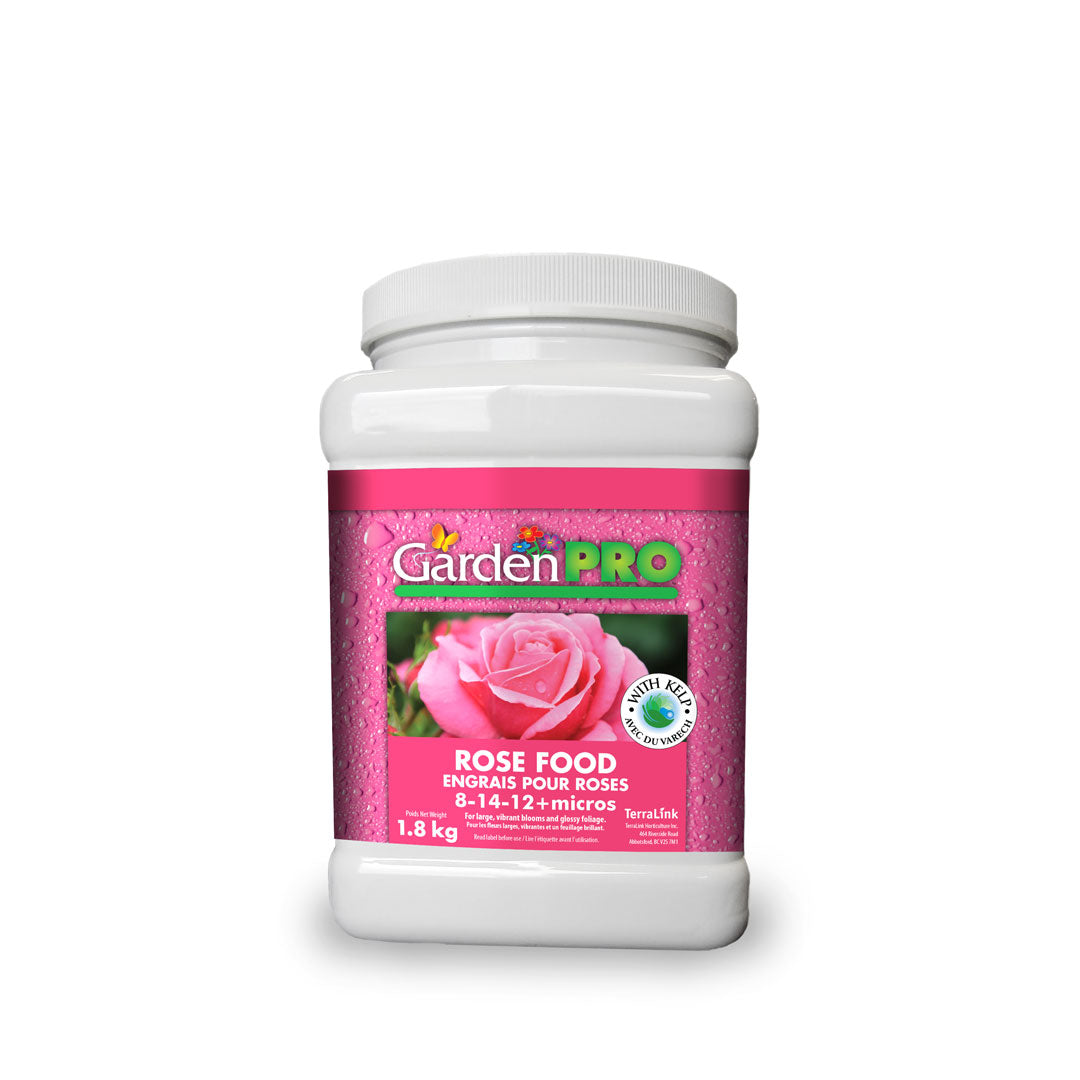
GardenPro Rose Food 8-14-12 + Micros - 1.8 KG
Regular price
$15.70
Regular price
Sale price
$15.70
Shipping calculated at checkout.
Store Availability
Newmarket, Ontario (Head Office)
1175 Stellar Drive, Unit #5
Newmarket, ON L3Y 7B8
- Mon10:00am–6:00pm
- Tue10:00am–6:00pm
- Wed10:00am–6:00pm
- Thu10:00am–6:00pm
- Fri10:00am–6:00pm
- Sat10:00am–4:00pm
- SunClosed


Barrie, Ontario
106 Saunders Road, Unit #2A
Barrie, ON L4N 9A8
- Mon10:00am–5:00pm
- Tue10:00am–5:00pm
- Wed10:00am–5:00pm
- Thu10:00am–5:00pm
- Fri10:00am–5:00pm
- Sat10:00am–3:00pm
- SunClosed
Winnipeg, Manitoba
915 McLeod Avenue, Unit #4
Winnipeg, MB R2G 0Y4
- Mon10:00am–6:00pm
- Tue10:00am–6:00pm
- Wed10:00am–6:00pm
- Thu10:00am–6:00pm
- Fri10:00am–6:00pm
- Sat11:00am–3:00pm
- SunClosed
Estimated Delivery Date
Order Within
—
Province
Est. Delivery
—
Quantity
Qualifies for Free Shipping Promotion
Sign in required
Back-in-stock notification
Select the store locations where you’d like to pick up this item, or choose Shipping to have it delivered.
Email notifications are turned off
Turn on email marketing to receive back-in-stock notifications.
Open account profile
Special order request
Select the store where you’d prefer to pick up your special order. To choose a different store, unselect your current choice first.
Description
Description
Description
GardenPRO Rose Food 8-14-12 is a GardenPRO rose fertilizer made for roses, delivering balanced garden nutrition for bigger flower performance and healthier-looking growth. This rose food is a targeted garden fertilizer for roses when you want clear, rose-specific support instead of a generic all-purpose blend.
Roses ask for steady nutrition and strong colour, so this formula is built around show-ready results like large, vibrant blooms and glossy foliage. The nitrogen side is supported by stabilized nitrogen, a feature selected to support extended nutrition through the active growing period while improving nitrogen efficiency. In everyday terms, it’s a rose fertilizer designed to keep growth consistent and keep plants looking polished.
Beyond the core NPK, GardenPRO Rose Food 8-14-12 includes micronutrients for roses, plus added sulphur, magnesium and iron. These inputs are included to help drive greener leaves and brighter flowers, which is exactly what most rose gardeners shop for when they want foliage that looks lush and blooms that stand out. If your roses tend to look pale or your flower colour feels flat, this is a straightforward way to keep the nutrition profile rose-focused without piling on extra products.
This rose food also contains Ascophyllum nodosum kelp, chosen to support root growth and to help plants handle stress more reliably through changing conditions. That combination of kelp support, micronutrients for roses, and stabilized nitrogen makes this a practical choice for gardeners who want a complete rose fertilizer with clear benefits that show up in bloom quality and overall plant appearance.
The facts layer is simple: the NPK is 8-14-12, and the highlighted inputs include stabilized nitrogen, sulphur, magnesium and iron, plus Ascophyllum nodosum kelp and rose-focused micronutrients. GardenPRO Rose Food 8-14-12 is a good fit for rose growers who want a rose fertilizer that supports large, vibrant blooms, glossy foliage, greener leaves, and brighter flowers, with added kelp support for root growth in established garden beds.
Roses ask for steady nutrition and strong colour, so this formula is built around show-ready results like large, vibrant blooms and glossy foliage. The nitrogen side is supported by stabilized nitrogen, a feature selected to support extended nutrition through the active growing period while improving nitrogen efficiency. In everyday terms, it’s a rose fertilizer designed to keep growth consistent and keep plants looking polished.
Beyond the core NPK, GardenPRO Rose Food 8-14-12 includes micronutrients for roses, plus added sulphur, magnesium and iron. These inputs are included to help drive greener leaves and brighter flowers, which is exactly what most rose gardeners shop for when they want foliage that looks lush and blooms that stand out. If your roses tend to look pale or your flower colour feels flat, this is a straightforward way to keep the nutrition profile rose-focused without piling on extra products.
This rose food also contains Ascophyllum nodosum kelp, chosen to support root growth and to help plants handle stress more reliably through changing conditions. That combination of kelp support, micronutrients for roses, and stabilized nitrogen makes this a practical choice for gardeners who want a complete rose fertilizer with clear benefits that show up in bloom quality and overall plant appearance.
The facts layer is simple: the NPK is 8-14-12, and the highlighted inputs include stabilized nitrogen, sulphur, magnesium and iron, plus Ascophyllum nodosum kelp and rose-focused micronutrients. GardenPRO Rose Food 8-14-12 is a good fit for rose growers who want a rose fertilizer that supports large, vibrant blooms, glossy foliage, greener leaves, and brighter flowers, with added kelp support for root growth in established garden beds.
How to use
New Rose Plantings:
Give new roses the nutrients they need right from the start.
Add to planting hole: Mix 227 g (about 1 cup) into the planting hole.
Create a buffer: Cover the fertilizer mix with about 5 cm (2 in.) of soil.
Plant correctly: Spread out the roots, fill the hole with soil, and pack firmly.
Established Roses:
Feed established plants to support vigorous growth and better flowering.
When to apply: Spring, before blooming.
Where to apply: Work into the soil around the drip line (the soil under the outer edge of the plant).
Rate: 227 g (about 1 cup) per plant.
Finish: Water in after applying.
Give new roses the nutrients they need right from the start.
Add to planting hole: Mix 227 g (about 1 cup) into the planting hole.
Create a buffer: Cover the fertilizer mix with about 5 cm (2 in.) of soil.
Plant correctly: Spread out the roots, fill the hole with soil, and pack firmly.
Established Roses:
Feed established plants to support vigorous growth and better flowering.
When to apply: Spring, before blooming.
Where to apply: Work into the soil around the drip line (the soil under the outer edge of the plant).
Rate: 227 g (about 1 cup) per plant.
Finish: Water in after applying.
Product benefits
Vegetative Stage; Indoor; Outdoor; Regular Watering; Soil; Soilless; Targeted Support; Bigger Blooms; Lush Foliage; Micronutrient Support; Leaf Color Support; Root Development; Stress Support; Efficient Nutrient Use.
Guaranteed analysis
Total Nitrogen (N): 8.0%; Available Phosphoric Acid (P2O5): 14.0%; Soluble Potash (K2O): 12.0%; Total Magnesium (Mg): 1.1%; Sulfur (S): 5.0%; Total Iron (Fe): 0.25%; Total Manganese (Mn): 0.06%; Boron (B): 0.02%; Zinc (Zn): 0.2%.
Derived from
Active Ingredients derived from exempt materials.
How To Use
How To Use
New Rose Plantings
Established Roses
Warnings & Safety
Warnings & Safety
Important – Safety Information
General Safety Precautions
First Aid – Skin Contact
First Aid – Eye Contact
First Aid – Ingestion
First aid – Inhalation
Storage And Handling
Important – Medical
Guaranteed Minimum Analysis
Guaranteed Minimum Analysis
| Total Nitrogen (N) | 8.0% |
|---|---|
| Available Phosphoric Acid (P2O5) | 14.0% |
| Soluble Potash (K2O) | 12.0% |
| Total Magnesium (Mg) | 1.1% |
| Sulfur (S) | 5.0% |
| Total Iron (Fe) | 0.25% |
| Total Manganese (Mn) | 0.06% |
| Boron (B) | 0.02% |
| Zinc (Zn) | 0.2% |
Derived From
Derived From
| Active Ingredients derived from exempt materials |
Frequently Asked Questions
Frequently Asked Questions
Why is total nitrogen (N) important for plant growth, and what makes it different from other nutrients?
What does available phosphoric acid (P₂O₅) do for plants, and how is it different from available phosphate?
Why is soluble potash (K2O) important for plants?
Why is total magnesium (Mg) important for plant growth?
Why is sulfur (S) important for plant growth?
Why is total iron (Fe) important for plant growth?
Why is total manganese (Mn) important for plant growth?
Why is boron (B) essential for strong plant development, and what makes it different from other micronutrients?
Why is zinc (Zn) important for plant growth?
Frequently purchased together
-
-
-
GardenPro Aluminum Sulphate - 2 KG
Regular price $23.56Regular price -
Reviews are submitted by verified customers after purchase. This section shows a summary of product feedback rather than the full individual review list.