

Frequently purchased together
-
Advanced Nutrients Bud Blood - 300 Grams
Regular price $145.99Regular price -
Advanced Nutrients Bud Candy - 1 Litre
Regular price $36.99Regular price -
Advanced Nutrients Bud Factor X - 500 ML
Regular price $59.99Regular price -
Advanced Nutrients Bud Ignitor - 500 ML
Regular price $57.99Regular price


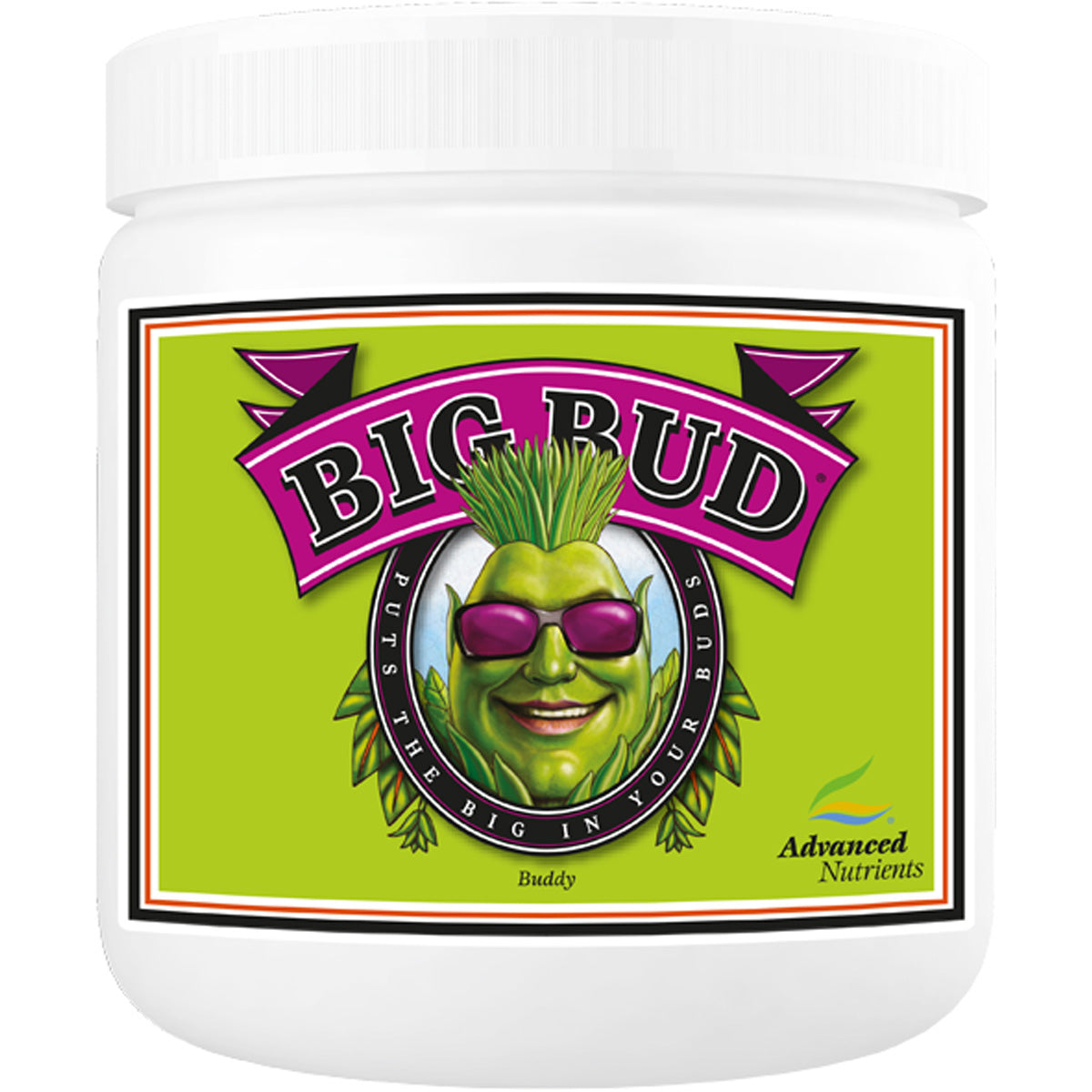
Advanced Nutrients Big Bud Powder - 500 Grams
Newmarket, Ontario (Head Office)
1175 Stellar Drive, Unit #5
Newmarket, ON L3Y 7B8
- Mon10:00am–6:00pm
- Tue10:00am–6:00pm
- Wed10:00am–6:00pm
- Thu10:00am–6:00pm
- Fri10:00am–6:00pm
- Sat10:00am–4:00pm
- SunClosed


Barrie, Ontario
106 Saunders Road, Unit #2A
Barrie, ON L4N 9A8
- Mon10:00am–5:00pm
- Tue10:00am–5:00pm
- Wed10:00am–5:00pm
- Thu10:00am–5:00pm
- Fri10:00am–5:00pm
- Sat10:00am–3:00pm
- SunClosed
Winnipeg, Manitoba
915 McLeod Avenue, Unit #4
Winnipeg, MB R2G 0Y4
- Mon10:00am–6:00pm
- Tue10:00am–6:00pm
- Wed10:00am–6:00pm
- Thu10:00am–6:00pm
- Fri10:00am–6:00pm
- Sat11:00am–3:00pm
- SunClosed
Sign in required
Back-in-stock notification
Select the store locations where you’d like to pick up this item, or choose Shipping to have it delivered.
Special order request
Select the store where you’d prefer to pick up your special order. To choose a different store, unselect your current choice first.
Description
Description
Description
Big Bud® Powder is built around an ideal pk ratio, using highly absorbable forms of potassium and phosphorus in precise ratios for a thriving bloom phase. That balanced approach is intended to help pack on flower weight while helping avoid phosphorus overload, keeping bloom support focused and controlled. For a compact facts layer, Big Bud® Powder is rated 0-15-35, placing the emphasis on phosphorus and potassium during the flowering window.
This water-soluble powder bloom booster is made with monopotassium phosphate, potassium sulfate, and whey protein hydrolysate. Advanced Nutrients positions the formula around high-quality raw materials chosen to provide optimum conditions to strengthen and bulk floral structures, supporting fuller flower formation and a more productive mid bloom phase.
Big Bud® Powder is designed for diverse hydroponic growing media and continuous liquid-feed growing systems such as aeroponics, drip irrigation and emitters, nft, flood and drain, and deep water culture. It’s also listed for regular watering and watering systems, with indoor and outdoor suitability and coco coir safe flexibility. This is a good fit for growers who want a mid bloom phase bloom booster that delivers an ideal pk ratio in a water-soluble powder format for consistent flowering support across modern hydroponic or irrigation-based setups.
How to use
- Week 1: do not use this product during this week of vegetative growth.
- Week 2: do not use this product during this week of vegetative growth.
- Week 3: do not use this product during this week of vegetative growth.
- Week 4: do not use this product during this week of vegetative growth.
Flowering stage - Big Bud Powder:
- Week 1: do not use this product during this week of flowering.
- Week 2: mix 0.5 g per litre of water or nutrient solution.
- Week 3: mix 0.5 g per litre of water or nutrient solution.
- Week 4: mix 0.5 g per litre of water or nutrient solution.
- Week 5: mix 0.5 g per litre of water or nutrient solution.
- Week 6: do not use this product during this week of flowering.
- Week 7: do not use this product during this week of flowering.
- Week 8: do not use this product during this week of flowering.
Product benefits
Guaranteed analysis
Derived from
How To Use
How To Use
How to Use Advanced Nutrients Big Bud Powder - 500 Grams
Step-by-step mixing and feeding instructions for Advanced Nutrients Big Bud Powder - 500 Grams.
Mixing & preparation
Fill your reservoir or watering container with clean, room-temperature water first. Shake the bottle of Advanced Nutrients Big Bud Powder - 500 Grams well before every use. Using the feeding schedule below, measure the recommended dose and add it directly to the water while stirring. Allow the solution to mix fully before adding any other fertilizers, additives, or supplements.
Always add nutrients to water — not the other way around. Mix thoroughly between products to ensure an even, stable nutrient solution.
Week-by-week feeding schedule
Vegetative stage — Big Bud Powder
- Week 1: do not use this product during this week of vegetative growth.
- Week 2: do not use this product during this week of vegetative growth.
- Week 3: do not use this product during this week of vegetative growth.
- Week 4: do not use this product during this week of vegetative growth.
Flowering stage — Big Bud Powder
- Week 1: do not use this product during this week of flowering.
- Week 2: mix 0.5 g per litre of water or nutrient solution.
- Week 3: mix 0.5 g per litre of water or nutrient solution.
- Week 4: mix 0.5 g per litre of water or nutrient solution.
- Week 5: mix 0.5 g per litre of water or nutrient solution.
- Week 6: do not use this product during this week of flowering.
- Week 7: do not use this product during this week of flowering.
- Week 8: do not use this product during this week of flowering.
Tips for best results
- Maintain pH and EC/ppm within the range recommended for your growing medium and crop.
- Use fresh nutrient solution whenever possible and avoid leaving mixed solution stagnant for long periods.
- Store nutrients in a cool, dark place away from direct sunlight and extreme temperatures.
- Keep bottles tightly sealed when not in use to reduce air exposure and preserve product quality.
- Use clean measuring tools and regularly rinse or clean your reservoir, lines, and irrigation equipment.
Common mistakes to avoid
- Do not mix different nutrients or additives together in concentrated form before adding them to water.
- Do not exceed the recommended dosage unless you are following a tested, crop-specific feeding plan.
- Do not skip pH or EC/ppm checks when growing in hydroponic or soilless systems.
- Do not allow the nutrient solution to freeze or overheat, as this can damage the formulation.
- Do not ignore the directions on the product label for your specific crop, growth stage, and system type.
Warnings & Safety
Warnings & Safety
Important – Safety Information
General Safety Precautions
First Aid – Skin Contact
First Aid – Eye Contact
First Aid – Ingestion
First aid – Inhalation
Storage And Handling
Important – Medical
Guaranteed Minimum Analysis
Guaranteed Minimum Analysis
| Total Phosphate (P2O5) | 15.0% |
|---|---|
| Sulfur (S) | 10.0% |
Frequently Asked Questions
Frequently Asked Questions
Why is total phosphate (P2O5) important for plant growth?
Why is sulfur (S) important for plant growth?
What does ascorbic acid do for plant growth?
Why is citric acid important for plant growth?
Is potassium sulfate better than other potassium sources for sensitive plants?
What does monopotassium phosphate do for flowering plants?
What does whey protein hydrolysate do for plants?
What do L-amino acids do for plants?
Safety & Technical Documents
Safety & Technical Documents
Frequently purchased together
-
Advanced Nutrients Bud Blood - 300 Grams
Regular price $145.99Regular price -
Advanced Nutrients Bud Candy - 1 Litre
Regular price $36.99Regular price -
Advanced Nutrients Bud Factor X - 500 ML
Regular price $59.99Regular price -
Advanced Nutrients Bud Ignitor - 500 ML
Regular price $57.99Regular price
Vegetative — Big Bud Powder
-
—
Flowering — Big Bud Powder
-
—