Frequently purchased together
-
My Good Green Bokashi Plus Bran Compost Accelerator - 1 Kg
Regular price $16.78Regular price -
My Good Green Bokashi Pro-Bloom Top Dress & Compost Tea - 1 Kg
Regular price $27.99Regular price -
My Good Green Ferminator Plant Wash - 1 Litre
Regular price $66.88Regular price -
My Good Green Ferminator Plant Wash - 500 ML
Regular price $41.88Regular price


Reviews are submitted by verified customers after purchase. This section shows a summary of product feedback rather than the full individual review list.

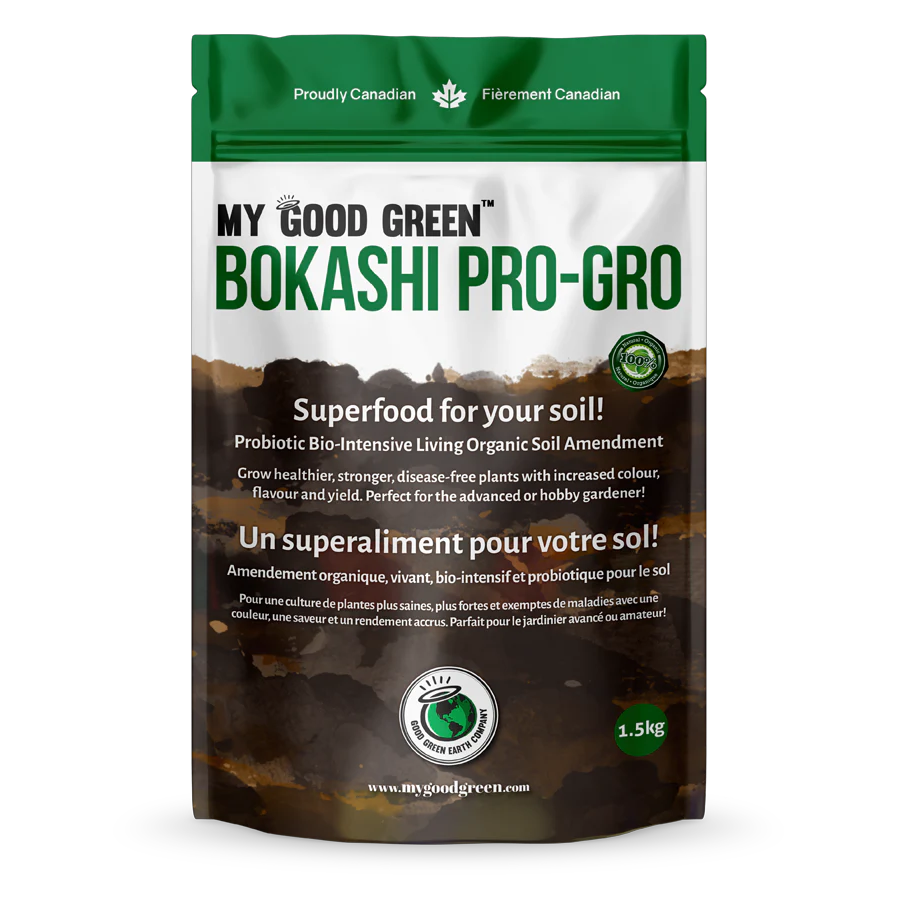
My Good Green Bokashi Pro-Gro - 1.5 KG
Regular price
$44.99
Regular price
Sale price
$44.99
Shipping calculated at checkout.
Store Availability
Newmarket, Ontario (Head Office)
1175 Stellar Drive, Unit #5
Newmarket, ON L3Y 7B8
- Mon10:00am–6:00pm
- Tue10:00am–6:00pm
- Wed10:00am–6:00pm
- Thu10:00am–6:00pm
- Fri10:00am–6:00pm
- Sat10:00am–4:00pm
- SunClosed


Barrie, Ontario
106 Saunders Road, Unit #2A
Barrie, ON L4N 9A8
- Mon10:00am–5:00pm
- Tue10:00am–5:00pm
- Wed10:00am–5:00pm
- Thu10:00am–5:00pm
- Fri10:00am–5:00pm
- Sat10:00am–3:00pm
- SunClosed
Winnipeg, Manitoba
915 McLeod Avenue, Unit #4
Winnipeg, MB R2G 0Y4
- Mon10:00am–6:00pm
- Tue10:00am–6:00pm
- Wed10:00am–6:00pm
- Thu10:00am–6:00pm
- Fri10:00am–6:00pm
- Sat11:00am–3:00pm
- SunClosed
Estimated Delivery Date
Order Within
—
Province
Est. Delivery
—
Quantity
Qualifies for Free Shipping Promotion
Sign in required
Back-in-stock notification
Select the store locations where you’d like to pick up this item, or choose Shipping to have it delivered.
Email notifications are turned off
Turn on email marketing to receive back-in-stock notifications.
Open account profile
Special order request
Select the store where you’d prefer to pick up your special order. To choose a different store, unselect your current choice first.
Description
Description
Description
My Good Green Bokashi Pro-Gro is a My Good Green fermented fertilizer for soil health, built as a living organic fertilizer and soil amendment for lawns and gardens. It’s made for growers who want a microbe-forward organic fertilizer that supports stronger plant performance and better soil function, without turning gardening into a complicated routine.
Bokashi Pro-Gro is made from wheat bran with a blend of vitamins, minerals, and a superfood complex, backed by a probiotic consortium. The formula is produced through a unique acidic anaerobic fermentation process that incorporates beneficial bacteria, yeast, and other microorganisms. That fermented organic soil approach is the differentiator here: it’s designed to help restore what everyday growing can take out of soil, supporting a more sustainable micro ecology that keeps working over time.
In the garden, Bokashi Pro-Gro is positioned to help plants flourish and to support healthier plants in just weeks. My Good Green also highlights increased nutrient density, and ties that benefit to fruits and vegetables, along with improvements in flavour, colour, and yield. If your priority is better-looking harvests with richer eating quality, those plant-focused outcomes are exactly what this fermented fertilizer is built to support.
Bokashi Pro-Gro is also described as helping increase uptake of organic matter, which matters for growers aiming for soil that feels more alive and responsive across the season. The brand further notes reduced watering needs and lower nutrient costs as practical, real-world advantages tied to how the product supports soil performance. A final environmental note is included as well: the runoff is described as beneficial for the environment, making this a clean fit for growers who care about the downstream impact of their inputs.
This product is suited for several common garden routines without being locked to a single style. It’s described for lawns and gardens, and it’s also positioned for container top dressing. Bokashi Pro-Gro is also presented as suitable for compost tea and foliar application, offering flexibility for growers who like microbial support beyond the soil surface.
My Good Green Bokashi Pro-Gro is a good fit for gardeners who want a wheat-bran-based fermented fertilizer with beneficial microbes, vitamins, minerals, and a superfood complex—especially for anyone focused on healthier plants, improved flavour and colour in fruits and vegetables, and a stronger, more resilient soil ecology.
Bokashi Pro-Gro is made from wheat bran with a blend of vitamins, minerals, and a superfood complex, backed by a probiotic consortium. The formula is produced through a unique acidic anaerobic fermentation process that incorporates beneficial bacteria, yeast, and other microorganisms. That fermented organic soil approach is the differentiator here: it’s designed to help restore what everyday growing can take out of soil, supporting a more sustainable micro ecology that keeps working over time.
In the garden, Bokashi Pro-Gro is positioned to help plants flourish and to support healthier plants in just weeks. My Good Green also highlights increased nutrient density, and ties that benefit to fruits and vegetables, along with improvements in flavour, colour, and yield. If your priority is better-looking harvests with richer eating quality, those plant-focused outcomes are exactly what this fermented fertilizer is built to support.
Bokashi Pro-Gro is also described as helping increase uptake of organic matter, which matters for growers aiming for soil that feels more alive and responsive across the season. The brand further notes reduced watering needs and lower nutrient costs as practical, real-world advantages tied to how the product supports soil performance. A final environmental note is included as well: the runoff is described as beneficial for the environment, making this a clean fit for growers who care about the downstream impact of their inputs.
This product is suited for several common garden routines without being locked to a single style. It’s described for lawns and gardens, and it’s also positioned for container top dressing. Bokashi Pro-Gro is also presented as suitable for compost tea and foliar application, offering flexibility for growers who like microbial support beyond the soil surface.
My Good Green Bokashi Pro-Gro is a good fit for gardeners who want a wheat-bran-based fermented fertilizer with beneficial microbes, vitamins, minerals, and a superfood complex—especially for anyone focused on healthier plants, improved flavour and colour in fruits and vegetables, and a stronger, more resilient soil ecology.
Product benefits
Vegetative Stage; Indoor; Outdoor; Coco Coir Safe; Soil; Soilless; Organic; Soil Biology Support; Organic Matter; Plant Health; Better Nutrient Uptake; Better Flavor; Plant Vigor; Quality Yield Support; Multi-Media Ready.
Guaranteed analysis
Total Nitrogen (N): 2.57%; Water Soluble Nitrogen (N): 1.21%; Water Insoluble Nitrogen (N): 1.36%; Available Phosphoric Acid (P2O5): 2.5%; Soluble Potash (K2O): 1.7%; Calcium (Ca): 1.7%; Ascophyllum Nodosum: 0.00025%; Total Magnesium (Mg): 0.6%; Sodium (Na): 0.15%; Organic Matter: 86.6%; Vitamin B1: 0.00005%; Vitamin B2: 0.00005%; Vitamin B3: 0.00005%; Vitamin B5: 0.00005%.
Derived from
Wheat Bran; Carbonatite; Hemp Seed Protein Powder; Blackstrap Molasses; Kelp Meal; Sea Salt; Pickling Salt.
Warnings & Safety
Warnings & Safety
Important – Safety Information
General Safety Precautions
First Aid – Skin Contact
First Aid – Eye Contact
First Aid – Ingestion
First aid – Inhalation
Storage And Handling
Important – Medical
Guaranteed Minimum Analysis
Guaranteed Minimum Analysis
| Total Nitrogen (N) | 2.57% |
|---|---|
| Water Soluble Nitrogen (N) | 1.21% |
| Water Insoluble Nitrogen (N) | 1.36% |
| Available Phosphoric Acid (P2O5) | 2.5% |
| Soluble Potash (K2O) | 1.7% |
| Calcium (Ca) | 1.7% |
| Ascophyllum Nodosum | 0.00025% |
| Total Magnesium (Mg) | 0.6% |
| Sodium (Na) | 0.15% |
| Organic Matter | 86.6% |
| Vitamin B1 | 0.00005% |
| Vitamin B2 | 0.00005% |
| Vitamin B3 | 0.00005% |
| Vitamin B5 | 0.00005% |
Frequently Asked Questions
Frequently Asked Questions
Why is total nitrogen (N) important for plant growth, and what makes it different from other nutrients?
Why is water-soluble nitrogen important for plant growth, and what makes it unique compared to other nitrogen sources?
Why is water insoluble nitrogen important for plant growth?
What does available phosphoric acid (P₂O₅) do for plants, and how is it different from available phosphate?
Why is soluble potash (K2O) important for plants?
Why is calcium important for plant growth?
What does ascophyllum nodosum do for plants?
Why is total magnesium (Mg) important for plant growth?
Why is sodium (Na) important to manage in plant growing?
Why is organic matter important for plant growth?
Why is vitamin B1 important for plants after stress or transplanting?
Why is vitamin B2 important for plants?
Why is vitamin B3 important for plants?
Why is vitamin B5 important for plants?
What makes carbonatite unique for plant growing compared to more common mineral amendments?
Does blackstrap molasses actually feed plants or just soil microbes?
Is wheat bran good for plant soil?
Can hemp seed protein powder replace regular nitrogen fertilizer for plants?
What does kelp meal do for plants?
Is sea salt good for plants?
Is pickling salt safe to use around plants?
Frequently purchased together
-
My Good Green Bokashi Plus Bran Compost Accelerator - 1 Kg
Regular price $16.78Regular price -
My Good Green Bokashi Pro-Bloom Top Dress & Compost Tea - 1 Kg
Regular price $27.99Regular price -
My Good Green Ferminator Plant Wash - 1 Litre
Regular price $66.88Regular price -
My Good Green Ferminator Plant Wash - 500 ML
Regular price $41.88Regular price
Reviews are submitted by verified customers after purchase. This section shows a summary of product feedback rather than the full individual review list.