Frequently purchased together
-
Hydrofarm Measuring Cup - 500 ML
Regular price $4.99Regular price -
Hydrofarm Measuring Cup - 1000 ML
Regular price $7.56Regular price -
Mondi Mist N' Spray Deluxe Tank Sprayer - 1.2 Litre
Regular price $23.63Regular price -
Mondi Mist N' Spray Deluxe Tank Sprayer - 2 Litre
Regular price $24.88Regular price


Reviews are submitted by verified customers after purchase. This section shows a summary of product feedback rather than the full individual review list.

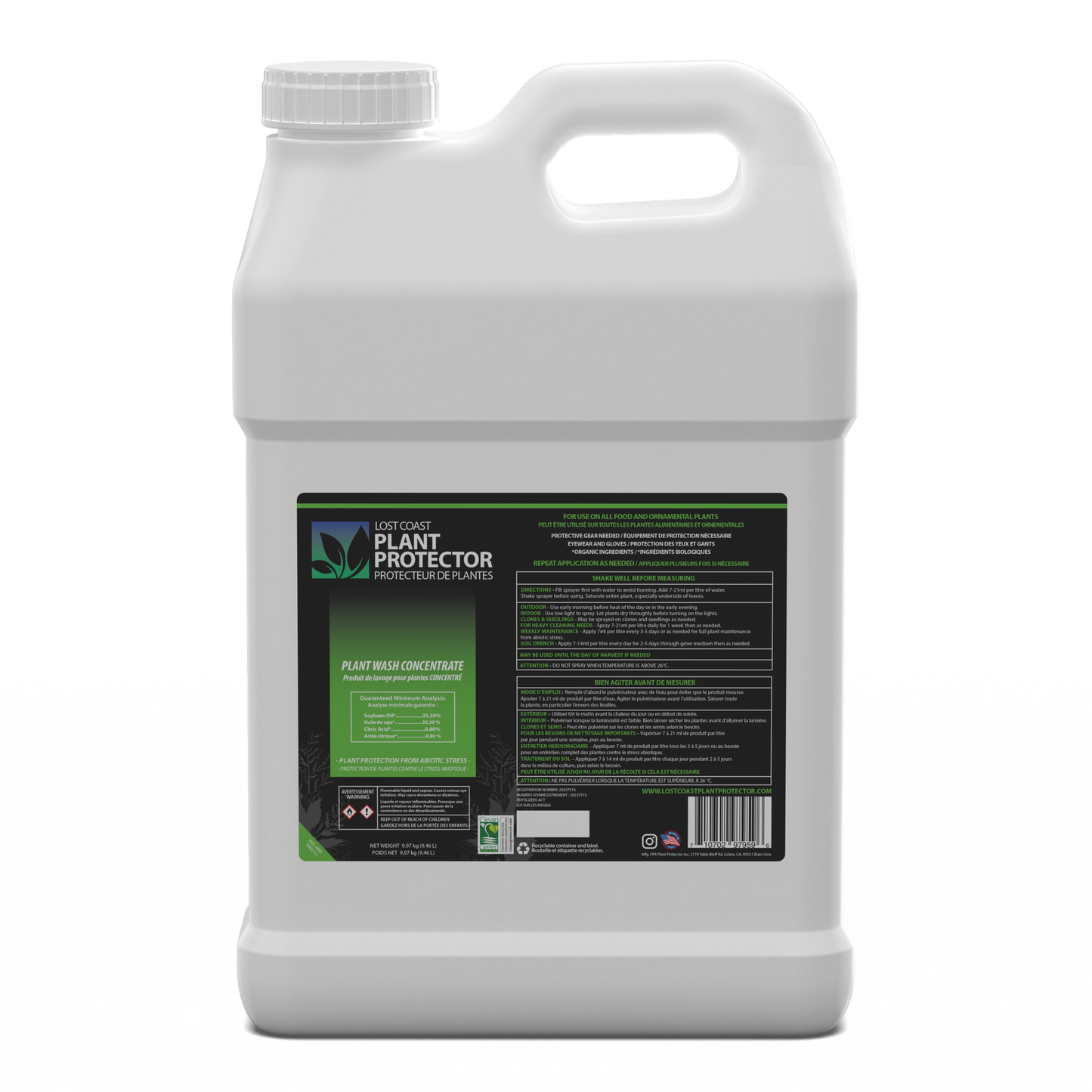
Lost Coast Plant Protector - 10 Litre
Store Availability
Newmarket, Ontario (Head Office)
1175 Stellar Drive, Unit #5
Newmarket, ON L3Y 7B8
- Mon10:00am–6:00pm
- Tue10:00am–6:00pm
- Wed10:00am–6:00pm
- Thu10:00am–6:00pm
- Fri10:00am–6:00pm
- Sat10:00am–4:00pm
- SunClosed


Barrie, Ontario
106 Saunders Road, Unit #2A
Barrie, ON L4N 9A8
- Mon10:00am–5:00pm
- Tue10:00am–5:00pm
- Wed10:00am–5:00pm
- Thu10:00am–5:00pm
- Fri10:00am–5:00pm
- Sat10:00am–3:00pm
- SunClosed
Winnipeg, Manitoba
915 McLeod Avenue, Unit #4
Winnipeg, MB R2G 0Y4
- Mon10:00am–6:00pm
- Tue10:00am–6:00pm
- Wed10:00am–6:00pm
- Thu10:00am–6:00pm
- Fri10:00am–6:00pm
- Sat11:00am–3:00pm
- SunClosed
Quantity
Not Eligible for Free Shipping
Sign in required
Back-in-stock notification
Select the store locations where you’d like to pick up this item, or choose Shipping to have it delivered.
Email notifications are turned off
Turn on email marketing to receive back-in-stock notifications.
Open account profile
Special order request
Select the store where you’d prefer to pick up your special order. To choose a different store, unselect your current choice first.
Description
Description
Description
Lost Coast Plant Protector is a liquid concentrate natural plant wash that helps protect plants by controlling soft-bodied insects and reducing powdery mildew, mold, and fungus.
Built for clean, confidence-inspiring plant care, this plant protector targets common garden pressure without harsh, heavy-handed chemistry. The formula works through suffocation and dehydration, focusing on soft-bodied insects, their larvae, and eggs. It also supports powdery mildew control and helps reduce mold and fungus on contact, making it a practical choice when you want one product that covers multiple problems without overcomplicating your routine.
The ingredients are straightforward and intentionally chosen. Lost Coast Plant Protector includes soy oil, peppermint essential oil, and citric acid as key actives, supported by a plant-derived soap blend, cosmetic grade isopropyl alcohol, and sodium citrate. Together, these inputs help the formula spread evenly across plant surfaces while keeping the approach simple and plant-first. The ingredient quality is described in plain terms as biodegradable, food grade, and cosmetic grade, which aligns well with growers who prefer an ingredient-forward option in their garden toolkit.
Beyond pest and mildew pressure, this natural plant wash is also positioned for abiotic stress reduction. Lost Coast Plant Protector supports your plant’s ability to withstand abiotic stress linked to extreme conditions, including excess heat and cold as well as drought or flood stress. That makes it useful not only when problems show up, but also when environmental swings are part of the growing season and you want added support for overall plant resilience.
Day-to-day, the experience is designed to stay tidy. It dries off quickly and is described as gentle plant care, which matters when you want a dependable routine product that doesn’t leave your plants looking weighed down. It’s also presented as beneficial insect friendly, with claims that it will not harm bees, ladybugs, and praying mantis—an important consideration for gardeners who value a balanced yard and garden ecosystem.
For setup flexibility, Lost Coast Plant Protector is suitable for foliar application, fitting naturally into houseplant care, yard and garden maintenance, and broader horticultural settings where consistent coverage and clean handling matter. This is a good fit for growers who want a biodegradable ingredients plant protector with soy oil, peppermint essential oil, and citric acid, aimed at soft-bodied insect control, powdery mildew control, and abiotic stress reduction in a simple, plant-centered format.
Built for clean, confidence-inspiring plant care, this plant protector targets common garden pressure without harsh, heavy-handed chemistry. The formula works through suffocation and dehydration, focusing on soft-bodied insects, their larvae, and eggs. It also supports powdery mildew control and helps reduce mold and fungus on contact, making it a practical choice when you want one product that covers multiple problems without overcomplicating your routine.
The ingredients are straightforward and intentionally chosen. Lost Coast Plant Protector includes soy oil, peppermint essential oil, and citric acid as key actives, supported by a plant-derived soap blend, cosmetic grade isopropyl alcohol, and sodium citrate. Together, these inputs help the formula spread evenly across plant surfaces while keeping the approach simple and plant-first. The ingredient quality is described in plain terms as biodegradable, food grade, and cosmetic grade, which aligns well with growers who prefer an ingredient-forward option in their garden toolkit.
Beyond pest and mildew pressure, this natural plant wash is also positioned for abiotic stress reduction. Lost Coast Plant Protector supports your plant’s ability to withstand abiotic stress linked to extreme conditions, including excess heat and cold as well as drought or flood stress. That makes it useful not only when problems show up, but also when environmental swings are part of the growing season and you want added support for overall plant resilience.
Day-to-day, the experience is designed to stay tidy. It dries off quickly and is described as gentle plant care, which matters when you want a dependable routine product that doesn’t leave your plants looking weighed down. It’s also presented as beneficial insect friendly, with claims that it will not harm bees, ladybugs, and praying mantis—an important consideration for gardeners who value a balanced yard and garden ecosystem.
For setup flexibility, Lost Coast Plant Protector is suitable for foliar application, fitting naturally into houseplant care, yard and garden maintenance, and broader horticultural settings where consistent coverage and clean handling matter. This is a good fit for growers who want a biodegradable ingredients plant protector with soy oil, peppermint essential oil, and citric acid, aimed at soft-bodied insect control, powdery mildew control, and abiotic stress reduction in a simple, plant-centered format.
Product benefits
Vegetative Stage; Flowering Stage; Indoor; Outdoor; Regular Watering; Coco Coir Safe; Foliar Application; Soil; Soilless; Organic; Plant Wash; Foliar Ready; Root Drench; Easy Mixing; Plant Health.
Guaranteed analysis
Soybean Oil: 35.3%; Citric Acid: 0.8%.
Derived from
Soy Oil; Peppermint Essential Oil; Citric Acid; Soap; Isopropyl Alcohol; Sodium Citrate.
Specifications
Organic: Yes.
Warnings & Safety
Warnings & Safety
General Safety Precautions
First Aid – Skin Contact
First Aid – Eye Contact
First Aid – Ingestion
First aid – Inhalation
Storage And Handling
Important – Medical
Pest & Disease Control Safety
Label & Manufacturer Directions
Application & Placement Safety
Liquid & Spray Handling
Guaranteed Minimum Analysis
Guaranteed Minimum Analysis
| Soybean Oil | 35.3% |
|---|---|
| Citric Acid | 0.8% |
Specifications
Specifications
| Organic | Yes |
|---|
Frequently Asked Questions
Frequently Asked Questions
Why is soybean oil important in plant pest sprays, and what makes it unique?
Why is citric acid important for plant growth?
Is soy oil a fertilizer or a pest-control spray ingredient?
Can peppermint essential oil harm plant leaves?
Can soap sprays harm plant leaves even if they control pests?
Can isopropyl alcohol damage plant leaves when used in pest sprays?
What does sodium citrate do in a nutrient solution for plants?
Safety & Technical Documents
Safety & Technical Documents
Frequently purchased together
-
Hydrofarm Measuring Cup - 500 ML
Regular price $4.99Regular price -
Hydrofarm Measuring Cup - 1000 ML
Regular price $7.56Regular price -
Mondi Mist N' Spray Deluxe Tank Sprayer - 1.2 Litre
Regular price $23.63Regular price -
Mondi Mist N' Spray Deluxe Tank Sprayer - 2 Litre
Regular price $24.88Regular price
Reviews are submitted by verified customers after purchase. This section shows a summary of product feedback rather than the full individual review list.