Frequently purchased together
-
Growth Technology Complete Focus - 1 Litre
Regular price $32.14Regular price -
Growth Technology GT Foliar - 500 ML
Regular price $19.99Regular price -
Growth Technology GT Silica - 1 Litre
Regular price $31.16Regular price -
Growth Technology Foliage Focus - 250 ML
Regular price $18.50Regular price


Reviews are submitted by verified customers after purchase. This section shows a summary of product feedback rather than the full individual review list.

Lechuza Pon Substrate - 3 Litres
Regular price
$20.00
Regular price
Sale price
$20.00
Shipping calculated at checkout.
Store Availability
Newmarket, Ontario (Head Office)
1175 Stellar Drive, Unit #5
Newmarket, ON L3Y 7B8
- Mon10:00am–6:00pm
- Tue10:00am–6:00pm
- Wed10:00am–6:00pm
- Thu10:00am–6:00pm
- Fri10:00am–6:00pm
- Sat10:00am–4:00pm
- SunClosed


Barrie, Ontario
106 Saunders Road, Unit #2A
Barrie, ON L4N 9A8
- Mon10:00am–5:00pm
- Tue10:00am–5:00pm
- Wed10:00am–5:00pm
- Thu10:00am–5:00pm
- Fri10:00am–5:00pm
- Sat10:00am–3:00pm
- SunClosed
Winnipeg, Manitoba
915 McLeod Avenue, Unit #4
Winnipeg, MB R2G 0Y4
- Mon10:00am–6:00pm
- Tue10:00am–6:00pm
- Wed10:00am–6:00pm
- Thu10:00am–6:00pm
- Fri10:00am–6:00pm
- Sat11:00am–3:00pm
- SunClosed
Estimated Delivery Date
Order Within
—
Province
Est. Delivery
—
Quantity
Not Eligible for Free Shipping
Sign in required
Back-in-stock notification
Select the store locations where you’d like to pick up this item, or choose Shipping to have it delivered.
Email notifications are turned off
Turn on email marketing to receive back-in-stock notifications.
Open account profile
Special order request
Select the store where you’d prefer to pick up your special order. To choose a different store, unselect your current choice first.
Description
Description
Description
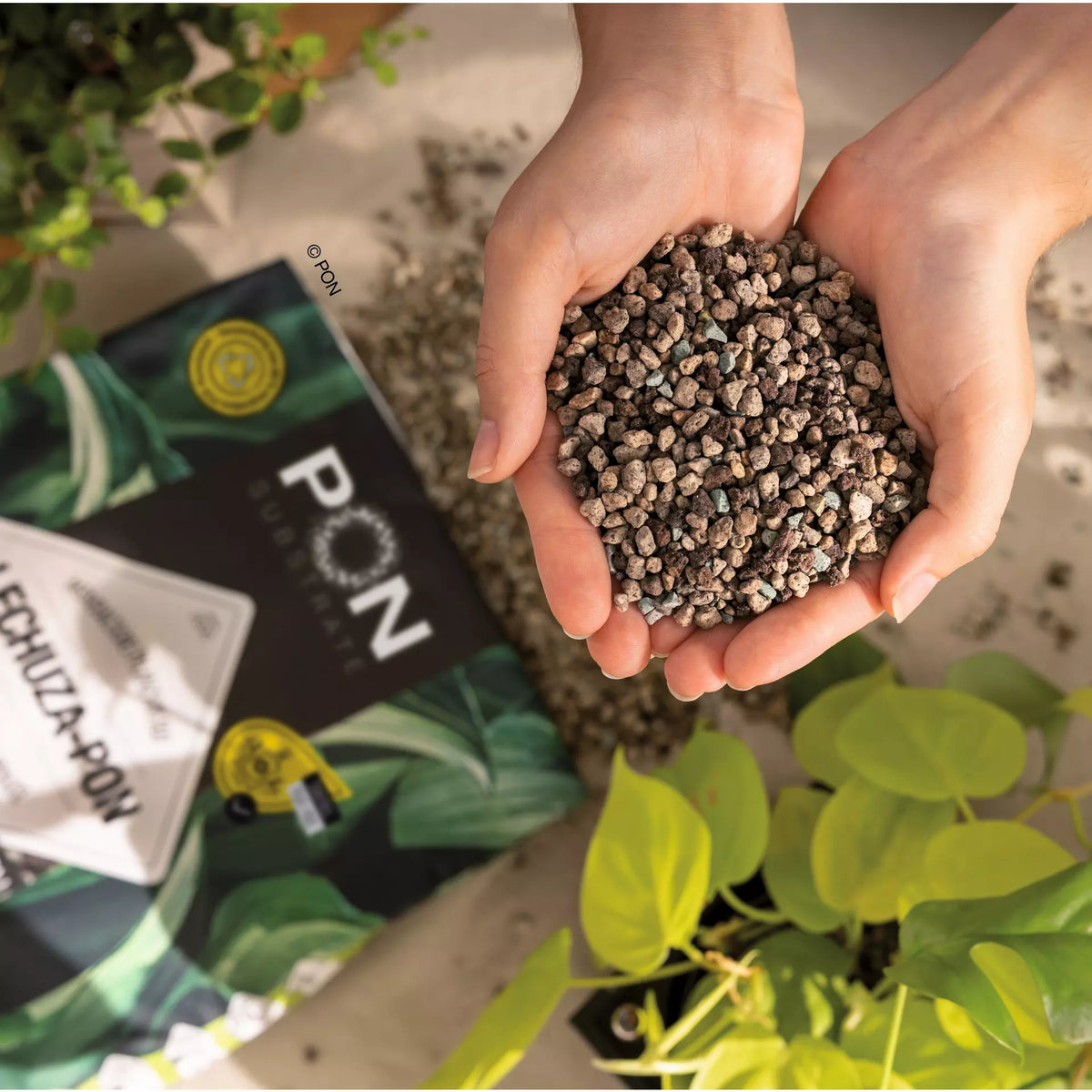
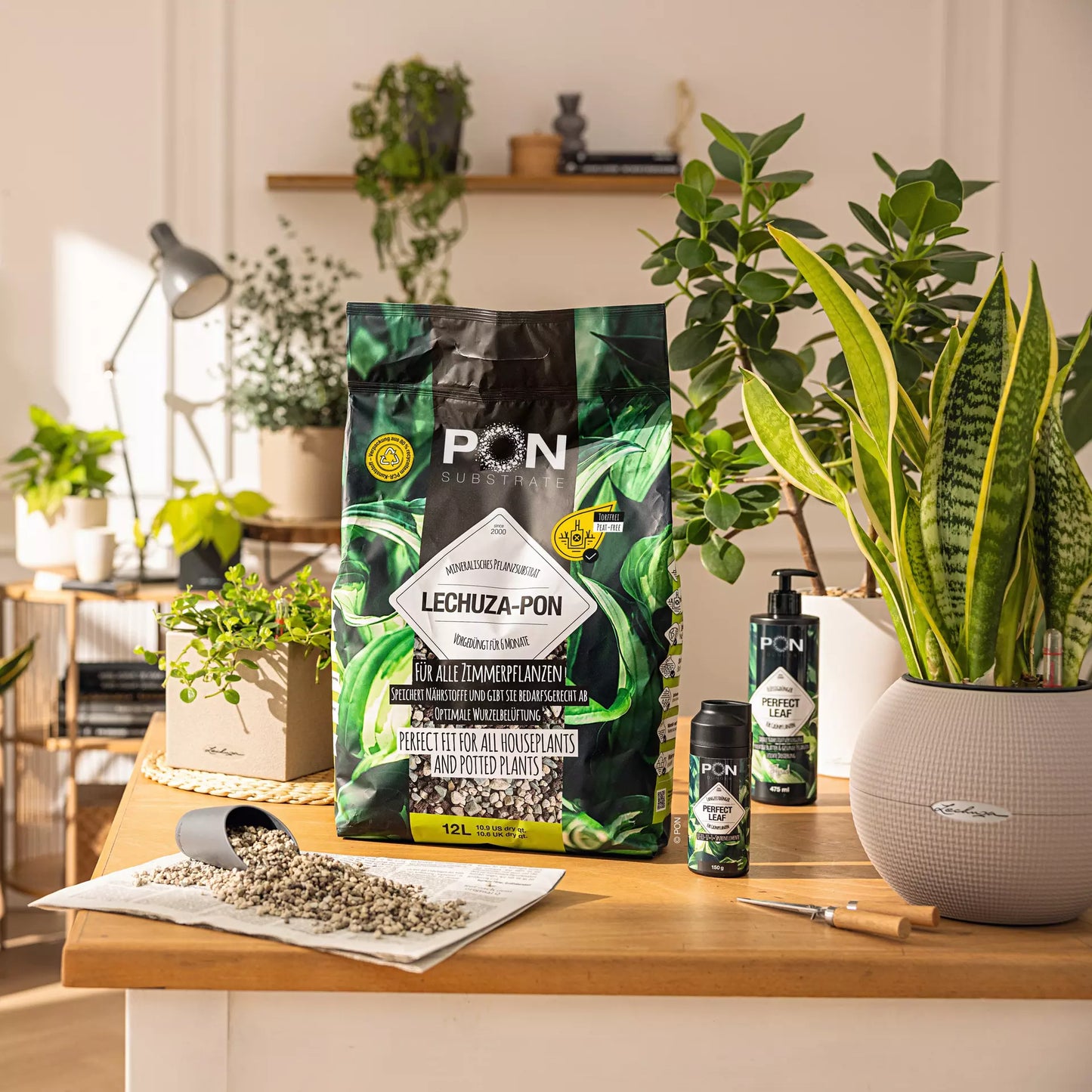
Lechuza Pon is a Lechuza mineral plant substrate for houseplants, made to support root aeration, drainage, and steady nutrient supply in a clean, soil-free growing medium. This purely mineral plant substrate is a plant potting substrate and indoor plant growing medium built around the needs of container-grown plants, especially shoppers looking for a tidy, peat-free option for everyday plant care.
The formula is designed around excellent drainage properties and optimal root aeration, helping the root zone stay open, air-permeable, and less prone to waterlogging stress. Its special composition also acts as a reservoir for water and nutrients, holding them in the substrate structure and releasing them back to plants as needed. That makes Lechuza Pon a strong fit for plant owners who want a more controlled substrate feel without heavy, clumpy soil.
Lechuza Pon is made from zeolite, pumice, lava, and slow-release fertilizer. The mineral base helps the substrate remain volume stable, so it keeps its structure and does not compact or clump easily over time. The added long-term fertilizer supports lush green growth, while the stable pH value helps create steadier root conditions for houseplants. It is also suitable for edible plants, giving it broader flexibility for indoor plant collections.
This peat-free mineral substrate is suitable for all houseplants and is closely tied to the original Lechuza irrigation system. Its nutrient and water storage, high drainage ability, and reusable structure make it practical for decorative indoor planters, self-watering planters, and clean plant displays. The purely mineral base also gives the substrate a cleaner profile for indoor spaces where soil mess, fungus gnats, and mold are common concerns.
Lechuza Pon is well suited for plant owners who want a professional quality, peat-free plant substrate that supports root aeration, nutrient supply, water storage, and stable structure in one simple medium.
The formula is designed around excellent drainage properties and optimal root aeration, helping the root zone stay open, air-permeable, and less prone to waterlogging stress. Its special composition also acts as a reservoir for water and nutrients, holding them in the substrate structure and releasing them back to plants as needed. That makes Lechuza Pon a strong fit for plant owners who want a more controlled substrate feel without heavy, clumpy soil.
Lechuza Pon is made from zeolite, pumice, lava, and slow-release fertilizer. The mineral base helps the substrate remain volume stable, so it keeps its structure and does not compact or clump easily over time. The added long-term fertilizer supports lush green growth, while the stable pH value helps create steadier root conditions for houseplants. It is also suitable for edible plants, giving it broader flexibility for indoor plant collections.
This peat-free mineral substrate is suitable for all houseplants and is closely tied to the original Lechuza irrigation system. Its nutrient and water storage, high drainage ability, and reusable structure make it practical for decorative indoor planters, self-watering planters, and clean plant displays. The purely mineral base also gives the substrate a cleaner profile for indoor spaces where soil mess, fungus gnats, and mold are common concerns.
Lechuza Pon is well suited for plant owners who want a professional quality, peat-free plant substrate that supports root aeration, nutrient supply, water storage, and stable structure in one simple medium.
How to use
Planting Instructions:
Step 1: add the drainage layer.
Add LECHUZA-PON to the bottom of the planter, directly on top of the separator. This layer helps move water from the reservoir up to the plant.
Next, add a thin layer of your chosen potting mix or substrate. Use just enough to position the plant at the right height inside the planter.
Step 2: place your plant.
Place the plant into the planter. You do not need to remove all of the soil from the roots. Keeping some of the existing soil around the roots can help the plant settle in more easily.
Step 3: fill the planter.
Fill the rest of the planter with your chosen substrate until the plant is secure and sitting at the proper height. Gently firm the substrate around the plant so it stays in place.
Step 4: water from the top at first.
For the first 12 weeks, water your plant from above, directly onto the substrate, just like you would in a regular pot.
During this adjustment period, only water as much as the plant can take up. Try to keep little to no water sitting in the reservoir until the plant has had time to grow into the self-watering system.
Step 1: add the drainage layer.
Add LECHUZA-PON to the bottom of the planter, directly on top of the separator. This layer helps move water from the reservoir up to the plant.
Next, add a thin layer of your chosen potting mix or substrate. Use just enough to position the plant at the right height inside the planter.
Step 2: place your plant.
Place the plant into the planter. You do not need to remove all of the soil from the roots. Keeping some of the existing soil around the roots can help the plant settle in more easily.
Step 3: fill the planter.
Fill the rest of the planter with your chosen substrate until the plant is secure and sitting at the proper height. Gently firm the substrate around the plant so it stays in place.
Step 4: water from the top at first.
For the first 12 weeks, water your plant from above, directly onto the substrate, just like you would in a regular pot.
During this adjustment period, only water as much as the plant can take up. Try to keep little to no water sitting in the reservoir until the plant has had time to grow into the self-watering system.
Product benefits
Better Aeration; Drainage Support; Water Retention; Nutrient Retention; Air-Water Balance; Reduced Compaction; Slow Nutrient Release; Pest Defense; Indoor; Outdoor; Flowering Stage; Vegetative Stage; Soilless; Hydroponics.
Guaranteed analysis
Total Nitrogen (N): 14.7%; Nitrate Nitrogen (N): 6.6%; Ammoniacal Nitrogen (N): 8.1%; Phosphorus Pentoxide (P2O5): 11.0%; Potassium Oxide (K2O): 14.2%; Micronutrients / Trace Elements: 2.0 ME.
Derived from
Pumice; Lava Rock; Zeolite; Slow Release Fertilizer.
How To Use
How To Use
Planting Instructions
Guaranteed Minimum Analysis
Guaranteed Minimum Analysis
| Total Nitrogen (N) | 14.7% |
|---|---|
| Nitrate Nitrogen (N) | 6.6% |
| Ammoniacal Nitrogen (N) | 8.1% |
| Phosphorus Pentoxide (P2O5) | 11.0% |
| Potassium Oxide (K2O) | 14.2% |
| Micronutrients / Trace Elements | 2.0 ME |
Derived From
Derived From
Frequently Asked Questions
Frequently Asked Questions
Why is total nitrogen (N) important for plant growth, and what makes it different from other nutrients?
What does nitrate nitrogen (N) do for plants?
What Is ammoniacal nitrogen (N) and why do plants need It?
Why is phosphorus pentoxide (P2O5) important for plant growth?
Why is potassium oxide (K2O) important for plant growth, and what makes it different from other nutrients?
Is pumice better than perlite for plant soil mixes?
What does lava rock do for plant roots?
What does zeolite do for plants?
What makes slow release fertilizer different from regular fertilizer?
Frequently purchased together
-
Growth Technology Complete Focus - 1 Litre
Regular price $32.14Regular price -
Growth Technology GT Foliar - 500 ML
Regular price $19.99Regular price -
Growth Technology GT Silica - 1 Litre
Regular price $31.16Regular price -
Growth Technology Foliage Focus - 250 ML
Regular price $18.50Regular price
Reviews are submitted by verified customers after purchase. This section shows a summary of product feedback rather than the full individual review list.