Frequently purchased together
-
-
Jack's Classic Blossom Booster 10-30-20 - 8 OZ
Regular price $15.95Regular price -
-


Reviews are submitted by verified customers after purchase. This section shows a summary of product feedback rather than the full individual review list.

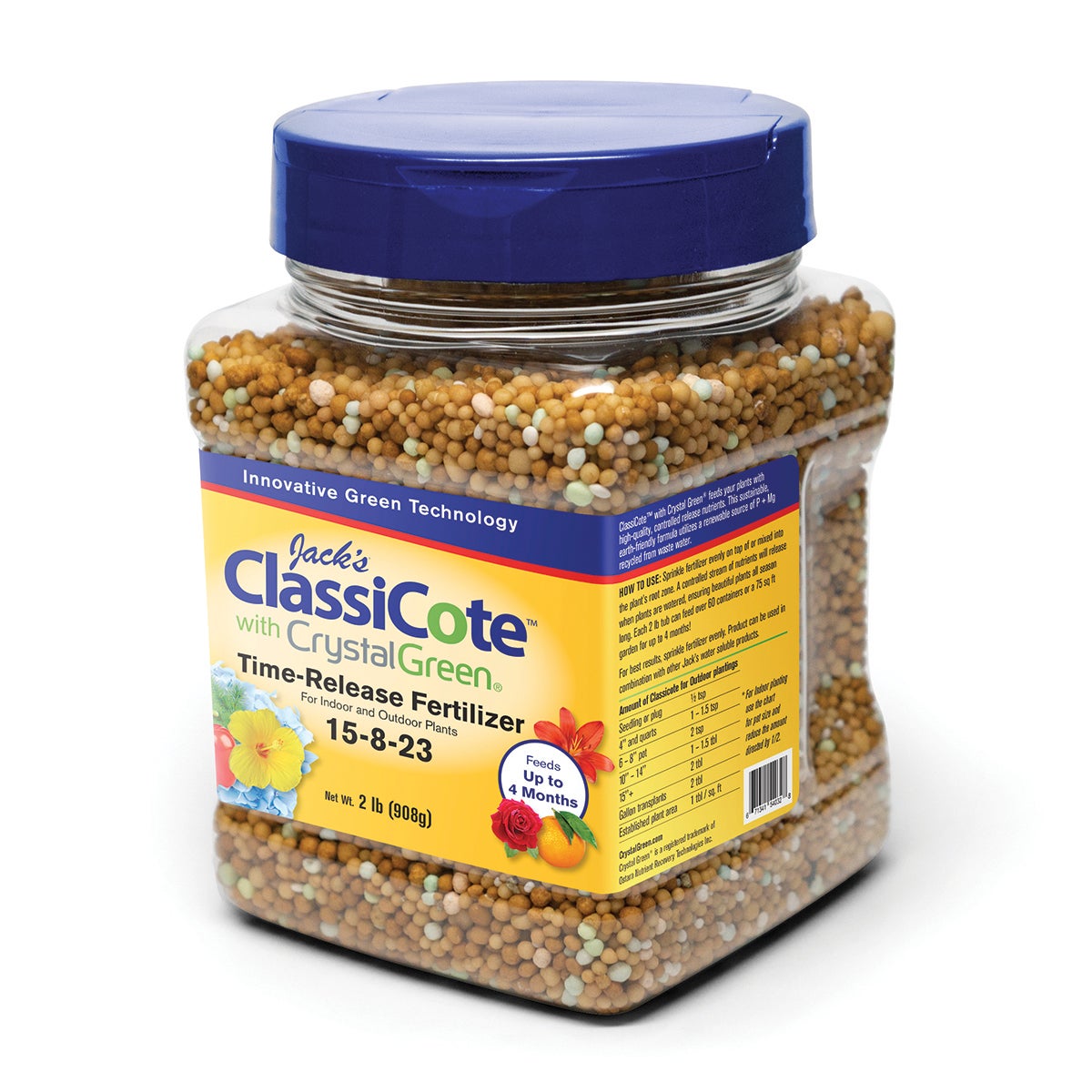
Jack's ClassiCote w/ Crystal Green Time Release - 4 lbs
Store Availability
Newmarket, Ontario (Head Office)
1175 Stellar Drive, Unit #5
Newmarket, ON L3Y 7B8
- Mon10:00am–6:00pm
- Tue10:00am–6:00pm
- Wed10:00am–6:00pm
- Thu10:00am–6:00pm
- Fri10:00am–6:00pm
- Sat10:00am–4:00pm
- SunClosed


Barrie, Ontario
106 Saunders Road, Unit #2A
Barrie, ON L4N 9A8
- Mon10:00am–5:00pm
- Tue10:00am–5:00pm
- Wed10:00am–5:00pm
- Thu10:00am–5:00pm
- Fri10:00am–5:00pm
- Sat10:00am–3:00pm
- SunClosed
Winnipeg, Manitoba
915 McLeod Avenue, Unit #4
Winnipeg, MB R2G 0Y4
- Mon10:00am–6:00pm
- Tue10:00am–6:00pm
- Wed10:00am–6:00pm
- Thu10:00am–6:00pm
- Fri10:00am–6:00pm
- Sat11:00am–3:00pm
- SunClosed
Estimated Delivery Date
Order Within
—
Province
Est. Delivery
—
Quantity
Sign in required
Back-in-stock notification
Select the store locations where you’d like to pick up this item, or choose Shipping to have it delivered.
Email notifications are turned off
Turn on email marketing to receive back-in-stock notifications.
Open account profile
Special order request
Select the store where you’d prefer to pick up your special order. To choose a different store, unselect your current choice first.
Description
Description
Description
Jack's ClassiCote w/ Crystal Green Time Release is a time-release fertilizer that provides controlled-release nutrients for sustained plant nutrition and steady green growth. This controlled-release plant fertilizer is made to deliver a consistent nutrient supply over time while supporting strong roots in a wide range of garden settings.
ClassiCote with Crystal Green 15-8-23 uses controlled release nutrients that become available in small increments, giving plants time for absorption instead of washing away. That gradual nutrient delivery helps keep growth more even, especially when you want dependable nutrition without sharp swings in availability.
A key differentiator is Crystal Green’s®, a highly pure crystalline compound made with innovative green technology that captures nutrients from wastewater. In this blend, it serves as a renewable, slowly available source of phosphorus and magnesium, turning reclaimed nutrients into practical plant nutrition. The formula is also described as a sustainable, earth-friendly way to support long-term growth.
This time-release fertilizer is formulated with enhanced micronutrient availability to round out plant nutrition beyond the primary macronutrients. The result is optimal nutrition aimed at strong roots and vital green growth, supporting healthier-looking foliage and overall plant performance across the season. The 15-8-23 NPK is a balanced option for general growing where consistent nutrition supports vigorous development.
Jack's ClassiCote w/ Crystal Green Time Release is suited for gardens and vegetables, turf, containers, and trees. It’s a good fit for growers who want controlled-release nutrients, Crystal Green’s renewable phosphorus and magnesium support, and season-long nutrition designed around strong roots and vital green growth.
ClassiCote with Crystal Green 15-8-23 uses controlled release nutrients that become available in small increments, giving plants time for absorption instead of washing away. That gradual nutrient delivery helps keep growth more even, especially when you want dependable nutrition without sharp swings in availability.
A key differentiator is Crystal Green’s®, a highly pure crystalline compound made with innovative green technology that captures nutrients from wastewater. In this blend, it serves as a renewable, slowly available source of phosphorus and magnesium, turning reclaimed nutrients into practical plant nutrition. The formula is also described as a sustainable, earth-friendly way to support long-term growth.
This time-release fertilizer is formulated with enhanced micronutrient availability to round out plant nutrition beyond the primary macronutrients. The result is optimal nutrition aimed at strong roots and vital green growth, supporting healthier-looking foliage and overall plant performance across the season. The 15-8-23 NPK is a balanced option for general growing where consistent nutrition supports vigorous development.
Jack's ClassiCote w/ Crystal Green Time Release is suited for gardens and vegetables, turf, containers, and trees. It’s a good fit for growers who want controlled-release nutrients, Crystal Green’s renewable phosphorus and magnesium support, and season-long nutrition designed around strong roots and vital green growth.
Product benefits
Vegetative Stage; Flowering Stage; Indoor; Outdoor; Regular Watering; Soil; Soilless; Slow Nutrient Release; Steady Feeding; Consistent Performance; Root Development; Phosphorus Support; Magnesium Support; Micronutrient Support; Wide Plant Use.
Guaranteed analysis
Total Nitrogen (N): 15.0%; Ammoniacal Nitrogen (N): 1.6%; Nitrate Nitrogen (N): 6.3%; Urea Nitrogen (N): 7.1%; Available Phosphate (P2O5): 8.0%; Soluble Potash (K2O): 23.0%; Total Magnesium (Mg): 1.3%; Water Soluble Magnesium (Mg): 0.3%; Sulfur (S): 2.0%; Water Soluble Iron (Fe): 0.6%; Water Soluble Manganese (Mn): 0.09%; Molybdenum (Mo): 0.001%.
Derived from
Polymer Coated Potassium Nitrate; Polymer Coated Urea; Polymer Coated Monoammonium Phosphate; Magnesium Ammonium Phosphate Hexahydrate; Sulfate of Potash Magnesia; Ferrous Sulfate; Manganese Sulfate; Sodium Molybdate.
Warnings & Safety
Warnings & Safety
Important – Safety Information
General Safety Precautions
First Aid – Skin Contact
First Aid – Eye Contact
First Aid – Ingestion
First aid – Inhalation
Storage And Handling
Important – Medical
Guaranteed Minimum Analysis
Guaranteed Minimum Analysis
| Total Nitrogen (N) | 15.0% |
|---|---|
| Ammoniacal Nitrogen (N) | 1.6% |
| Nitrate Nitrogen (N) | 6.3% |
| Urea Nitrogen (N) | 7.1% |
| Available Phosphate (P2O5) | 8.0% |
| Soluble Potash (K2O) | 23.0% |
| Total Magnesium (Mg) | 1.3% |
| Water Soluble Magnesium (Mg) | 0.3% |
| Sulfur (S) | 2.0% |
| Water Soluble Iron (Fe) | 0.6% |
| Water Soluble Manganese (Mn) | 0.09% |
| Molybdenum (Mo) | 0.001% |
Frequently Asked Questions
Frequently Asked Questions
Why is total nitrogen (N) important for plant growth, and what makes it different from other nutrients?
What Is ammoniacal nitrogen (N) and why do plants need It?
What does nitrate nitrogen (N) do for plants?
Why is urea nitrogen important for plant growth?
What does available phosphate (P₂O₅) do for plant growth?
Why is soluble potash (K2O) important for plants?
Why is total magnesium (Mg) important for plant growth?
Why is water soluble magnesium important for plant growth?
Why is sulfur (S) important for plant growth?
Why is water soluble iron (Fe) important for plants, and what makes it different from other iron forms?
Why is water-soluble manganese important for plant growth?
Why is molybdenum (Mo) important for plant growth?
What does ferrous sulfate do for yellow new leaves on plants?
What makes polymer-coated potassium nitrate different from regular potassium nitrate?
What makes polymer-coated urea release nitrogen more steadily than regular urea?
What makes polymer-coated monoammonium phosphate different from regular phosphate fertilizers?
What makes magnesium ammonium phosphate hexahydrate act like a slow-release fertilizer instead of an instant feed?
What does sulfate of potash magnesia do that plain potassium fertilizers don’t?
What does manganese sulfate do for plants?
What does sodium molybdate do for plants?
Frequently purchased together
-
-
Jack's Classic Blossom Booster 10-30-20 - 8 OZ
Regular price $15.95Regular price -
-
Reviews are submitted by verified customers after purchase. This section shows a summary of product feedback rather than the full individual review list.