

Frequently purchased together
-
House & Garden Amino Treatment - 250 ML
Regular price $83.88Regular price -
House & Garden Algen Extract - 250 ML
Regular price $32.40Regular price -
House & Garden Bud XL - 1 Litre
Regular price $49.99Regular price -
House & Garden Roots Excelurator Gold - 100 ML
Regular price $41.40Regular price


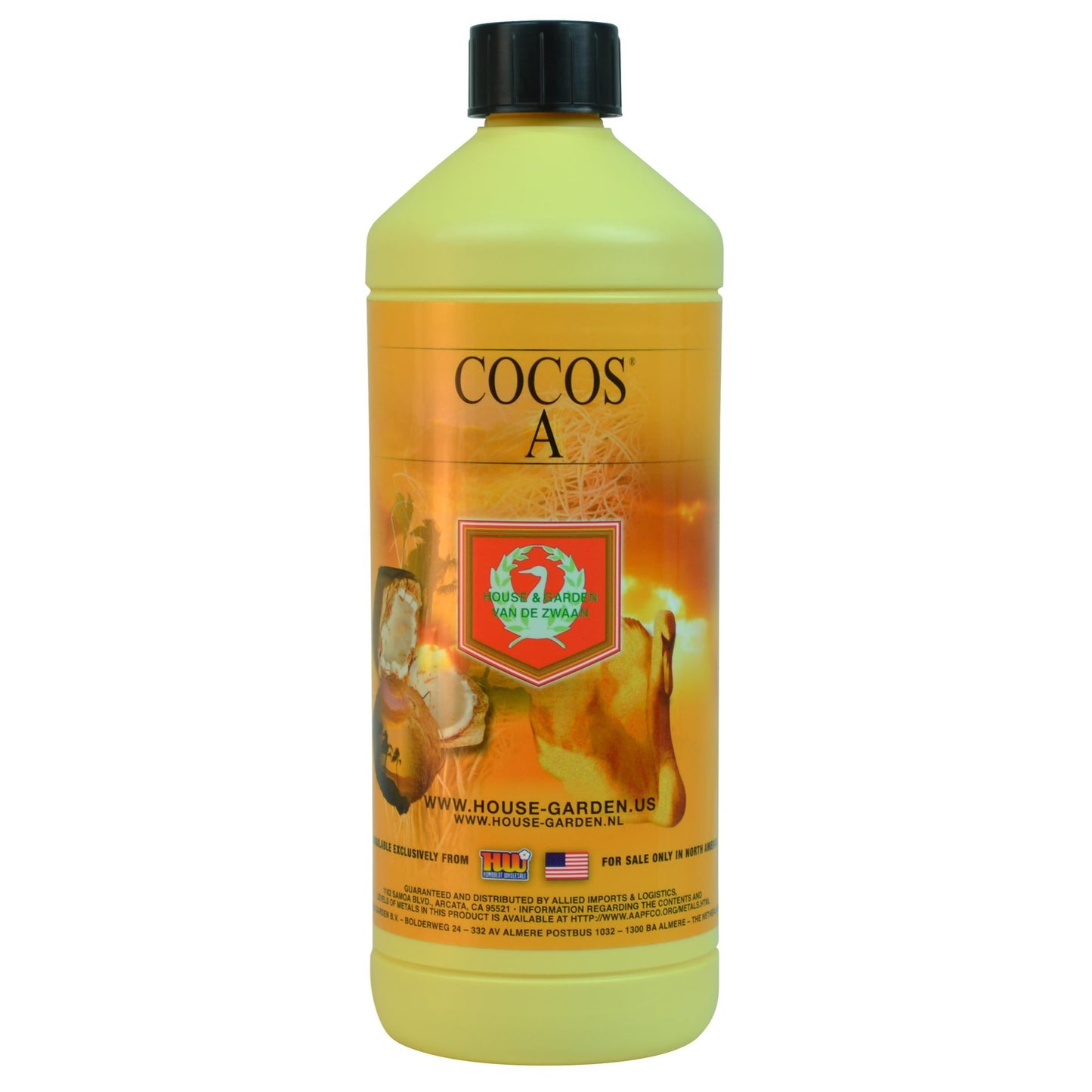
House & Garden Coco A - 1 Litre
Newmarket, Ontario (Head Office)
1175 Stellar Drive, Unit #5
Newmarket, ON L3Y 7B8
- Mon10:00am–6:00pm
- Tue10:00am–6:00pm
- Wed10:00am–6:00pm
- Thu10:00am–6:00pm
- Fri10:00am–6:00pm
- Sat10:00am–4:00pm
- SunClosed


Barrie, Ontario
106 Saunders Road, Unit #2A
Barrie, ON L4N 9A8
- Mon10:00am–5:00pm
- Tue10:00am–5:00pm
- Wed10:00am–5:00pm
- Thu10:00am–5:00pm
- Fri10:00am–5:00pm
- Sat10:00am–3:00pm
- SunClosed
Winnipeg, Manitoba
915 McLeod Avenue, Unit #4
Winnipeg, MB R2G 0Y4
- Mon10:00am–6:00pm
- Tue10:00am–6:00pm
- Wed10:00am–6:00pm
- Thu10:00am–6:00pm
- Fri10:00am–6:00pm
- Sat11:00am–3:00pm
- SunClosed
Sign in required
Back-in-stock notification
Select the store locations where you’d like to pick up this item, or choose Shipping to have it delivered.
Special order request
Select the store where you’d prefer to pick up your special order. To choose a different store, unselect your current choice first.
Manufacturer Recommended Products

Description
Description
Description
Coco coir has unique nutrient-holding behavior, so House & Garden Coco A and B focuses on the right ratios of soluble macronutrients with added attention to magnesium. That targeted balance is tuned to the cation-exchange capacity of coco, helping plants stay steady instead of chasing deficiencies that can show up in coir-based media. It’s formulated for pure coco coir, plus coco blends that contain 30% or more coco coir, so it fits common coco setups without changing the goalposts.
As a complete two-part base nutrient, it’s built to promote lush, vigorous growth while supporting plant strength and resilience as plants mature. The formula is also positioned to boost nutrient uptake efficiency, which is especially valuable when you want the plant to stay responsive and even across the canopy. Through flowering, it’s described for enhancing yield and aroma, making it a practical foundation when you’re aiming for both performance and finish quality.
House & Garden Coco A and B is suited for coco-based growing, including drain-to-waste hydroponic systems, and it’s presented as a straightforward option across the grow and bloom phases—from cuttings and seedlings through late bloom. For growers who care about clean inputs, it’s stated to contain no dyes, no synthetic PGRs, and no detectable heavy metals.
The mineral sources behind the formula are listed as calcium nitrate, ammonium nitrate, nitric acid, and potassium hydroxide. If you’re running coco coir and want a coco coir base nutrient that’s tuned for soluble macronutrients, magnesium balance, and steady uptake, House & Garden Coco A and B is a strong fit for growers who want reliable results without extra complexity.
How to use
- Week 1: mix 1.0 ml per litre of water or nutrient solution.
- Week 2: mix 1.5 ml per litre of water or nutrient solution.
- Week 3: mix 1.5 ml per litre of water or nutrient solution.
Flowering stage - Coco A:
- Week 1: mix 2.0 ml per litre of water or nutrient solution.
- Week 2: mix 2.0 ml per litre of water or nutrient solution.
- Week 3: mix 2.5 ml per litre of water or nutrient solution.
- Week 4: mix 2.5 ml per litre of water or nutrient solution.
- Week 5: mix 2.5 ml per litre of water or nutrient solution.
- Week 6: mix 2.0 ml per litre of water or nutrient solution.
- Week 7: mix 2.0 ml per litre of water or nutrient solution.
- Week 8: mix 2.0 ml per litre of water or nutrient solution.
Product benefits
Guaranteed analysis
Derived from
How To Use
How To Use
How to Use House & Garden Coco A - 1 Litre
Step-by-step mixing and feeding instructions for House & Garden Coco A - 1 Litre.
Mixing & preparation
Fill your reservoir or watering container with clean, room-temperature water first. Shake the bottle of House & Garden Coco A - 1 Litre well before every use. Using the feeding schedule below, measure the recommended dose and add it directly to the water while stirring. Allow the solution to mix fully before adding any other fertilizers, additives, or supplements.
Always add nutrients to water — not the other way around. Mix thoroughly between products to ensure an even, stable nutrient solution.
Week-by-week feeding schedule
Vegetative stage — Coco A
- Week 1: mix 1.0 ml per litre of water or nutrient solution.
- Week 2: mix 1.5 ml per litre of water or nutrient solution.
- Week 3: mix 1.5 ml per litre of water or nutrient solution.
Flowering stage — Coco A
- Week 1: mix 2.0 ml per litre of water or nutrient solution.
- Week 2: mix 2.0 ml per litre of water or nutrient solution.
- Week 3: mix 2.5 ml per litre of water or nutrient solution.
- Week 4: mix 2.5 ml per litre of water or nutrient solution.
- Week 5: mix 2.5 ml per litre of water or nutrient solution.
- Week 6: mix 2.0 ml per litre of water or nutrient solution.
- Week 7: mix 2.0 ml per litre of water or nutrient solution.
- Week 8: mix 2.0 ml per litre of water or nutrient solution.
Tips for best results
- Maintain pH and EC/ppm within the range recommended for your growing medium and crop.
- Use fresh nutrient solution whenever possible and avoid leaving mixed solution stagnant for long periods.
- Store nutrients in a cool, dark place away from direct sunlight and extreme temperatures.
- Keep bottles tightly sealed when not in use to reduce air exposure and preserve product quality.
- Use clean measuring tools and regularly rinse or clean your reservoir, lines, and irrigation equipment.
Common mistakes to avoid
- Do not mix different nutrients or additives together in concentrated form before adding them to water.
- Do not exceed the recommended dosage unless you are following a tested, crop-specific feeding plan.
- Do not skip pH or EC/ppm checks when growing in hydroponic or soilless systems.
- Do not allow the nutrient solution to freeze or overheat, as this can damage the formulation.
- Do not ignore the directions on the product label for your specific crop, growth stage, and system type.
Warnings & Safety
Warnings & Safety
Important – Safety Information
General Safety Precautions
First Aid – Skin Contact
First Aid – Eye Contact
First Aid – Ingestion
First aid – Inhalation
Storage And Handling
Important – Medical
Guaranteed Minimum Analysis
Guaranteed Minimum Analysis
| Total Nitrogen (N) | 0.3% |
|---|---|
| Ammoniacal Nitrogen (N) | 0.02% |
| Nitrate Nitrogen (N) | 0.28% |
Derived From
Derived From
Frequently Asked Questions
Frequently Asked Questions
Why is total nitrogen (N) important for plant growth, and what makes it different from other nutrients?
What Is ammoniacal nitrogen (N) and why do plants need It?
What does nitrate nitrogen (N) do for plants?
Why do growers use calcium nitrate instead of other calcium sources?
What makes ammonium nitrate different from other nitrogen ingredients for plant growth?
Is nitric acid only for pH, or does it feed the plant too?
Is potassium hydroxide just a potassium fertilizer?
Frequently purchased together
-
House & Garden Amino Treatment - 250 ML
Regular price $83.88Regular price -
House & Garden Algen Extract - 250 ML
Regular price $32.40Regular price -
House & Garden Bud XL - 1 Litre
Regular price $49.99Regular price -
House & Garden Roots Excelurator Gold - 100 ML
Regular price $41.40Regular price

Vegetative — Week 1
-
Coco A—
-
Coco B—
-
Roots Excelurator—
-
Multi Zen—
-
Bud-XL—
-
Top Booster—
-
Top Shooter—
Flowering — Week 1
-
Coco A—
-
Coco B—
-
Roots Excelurator—
-
Multi Zen—
-
Bud-XL—
-
Top Booster—
-
Top Shooter—
Vegetative — Week 1
-
Coco A—
-
Coco B—
-
Drip Clean—
-
Roots Excelurator—
-
Amino Treatment—
-
Multi Zen—
-
Algen Extract—
-
Nitrogen Boost—
-
Bud-XL—
-
Top Booster—
-
Top Shooter—
-
Magic Green—
Flowering — Week 1
-
Coco A—
-
Coco B—
-
Drip Clean—
-
Roots Excelurator—
-
Amino Treatment—
-
Multi Zen—
-
Algen Extract—
-
Nitrogen Boost—
-
Bud-XL—
-
Top Booster—
-
Top Shooter—
-
Magic Green—