Skip to product information
1 of 1
Growth Technology AU flag

Official Reseller

Provision Gardens is an official reseller of this brand.

Our inventory is sourced directly from the manufacturer and/or authorized distribution partners. We do not sell used items or unverified/old stock. This helps ensure product authenticity, freshness, and the high standard you expect.

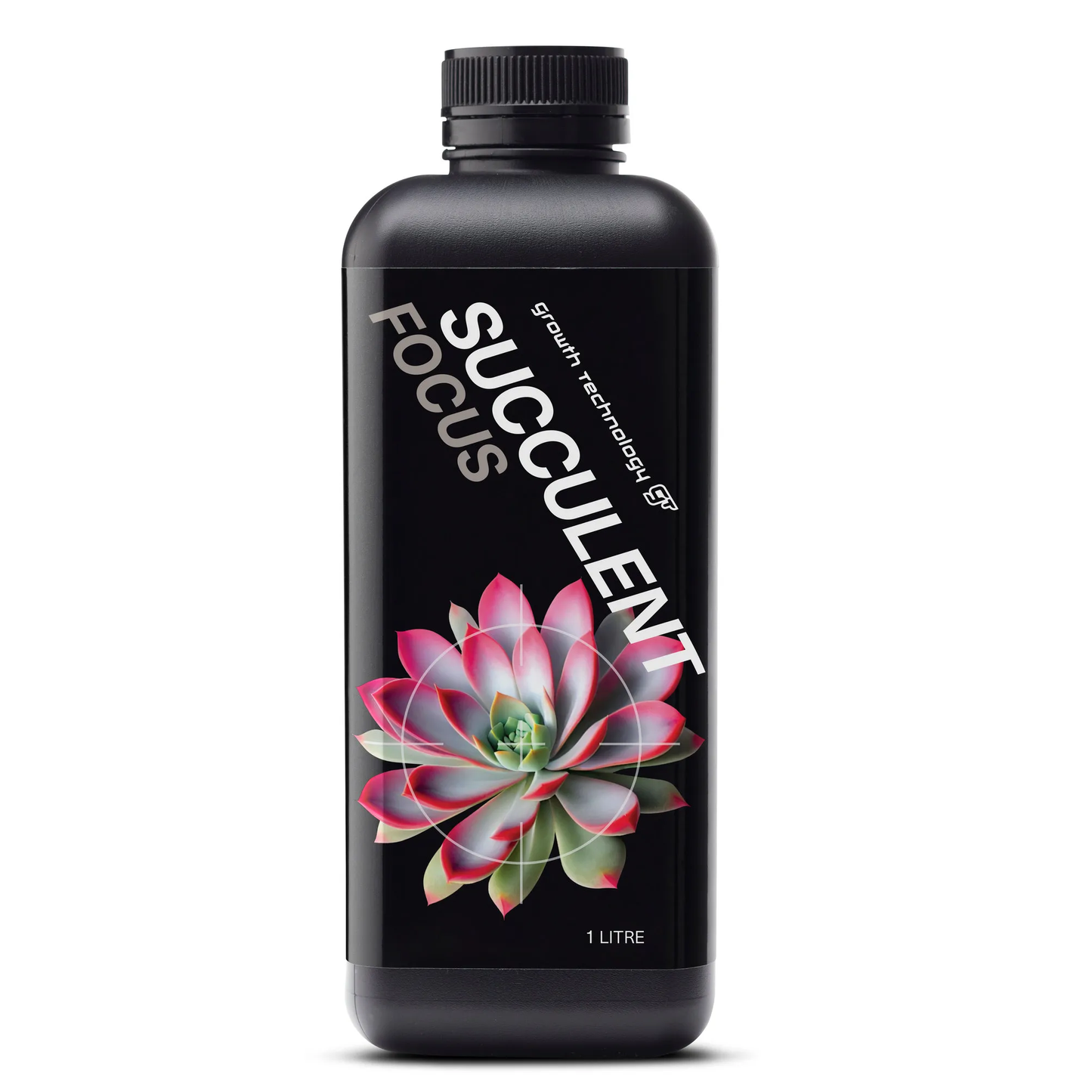
Growth Technology Succulent Focus - 1 Litre

Growth Technology Succulent Focus - 1 Litre

Regular price $32.14
Regular price Sale price $32.14
Shipping calculated at checkout.

OTHER AVAILABLE SIZES / MODELS:

Store Availability
Newmarket, Ontario
Available
Winnipeg, Manitoba
Available
Barrie, Ontario
Unavailable
Pickering, Ontario
Unavailable

Out of stock at your chosen pickup location? We'll automatically transfer inventory from another location so it's ready at your selected pickup location. (Ontario Only)

Province:
Choose your province
Order Within:
Estimated Delivery:
Free Shipping (Canada):
Free Shipping (Ontario):
Quantity
Qualifies for Free Shipping Promotion

Description

Growth Technology Succulent Focus is a precision formulated nutrient for succulents, made to keep plants healthy and vibrant while helping reduce the risk of fertiliser burn. This succulent nutrient is also a complete, balanced fertiliser, giving you a straightforward plant nutrient option for consistent succulent care.

Succulents may tolerate lean conditions, but they still respond best when essential minerals are supplied in the right balance. Succulent Focus is designed as a complete, balanced formula that contains all 12 essential minerals, so your plants aren’t relying on partial feeding that can create slow-developing gaps over time. The nutrient profile is described as highly bioavailable, supporting efficient uptake while keeping growth steady and controlled.

Stability is a major advantage for ongoing care. Succulent Focus is pH buffered, with no pH adjustment needed with most tap water, which helps keep nutrition more consistent from watering to watering. It’s also completely odourless, making it a clean fit for indoor shelves, windowsills, greenhouses, and plant rooms where you want performance without lingering smells.

The formula is built around clean inputs and reliable absorption. Succulent Focus is manufactured using high grade raw materials and chelated trace elements to support effortless absorption, including the micronutrient support succulents need for balanced development. It is also guaranteed not to contain potentially harmful and ineffective chlorides, urea and sodium, which helps keep the formulation cleaner for regular use on slower-growing plants. The Focus range is formulated so the nutrients are in an ionic form, which means they’re immediately available for plant roots to absorb and use.

For setup flexibility, Succulent Focus is suitable for both hydroponics and soil, so you can keep the same complete mineral approach across different growing media. It’s positioned for the vegetative, flowering, and mature life cycle stages, which suits collections where some plants are actively growing while others are simply being maintained. If you like to keep your succulents on a stable routine, this broad life-cycle fit makes it easier to stay consistent as plants mature.

This is a good fit for growers who want a complete, balanced succulent nutrient that’s highly bioavailable and pH buffered, with chelated trace elements and a clean, odourless formulation designed to safely nurture succulents.

How To Use

How to Use Growth Technology Succulent Focus - 1 Litre

Step-by-step mixing and feeding instructions for Growth Technology Succulent Focus - 1 Litre.

Mixing & preparation

Fill your reservoir or watering container with clean, room-temperature water first. Shake the bottle of Growth Technology Succulent Focus - 1 Litre well before every use. Using the feeding schedule below, measure the recommended dose and add it directly to the water while stirring. Allow the solution to mix fully before adding any other fertilizers, additives, or supplements.

Always add nutrients to water — not the other way around. Mix thoroughly between products to ensure an even, stable nutrient solution.

Week-by-week feeding schedule

Vegetative stage — Soil

  • Week 1: mix 3.0 ml per litre of water or nutrient solution.
  • Week 2: mix 3.0 ml per litre of water or nutrient solution.
  • Week 3: mix 3.0 ml per litre of water or nutrient solution.
  • Week 4: mix 3.0 ml per litre of water or nutrient solution.

Flowering stage — Soil

  • Week 1: mix 3.0 ml per litre of water or nutrient solution.
  • Week 2: mix 3.0 ml per litre of water or nutrient solution.
  • Week 3: mix 3.0 ml per litre of water or nutrient solution.
  • Week 4: mix 3.0 ml per litre of water or nutrient solution.
  • Week 5: mix 3.0 ml per litre of water or nutrient solution.
  • Week 6: mix 3.0 ml per litre of water or nutrient solution.
  • Week 7: mix 3.0 ml per litre of water or nutrient solution.
  • Week 8: mix 3.0 ml per litre of water or nutrient solution.

Tips for best results

  • Maintain pH and EC/ppm within the range recommended for your growing medium and crop.
  • Use fresh nutrient solution whenever possible and avoid leaving mixed solution stagnant for long periods.
  • Store nutrients in a cool, dark place away from direct sunlight and extreme temperatures.
  • Keep bottles tightly sealed when not in use to reduce air exposure and preserve product quality.
  • Use clean measuring tools and regularly rinse or clean your reservoir, lines, and irrigation equipment.

Common mistakes to avoid

  • Do not mix different nutrients or additives together in concentrated form before adding them to water.
  • Do not exceed the recommended dosage unless you are following a tested, crop-specific feeding plan.
  • Do not skip pH or EC/ppm checks when growing in hydroponic or soilless systems.
  • Do not allow the nutrient solution to freeze or overheat, as this can damage the formulation.
  • Do not ignore the directions on the product label for your specific crop, growth stage, and system type.

Warnings & Safety

Warning – Important Safety Information

This product may cause mild skin irritation and eye irritation. Avoid unnecessary contact with skin, eyes, and clothing. Use only as directed.

General safety precautions

Read and follow all instructions on the product label and any accompanying documentation before use. Keep out of reach of children and pets. Do not ingest. Avoid breathing vapours, mist, or dust that may be generated during handling or use.

Wear appropriate personal protective equipment (PPE), such as protective gloves, long sleeves, long pants and closed-toe footwear. When there is a risk of splashing or airborne particles, use safety glasses or other suitable eye and face protection.

First aid – skin contact

IF ON SKIN OR HAIR: Remove contaminated clothing immediately. Rinse skin with clean water for several minutes, then wash with mild soap and water. If irritation or redness develops and persists, seek medical attention. Wash contaminated clothing before reuse.

First aid – eye contact

IF IN EYES: Rinse cautiously with clean water for several minutes, keeping eyelids open. Remove contact lenses if present and easy to do. Continue rinsing. If irritation persists, obtain medical advice.

First aid – ingestion and inhalation

IF SWALLOWED: Rinse mouth thoroughly with water. Do not induce vomiting unless instructed by a medical professional. Seek medical attention if you feel unwell.

IF INHALED: Move the person to fresh air and keep them comfortable for breathing. If coughing, breathing difficulty, dizziness or other symptoms occur, seek medical assistance.

Storage and handling

Store this product in its original closed container, in a cool, dry and well-ventilated area. Protect from extreme temperatures and direct sunlight. Keep container tightly sealed when not in use.

Avoid release to drains, natural waterways or outdoor soil. Dispose of unused product and empty containers in accordance with local regulations and the directions on the label.

Important: If medical advice is needed, keep the product label or container available. Always follow the specific instructions and safety recommendations provided by the manufacturer. This safety notice is intended as general guidance and does not replace official label directions or documentation.

Guaranteed Minimum Analysis

Frequently Asked Questions

What does available phosphorus do for plants?

Available phosphorus supports root growth, energy production, and strong flowering by providing a form of phosphorus that plants can absorb immediately.

Why is boron (B) essential for strong plant development, and what makes it different from other micronutrients?

Boron is essential because it stabilizes cell walls, supports root and shoot growth, and regulates sugar movement throughout the plant. What makes boron unique is its limited mobility and extremely narrow range between deficiency and excess, which causes new growth to show symptoms rapidly when levels fall out of balance.

Why is calcium important for plant growth?

Calcium is important because it builds and stabilizes plant cells as they form, acting as the structural support that keeps new growth strong and functional. Unlike other nutrients that drive color or speed of growth, calcium’s role is unique because it controls cell wall strength and membrane stability, making it essential for healthy roots, shoots, and long-term plant resilience rather than quick visual results.

Why is copper (Cu) important for plant growth?

Copper is important because it powers key enzymes that support energy use, tissue strength, and stress protection, and it’s unique from many other micronutrients because plants need it in tiny amounts but can be harmed quickly if copper becomes excessive.

Why is molybdenum (Mo) important for plant growth?

Molybdenum is important because it helps plants convert nitrogen into usable building blocks for chlorophyll and growth, and it’s unique from many nutrients because it mainly supports enzyme-driven “nutrient use” rather than directly building plant tissue.

What does nitrate nitrogen (N) do for plants?

Nitrate Nitrogen provides a stable, easy-to-absorb form of nitrogen that supports steady growth, strong foliage, and reliable plant development without sudden nutrient swings.

Why is potassium (K) important for plant growth and why is it unique compared to other major nutrients?

Potassium is important because it controls key plant systems like water regulation, sugar transport, and nutrient movement, which supports stronger stems and better flowering or fruit quality. It’s unique because it doesn’t mainly build plant tissue like other major nutrients—it helps the plant use and manage what it already has, so small imbalances can affect the whole plant.

Why is sulfur (S) important for plant growth?

Sulfur is important because plants need it to build key amino acids and proteins that drive real growth, strong structure, and efficient use of nitrogen, making it uniquely different from “look-alike” nutrients that may change leaf color without supporting the plant’s core building process.

Why is total iron (Fe) important for plant growth?

Total iron (Fe) matters because iron supports chlorophyll development and plant energy systems, keeping new growth green and vigorous; it’s unique from many other nutrients because iron deficiency usually shows up first in young leaves even when older leaves stay green, since iron doesn’t easily move within the plant.

Why is total magnesium (Mg) important for plant growth?

Total magnesium is important because magnesium powers chlorophyll and energy use, helping plants stay green, turn light into growth, and use other nutrients efficiently—and it’s unique because its problems often come from nutrient balance and uptake competition, not just a simple shortage.

Why is total manganese (Mn) important for plant growth?

Total manganese matters because it supports photosynthesis and enzyme activity that keep new growth green and vigorous, and it’s unique because “total” manganese measures what’s present but not necessarily what the plant can absorb—so pH and root conditions decide whether manganese helps or harms.

Why is zinc (Zn) important for plant growth?

Zinc is important because it powers key enzymes and helps regulate growth hormones, which directly controls healthy new leaves, normal internode spacing, and strong growth tips; it’s unique compared to many other micronutrients because zinc problems often show up as distorted, undersized new growth and stunting, not just simple leaf yellowing.

Safety & Technical Documents

View full details
Nutrient Feed Chart

Vegetative — Soil

Flowering — Soil

Product Comparison