

Frequently purchased together
-
General Hydroponics Flora Blend - 1 Quart
Regular price $21.09Regular price -
General Hydroponics Flora Nova Bloom - 1 Quart
Regular price $52.99Regular price -
General Hydroponics Flora Nova Grow - 1 Quart
Regular price $49.99Regular price


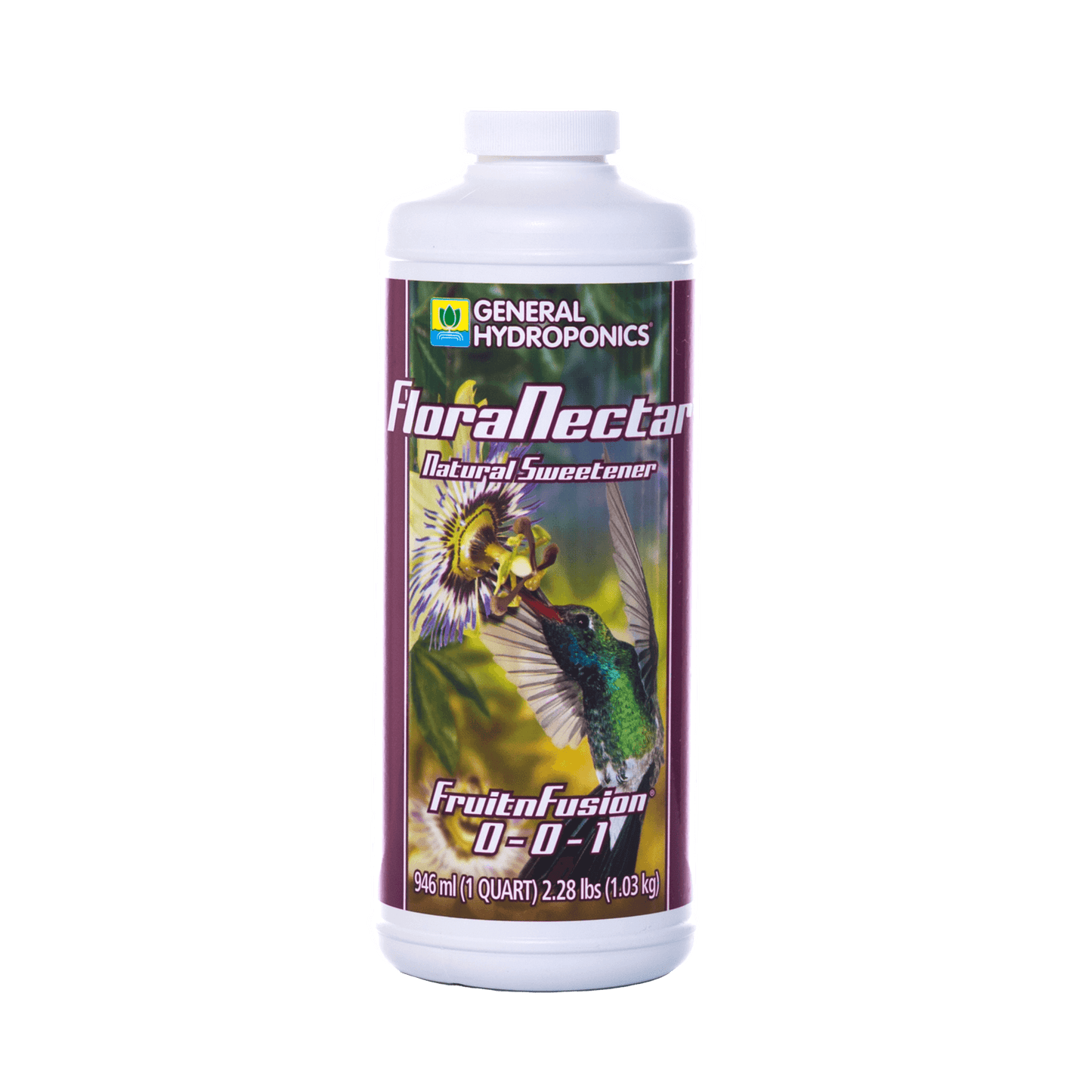
General Hydroponics Flora Nectar FruitnFusion - 1 Quart
Out of stock at your selected pickup location? If your order is being picked up in Newmarket or Barrie, we’ll automatically transfer available inventory between those two stores, so everything is handled for you.
Newmarket, Ontario (Head Office)
1175 Stellar Drive, Unit #5
Newmarket, ON L3Y 7B8
- Mon10:00am–6:00pm
- Tue10:00am–6:00pm
- Wed10:00am–6:00pm
- Thu10:00am–6:00pm
- Fri10:00am–6:00pm
- Sat10:00am–4:00pm
- SunClosed


Barrie, Ontario
106 Saunders Road, Unit #2A
Barrie, ON L4N 9A8
- Mon10:00am–6:00pm
- Tue10:00am–6:00pm
- Wed10:00am–6:00pm
- Thu10:00am–6:00pm
- Fri10:00am–6:00pm
- Sat10:00am–4:00pm
- SunClosed
Pickering, Ontario
719 Krosno Boulevard
Pickering, ON L1W 1G4
- MonClosed
- Tue10:00am–5:00pm
- Wed10:00am–6:00pm
- Thu10:00am–6:00pm
- Fri10:00am–6:00pm
- Sat11:00am–4:00pm
- SunClosed
Winnipeg, Manitoba
915 McLeod Avenue, Unit #4
Winnipeg, MB R2G 0Y4
- Mon10:00am–6:00pm
- Tue10:00am–6:00pm
- Wed10:00am–6:00pm
- Thu10:00am–6:00pm
- Fri10:00am–6:00pm
- Sat11:00am–3:00pm
- SunClosed
Description
Description
General Hydroponics FloraNectar FruitnFusion is a natural sweetener and plant flavor enhancer that supports sweetness and aroma and helps maintain plant metabolism through all phases. This plant sweetener supplement is designed to help meet additional energy requirements during active growth and through stressful times of transition, giving crops extra metabolic support when conditions change.
FloraNectar FruitnFusion is built around a blend of minerals and natural molasses, and it also includes all natural raw cane sugar and malt syrup as part of its sweetener base. The formula includes select plant based esters, L-amino acids, organic acids, polyflavonoids, vitamins, and essential minerals in a compact, purpose-driven profile. Its NPK is 0-0-1, keeping the focus on flavor-focused support rather than base nutrition.
In high intensity growing environments, the balance between respiration and photosynthesis can shift when plants burn energy quickly. FloraNectar FruitnFusion is intended to help plants achieve a better balance between respiration and photosynthesis by supporting the enzyme activity tied to maintaining optimal metabolism. That metabolic support is highlighted as especially relevant during the flowering and fruiting phase when nitrogen levels have been reduced, helping plants stay productive as they move deeper into reproduction.
Fruit and flower growers often look for support that lines up with quality goals without adding complexity. FloraNectar FruitnFusion is positioned to optimize the greatest transference of sweetness and aroma into your fruits and flowers, while still supporting overall plant performance through the full crop cycle. It also promotes a sturdier plant structure during the vegetative phase when high levels of nitrogen are present, helping plants carry themselves confidently as growth accelerates.
For setup flexibility, FloraNectar FruitnFusion is suited for rockwool, coco, potting mix, peat lite mix, and in-ground soil. It’s listed for vegetables, herbs, fruits, flowers, and other high value crops, making it a practical option for mixed gardens as well as focused fruiting and flowering runs. This is a good fit for growers who want a natural sweetener, a plant flavor enhancer, and metabolism support aimed at stronger structure in vegetative growth and sweetness-and-aroma performance during flowering and fruiting.
How To Use
How To Use
How to Use General Hydroponics Flora Nectar FruitnFusion - 1 Quart
Step-by-step mixing and feeding instructions for General Hydroponics Flora Nectar FruitnFusion - 1 Quart.
Mixing & preparation
Fill your reservoir or watering container with clean, room-temperature water first. Shake the bottle of General Hydroponics Flora Nectar FruitnFusion - 1 Quart well before every use. Using the feeding schedule below, measure the recommended dose and add it directly to the water while stirring. Allow the solution to mix fully before adding any other fertilizers, additives, or supplements.
Always add nutrients to water — not the other way around. Mix thoroughly between products to ensure an even, stable nutrient solution.
Week-by-week feeding schedule
Vegetative stage — Flora Nectar
- Week 1: mix 1.25 ml per litre of water or nutrient solution.
- Week 2: mix 1.25 ml per litre of water or nutrient solution.
- Week 3: mix 1.25 ml per litre of water or nutrient solution.
- Week 4: mix 1.25 ml per litre of water or nutrient solution.
Flowering stage — Flora Nectar
- Week 1: mix 2.5 ml per litre of water or nutrient solution.
- Week 2: mix 2.5 ml per litre of water or nutrient solution.
- Week 3: mix 2.5 ml per litre of water or nutrient solution.
- Week 4: mix 2.5 ml per litre of water or nutrient solution.
- Week 5: mix 2.5 ml per litre of water or nutrient solution.
- Week 6: mix 2.5 ml per litre of water or nutrient solution.
- Week 7: mix 2.5 ml per litre of water or nutrient solution.
- Week 8: do not use this product during this week of flowering.
Tips for best results
- Maintain pH and EC/ppm within the range recommended for your growing medium and crop.
- Use fresh nutrient solution whenever possible and avoid leaving mixed solution stagnant for long periods.
- Store nutrients in a cool, dark place away from direct sunlight and extreme temperatures.
- Keep bottles tightly sealed when not in use to reduce air exposure and preserve product quality.
- Use clean measuring tools and regularly rinse or clean your reservoir, lines, and irrigation equipment.
Common mistakes to avoid
- Do not mix different nutrients or additives together in concentrated form before adding them to water.
- Do not exceed the recommended dosage unless you are following a tested, crop-specific feeding plan.
- Do not skip pH or EC/ppm checks when growing in hydroponic or soilless systems.
- Do not allow the nutrient solution to freeze or overheat, as this can damage the formulation.
- Do not ignore the directions on the product label for your specific crop, growth stage, and system type.
Warnings & Safety
Warnings & Safety
Warning – Important Safety Information
This product may cause mild skin irritation and eye irritation. Avoid unnecessary contact with skin, eyes, and clothing. Use only as directed.
General safety precautions
Read and follow all instructions on the product label and any accompanying documentation before use. Keep out of reach of children and pets. Do not ingest. Avoid breathing vapours, mist, or dust that may be generated during handling or use.
Wear appropriate personal protective equipment (PPE), such as protective gloves, long sleeves, long pants and closed-toe footwear. When there is a risk of splashing or airborne particles, use safety glasses or other suitable eye and face protection.
First aid – skin contact
IF ON SKIN OR HAIR: Remove contaminated clothing immediately. Rinse skin with clean water for several minutes, then wash with mild soap and water. If irritation or redness develops and persists, seek medical attention. Wash contaminated clothing before reuse.
First aid – eye contact
IF IN EYES: Rinse cautiously with clean water for several minutes, keeping eyelids open. Remove contact lenses if present and easy to do. Continue rinsing. If irritation persists, obtain medical advice.
First aid – ingestion and inhalation
IF SWALLOWED: Rinse mouth thoroughly with water. Do not induce vomiting unless instructed by a medical professional. Seek medical attention if you feel unwell.
IF INHALED: Move the person to fresh air and keep them comfortable for breathing. If coughing, breathing difficulty, dizziness or other symptoms occur, seek medical assistance.
Storage and handling
Store this product in its original closed container, in a cool, dry and well-ventilated area. Protect from extreme temperatures and direct sunlight. Keep container tightly sealed when not in use.
Avoid release to drains, natural waterways or outdoor soil. Dispose of unused product and empty containers in accordance with local regulations and the directions on the label.
Important: If medical advice is needed, keep the product label or container available. Always follow the specific instructions and safety recommendations provided by the manufacturer. This safety notice is intended as general guidance and does not replace official label directions or documentation.
Guaranteed Minimum Analysis
Guaranteed Minimum Analysis
| Soluble Potash (K2O) | 1.0% |
|---|---|
| Total Magnesium (Mg) | 0.5% |
| Sulfur (S) | 1.0% |
Derived From
Derived From
Frequently Asked Questions
Frequently Asked Questions
Why is molasses important for plant growth, and what makes it unique compared to other inputs?
Why is soluble potash (K2O) important for plants?
Why is sulfur (S) important for plant growth?
Why is total magnesium (Mg) important for plant growth?
What does magnesium sulfate do for plants?
Is potassium sulfate better than other potassium sources for sensitive plants?
Safety & Technical Documents
Safety & Technical Documents
Frequently purchased together
-
General Hydroponics Flora Blend - 1 Quart
Regular price $21.09Regular price -
General Hydroponics Flora Nova Bloom - 1 Quart
Regular price $52.99Regular price -
General Hydroponics Flora Nova Grow - 1 Quart
Regular price $49.99Regular price

Vegetative — Flora Nectar
-
—
Flowering — Flora Nectar
-
—