Frequently purchased together
-
 HOT ITEM
Gaia Green All Purpose - 2 KG
Regular price $27.99Regular price -
 HOT ITEM
Gaia Green Power Bloom - 2 KG
Regular price $29.99Regular price -
 HOT ITEM
Gaia Green Worm Castings - 2 Litre
Regular price $16.87Regular price -


Reviews are submitted by verified customers after purchase. This section shows a summary of product feedback rather than the full individual review list.

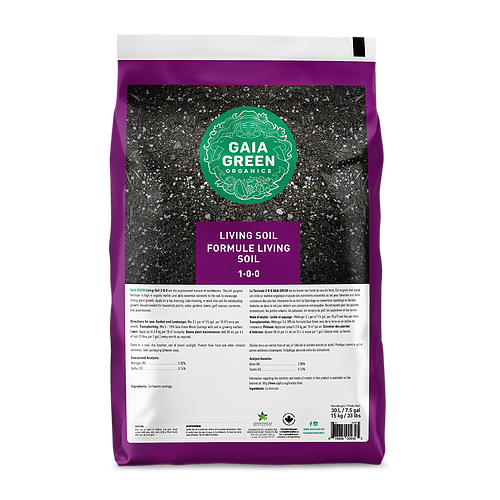
Gaia Green Living Soil - 30 Litre
Regular price
$34.99
Regular price
Sale price
$34.99
Shipping calculated at checkout.
Store Availability
Newmarket, Ontario (Head Office)
1175 Stellar Drive, Unit #5
Newmarket, ON L3Y 7B8
- Mon10:00am–6:00pm
- Tue10:00am–6:00pm
- Wed10:00am–6:00pm
- Thu10:00am–6:00pm
- Fri10:00am–6:00pm
- Sat10:00am–4:00pm
- SunClosed


Barrie, Ontario
106 Saunders Road, Unit #2A
Barrie, ON L4N 9A8
- Mon10:00am–5:00pm
- Tue10:00am–5:00pm
- Wed10:00am–5:00pm
- Thu10:00am–5:00pm
- Fri10:00am–5:00pm
- Sat10:00am–3:00pm
- SunClosed
Winnipeg, Manitoba
915 McLeod Avenue, Unit #4
Winnipeg, MB R2G 0Y4
- Mon10:00am–6:00pm
- Tue10:00am–6:00pm
- Wed10:00am–6:00pm
- Thu10:00am–6:00pm
- Fri10:00am–6:00pm
- Sat11:00am–3:00pm
- SunClosed
Quantity
In-Store Pickup Only
Sign in required
Back-in-stock notification
Select the store locations where you’d like to pick up this item, or choose Shipping to have it delivered.
Email notifications are turned off
Turn on email marketing to receive back-in-stock notifications.
Open account profile
Special order request
Select the store where you’d prefer to pick up your special order. To choose a different store, unselect your current choice first.
Description
Description
Description
Gaia Green Living Soil Blend is a living soil potting mix for potted plants, designed to create a root environment that supports beneficial microbial activity. It’s a premium potting mix and container growing medium for growers who want a holistic, ecological approach to growing potted plants.
This proprietary blend of premium ingredients is pre-charged with select Gaia Green organics, so it comes ready to support early, steady plant performance in containers. The mix is intentionally biologically active for high nutrient availability, helping the root zone stay supplied as the living portion of the media does its job. For growers who prefer a soil-building style of growing, that biologically active profile is a core reason this living soil potting mix stands out.
Gaia Green Living Soil Blend is built around high porosity and moisture retention to support an optimal root environment. High porosity supports airflow through the medium, while moisture retention helps maintain a more consistent hydration buffer in the pot. Together, those traits help keep roots in a more stable, well-aerated space, which supports healthier overall growth without chasing constant changes in how the pot feels day to day.
The ingredient base combines soil amending ingredients with a broad set of organic and mineral inputs. The soil amending ingredients include peat moss, perlite, coconut coir, fir bark, composted porcine litter, and African nightcrawler worm castings, forming a structured, moisture-smart foundation. The blend is further supported with selected mineral and organic components such as rock dusts, humic acid, kelp meal, gypsum, and natural meals, reinforcing its role as a living soil designed for nutrient availability and a strong root environment.
This living soil blend is a good fit for growers who want a premium potting mix that supports beneficial microbial activity, high nutrient availability, and a balanced combination of high porosity and moisture retention. If your goal is a biologically active container growing medium that supports an optimal root environment for potted plants, Gaia Green Living Soil Blend is well suited to that style of growing.
This proprietary blend of premium ingredients is pre-charged with select Gaia Green organics, so it comes ready to support early, steady plant performance in containers. The mix is intentionally biologically active for high nutrient availability, helping the root zone stay supplied as the living portion of the media does its job. For growers who prefer a soil-building style of growing, that biologically active profile is a core reason this living soil potting mix stands out.
Gaia Green Living Soil Blend is built around high porosity and moisture retention to support an optimal root environment. High porosity supports airflow through the medium, while moisture retention helps maintain a more consistent hydration buffer in the pot. Together, those traits help keep roots in a more stable, well-aerated space, which supports healthier overall growth without chasing constant changes in how the pot feels day to day.
The ingredient base combines soil amending ingredients with a broad set of organic and mineral inputs. The soil amending ingredients include peat moss, perlite, coconut coir, fir bark, composted porcine litter, and African nightcrawler worm castings, forming a structured, moisture-smart foundation. The blend is further supported with selected mineral and organic components such as rock dusts, humic acid, kelp meal, gypsum, and natural meals, reinforcing its role as a living soil designed for nutrient availability and a strong root environment.
This living soil blend is a good fit for growers who want a premium potting mix that supports beneficial microbial activity, high nutrient availability, and a balanced combination of high porosity and moisture retention. If your goal is a biologically active container growing medium that supports an optimal root environment for potted plants, Gaia Green Living Soil Blend is well suited to that style of growing.
Product benefits
Stimulates Microbial Activity; Root Zone Biology; Pre-Charged Nutrition; Plant-Available Nutrition; Root Zone Oxygen; Moisture Retention; Growth Support; Microbe Friendly; Indoor; Outdoor; Flowering Stage; Vegetative Stage; Soilless; Organic.
Guaranteed analysis
Total Nitrogen (N): 1.0%; Total Magnesium (Mg): 0.5%; Total Iron (Fe): 0.3%.
Derived from
African Night Crawler Worm Castings; Glacial Rock Dust; Dolomite; Feather Meal; Alfalfa Meal; Bone Meal; Rock Phosphate; Blood Meal; Fishbone Meal; Mineralized Phosphate; Insect Frass; Mined Potassium Sulfate; Basalt Rock Dust; Humic Acid; Gypsum; Kelp Meal; Oyster Shell Flour; Greensand; Peat Moss; Perlite; Coconut Coir; Fir Bark; Composted Porcine Litter.
Guaranteed Minimum Analysis
Guaranteed Minimum Analysis
| Total Nitrogen (N) | 1.0% |
|---|---|
| Total Magnesium (Mg) | 0.5% |
| Total Iron (Fe) | 0.3% |
Derived From
Derived From
Frequently Asked Questions
Frequently Asked Questions
Why is total nitrogen (N) important for plant growth, and what makes it different from other nutrients?
Why is total magnesium (Mg) important for plant growth?
Why is total iron (Fe) important for plant growth?
Why are african night crawler worm castings important for plant growth?
What does dolomite do for plants in the root zone?
What does feather meal do for plants?
What makes alfalfa meal important for plant growth compared to other natural amendments?
When should you use bone meal for plants, and why does it work differently than other amendments?
Is blood meal good for plants, and what makes it different from other nitrogen sources?
What does fishbone meal do for plant roots?
What is basalt rock dust used for in gardening?
Why is humic acid important for plant growth?
Why is perlite important for plant growth, and what makes it different from other mix ingredients?
Why is coconut coir important for plant growth?
What does fir bark do in potting soil?
Can composted porcine litter burn plants?
What does glacial rock dust actually do for plants?
What makes natural rock phosphate different from other phosphorus sources for plant growth?
What does mineralized phosphate do for plants?
What makes insect frass different from other organic soil amendments?
What does mined potassium sulfate do for fruiting plants?
Does gypsum change soil pH?
What does kelp meal do for plants?
What does oyster shell flour do for plants?
Is greensand a fast way to fix a potassium deficiency in plants?
Is peat moss good for all potting mixes?
Frequently purchased together
-
HOT ITEM
Gaia Green All Purpose - 2 KG
Regular price $27.99Regular price -
HOT ITEM
Gaia Green Power Bloom - 2 KG
Regular price $29.99Regular price -
HOT ITEM
Gaia Green Worm Castings - 2 Litre
Regular price $16.87Regular price -
Reviews are submitted by verified customers after purchase. This section shows a summary of product feedback rather than the full individual review list.